



Gasgoo Munich- Changan Automobile has unveiled its 2025 annual report, revealing a year of record volume even as profits shifted. Revenue climbed 2.67% to 164 billion yuan. Sales jumped 8.5% to 2.913 million units. This marked the highest tally in nine years and the sixth straight year of growth. Net profit attributable to shareholders, however, tumbled 44.34% to 4.075 billion yuan. The drop was driven primarily by a sharp pullback in non-recurring gains. Stripping out those one-off items, underlying net profit rose 8.03% to 2.795 billion yuan.
Broadly speaking, the automaker is scaling up. Profitability in its core business is steadily recovering. Yet the headline net profit figure took a visible hit as one-off boosts from the previous year faded.
Non-Recurring Gains Fade, Core Profitability Shifts

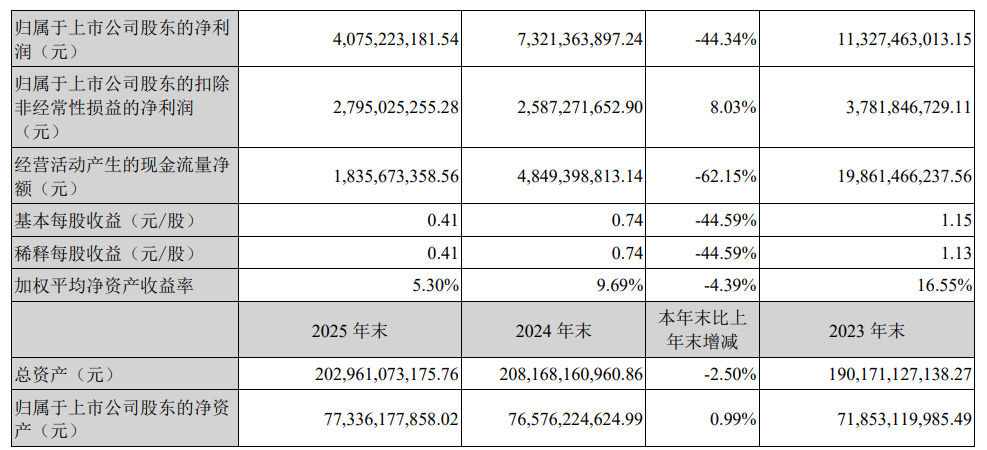
Image Source: Screenshot from Changan Automobile's Annual Report
Changan's 44.34% profit slump is largely tied to a dramatic reduction in non-recurring items. The annual report shows these gains totaled 1.28 billion yuan in 2025 — a plunge of roughly 73%, or 3.454 billion yuan, compared to 4.734 billion yuan the year prior. Most notably, gains from the disposal of non-current assets nosedived from 2.55 billion yuan to 173 million yuan. Government subsidies were cut nearly in half, falling from 1.627 billion yuan to 559 million yuan. The sharpest contrast came from fixed asset disposals. These brought in 2.466 billion yuan in 2024 but only 103 million yuan last year.
Simply put, a significant chunk of 2024's net profit was propped up by one-off events like asset sales and government subsidies. With those tailwinds vanishing in 2025, the decline in headline profit was expected. Yet the fact that underlying net profit still climbed 8.03% suggests the core business is generating real growth.
Operationally, Changan's gross margins are trending upward. The full-year margin for 2025 reached 15.54%, up 0.6 percentage points from the previous year. A steady quarterly climb saw the fourth quarter hit 16.8%. This improvement signals that profitability in the main business is healing. It is driven by scaling economies in the new energy sector and ongoing cost reductions across the supply chain.
Meanwhile, net cash flow from operating activities slumped 62.15% to 1.836 billion yuan. According to the filing, this drop stems from a strategic decision to comply with policy guidance. The company shortened payment cycles for suppliers, accelerating payments and increasing cash outflows during the period.
R&D spending remained a priority, reaching 12.6 billion yuan in 2025, or 7.67% of revenue. Of that, 7.158 billion yuan was recorded as R&D expenses, a figure that has grown rapidly in recent years.
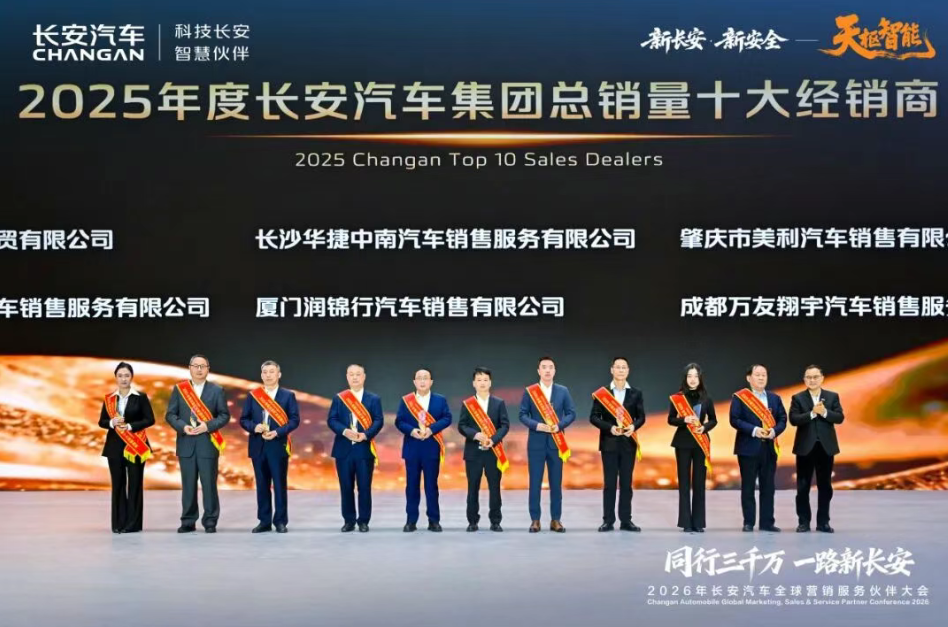
Image Source: Changan Automobile
In terms of sales channels, the dealer model continues to dominate, contributing 90.18% of revenue. Direct sales accounted for just 4.78%. This mix is consistent with traditional automakers.
At an earnings briefing on April 13, management addressed investor concerns over why profits did not keep pace with rising sales. They insisted that operating quality is steadily improving, pointing to sustained gains in both comprehensive gross margins and core business profitability.
Dual Push in New Energy and Overseas Markets
Changan's new energy division notched a breakthrough in 2025. Annual sales of new energy vehicles surpassed 1.11 million units, a 51.1% surge. Revenue in the sector jumped 36.3% to 80.276 billion yuan. The company has now solidified a three-brand NEV matrix comprising Changan NEVO, Deepal, and Avatr.
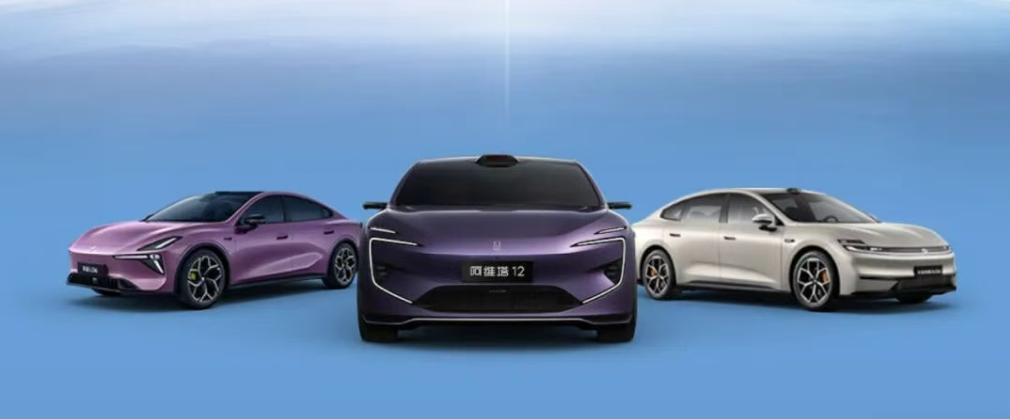
Image Source: Changan Automobile
Breaking it down: Changan NEVO sold over 410,000 units, up 42.6%. It primarily targets the 100,000 to 150,000 yuan price bracket. Deepal moved 325,000 units, a 44.4% increase, generating 50.245 billion yuan in revenue. Its net loss narrowed significantly to 899 million yuan from 1.571 billion yuan in 2024. Avatr, meanwhile, sold over 120,000 units, a roughly 63% jump. It has topped 10,000 monthly sales for ten straight months. However, as its impact on net profit remained below 10%, detailed financials were not disclosed separately. Combined, the three brands sold roughly 859,000 units. Both NEVO and Deepal narrowed their losses by between 40% and 50%.
In terms of pricing, the average selling price per vehicle slipped to roughly 53,400 yuan in 2025. This is down about 3,300 yuan from 56,700 yuan the previous year. Calculated against total sales revenue of 155.739 billion yuan and volume of 2.913 million units, this decline reflects the impact of lower-priced new energy vehicles on the overall average.
On the international front, overseas sales reached 637,000 units in 2025. This represents an 18.9% increase, accounting for 21.9% of total volume. Momentum picked up in March 2026. Monthly exports surpassed 100,000 for the first time to hit 104,100 units. Profitability is stronger abroad, too. The overseas business reported a gross margin of 19.49%, roughly 5 percentage points higher than domestic operations.
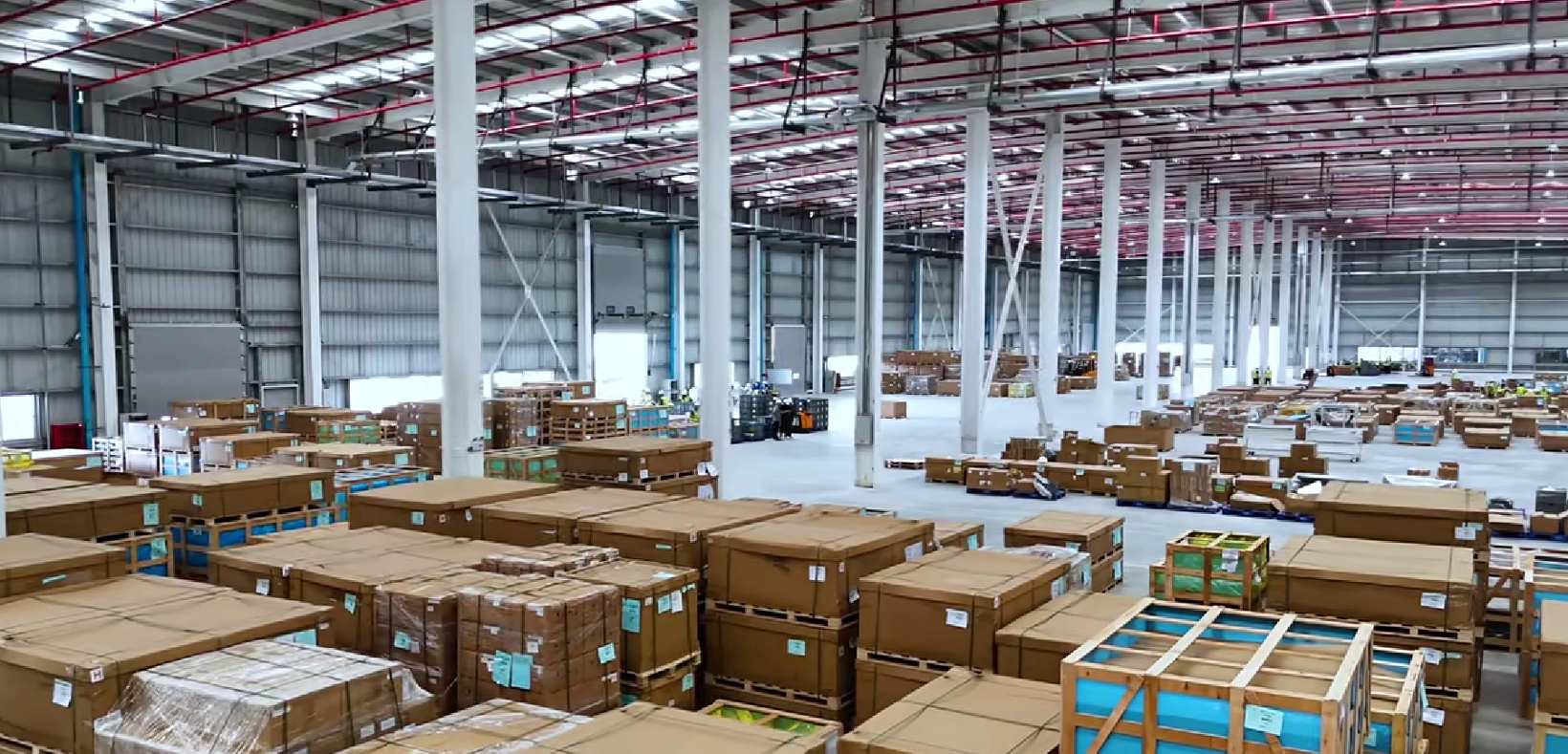
Image Source: Changan Automobile
Regionally, Southeast Asia and Latin America are anchoring growth. The Rayong plant in Thailand has launched production with an initial design capacity of 100,000 units. A new facility in Brazil with 60,000 units of capacity has also come online. In the Middle East and Africa, Changan ranked among the top three Chinese brands by sales in markets including Saudi Arabia and Egypt.
Looking ahead, Changan has set a sales target of 3.3 million units for 2026, including 1.4 million new energy vehicles. By 2030, the company aims to reach 5 million units in total sales. This comprises 4 million from proprietary brands and 1.5 million from overseas markets.
To hit these targets, Changan plans to invest 14.47 billion yuan in 2026. Of that, 4.47 billion yuan in fixed assets will go toward boosting R&D capabilities. Meanwhile, 10 billion yuan in long-term equity investment will fund smart infrastructure, overseas platforms, and emerging sectors like flying cars and humanoid robots. The company plans to launch 43 new models over the next three years. It aims for full market coverage across all categories by 2028.
On the technology front, Changan intends to maintain R&D spending above 5% of revenue annually throughout the 15th Five-Year Plan period. It will focus on breakthroughs in intelligent driving, AI cockpits, and next-generation batteries.
Regarding new energy, the company's proprietary "Golden Bell" battery brand continues to advance. Solid-state batteries are slated to complete vehicle verification in 2026. Gradual mass production is planned for 2027.
On the smart front, Deepal secured among the first batch of L3 autonomous driving access permits. In December 2025, it received the country's first official L3 license plate. By March 2026, it had obtained a license to test its self-developed L4 Robotaxi.
Furthermore, Changan is expanding into "pan-mobility" sectors. It established Changan Tianshu Intelligent Robotics in April 2026. It plans to achieve mass production of humanoid robots by 2028 and launch flying cars for commercial routes by 2030.


