



Gasgoo Munich- Changan Automobile released its 2025 annual performance report. Revenue increased 2.67% to approximately 164 billion yuan, while net profit attributable to shareholders fell 44.34% to 4.08 billion yuan. Excluding non-recurring items such as asset disposals and government subsidies, net profit rose 8.03% to 2.80 billion yuan, reflecting resilience in core operations.

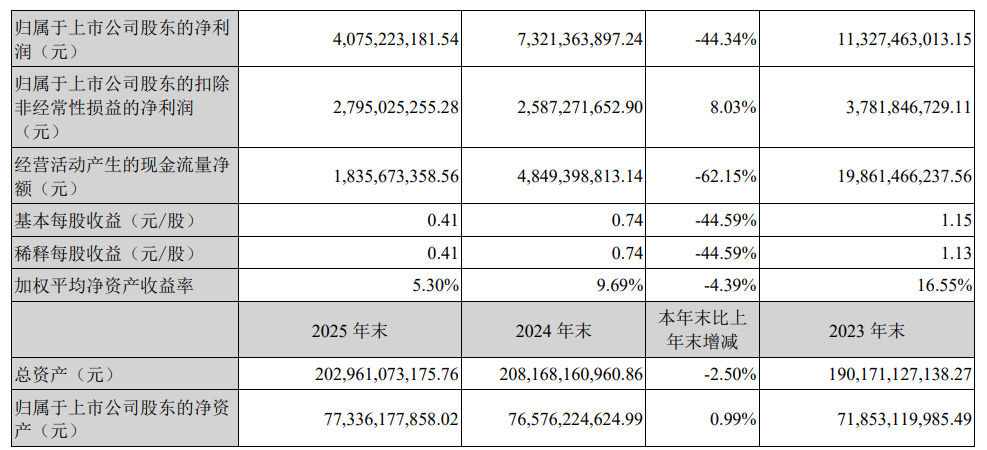
Image source: Screenshot of Changan Automobile's financial report
In terms of sales, Changan sold 2.91 million vehicles in 2025, an 8.5% increase and the highest figure in nine years. New energy vehicle sales exceeded 1.11 million, rising 51.1%, while overseas sales reached 637,000, up 18.9%. Both segments reached record levels.
The decline in net profit was primarily driven by a sharp decrease in non-recurring income. Total non-recurring gains fell to 1.28 billion yuan, significantly lower than the 4.73 billion yuan recorded in 2024. Specifically, income from asset disposals dropped to 103 million yuan from 2.47 billion yuan a year earlier, while government subsidies fell to 559 million yuan from 1.63 billion yuan.
Average selling prices also faced pressure. Based on sales revenue and volume, the average price per vehicle was approximately 53,400 yuan in 2025, a decrease of about 3,300 yuan from 56,700 yuan in 2024. Overseas markets faced similar challenges; overseas revenue increased 2.4% to 33.2 billion yuan, but gross margins fell 6.7 percentage points to 19.49%.
Among its new energy brands, Deepal generated 50.25 billion yuan in revenue, up 34.97%, while its net loss narrowed to 899 million yuan from 1.57 billion yuan in 2024. Avatr sold over 120,000 units, increasing approximately 63%, though the company did not disclose specific financial figures.
Looking ahead, Changan aims to achieve total sales of 5 million by 2030, with 4 million from its own brands. For 2026, it plans to invest 14.47 billion yuan to strengthen R&D capabilities, smart infrastructure, and overseas platforms, and to explore emerging fields such as flying cars and humanoid robots. In 2025, R&D spending increased 23.79% to 12.58 billion yuan.


