



Gasgoo Munich- The Taishan X8 recently entered its pre-launch phase, prompting Voyah Chairman Lu Fang to unveil a new concept: the "courtyard-grade SUV." The narrative is shifting from "moving your home into the car" to "installing a courtyard inside it." According to Voyah, this "courtyard-grade" designation follows the "622 courtyard-grade standard"—defined by 6.1 square meters of cabin space, a 2-meter fully flat bed, and two independent zero-gravity seats in the rear, all designed to maximize openness.
For years, the industry's "home on wheels" narrative has revolved around a core trio: a refrigerator, a large screen, and a plush sofa. Since Li Auto introduced this combination with the ONE, the fundamental definition of interior space has barely shifted. That may be about to change, however, as a wave of flagship models—like the Li Auto MEGA Home and Lynk & Co 900—roll out with factory-installed rotating seats.
Building a "Mobile Living Room"?
Rotating seats are hardly new technology. In the aftermarket, modification services have been available for years. Yet, models offering this feature straight from the factory remain few and far between.
In the domestic market, models confirmed to come with factory-installed rotating seats include the upcoming Luxeed V9, alongside the already-launched Li Auto MEGA Home, Lynk & Co 900, and ZEEKR MIX. Prices for these vehicles are largely concentrated above 250,000 yuan. Interest in rotating seats cooled after the debut of the Li Auto MEGA Home and Lynk & Co 900, but the impending launch of the Luxeed V9 has thrust the feature back into the spotlight.
According to public information, brands interpret this technology differently. The Li Auto MEGA Home comes standard with second-row zero-gravity rotating seats, offering three modes: a 45-degree welcome position, a 90-degree viewing mode, and a 180-degree face-to-face setup. Paired with air suspension and electric sliding doors, this significantly improves accessibility for the elderly and children.
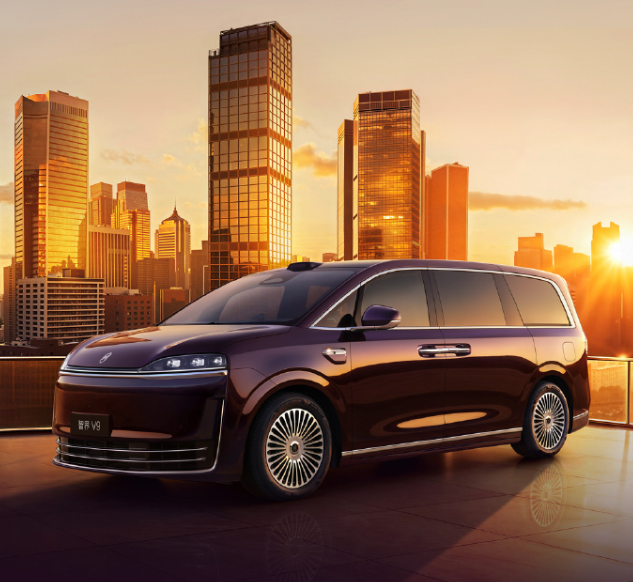
Image Source: Harmony lntelligent Mobility Alliance
ZEEKR MIX, meanwhile, employs flip-front seats and ultra-long slide rails to expand into outdoor and leisure scenarios. The upcoming Luxeed V9 positions rotating seats as a core selling point, covering scenarios ranging from welcoming guests and sightseeing to business meetings and sleeping modes. The Luxeed V9 also offers 45-, 90-, and 180-degree adjustments, corresponding to easy entry, in-car viewing, and face-to-face interaction between the second and third rows.
Brands are adopting distinct strategies. Li Auto prioritizes all-scenario family comfort by making rotation compatible with zero-gravity functionality. Lynk & Co 900 focuses on mechanism stability, equipping the second row with dual 180-degree electric rotating seats; the right side offers a zero-gravity seat as a separate configuration rather than an either-or choice. ZEEKR MIX targets younger users with 270-degree stepless electric rotation for the front passenger and driver, plus 2-meter ultra-long slide rails. Luxeed V9, on the other hand, uses multi-mode linkage to serve both business and family needs. These differences reflect not only brand positioning but also varying choices in technology pathways and cost control.
Bringing rotating seats to mass production relies on three key pillars. First, lightweight, high-strength rotating mechanisms using aviation-grade aluminum and redundant rail designs ensure durability. Second, compact motors and control systems deliver smooth, quiet operation, completing a rotation in about five seconds. Third, comprehensive safety logic ensures the seats activate only when parked and lock automatically while driving, using obstacle sensing to mitigate risks. These technical breakthroughs allow rotating seats to shed the risks associated with aftermarket modifications, meeting factory standards for safety and quality.
Beyond models already launched or imminent, reports suggest NIO's all-new ES9 and the next-generation Li Auto L9 are also poised to introduce rotating seats. The NIO ES9 boasts a length approaching 5.4 meters and a wheelbase reaching 3.25 meters—dimensions that actually exceed those of the Li Auto MEGA.
Driven by Intensifying Competition
The rapid proliferation of rotating seats is driven by the intense pressure of competition in the high-end market. As brands like NIO, Li Auto, Lynk & Co, ZEEKR, and Harmony lntelligent Mobility Alliance double down on flagship models, user definitions of luxury continue to evolve; simply piling on high-end materials no longer guarantees a lasting edge. As a typical example of spatial innovation, rotating seats align perfectly with the high-end demand for quality, practicality, and personalization, quickly becoming a new battleground.
Industry trends suggest rotating seats are trickling down and becoming more widespread. The NIO ES9 and the next-gen Li Auto L9 are both rumored to adopt the feature, potentially making it a standard configuration for flagships priced above 300,000 yuan. Meanwhile, suppliers like Magna have introduced systems such as the "Magna flexible seat system," further lowering the technical barrier and pushing rotating seats from a high-end exclusive to a mainstream option.
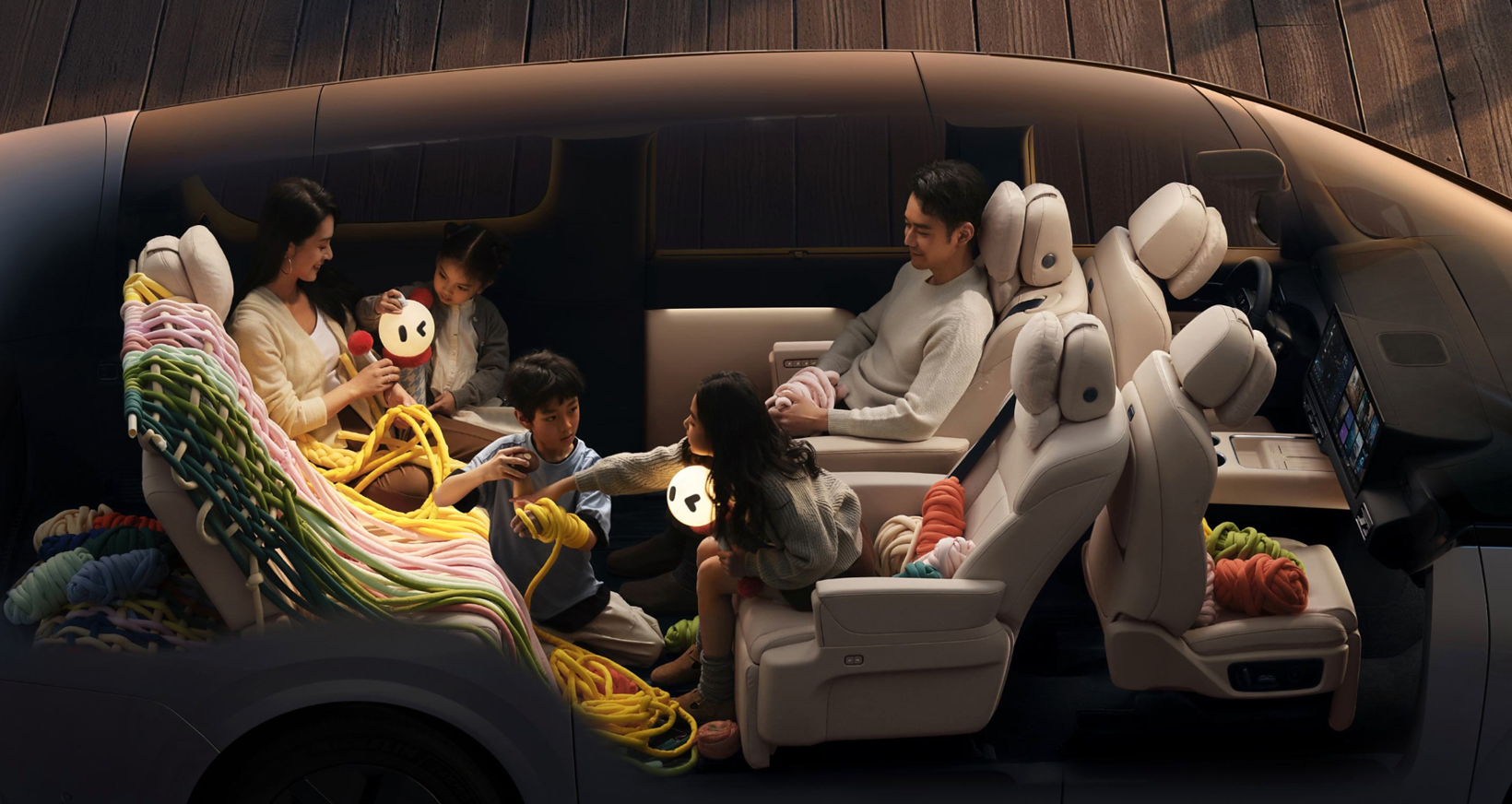
Image Source: Li Auto
Whether rotating seats will transition from a novelty feature on a few models to a standard fixture in high-end vehicles remains to be seen. On one hand, the configuration undoubtedly expands how interior space is used, unlocking new possibilities within a few square meters of cabin.
On the other, many scenarios showcased in marketing materials—face-to-face meetings, in-car sightseeing, camping mode—still require time to prove their frequency of use in real-world conditions. Furthermore, rotating seats impose higher demands on vehicle layout, cost control, and supply chain integration, meaning not every automaker has the capacity or willingness to follow suit.
Moreover, safety and user experience remain long-term tests. The rotating mechanism adds complexity, raising the bar for durability, failure prevention, and crash protection. Adapting seatbelts, occupant restraint systems, and body rigidity for rotated positions requires continuous verification and optimization. Ultimately, details like scenario practicality, ease of operation, and quietness will determine whether this feature evolves from a selling point into a genuine necessity.
Yet, it is undeniable that many long-term visions of autonomous driving share a common premise: in the future, people will no longer need to keep their eyes on the road. When that time comes, a car's most important function will no longer be "driving," but rather "what people do inside the vehicle."
Viewed through this lens, rotating seats can be understood as the first step toward "in-car socialization" and "spatial reconstruction." If refrigerators, screens, and sofas solved the problem of comfort—making people more comfortable in a fixed position—then rotating seats attempt to solve the problem of how people actively utilize the interior space.
Currently, rotating seat products on the market remain largely in the phase of "showcasing imagination." Whether they gain true market acceptance depends on whether users can discover high-frequency, essential application scenarios in their daily lives. The answer lies not in manufacturers' marketing materials, but in consumers' everyday driving experiences.


