



Gasgoo Munich- EVE Energy released its 2025 annual report on March 27, revealing total revenue of 61.47 billion yuan, a 26.44% jump from the previous year. Net profit attributable to shareholders came in at 4.134 billion yuan, while adjusted profit—stripping out equity incentive costs—climbed 24.76% to 5.002 billion yuan. Non-recurring net profit rose 28.04% to 3.964 billion yuan after adjustments. Operating cash flow, meanwhile, surged 68.98% to 7.492 billion yuan, signaling steady improvement in operational quality.
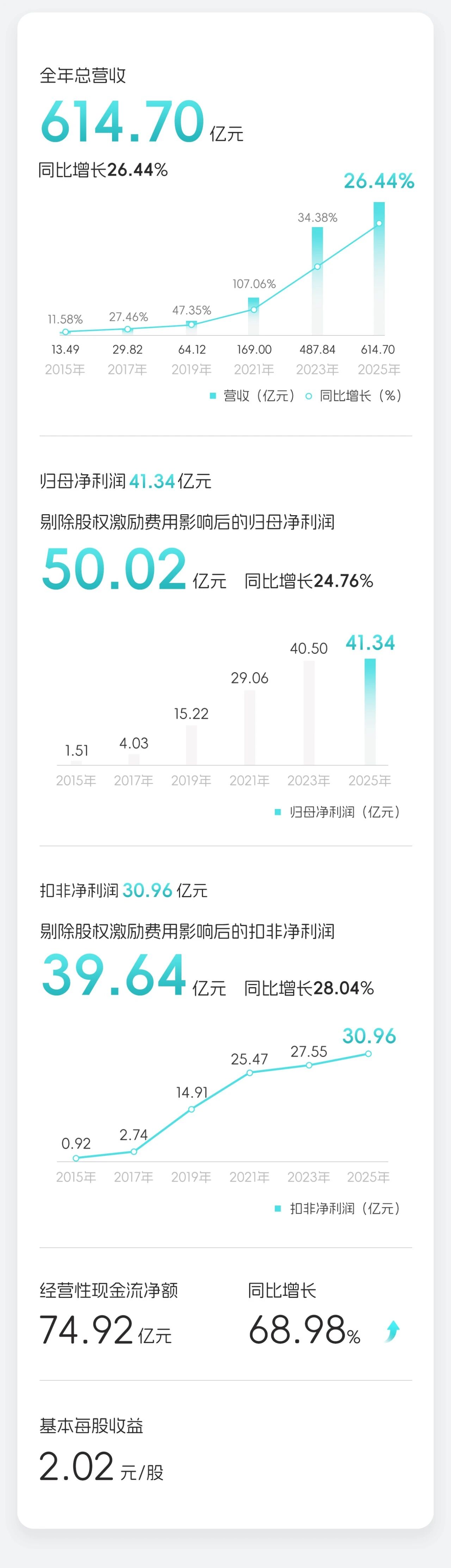
Image source: EVE Energy
Across its business lines, EVE Energy posted solid growth in consumer, power, and energy storage batteries. Power battery shipments jumped 65.56% to 50.15 GWh, while energy storage shipments climbed 40.84% to 71.05 GWh. By December 2025, cumulative global energy storage shipments had surpassed the 150 GWh milestone.
On the technology front, EVE Energy poured 3.435 billion yuan into R&D in 2025—a 12.27% increase—expanding its team to 6,597 personnel. The company notched breakthroughs across multiple battery categories: consumer batteries saw the launch of high-performance full-tab cylindrical cells and long-life medical batteries; power battery R&D produced large-format cylindrical cells with full-tab technology that significantly boost energy density and safety, alongside an open-source 3.0 battery for commercial vehicles designed for diverse operating conditions; and energy storage saw the debut of a highly integrated 6.9 MWh system.
EVE Energy also made significant strides in emerging sectors. Its "Longquan No. 2" 10 Ah all-solid-state battery achieves an energy density of 300 Wh/kg. Additionally, the company’s first sodium-ion battery energy storage system was officially connected to the grid. Its low-altitude economy batteries powered the maiden research flight of a domestic manned electric airship, while it established a full-chain technology layout for robot batteries.
Globally, EVE Energy is steadily advancing its overseas bases and partnerships. At its Malaysia plant, the first cylindrical cell rolled off the production line, an innovation center and joint university lab were unveiled, and the energy storage line is set to be fully operational by early 2026. In Hungary, mechanical and electrical equipment has arrived, with production slated to begin in 2027. Meanwhile, the U.S. ACT project and CLS global cooperation model are progressing smoothly.


