



In June 2026, a notable shift emerged in Brazil's passenger vehicle market.
According to Gasgoo Automotive Industry Database, 212,902 new passenger vehicles were registered in Brazil that month, up 33.8% year on year. Chinese brands accounted for 49,628 units of registrations, lifting their market share from 10.2% a year earlier to 23.3%. BYD ranked fourth among brands with 21,219 registrations, while the BYD Song family, Dolphin Mini and Dolphin all placed among the month's top 10 models across all powertrain types.

These monthly figures show that some Chinese brands and models have moved beyond attracting attention and into Brazilian consumers' actual purchase decisions. Registrations and market share, however, capture transactions in a particular period; they do not by themselves show that a brand has earned long-term trust. Once sales begin to rise, a harder question follows: are consumers simply trying a new product, or will they continue to choose, recommend and remember a particular brand after living with it over time?
During a recent visit to China, two General Motors South America executives spoke with Gasgoo. Rafael Santos, Vice President of Sales, After-Sales and Product Marketing at General Motors South America, discussed how reliability, total cost of ownership and after-sales support shape consumers' longer-term assessment of a vehicle. Gustavo Aguiar, Chief Marketing Officer at General Motors South America, focused on brand personality and why consumers choose one specific brand over another.
Their perspectives come from different sides of the business—sales and service on one hand, and brand marketing on the other—but together they point to a more complete chain: products can open a market, while long-term trust depends on the ownership experience, service capabilities and a clearly recognizable brand.
Product appeal opened the door
The growth of Chinese automakers in Brazil has coincided with a rising share of electrified vehicles in the country's passenger vehicle market. Gasgoo Automotive Industry Database show that battery electric vehicles, plug-in hybrid electric vehicles and hybrid electric vehicles together accounted for 25.2% of new passenger vehicle registrations in June 2026. Chinese brands have been active not only in the battery-electric segment, but also across a broader range of the market through products such as plug-in hybrids.
On his seventh visit to China, Santos was not surprised by the pace of change in the country's automotive industry. "What I see is that China is becoming more competitive year after year, not only in terms of products and manufacturing, but also in the technology embedded in vehicles," he said. "What impressed me most was the level of integration among the different technologies inside the cars."
Aguiar focused instead on how products are developed. In his observation, Chinese companies are more willing to develop and test products in real-world settings while gathering feedback. "You can test, learn and scale fast," he said.
One perspective emphasizes technology integration; the other, the way products are iterated. Together, they help explain how Chinese vehicles can continue to offer new experiences. But neither factor alone explains whether a brand can establish a lasting presence overseas. Features, design and the test-drive experience may influence a first purchase, but they cannot substitute for the years of ownership that follow.
Consumers are buying more than a car
When a new model enters the market, its styling, smart features and powertrain are among the qualities consumers notice first. Once the vehicle enters daily use, the criteria expand to reliability, ease of repair, running costs and resale value.
Because his remit spans sales, after-sales and product marketing, Santos tends to view consumer choice across the vehicle's full lifecycle. "I think consumers in my region look for affordability and reliability, and they look at the total cost of ownership," he said. "So it is not only the car, but also the after-sales service. The resale value of the car in our markets is still very important."
Together, these factors shape consumers' expectations of future cost and risk: whether a vehicle can be repaired promptly when problems arise, whether parts are readily available, and what the car may be worth on the used-vehicle market several years later. For a durable product such as a car, the purchase decision does not end at delivery.
An Ipsos analysis of social media conversations in Brazil about Chinese vehicles found that positive comments on innovation, design and product competitiveness coexisted with concerns about quality, battery durability, repair costs, parts availability, after-sales service and resale value.
This distinction matters: the Ipsos work was a social listening study, not a nationally representative consumer survey. It cannot be used to rank the factors Brazilian consumers consider when buying a car, nor can it establish the actual reliability or resale performance of Chinese vehicles. The more limited conclusion it supports is that, in the online discussions analyzed, long-term ownership issues are now appearing alongside new technologies and products.
Trust requires an operating model that can deliver
Once consumers begin weighing repairs, parts availability and resale value, an automaker's relationship with the market cannot end when the vehicle is sold.
"It is important not only to have the design and technology, but also a network that can provide after-sales services for customers," Santos said. In his view, the vehicle, after-sales service, financing and insurance should together form a complete package for the customer.
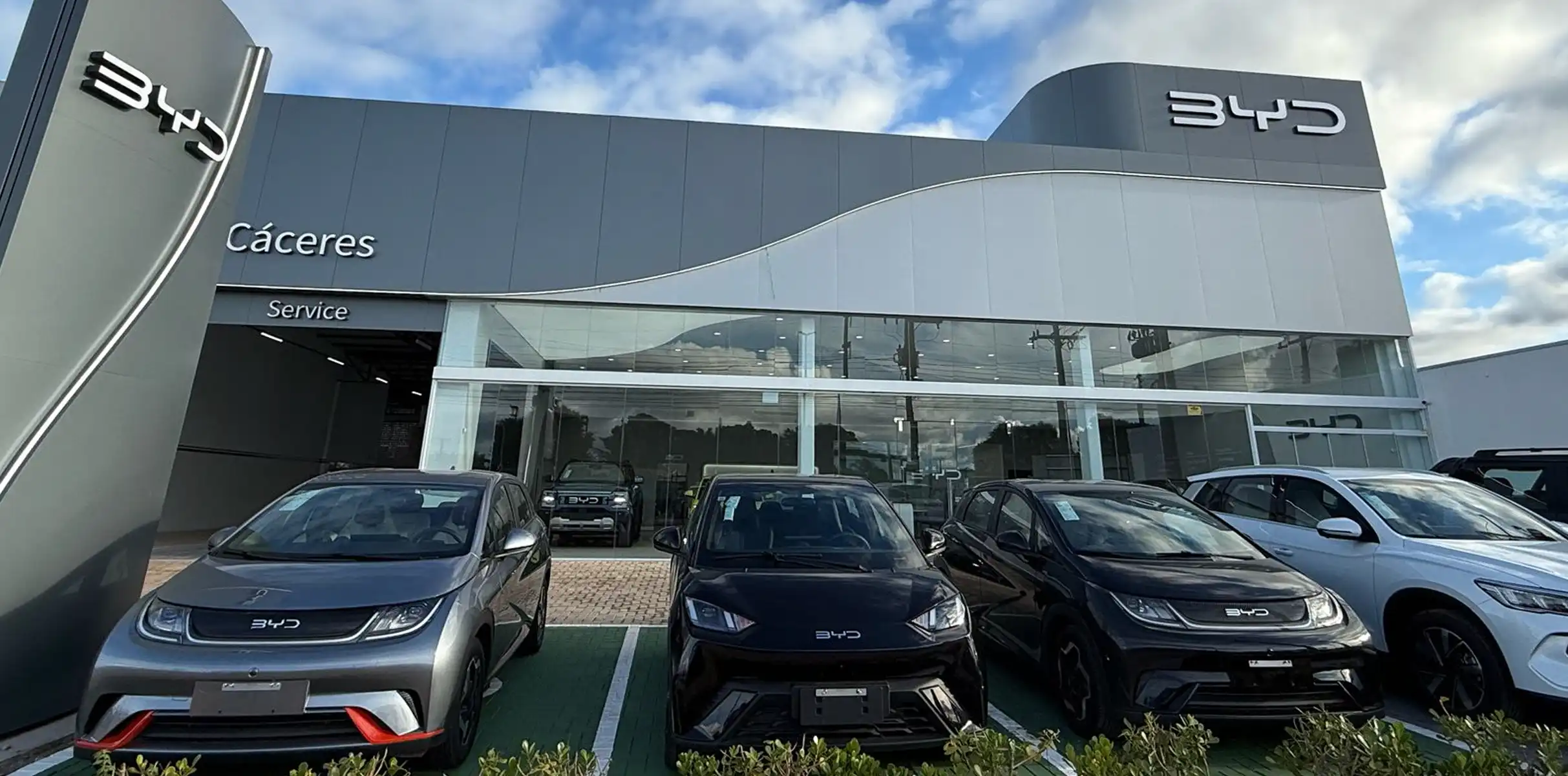
Representatives of BYD's dealer network in Brazil; image source: BYD Brasil
Some Chinese automakers have begun establishing local production or assembly operations in Brazil. Great Wall Motor opened its plant in the state of São Paulo in August 2025. According to a company press release, the plant has an annual production capacity of 50,000 vehicles.

GWM Brazilian Plant; image source: GWM
BYD has also been assembling vehicles in Camaçari, in the state of Bahia. A UOL report published on September 19, 2026, said the operation was still assembling vehicles locally from imported semi-knocked-down, or SKD, kits, with the introduction of locally sourced components still to come. In other words, "assembly in Brazil" and the development of a mature local supply chain remain two distinct stages.
Factories and assembly projects can signal a willingness to commit long-term assets. But local production is not a substitute for service outlets, parts inventory, staff training or repair efficiency. Whether local production improves the customer experience would still need to be tested against direct indicators such as service coverage, parts lead times, repair quality and customer satisfaction.
From "Chinese cars" to distinct brands
Even if an automaker can reduce uncertainty during the ownership phase, another question remains: as more Chinese brands enter Brazil, why should consumers choose one over another?
During the visit, Aguiar offered a personal observation from a marketing perspective. In his view, "Chinese cars" already exist as an umbrella category, yet consumers encountering some individual company or nameplate brands may still first think simply, "It is a Chinese car." No publicly available Brazilian consumer survey currently establishes that this perception is widespread, so the point should remain an interviewee's observation rather than be treated as a settled market conclusion.
Ipsos's social listening analysis offers a complementary perspective: among the relevant online discussions it examined, BYD was the most frequently recalled Chinese brand. This suggests, at a minimum, that some leading companies are beginning to establish identities beyond the broad "Chinese car" label. It does not, however, show whether Brazilian consumers can clearly distinguish among all the Chinese brands entering the market.
Aguiar believes the next step is for individual brands to develop more distinct identities. He framed the challenge in terms of a brand's personality and how it speaks to the consumer. A product may be excellent and meet a broad range of needs, in his view, but a brand must also communicate what it stands for, whom it is for and why it deserves to be remembered.

BYD Dolphin Mini; image source: BYD Brasil
Brand personality is not a separate story detached from products and services. Over a vehicle's long ownership cycle, quality, the repair process, dealer service, parts lead times and used-vehicle performance continually reshape how consumers understand a brand. A clear brand identity can help consumers associate those experiences with a particular name. Whether those experiences then lead to repeat purchases and recommendations would still need to be verified through data on customer satisfaction, brand trust and repurchase intent.
Asked how Brazilian consumers learn about overseas automotive brands, Aguiar said social media and user-generated content are playing a larger role, while the influence of traditional linear television is declining. This is his industry observation.
The available material does not establish that social media has replaced automotive media, dealers or in-person experiences, nor can platform audience figures be used to infer each channel's share of purchase decisions.
A more measured conclusion is that brand perceptions are no longer shaped by corporate advertising alone. Content, reviews and discussions posted by users about their real-world experiences also contribute to the way a brand is perceived. This is where the two executives' observations meet: Santos emphasizes reliability, total cost of ownership and the after-sales network—the factors that determine whether a brand can deliver on its promise. Aguiar emphasizes brand personality and consumer connection—the factors that determine whether those experiences are recognized and attributed to a specific brand.
For Chinese automakers entering Brazil, then, product, service and brand are not three separate tasks. The product determines whether consumers are willing to try a vehicle for the first time. After-sales support and the long-term ownership experience influence whether that trial develops into trust. A clear brand identity helps consumers remember who delivered that experience.
The June 2026 registration figures show that some Chinese brands have achieved measurable sales gains in Brazil. Publicly available material, however, still lacks comparable data on repurchase intent, brand trust and customer satisfaction. The figures therefore do not establish that long-term trust has already taken hold.
What is clear is that the competitive test has changed. Selling a vehicle shows that a product has captured a market opportunity at a given moment. Whether consumers still choose, recommend and remember the brand after living with the product is the next test of long-term operating capability.


