



Gasgoo Munich- On March 9, Qijing Auto—a new energy vehicle brand jointly developed by GAC Group and Huawei—revealed that its first production model will be called the GT7. Positioned as a new-generation intelligent shooting brake, the vehicle is scheduled to make its public debut on March 17.
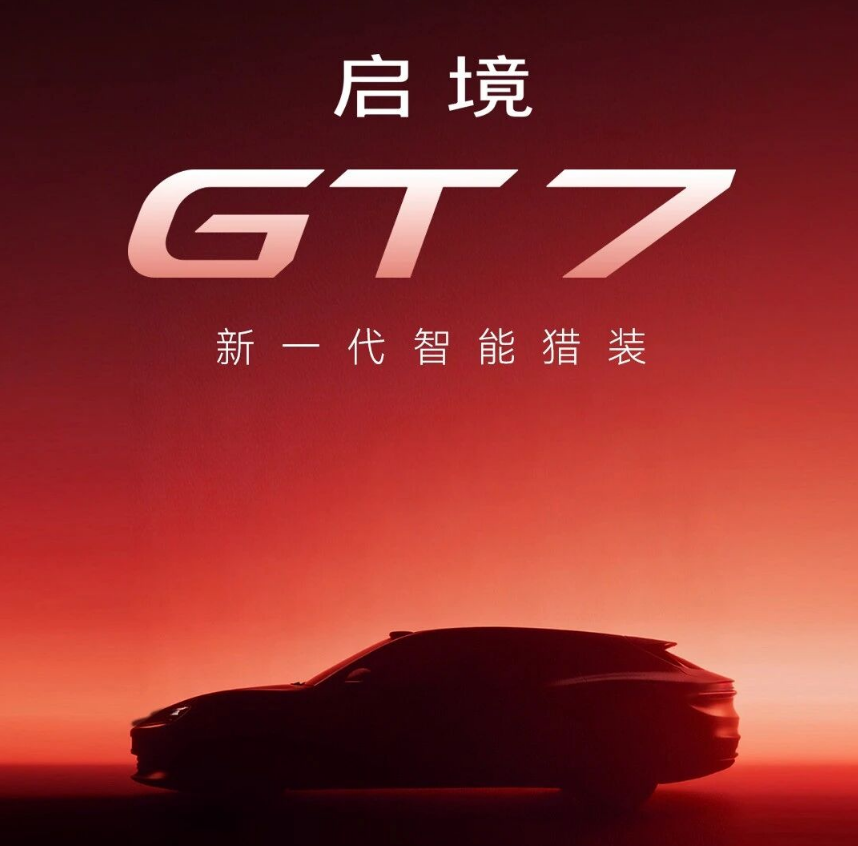
Image source: Qijing Auto
Preview images released by the company suggest the GT7 will adopt a sporty shooting-brake silhouette, blending the proportions of a coupe with the practicality of a wagon. As is common among many modern electric vehicles, the front fascia appears to feature a closed grille design paired with slim, elongated headlamps. Blue indicator lights associated with intelligent driving functions are also visible within the headlamp clusters and on the front fenders, signaling the vehicle's focus on advanced driver-assistance capabilities.
The GT7 is expected to integrate several of Huawei's latest automotive technologies. These include the company's newly introduced dual-optical-path 896-line LiDAR system, the XMC digital chassis platform, Huawei's HarmonySpace intelligent cockpit, and hardware designed to support Qiankun L3 conditional autonomous driving functions.
Huawei first showcased the 896-line LiDAR at its technology update event on March 4, describing it as the highest-resolution LiDAR currently intended for mass production. The sensor is also slated to appear in upcoming models such as the MAEXTRO S800 and the AITO M9.
The LiDAR uses a proprietary dual-optical-path architecture that combines wide-angle and telephoto receiving units within a single module. This configuration enables what Huawei describes as dual-focus imaging, designed to deliver significantly higher perception fidelity than conventional point-cloud-based sensing. According to the company, the system offers roughly four times the resolution of its previous 192-line LiDAR and generates a point-cloud density per frame comparable to seven times that of typical 128-line sensors.
One of the system's key advantages lies in its ability to detect small objects at longer distances. Huawei claims the sensor can reliably identify objects as small as 14 centimeters in height from up to 120 meters away, including road debris such as stones or fallen tires on highways. At night, the system is said to capture subtle movements—such as the wagging of a dog's tail—from more than 50 meters away. The LiDAR unit also features a strengthened optical window with improved durability, intended to enhance performance under challenging conditions such as rain, fog, or strong backlighting.
Beyond sensing hardware, the GT7 will also adopt Huawei's Qiankun L3 conditional autonomous driving hardware architecture, which incorporates multiple redundancy systems designed to support higher levels of automated driving. The vehicle will run on Huawei's Chitu intelligent platform alongside the XMC digital chassis engine. Suspension and chassis tuning have reportedly been carried out by engineers with experience working on performance vehicles from brands such as McLaren and Aston Martin, reflecting an effort to combine advanced intelligence with engaging driving dynamics.
The Qijing GT7 will be offered in both battery-electric and range-extended variants, targeting the premium segment around the 300,000-yuan price range. The model's styling and technology positioning appear aimed at younger buyers seeking a blend of performance, design, and advanced digital features.


