



Gasgoo Munich- What major events shaped the global automotive industry this week?
Passenger Car Retail Sales Drop 16% in First Three Weeks of March
On March 24, Gasgoo learned from the China Passenger Car Association (CPCA) that from March 1 to 22, automakers wholesaled 1.084 million passenger vehicles nationwide—a 14% year-on-year decline but a 62% jump from the previous month. Cumulative wholesale volumes reached 4.578 million, down 11% from last year. Retail sales over the same period hit 920,000 units, slipping 16% annually but climbing 19% month-on-month, bringing cumulative retail sales to 3.498 million—an 18% drop.
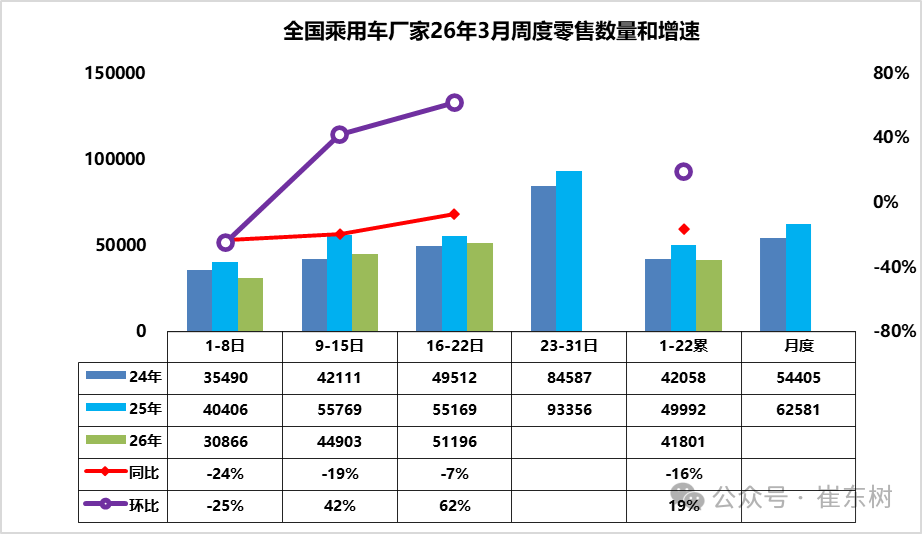
Image Source: CPCA
On the new energy front, manufacturers wholesaled 543,000 units in the first 22 days of March, down 15% year-on-year but up 71% month-on-month, with a cumulative total of 2.133 million—a 10% annual decline. Retail sales of new energy vehicles reached 495,000, a 17% drop from last year but a 66% rise from February, totaling 1.556 million units for the period, down 23%. The retail penetration rate for new energy vehicles stood at 53.9%, while the wholesale rate hit 50.1%.
A weekly breakdown reveals a gradual warming in retail trends during March's first three weeks. Average daily retail sales climbed from 31,000 to 45,000 and then 51,000 units, with the year-on-year decline narrowing from 24% to 7%. Month-on-month growth also swung from a 25% drop to a 62% surge. The wholesale side showed a similar recovery: average daily volumes rose from 31,000 to 58,000 and then 62,000, as the annual decrease shrank from 32% to 3%, and monthly growth reversed to a 126% jump.
Gasgoo Take: March saw the automotive market rebound under pressure with divergent performance. As the new energy penetration rate breached the 50% mark, the industry's structural transformation became increasingly pronounced.
Report: Sony-Honda Joint Venture Considers Halting EV Development
According to a March 25 report by Nikkei, Sony Group and Honda Motor are considering suspending development of their jointly developed electric vehicle, the AFEELA.
Honda, responsible for production at the Sony Honda Mobility Inc. joint venture, has adjusted its electric vehicle strategy, making it difficult for the collaboration to proceed as planned.
On March 12, Honda announced it would cancel three electric models originally planned for development and launch in North America. The strategic review is expected to generate total costs and losses of 2.5 trillion yen (approximately $157 billion). Honda now forecasts a net loss of between 420 billion yen and 690 billion yen for fiscal 2025, a sharp reversal from its previous projection of a 300 billion yen profit.
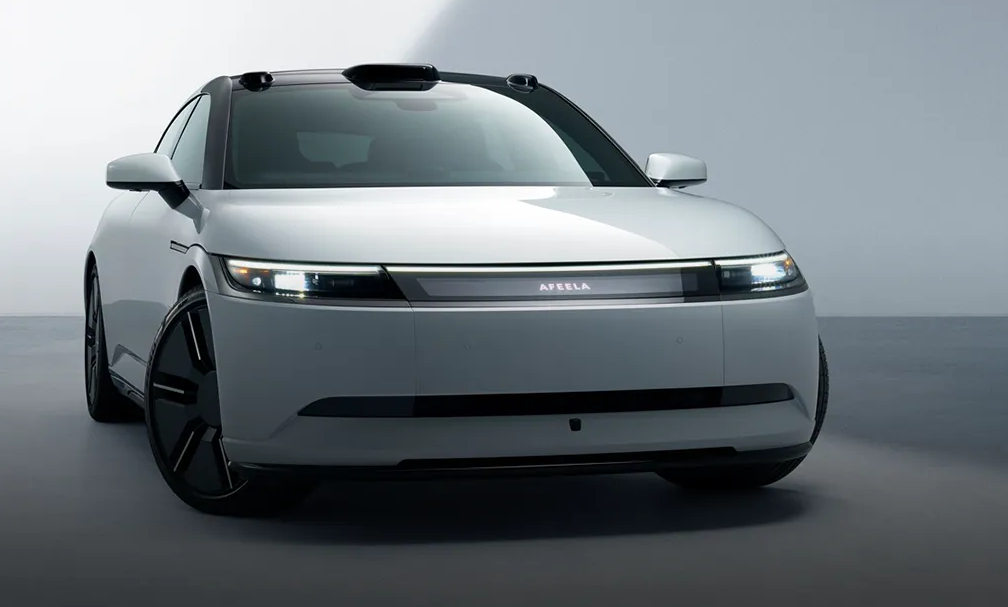
AFEELA 1; Image Source: Sony Honda Mobility
Established in 2022, Sony Honda Mobility set out to redefine the concept of the car, transforming travel time into an experience for enjoying entertainment content like anime and video games.
However, losses have widened year by year since its inception. As of June 30 last year, the company disclosed that its annual operating loss for the fiscal year ending in March had doubled to 52 billion yen ($362 million), up from 20.5 billion yen in the previous fiscal year.
Industry analysts have noted that developing new cars requires massive investment—including prototyping and R&D—while luxury models typically have limited sales volumes, posing a challenge to Sony Honda Mobility's future profitability. Although the company plans to recoup costs through premium pricing, that may not fully cover expenses.
At last year's Consumer Electronics Show, Sony Honda Mobility unveiled its first model under the AFEELA brand, the AFEELA 1. The vehicle comes in two configurations with a starting price of $89,900, including a three-year free subscription to select features and services.
On January 2 this year, the company announced that trial production of the AFEELA 1 had begun at Honda's East Liberty Auto Plant in Ohio. However, exact timelines for mass production and delivery have not been released. Honda's strategic review casts a shadow over the new car's market launch.
Gasgoo Take: The potential pause in AFEELA's development underscores the imbalance between high investment and low returns in cross-sector EV manufacturing, compounded by Honda's contraction of its electrification strategy.
GAC Group Starts Production of AION UT at Magna's Austria Plant
On March 26, Gasgoo learned from Magna that the GAC AION UT officially rolled off the production line at Magna's Graz plant in Austria. This marks the second model from GAC to be produced at the facility following the AION V, signaling a deepening of local production cooperation between GAC and Magna in Europe and adding new momentum to GAC's expansion in the European market.
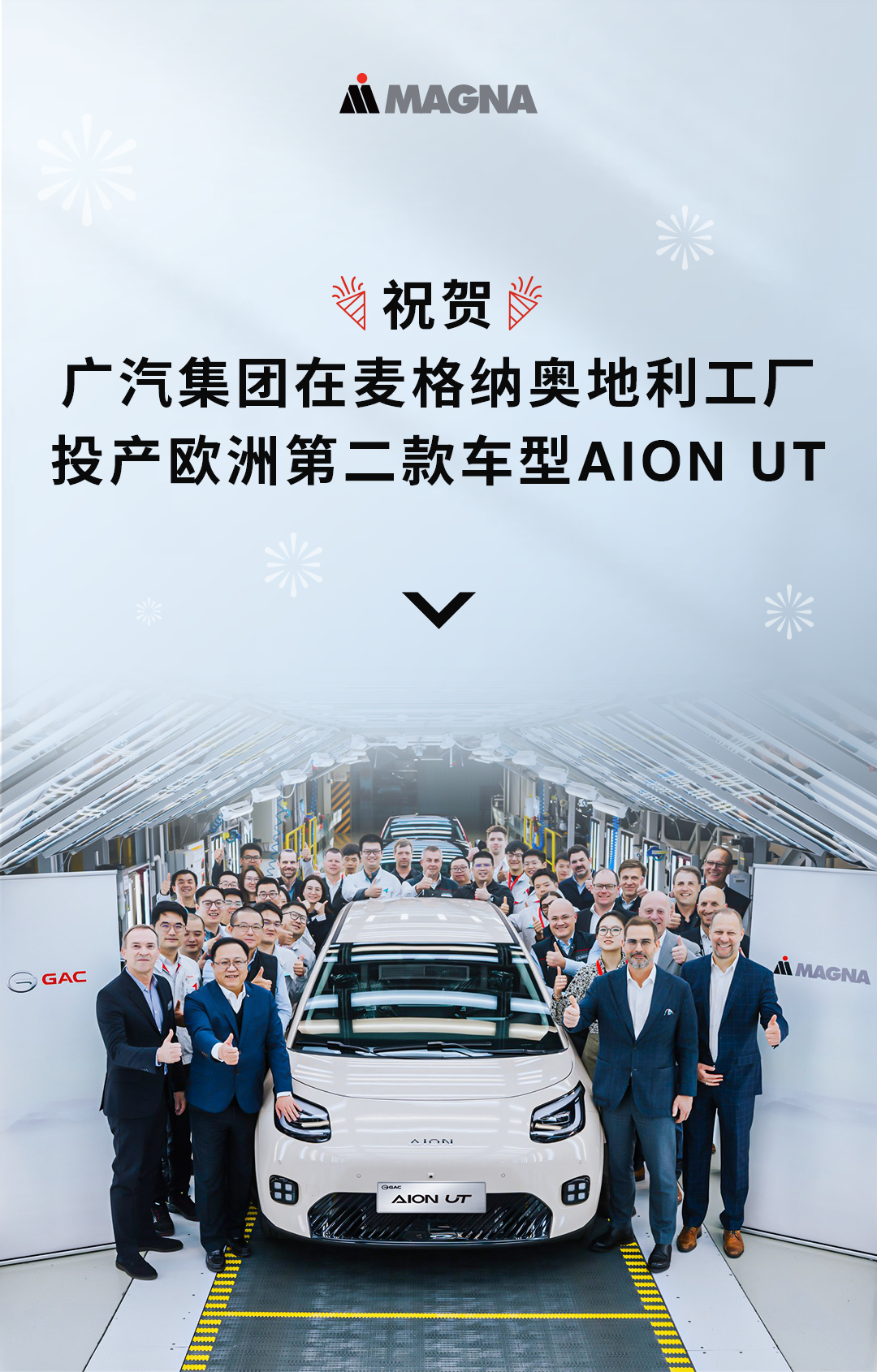
Image Source: Magna
On November 21, 2025, GAC Group and Magna jointly announced their collaboration on vehicle production in Europe. This move is a key step for GAC to scale up local production and accelerate its electrification strategy in the region, while simultaneously expanding its production, supply chain, and sales operations.
According to official sources, GAC's electric SUV model, the AION V, had already started mass production at Magna's Graz plant at that time.
Notably, on September 15, 2025, Magna announced that Chinese smart EV maker XPENG had selected its Graz plant to assemble two new models, with mass production set to begin in the third quarter of 2025. This marked the first time the factory undertook complete vehicle assembly for a Chinese OEM.
Gasgoo Take: The production of the GAC AION UT at Magna's Austrian plant represents an advancement in the localization of Chinese automakers going global, as well as a pragmatic choice to leverage mature supply chains and reduce overseas layout costs.
Aptiv's Smart Automotive Electronics Factory Project Settles in Jiaxing
On March 23, Aptiv's smart automotive electronics factory project was officially signed and settled in the Jiaxing National High-Tech Zone, with a planned total investment of 5 billion yuan. This signing marks Aptiv's second major investment in the zone since 2018, demonstrating the company's firm confidence in its future layout and roots in Jiaxing.
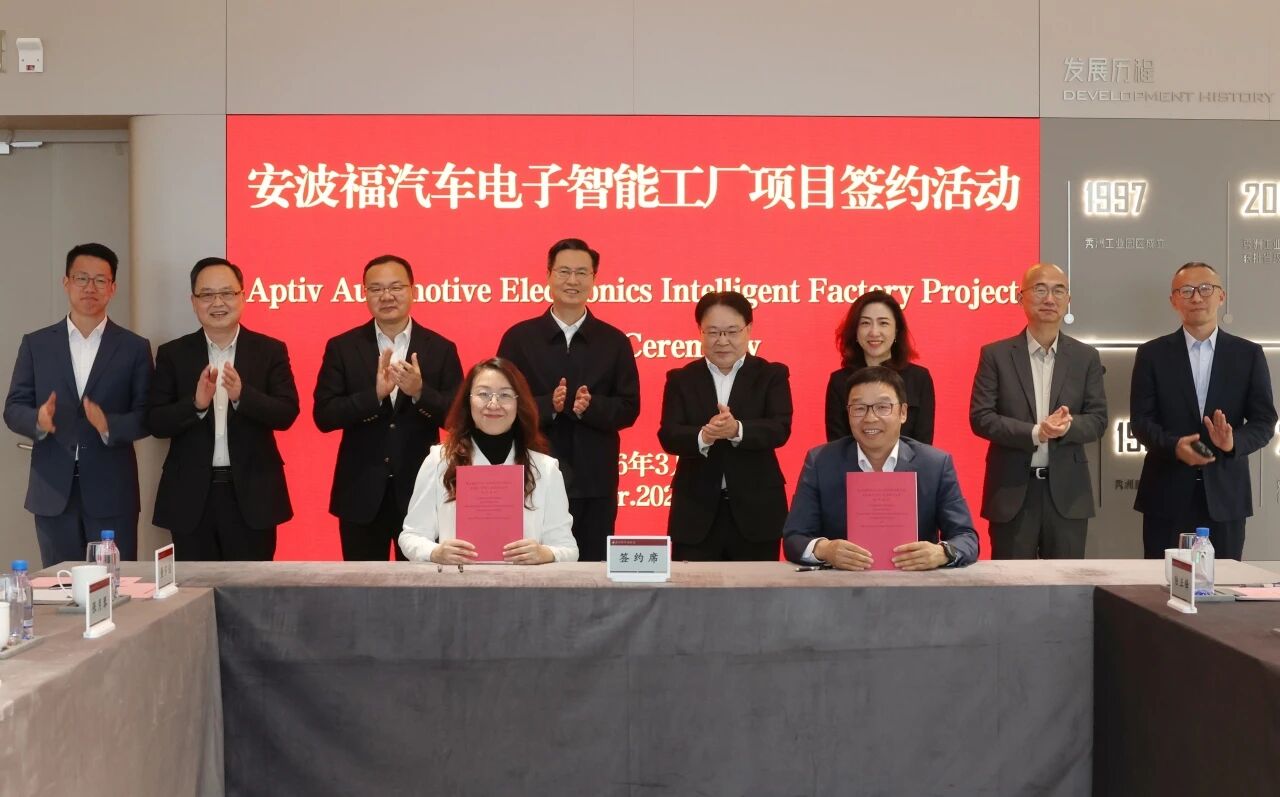
Image Source: Jiaxing Release
The first phase of the project will build a new smart factory in the Jiaxing High-Tech Zone, focusing on the R&D, production, and sales of smart cockpit products, assisted driving systems, and supporting sensors. Production is slated to officially begin in the third quarter of 2027, precisely targeting the core technology needs of smart vehicles.
The automotive parts industry in the Jiaxing National High-Tech Zone is a key pillar for building a modern industrial cluster. It has already gathered over 80 Fortune 500 companies and industry leaders, forming a pattern characterized by high-end leadership, complete chains, and a superior ecosystem. Aptiv's new project will further refine the regional smart automotive supply chain ecosystem, facilitating rapid upstream and downstream matching and enhancing the core competitiveness of the industrial cluster.
Gasgoo Take: Aptiv's new factory in Jiaxing is a strategic move by a global parts giant to bind itself to China's smart vehicle track, strengthening core competitiveness through localized intelligent manufacturing.
ZF Hints at Further Asset Sales After Spinning Off Wind Power Division
According to foreign media reports, automotive supplier ZF Group has hinted it may divest more businesses to reduce its net debt of 10.2 billion euros (approximately $117 billion).
ZF has spun off its wind power division into an independent subsidiary and stated on March 19 that this move opens up new "strategic options" for the business. The company is already advancing an asset sale plan, having agreed in December to sell its driver assistance business to Harman International, a unit of Samsung Electronics, for 1.5 billion euros.
ZF expects demand to remain sluggish through 2026, with revenue holding steady at just over 38 billion euros. To alleviate pressure from debt and refinancing costs, the company is pushing a restructuring plan that includes cutting up to 14,000 jobs in Germany by the end of 2028.
As the electrification transition lags expectations, ZF has paused several electric mobility projects and booked 1.6 billion euros in one-time charges for fiscal 2025. Currently, the company is pinning its hopes on stronger demand for internal combustion engine and hybrid powertrains, while also monitoring potential moves by the EU to ease restrictions on internal combustion engines.
Gasgoo Take: ZF's asset divestments and job cuts are strategic adjustments to optimize its business structure and focus on core areas under cost pressure, aiming to build momentum for adapting to the industry's electrification shift.
Minth Group's 2025 Net Profit Growth Outpaces Revenue Growth
On March 24, Gasgoo learned that Minth Group released its full-year 2025 performance report. Both revenue and profit hit record highs, with net profit growth outpacing revenue growth. Core indicators such as cash flow and shareholder returns saw significant optimization, highlighting the effectiveness of its global layout and positioning in the automotive electrification track.
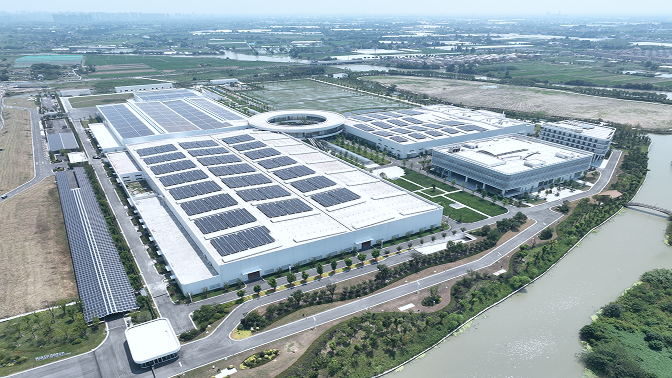
Image Source: Minth Group
Financial data shows that in 2025, Minth Group achieved revenue of 25.737 billion yuan, up 11.2% from 23.147 billion yuan in 2024. Net profit reached 2.692 billion yuan, a 16.1% increase, lifting the net profit margin from 10.0% to 10.5%—a 50-basis-point gain year-on-year. Operating profit rose 9.8% to 2.815 billion yuan, reflecting sustained strengthening of profitability. Although gross margin dipped slightly from 28.9% to 28% due to industry factors, overall profit quality remained high.
On the cash flow front, operating cash flow continued to improve. Combined with rational investment in emerging sectors, free cash flow saw explosive growth in 2025, reaching 2.703 billion yuan—a 98.3% surge from 1.363 billion yuan in 2024. Capital expenditure stood at 2.21 billion yuan, up 15.6%, allowing for precise layout in core businesses while reducing the debt-to-asset ratio from 24.3% to 21.2%, a drop of 3.1 percentage points, signaling a more robust financial structure.
Regarding shareholder returns, Minth Group significantly increased its dividend payout ratio from 20% in 2024 to 30%, a 10-percentage-point rise. The proposed final dividend is 0.764 Hong Kong dollars per share, up 75.6% from 0.435 Hong Kong dollars in 2024, delivering tangible value to shareholders.
Gasgoo Take: Minth Group's 2025 net profit growth outpacing revenue validates the effectiveness of auto parts companies' layouts in the electrification sector, with profitability quality and financial stability providing a dual support system.
Autoliv and ChuNeng Auto Form Strategic Partnership
On March 26, Gasgoo learned from Autoliv that it signed a strategic cooperation agreement with Wuhan Jiangxia ChuNeng Auto Technology R&D Co., Ltd. (hereinafter "ChuNeng Auto") in Xiaogan. Based on principles of equality, voluntariness, and mutual benefit, the two parties will engage in multi-dimensional collaboration around product development, manufacturing synergy, technological innovation, and market expansion.
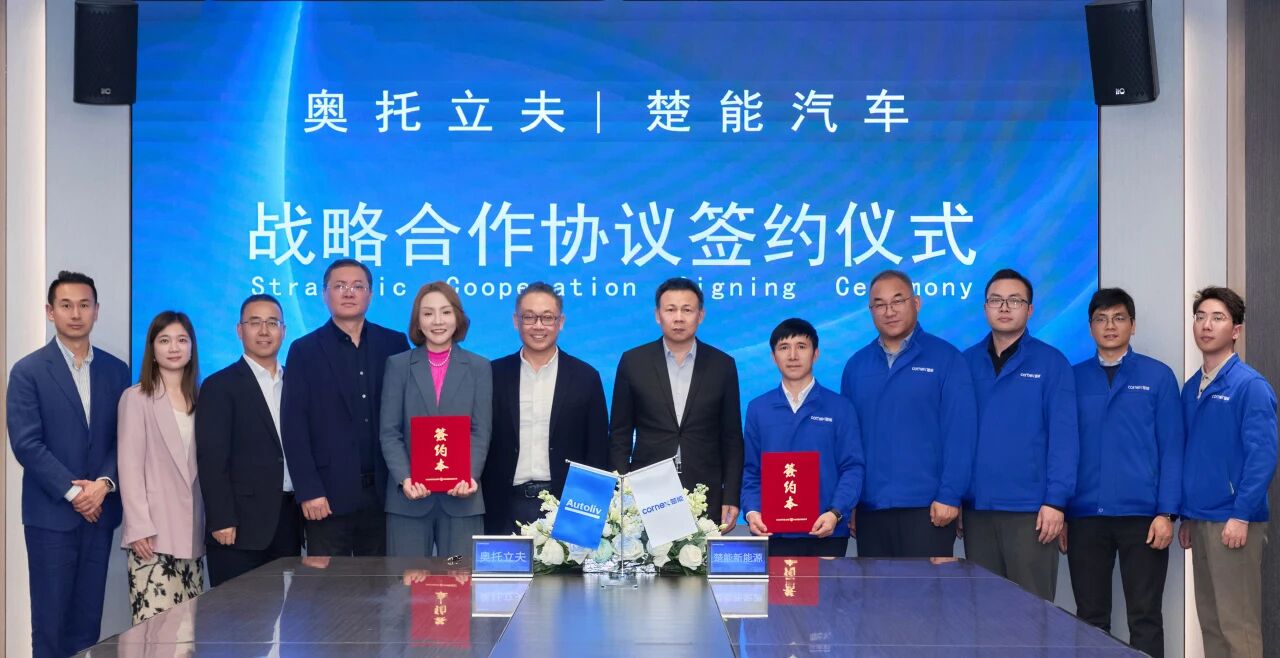
Image Source: Autoliv
Dai Deming, Chairman of ChuNeng Auto, stated that the automotive industry is undergoing profound change, with information penetration and market penetration rapidly reshaping the supply chain landscape. Relying on the Chinese market and manufacturing advantages, ChuNeng Auto possesses full-chain integration and vertical integration capabilities. Through this partnership, both sides will promote ecological linkage for value co-creation, enhance supply chain resilience, and provide consumers with more accessible, high-quality safety products and services.
Sun Yi, President of Autoliv China, noted that both sides share highly aligned philosophies. They will explore innovative paths around technical synergy and product upgrades, empowering each other in co-creation and win-win scenarios to "make safety a right," allowing more users to share in accessible mobility safety.
The two parties possess high relevance and complementarity in the industrial chain. By integrating their respective advantages in safety systems and complete vehicle integration, they will further strengthen the synergy efficiency from R&D to mass production, driving high-quality development in the automotive safety sector.
Gasgoo Take: The strategic partnership between Autoliv and ChuNeng Auto is a win-win layout where a global safety parts giant binds itself to a local OEM, achieving supply chain complementarity and strengthening development resilience.


