



Gasgoo Munich- Geely Automobile Holdings posted sales of 235,164 passenger vehicles in April 2026, climbing from both the previous month and the same period last year.
By brand, Geely moved 180,622 units, while Lynk & Co and Zeekr contributed 22,755 and 31,787 units, respectively. New energy vehicle (NEV) sales across these marques totaled 135,591 — an 8.0% annual jump and a 6.5% monthly gain. That pushed the NEV penetration rate to 57.7%, keeping it above the 50% threshold for a third straight month.
Overseas, exports surged 245% year-on-year to 83,186 units in April. This marks the fourth consecutive month of doubling export volumes, with overseas sales now accounting for 35.4% of the total.
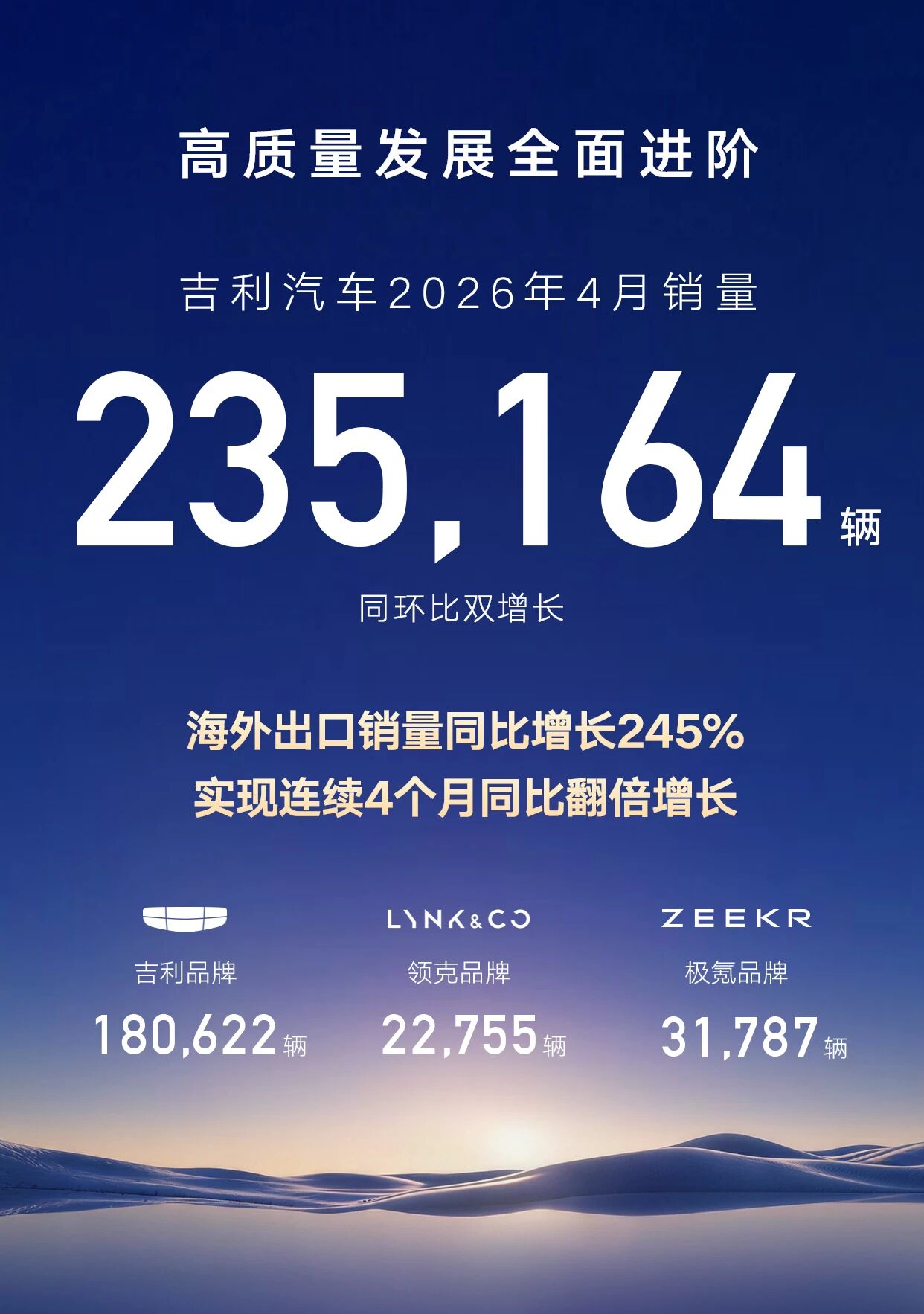
Image Source: Geely
Brand Matrix Synergies Continue to Deliver
Anchored by its "One Geely" strategy, the company has built a comprehensive brand portfolio spanning mainstream, premium, and luxury segments, optimizing its product structure.
ZEEKR delivered 31,787 vehicles in April — a 132% year-on-year surge and an 8% monthly increase — setting another record high. Global cumulative deliveries surpassed 750,000 units by the end of April, with an average transaction price approaching 350,000 yuan.
The ZEEKR 9X has held the title of best-selling large SUV in the 500,000-yuan class for five straight months, with cumulative deliveries topping 50,000 units. Meanwhile, the ZEEKR 8X secured nearly 3,500 deliveries within 13 days of launch and secured 10,000 firm orders in just 29 minutes; it debuts China’s first cabin-driving fusion super-intelligent agent, "Super Eva," along with the G-ASD 4.0 driver-assistance system. The refreshed ZEEKR 009 opened for pre-sale at the Beijing Auto Show, while the ZEEKR 007, 007 GT, and a 5th Anniversary Edition of the ZEEKR 001 were launched in April. ZEEKR plans to take the 9X overseas in the third quarter of 2026, targeting the Middle East, Central Asia, and Europe.
Lynk & Co sold 22,755 vehicles in April, with new energy models accounting for 12,533 units — or 55.1% of the mix. The Lynk & Co 900 flagship five-seater launched on April 27 with a limited-time starting price of 254,800 yuan, pairing with the six-seater version to form a flagship SUV duo. Pre-sales also began for the Lynk & Co 10+ and Lynk & Co 10, starting at 209,800 yuan, ahead of their official launch in May. Additionally, the brand’s first GT concept car, "Time to Shine," made its global debut at the Beijing Auto Show.
The Geely Galaxy brand moved 91,001 units in April, a 10.0% monthly increase. By model, the Geely Xingyuan contributed 41,938 sales, while the Galaxy Starship 7 EM-i sold 17,765 units, continuing to lead the A-class hybrid SUV market. The Galaxy E5 added 8,053 units.
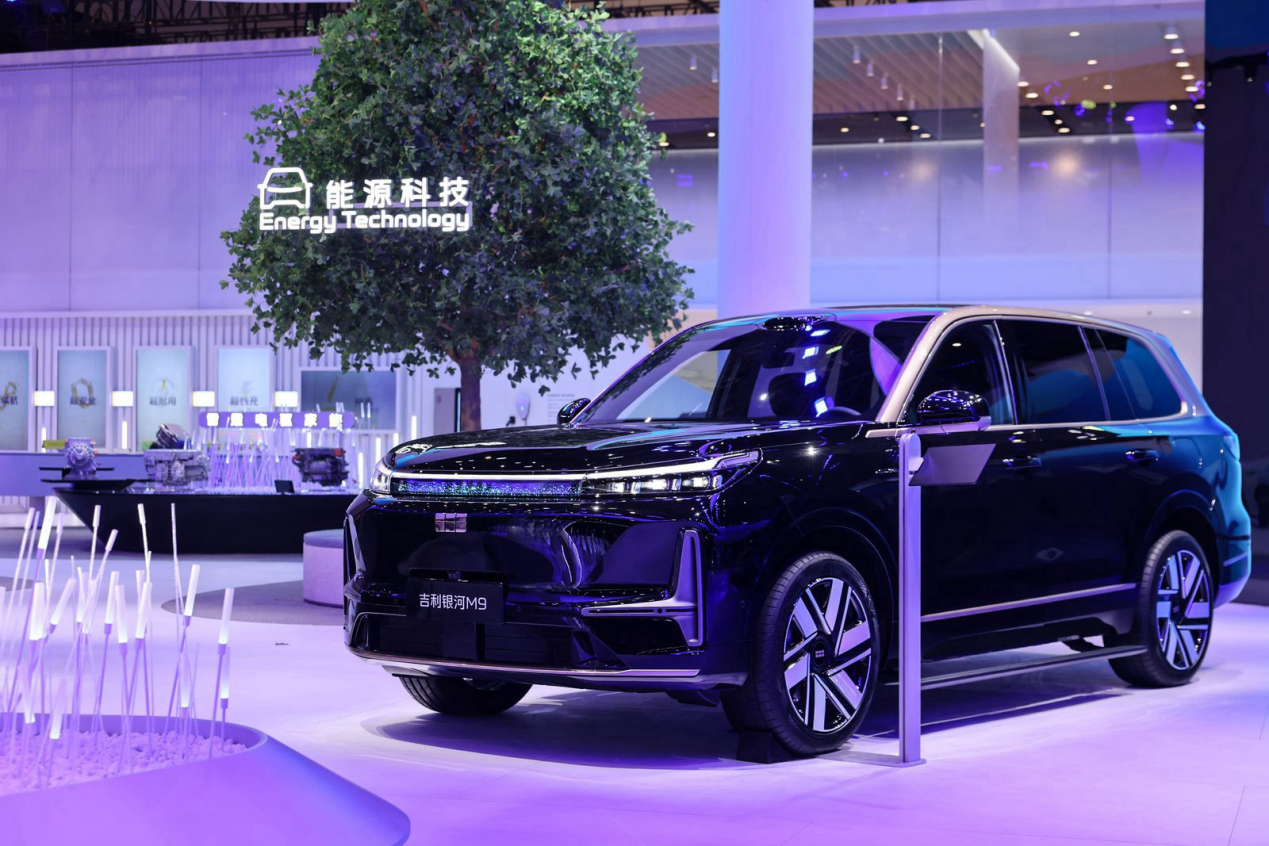
Image Source: Geely
On April 22, the Galaxy A7 EV and the 2026 Galaxy A7 EM launched with limited-time starting prices of 102,800 yuan and 89,800 yuan, respectively. The Galaxy M7 Voyager followed on April 28, priced between 109,800 yuan and 137,800 yuan; it features 225 kilometers of pure-electric range and is built on the GEA Evo architecture, featuring the debut of the Shield Gold Brick battery, Leishen AI Hybrid 2.0, Galaxy Flyme Auto 2 cockpit, and the Qianli Haohan H3 solution. At the same time, the Galaxy M9 Black Gold Smart Shine Edition was released at 259,800 yuan, equipped with a Thor-U chip (700 TOPS) and marking the first Galaxy model to feature the Qianli Haohan H7 solution. The second-generation Galaxy Light concept car also premiered at the Beijing Auto Show.
The Geely China Star series recorded 89,621 sales in April. The high-end lineup — comprising the Xingyue L, Xingrui, and Xingrui L — contributed 26,795 units (including exports), while the Boyue family added 20,175 units (including exports). The Bin series and Emgrand family both maintained monthly sales above 20,000. On April 3, the fourth-generation Boyue L "Little Blue Light" edition launched at a limited-time price of 119,900 yuan, making it the only internal combustion SUV under 150,000 yuan to feature the Qianli Haohan H3 solution. Geely unveiled its i-HEV intelligent hybrid technology on April 13, featuring a thermal efficiency of 48.41% and a combined fuel consumption of 2.22L/100km (based on Emgrand i-HEV test data). The Xingrui and Xingyue L i-HEV models then launched on April 29 with a starting price of 96,700 yuan.
A source within Geely Automobile Group revealed that the i-HEV technology will first be integrated into two or three models in the China Star series, with an international rollout planned for the fourth quarter to replace traditional internal combustion vehicles in overseas markets.
Overseas Exports Exceed 80,000 for Second Consecutive Month
Even as domestic growth remains steady, Geely Auto’s overseas business is maintaining a rapid pace of expansion.
In April, export sales reached 83,186 units, with new energy vehicles accounting for 48,901 units — or 58.8% of the total. Geely has upgraded its market strategy from the original plan of "three 150,000-unit and two 100,000-unit markets" to a broader target: targeting three 200,000-unit markets (Europe, Latin America/Africa, and ASEAN) and two 100,000 to 150,000-unit markets (Eastern Europe and the Middle East/Asia-Pacific). The company now covers over 100 countries and regions with more than 1,900 sales and service outlets, serving 20 million users globally.
Geely officially entered the French market in April, introducing the Galaxy E5 and Galaxy Starship 7 EM-i. Dealer agreements were signed in Portugal and Austria, with the first models scheduled to launch in the second quarter of 2026. The Lynk & Co 900 landed in Egypt, completing its initial deliveries, while four ZEEKR models entered the French market.
On the production front, the BAMC plant in Egypt began producing the Coolray and Emgrand, while the Indonesian factory achieved KD (knock-down) production of models like the Geely EX5 EM-i. In Kazakhstan, a "dual general agent, dual factory, dual energy" model has been established. Meanwhile, a joint venture with Renault in Brazil involves an investment of 3.8 billion reais, with localized production set to begin in the second half of 2026.
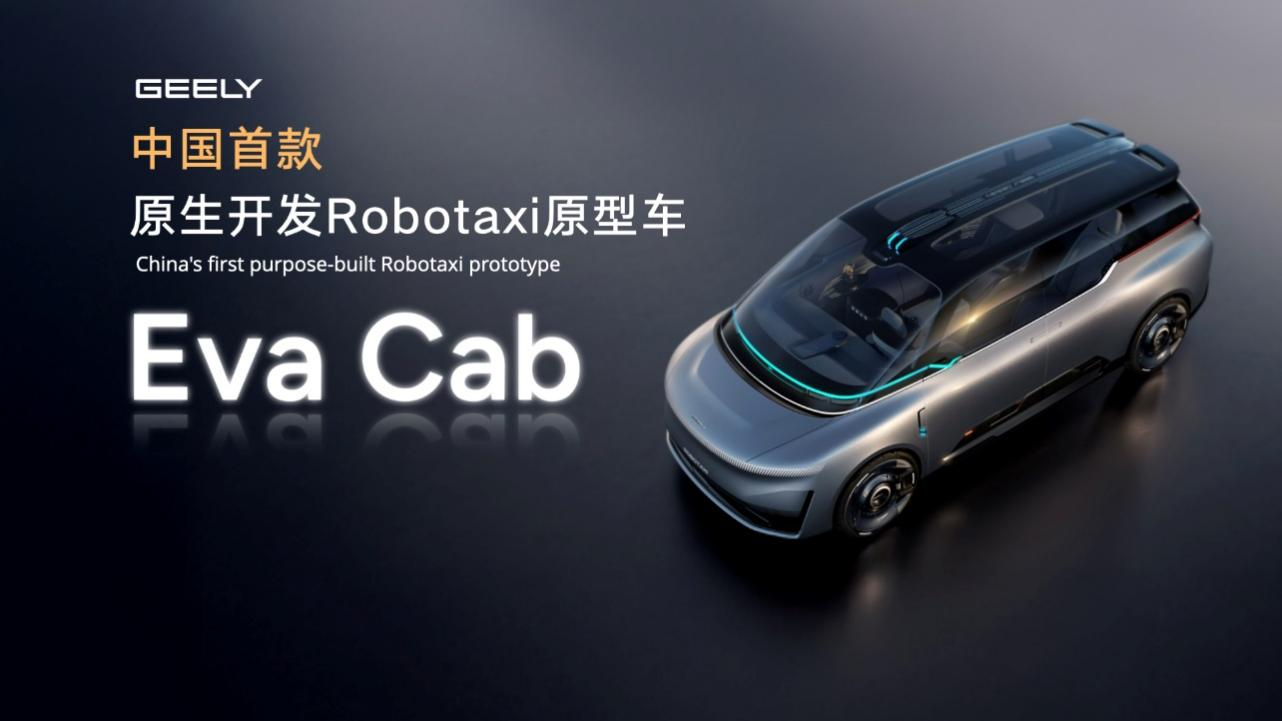
Image Source: Geely
Technologically, the Eva Cab Robotaxi prototype, unveiled at the Beijing Auto Show, is built on Geely’s L4-grade AI digital architecture. It features the EEA 4.0 electrical/electronic architecture, a 2160-line digital lidar, and the "Qianli Haohan G-ASD L4" software solution. Geely also debuted its first native new-energy off-road architecture, featuring AI intelligent torque distribution, all-terrain modes, one-click escape, and AI-active body posture adjustment. As of April, over 600,000 users have adopted the "Qianli Haohan" driver-assistance system, accumulating more than 1.32 billion kilometers. The system boasts an activation rate of 93.86% and a parking usage rate of 85.3%.
On April 28, Geely Auto released its 2025 ESG report, revealing that per-vehicle lifecycle carbon emissions have fallen 25.5% since 2020, surpassing the 25% reduction target. The company operates 15 national-level green factories and holds 12 zero-waste factory certifications. Geely Auto was also included in the S&P Global Sustainability Yearbook 2026, making it the only Chinese automaker to earn a spot.
As China’s automotive industry shifts from scale alone to high-quality development, Geely Auto is leveraging its global footprint, premium product matrix, and the large-scale deployment of core technologies like AI hybrid and intelligent driving to optimize its sales structure and operational quality. The company plans to launch more than ten new models and key technology upgrades in the second quarter, with an annual overseas sales target of 750,000 vehicles.


