



Gasgoo Munich- Once hailed as the "ultimate energy source," hydrogen fuel cell vehicles seem to generate far less buzz in public discourse these days.
Has the hydrogen narrative run its course?
Quite the opposite.
Recently, three ministries—the Ministry of Industry and Information Technology (MIIT), the Ministry of Finance, and the National Development and Reform Commission (NDRC)—jointly issued the "Notice on Carrying Out Pilot Work for Comprehensive Application of Hydrogen Energy" (hereinafter referred to as the "Notice"), setting clear targets for the industry's next phase.
Yet a deeper shift is underway: hydrogen is moving away from a narrative driven solely by "automotive" hype toward a steady undercurrent supported by multiple pillars—"industry" and "energy."
Status: How Did the Demonstration City Clusters Perform?
Cast your mind back to 2020. Five government departments launched a demonstration program for fuel cell vehicles, aiming to use the automotive sector as the "head of the dragon" to leverage industrialization across the entire supply chain. A comprehensive assessment system was established, covering vehicle promotion, R&D of core components, and hydrogen supply security.
The Beijing-Tianjin-Hebei region, Shanghai, and Guangdong became the first city clusters to take up the challenge.
Now, this years-long "exam" has drawn to a close, and the report cards for the first batch of demonstration city clusters are in.
As of December 31, 2025, the Beijing-Tianjin-Hebei fuel cell vehicle demonstration cluster became the first to submit its results, taking the lead to fully and exceed the targets of the initial round of demonstration tasks.
Data from the Beijing Municipal Bureau of Economy and Information Technology shows that during the demonstration period, the cluster promoted 5,322 fuel cell vehicles and built 50 hydrogen refueling stations, creating a hydrogen usage environment that leads the country.
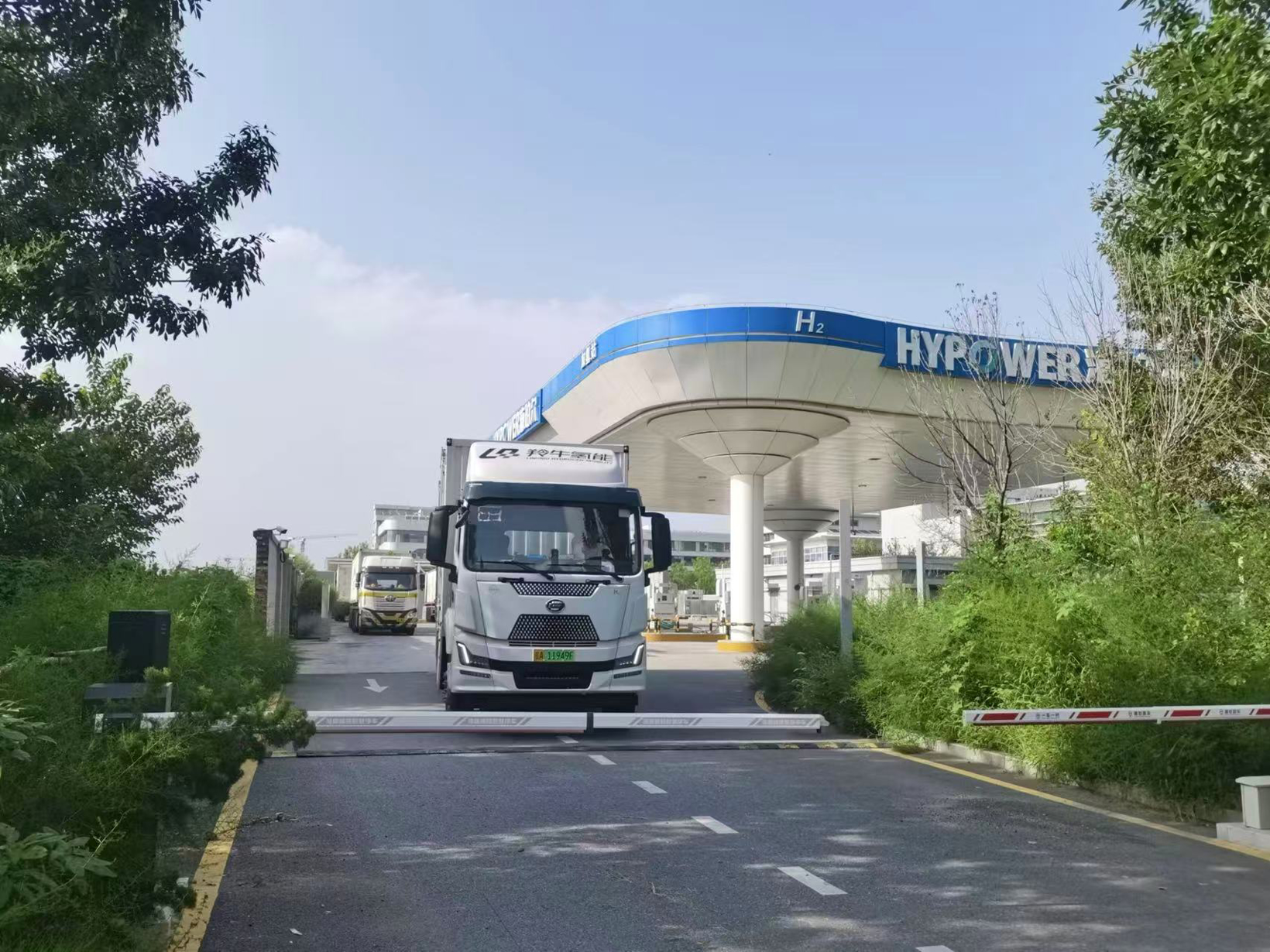
Image source: Lingniu Hydrogen Mobility
On the core technology front, the cluster achieved ahead of schedule the technological innovation and localized application of key components like stacks, membrane electrodes, and bipolar plates. It filled the gap in domestic carbon paper application and established a leading full-industry-chain system in Beijing's Daxing District.
Furthermore, 83 policies have been issued and implemented, pioneering a comprehensive policy support system that covers top-level design, technological innovation, industrial implementation, promotion, hydrogen security, and safety supervision.
The results in Shanghai and Guangdong are equally significant.
According to data from the Shanghai New Energy Vehicle Public Data Collection and Monitoring Center, Shanghai had connected over 5,000 fuel cell vehicles by December 2025, fulfilling its demonstration targets.
Reports indicate that in 2025 alone, cumulative sales in Guangdong reached 6,300 units, making it the top-selling demonstration zone in the country.
Following this year's "Two Sessions," policy for a second batch of demonstration city clusters has been put on the agenda. It is reported that Shanghai held a meeting on March 10 to discuss applications for the second phase of hydrogen demonstration clusters.
Lin Qi, Chairman and CEO of REFIRE, noted in a previous interview that driven by the previous round of policies, China's hydrogen energy industrial chain has basically taken shape, with eight core components now achieving self-reliance and controllability.
"The hydrogen fuel vehicle market is highly concentrated in policy demonstration city clusters. Early on, it was mainly in the first batch of demonstration cities like Guangdong, Shanghai, and Beijing. In recent years, newer demonstration clusters like Sichuan, Henan, and Shanxi have accelerated their development, becoming new growth poles for the industry," said Cui Dongshu, Secretary-General of the China Passenger Car Association (CPCA).
He further analyzed: "In 2025, hydrogen fuel vehicle sales were mainly concentrated in economically developed regions like Guangdong, Henan, and Sichuan. Meanwhile, areas with concentrated steel industries like Tianjin and Hebei show high acceptance of hydrogen fuel vehicles due to specific industrial transport needs, resulting in positive market development trends."
However, Cui also pointed out that the current scale of hydrogen refueling stations is small, profitability is poor, and siting and construction are difficult. Building new stations remains a significant challenge, with land acquisition and costs running quite high.
Development: Carving Out a Unique Path
At the recent "Two Sessions," Li Donglin, Chairman of CRRC Zhuzhou Institute Co., Ltd., drew a poignant comparison between the hydrogen energy industry and new energy vehicles (NEVs):
In the early 2000s, Minister Wan Gang proposed the "Ten Cities, Thousand Vehicles" plan for NEVs. At that time, the industry faced similar dilemmas: immature technology, high costs, and a lack of infrastructure. After two decades of persistent effort, China's NEV penetration rate has exceeded 50%, with annual production and sales reaching 16 million vehicles.
"The integrated development of the hydrogen energy industry also requires such a process of sustained effort," Li said.
This comparison aptly reveals hydrogen's current position: it's not that it won't work, but rather that it is on the eve of a boom.
To understand the logic of hydrogen's development, one must also see a deeper difference between it and pure electric vehicles—the fundamental difference in policy support mechanisms.
Pure electric vehicles followed a path of "universal purchase subsidies": consumers enjoyed direct subsidies when buying cars, and manufacturers claimed subsidies based on sales volume. While effective during the incubation period, this model also led to issues like subsidy fraud and over-dependence.
Hydrogen fuel cell vehicles took a different path from the very beginning. In 2020, five departments proposed replacing purchase subsidies with "rewards replacing subsidies," targeting demonstration city clusters rather than offering nationwide universal benefits.
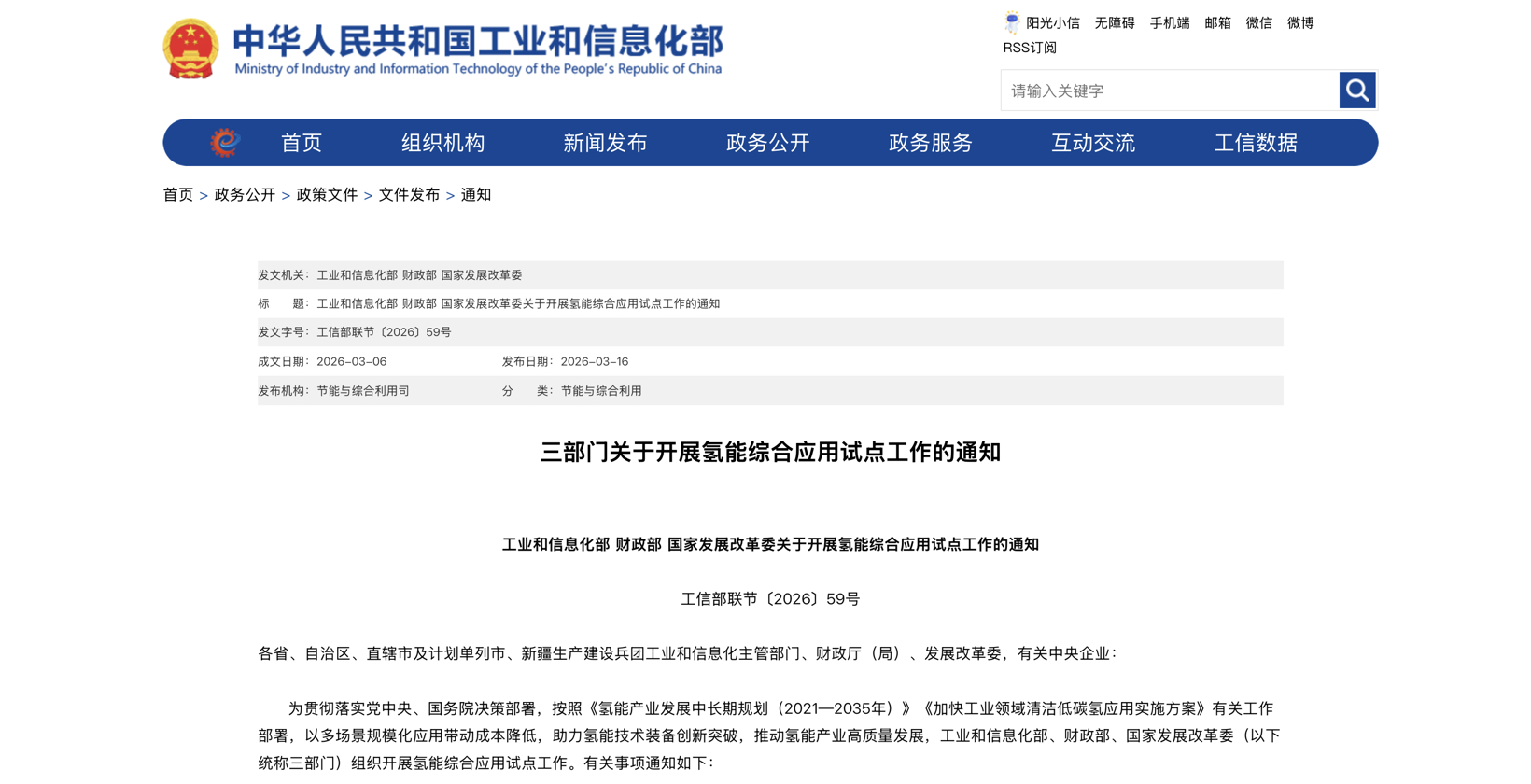
Image source: MIIT document
The current Notice continues and reinforces this mechanism. Central finance will continue to use the "reward replacing subsidy" method to provide funds to city clusters. The reward cap for a single cluster during the pilot period will not exceed 1.6 billion yuan, operating under a mechanism of "pre-allocation followed by final settlement."
This move will effectively incentivize local governments and guide resources toward projects that possess genuine technology, viable use cases, and tangible output.
From a technical standpoint, hydrogen vehicles possess irreplaceable advantages in specific scenarios:
Refueling takes just a few minutes, offering an experience identical to diesel refueling. Liquid hydrogen heavy-duty trucks can already achieve a range of over 1,000 kilometers and are barely affected by low temperatures, with range degradation not exceeding 10% even at -30°C.
More importantly is the payload advantage: The combined weight of a hydrogen fuel cell system and storage tank is far lower than that of a large battery pack required for the same range. This avoids the "tonnage loss" problem in pure electric heavy-duty trucks caused by excessive battery weight, directly boosting revenue per trip.
Therefore, in the future, hydrogen and electric vehicles will likely form a clear division of labor: EVs will continue to dominate daily commuting, while hydrogen vehicles conquer the fortress of heavy-load transport, jointly completing the green transformation of the transportation sector.
Cui pointed out: "Fuel cells offer high efficiency, fast refueling, low start-up temperatures, and low emissions. They make up for the shortcomings of power batteries, primarily replacing needs in high-latitude, medium-to-long distance, and high-load transport scenarios, corresponding to applications like heavy trucks, forklifts, buses, and urban sanitation vehicles."
Regarding the Notice, a relevant official from the MIIT emphasized that domestic hydrogen application still faces issues such as limited scenarios, a shortage of green hydrogen, high prices, and difficulties in storage, transport, and refueling. The business model has not yet taken shape, and market demand awaits release. Continued effort and key support at the national level are needed to drive discovery and problem-solving through application, giving this emerging field a push to get started and then helping it along the way.
Policy: The "1+N+X" Hydrogen Comprehensive Application Ecosystem Officially Debuts
In interpreting this round of pilot work, a relevant official from the MIIT's Department of Energy Conservation and Comprehensive Utilization made a key judgment: "China's hydrogen energy industry has achieved a 'zero to one' breakthrough and entered a critical stage of crossing the techno-economic inflection point for rapid, large-scale development."
Behind this judgment lies substantial industrial accumulation. By the end of 2025, cumulative domestic sales of hydrogen fuel cell vehicles neared 40,000 units, and 574 hydrogen refueling stations were built with a capacity exceeding 360 tons per day—ranking first globally. A batch of industrial projects involving 10,000-ton green hydrogen, 100,000-ton green ammonia and methanol, and million-ton hydrogen metallurgy have successively gone into operation, bringing national green hydrogen capacity to approximately 250,000 tons.
Therefore, the Notice jointly issued by the three departments is not only a timely response to the industry's adjustment period but also a re-anchoring of strategic focus.
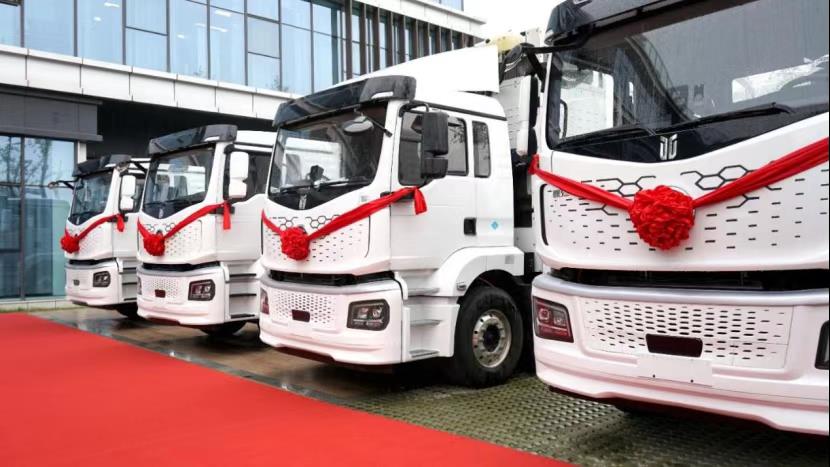
Image source: SinoHytec
The Notice explicitly proposes selecting city clusters through an "open competition" mechanism to form a "1+N+X" comprehensive hydrogen application ecosystem layout:
"1" general scenario: Fuel cell vehicles. The main line involves building hydrogen highways and hydrogen corridors, focusing on promoting the large-scale application of commercial vehicles for medium-to-heavy duty and medium-to-long distance transport, as well as cold chain logistics.
"N" industrial-scale scenarios: Including green ammonia and methanol, hydrogen-based chemical feedstock substitution, hydrogen metallurgy, and hydrogen-blended combustion. These scenarios involve large-scale hydrogen consumption and can drive down hydrogen costs rapidly through economies of scale.
"X" innovative application scenarios: Exploring innovative applications of hydrogen in rail locomotives, ships, aircraft, backup power, and combined heat and power (CHP).
Additionally, the Notice sets clear quantitative targets. By 2030, the average terminal hydrogen price will drop to below 25 yuan/kg, striving to reach around 15 yuan/kg in advantaged regions; the ownership of fuel cell vehicles will double from 2025 levels, striving to reach 100,000 units.
The International Energy Agency predicts that by 2030, global annual production of low-carbon hydrogen will reach 37 million tons. China occupies a core position in the global industry: it holds over 60% of the world's electrolyzer capacity and is the only country advancing the large-scale implementation of three major technological routes.
More importantly, hydrogen energy is vital to energy security. China's dependence on imports for oil and natural gas exceeds 70% and 40%, respectively. Developing green hydrogen, green ammonia, and green methanol pathways is not an option—it is a necessity.
As Li Donglin put it: "The technology chain of the hydrogen energy industry has been connected, but the commercial chain has not. This is the core reason for the industry's current cooling off."
Today, with the implementation of "comprehensive applications," the hydrogen energy industry stands at a new starting line.
Future: How to Get Hydrogen Vehicles Running at Scale?
The Notice explicitly proposes taking the construction of hydrogen highways and hydrogen corridors as the main line, focusing on promoting the large-scale application of fuel cell commercial vehicles in heavy-load transport and cold chain logistics.
Behind this main line lies a clear logic: the large-scale application of hydrogen vehicles must evolve from "points" to "lines," and then weave those "lines" into a "network."
Currently, the skeleton of this "network" is accelerating its formation across multiple regions.
In May 2019, China's first hydrogen corridor planning project—the Yangtze River Delta Hydrogen Corridor—was officially released. It aimed to promote the coordinated development of the hydrogen and fuel cell vehicle industries by building intercity belt and network hydrogen infrastructure.
Currently, the Beijing-Tianjin-Hebei region has jointly formed five cross-provincial hydrogen corridors with one-way distances of 200 to 300 kilometers. It has built the country's first "Beijing-Tianjin-Qingdao" hydrogen commercial long-haul logistics channel exceeding 600 kilometers, promoting "same city, same price" for vehicle hydrogen.
Recently, on March 12, the Chengdu-Chongqing "Hydrogen Corridor" reached a significant milestone: the "Chengdu-Deyang-Mianyang-Guangyuan" and "Panzhihua-Xichang-Ya'an-Chengdu" green hydrogen routes were officially opened. This marks the full opening of Sichuan's major southbound and northbound hydrogen transport channels, with the province's hydrogen backbone network taking preliminary shape.
Consequently, hydrogen application scenarios are evolving from single-vehicle operations toward the deep integration of "vehicle-road-network-industry."
Additionally, the Chengdu-Chongqing region leverages its hydropower advantages to push hydrogen prices down to 30 yuan/kg; the Yangtze River Delta is planning wind-solar-storage-hydrogen integration to connect the green power-green hydrogen-green methanol chain; the Beijing-Tianjin-Hebei region focuses on unifying standards and mutual policy recognition to clear obstacles for cross-regional operations; and the Greater Bay Area is exploring an "industry plus window" path to internationalization.
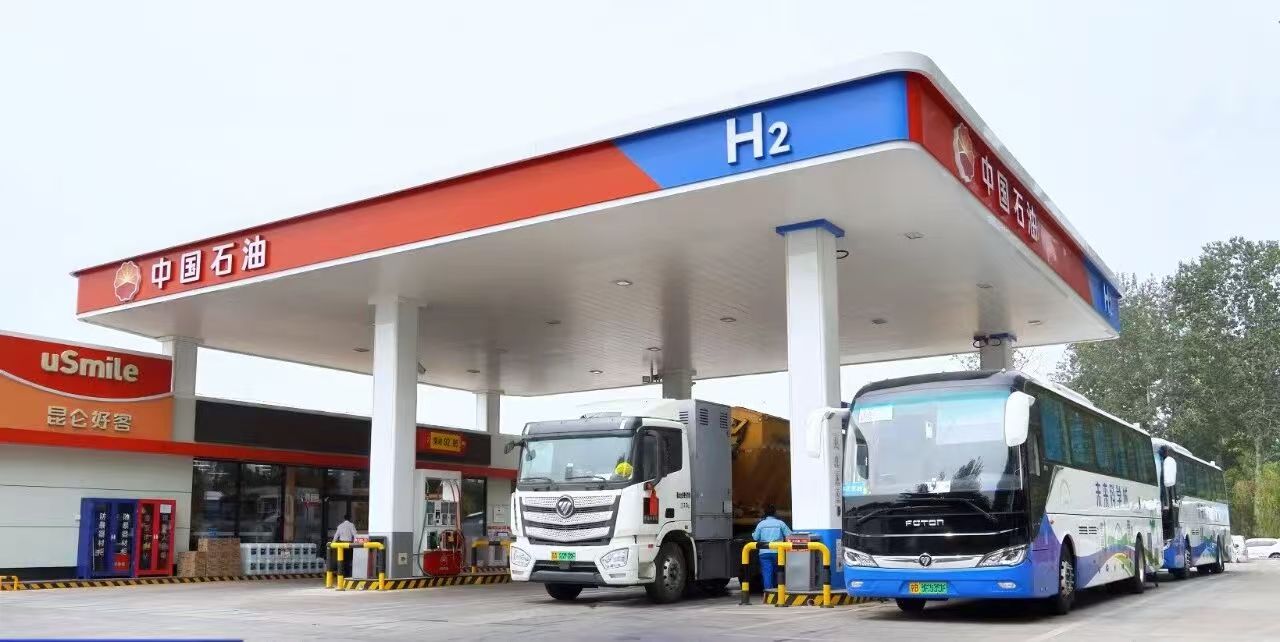
Image source: PetroChina
The breakthrough to getting hydrogen vehicles on the road lies in lowering hydrogen prices. The core of short-term competitiveness in the total cost of ownership for fuel cell vehicles is not the vehicle price, but the price of hydrogen. Currently, the Notice explicitly proposes reducing the terminal hydrogen price to 25 yuan/kg by 2030 (15 yuan/kg in advantaged regions).
Furthermore, it requires the scientific planning and layout of hydrogen refueling stations and the establishment of a support policy system covering clean, low-carbon hydrogen supply, station construction and operation, and vehicle promotion. It encourages the introduction of policies facilitating inter-city travel for fuel cell vehicles.
From an energy strategy perspective, China has proposed "dual carbon" goals. Building a new energy system requires three pillars: wind and solar power, electrochemical energy storage, and hydrogen energy.
Hydrogen is the ultimate form of chemical energy, producible through water electrolysis using water as raw material and electricity from China's abundant wind and solar resources. The volatility of wind and photovoltaic power makes it difficult for the grid to fully absorb them; using surplus electricity to produce hydrogen is equivalent to storing temporarily unusable electrical energy, solving the global challenge of large-scale renewable energy consumption.
From the Beijing-Tianjin-Hebei region taking the lead in completion to the implementation of new policies by the three departments, the grand drama of the hydrogen energy industry is moving from a "pilot performance" in city clusters to a "full-cast debut" of the national "1+N+X" ecosystem.
The buzz in the public sphere may remain "silent," but the gears of the hydrogen energy industry have never stopped turning.
In the coming years, as hydrogen prices fall, scenarios broaden, and the network improves, hydrogen commercial vehicles will truly "get moving" in the field of long-distance heavy-load transport. By then, people will eventually realize: silence is sometimes for the sake of a more powerful voice.


