



Gasgoo Munich- On May 6, Infineon Technologies reported operating results for the second quarter of fiscal 2026 (January 1 to March 31). The company generated revenue of €3.81 billion, with profit reaching €653 million — a margin of 17.1%. With first-half targets fully met, Infineon projects third-quarter revenue of around €4.1 billion and a margin between 17% and 19%, signaling continued momentum.
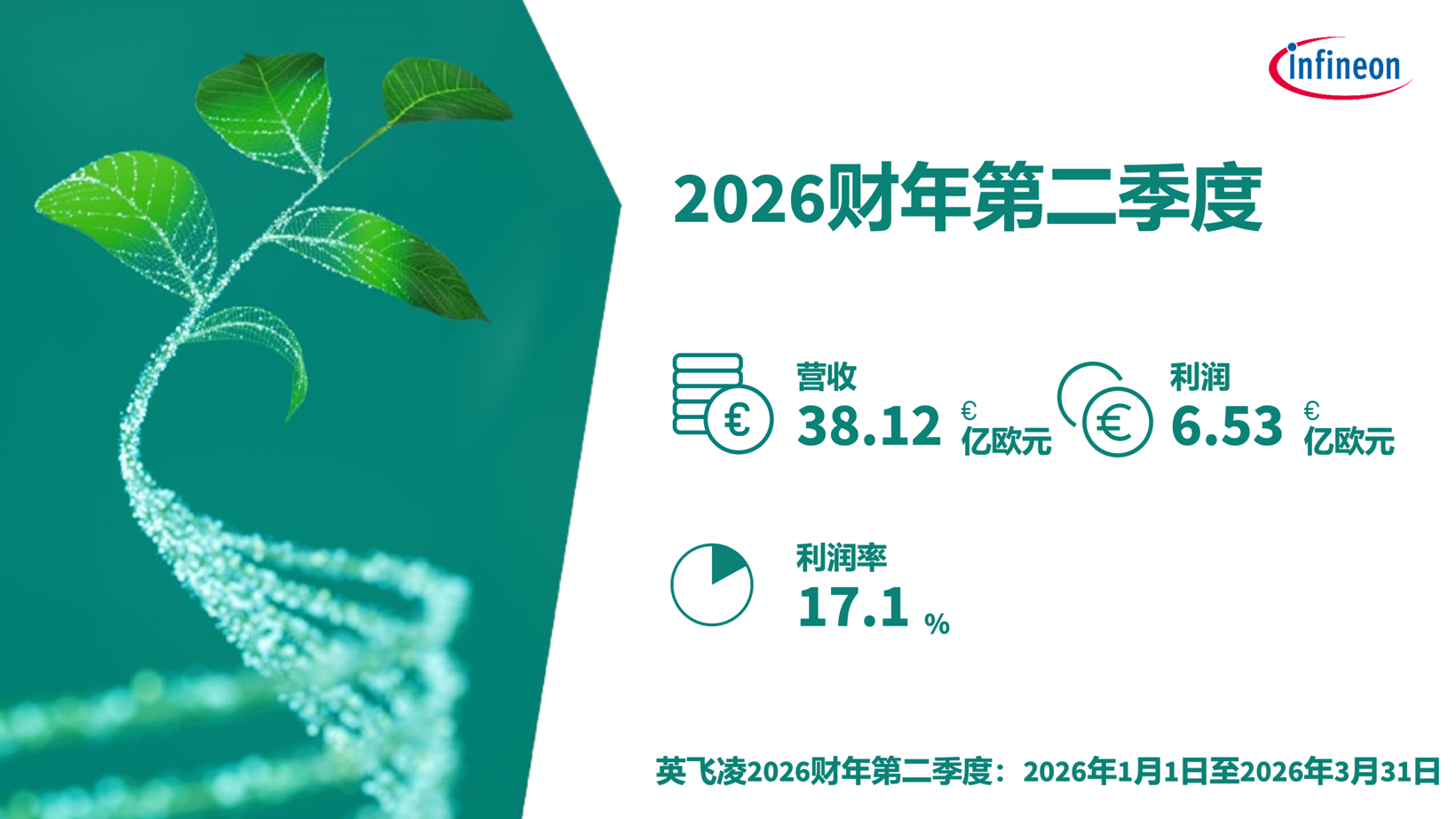
Image source: Infineon (same below)
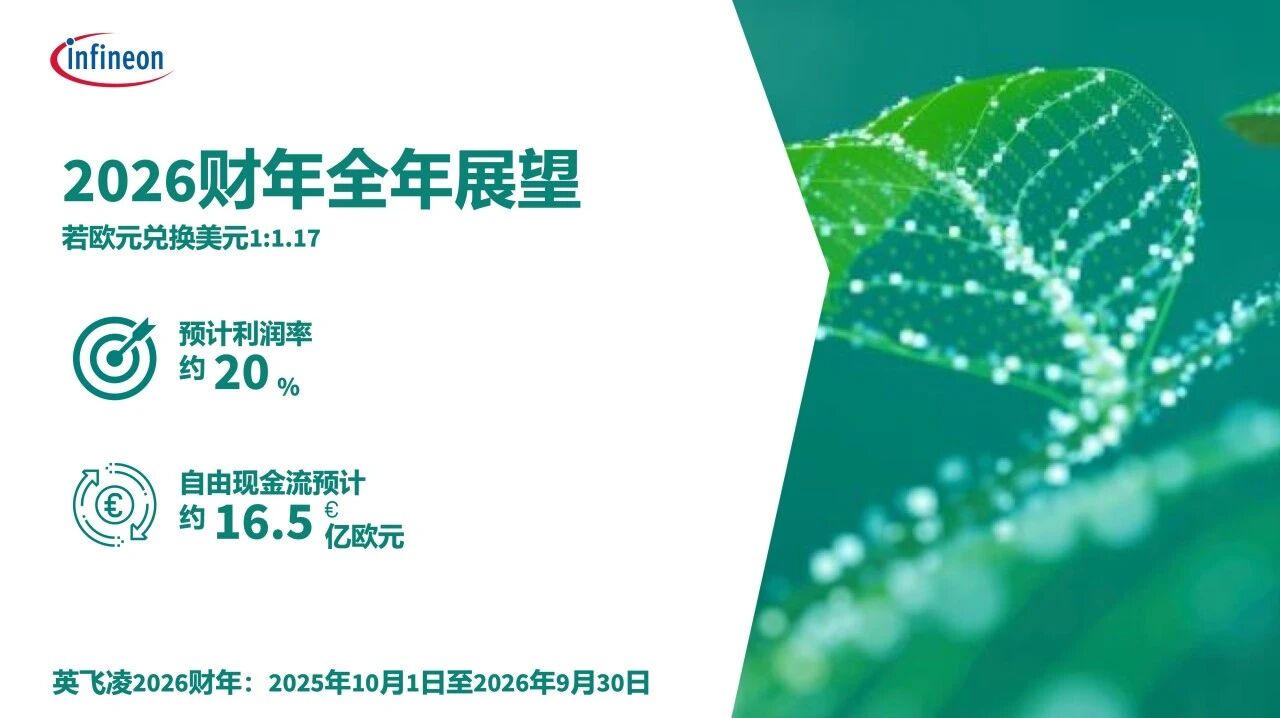
Assuming a EUR/USD exchange rate of 1.17, Infineon has significantly lifted its full-year outlook. The company now anticipates "significant" revenue growth, upgraded from a previous forecast of "moderate" growth. Adjusted gross margin is projected between 40% and 46% — a 3-percentage-point increase — while the profit margin is set to rise to around 20%. Both adjusted free cash flow, now seen at €1.65 billion, and free cash flow at €1.25 billion, are expected to exceed prior estimates.
The performance gains were driven by an AI boom and a recovery in the automotive sector. Surging demand for power solutions in AI data centers has emerged as a key growth engine. Meanwhile, accelerated expansion in power infrastructure is lifting the industrial business, while automotive electronics orders are rebounding. The company is making steady progress in software-defined vehicles, with market share climbing.
On the organizational front, Infineon announced it will streamline its four business units into three starting in the fourth quarter of fiscal 2026: Automotive (ATV), Power Systems (PS), and Edge Systems (ES). The move aims to optimize the business structure and sharpen decision-making and customer response times.
“Entering the second half, we expect growth to significantly outpace previous expectations, with multiple end markets simultaneously entering a broader upcycle.”Infineon CEO Jochen Hanebeck noted that the AI boom continues to intensify, driving "extremely robust" demand for the company's power solutions in AI data centers. Expansion in power infrastructure is accelerating, increasingly serving as a vital growth driver for the industrial division. In automotive, he pointed to positive progress—particularly in software-defined vehicles—even as the high-voltage business faces headwinds in electric mobility. Gaining further market share in autos, he added, validates the company's overall strategy.
“We are confident heading into the second half, even as we keep a close watch on geopolitical and macroeconomic risks,” he said. “We are pushing ahead with organizational optimization. By clarifying responsibilities for key application areas, we can deliver innovative system solutions to customers faster and further enhance decision-making efficiency.”


