



Gasgoo Munich- China's large six-seat SUV market is booming, yet its pricing structure has settled into a rigid hierarchy. The 200,000 yuan mark serves as the entry barrier for "true" three-row vehicles, while the 250,000 to 300,000 yuan bracket is crowded with mainstream family flagships. Models featuring standard high-end driver-assist systems and smart cockpits, meanwhile, are almost universally priced above 300,000 yuan.
That's why the crowd erupted at the launch event when the Huajing S— a flagship large six-seater equipped with standard Huawei Qiankun ADS Pro and the HarmonySpace 5 cockpit — announced a starting price of 149,800 yuan (including trade-in subsidies). This combination signifies more than just a low-priced entry; it creates a value anchor in the 150,000 yuan market where none existed before. Amid the chaotic battle among "Series 8 and Series 9" flagships, it marks the first time the labels "large six-seater" and "standard Huawei Qiankun" have converged at the 150,000 yuan price point.
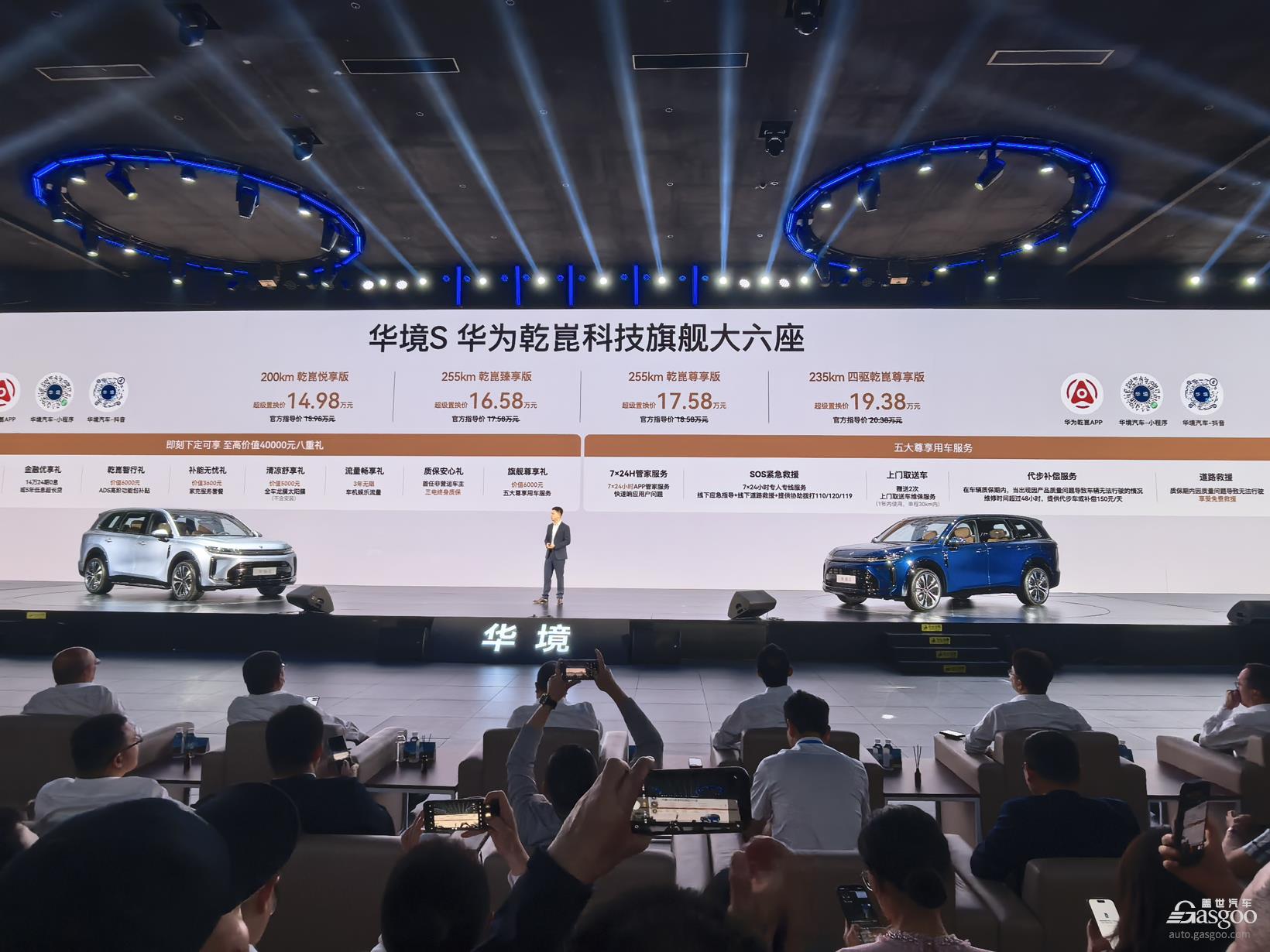
Image Source: Gasgoo
How to Rewrite the Logic of Product Definition?
The spatial implications of Huajing S's pricing strategy are worth exploring far more than the surface numbers suggest.
Profit margins in the compact SUV market are razor-thin, with the price war compressed to its limit. In contrast, large SUVs command unit prices two to three times higher, offering far more significant per-vehicle gross margins. This margin gap is the fundamental reason why numerous domestic brands are leveraging electrification and intelligence to break into the high-end family market.
With a price range of 149,800 to 193,800 yuan, the Huajing S sits squarely in the pricing void between the high-end segment and the mass market for large SUVs. By standardizing the full suite of Huawei Qiankun technologies, it effectively anchors high-end specs to a low price point, making the pricing structures of class competitors appear rigid by comparison. This vehicle not only lowers the entry barrier for Huawei's advanced driving systems and Harmony cockpits but also sets a new pricing benchmark through its flagship positioning. Given similar dimensions and core configurations, it is currently difficult to find a rival model that can compete horizontally at this price point.
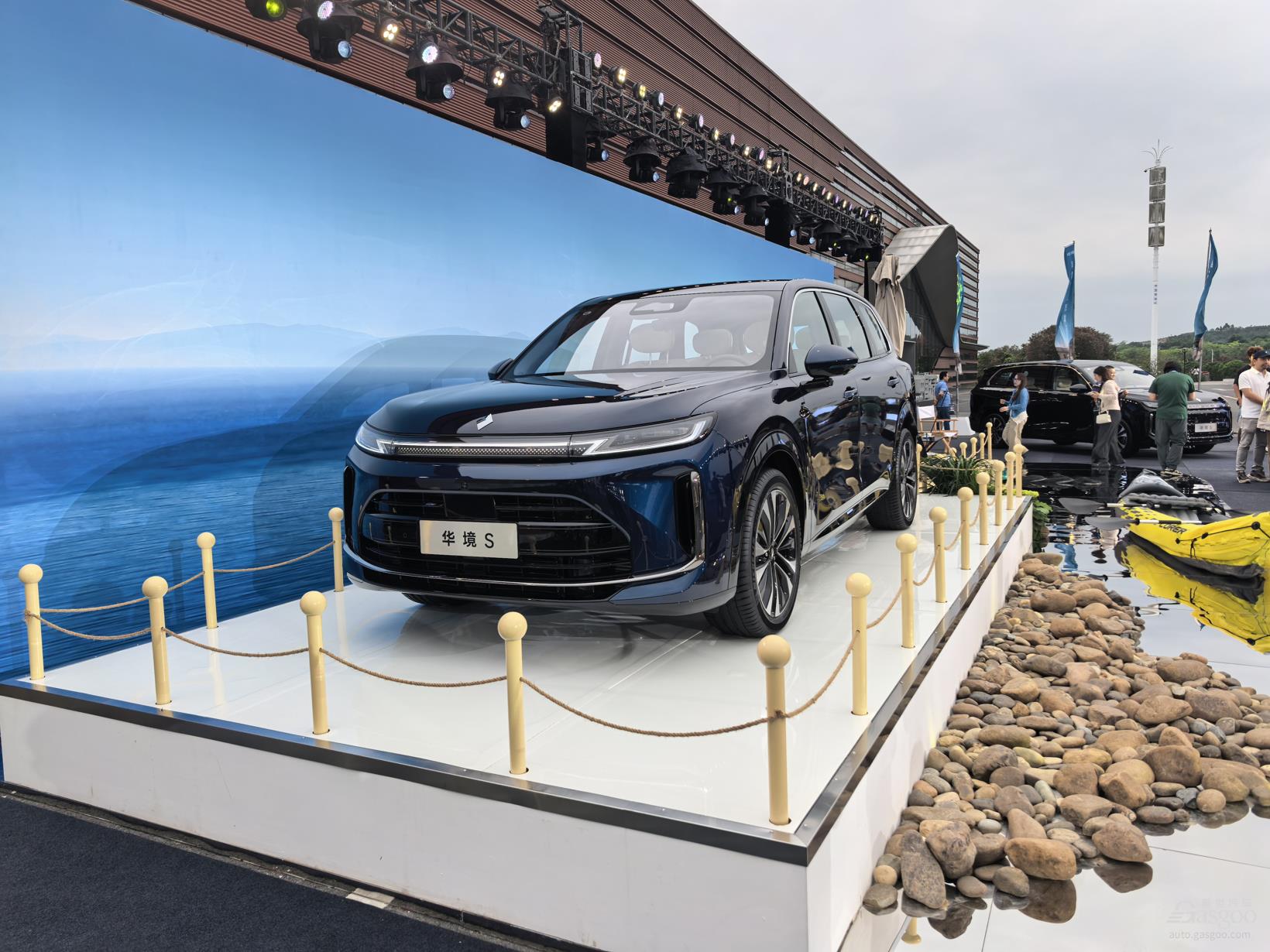
Image Source: Gasgoo
From a macro perspective, sales in China's large SUV market have been doubling since 2026, with the segment expanding rapidly. Yet, the number of players is also increasing. The recent Beijing Auto Show witnessed a "surge" in large SUV debuts, with dozens of new models unveiled. The intensity of competition in this market going forward is easy to imagine.
When a new segment shifts rapidly from a booming blue ocean to a battle for market share, new entrants must anchor themselves in a definite, realistic core price band and continuously deliver user value that meets those expectations. Only then can they secure a foothold in the zero-sum game.
Huajing S's insight into this trend is clear: rather than getting bogged down in trivial configurations and brand premiums in the 300,000 to 400,000 yuan flagship market, it chose to dive straight into the 150,000 to 200,000 yuan range, aiming to make this the mainstream price benchmark for large six-seat SUVs. Its chosen path — standardizing the full Huawei Qiankun suite — essentially creates a pricing model where the upper limit of intelligence in its class supports the lower limit of price. The core of this model lies in allowing users to own a product that satisfies the smart mobility needs of families of four or more without a high budget. The appeal to the terminal market is immense.
The trend of "trickling down" Huawei Qiankun intelligent driving was already visible in 2025. Products like the Shangjie H5 and Deepal L07 previously brought the basic version of Huawei Qiankun ADS into the 150,000 yuan market. However, the fundamental difference with Huajing S is that it isn't just a 150,000 yuan model *offering* Huawei driving; it is a 150,000 yuan flagship large six-seat SUV that makes it standard across the entire lineup.
Intelligent driving has shifted from an optional configuration to a baseline requirement — a first for SUVs in this price range.
Moreover, the ADS Pro Enhanced version equipped on the Huajing S features Huawei Qiankun's in-cabin LiDAR vision, Limera, at the hardware level. Functionally, it supports city navigation assistance right out of the gate, covering daily commutes in complex traffic environments and highway driving scenarios. In other words, this represents the full delivery of a high-end driver-assist experience.
Running parallel to this is the standard inclusion of the HarmonySpace 5 cockpit. Features like Super Desktop, seamless phone-to-vehicle integration, and four-zone voice interaction are now available immediately, making the smart cockpit no longer an exclusive option for top trims but a core component of the base configuration. The significance of this shift lies in the current focus of smart car competition on cockpit experience differentiation. By achieving "Huawei-level" cockpit democratization in the 150,000 yuan market, Huajing S exerts reverse pressure on product differentiation: any competitor in this class that fails to offer Huawei-level cockpit capabilities will naturally be at a disadvantage in terms of consumer attention, especially among buyers for whom intelligence is a core purchase driver.
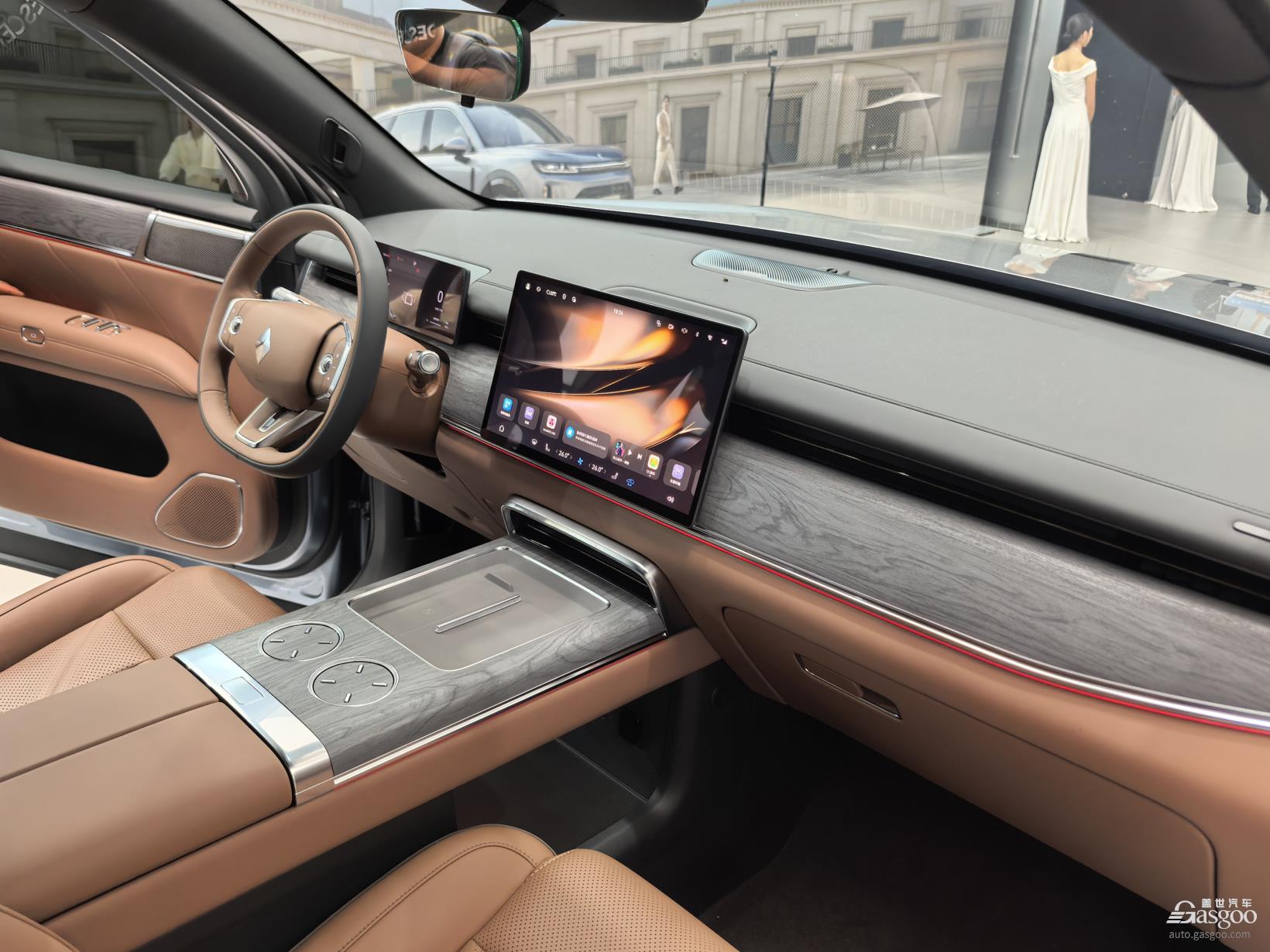
Image Source: Gasgoo
Beyond Huawei's support, large space and comprehensive safety are also core highlights of the Huajing S's product strength. In terms of space, a 5,235 mm length combined with a 3,105 mm wheelbase delivers a class-leading "space utilization rate" of 87.4%.
On the safety front, in addition to the active safety provided by the Huawei Qiankun CAS 4.0 collision avoidance system, the Huajing S's passive safety credentials are equally robust. The vehicle uses Baosteel's 2,000 MPa nuclear submarine-grade ultra-high-strength steel, paired with a globally debuted one-piece hot-stamped front floor structure and one-piece hot-stamped double door rings. This constructs a "five-longitudinal, eleven-transverse" bottom structure and a cage-style six-ring body frame. Even more notably, the Huajing S completed the industry's first "80 km/h side impact plus 15-meter rollover drop" collision challenge, providing a real-world validation of the vehicle's safety.
Is the Domestic Large Six-Seat SUV Landscape About to Be Reshaped?
The launch of the Huajing S lands in a large six-seat SUV market that is currently undergoing structural change.
From the demand side, the growth logic for large six-seat SUVs remains clear. The rising proportion of two- and three-child families is driving differentiated space needs. The 2+2+2 layout of large six-seaters adapts perfectly to the high-frequency scenario of "two adults, two children, and two elders," making it an inevitable choice for multi-generational households. On the supply side, electric drive systems enable short overhangs and long wheelbases, significantly improving third-row comfort. Meanwhile, the popularity of range-extended (EREV) and plug-in hybrid (PHEV) technologies allows large SUVs to balance pure-electric commuting with the convenience of long-distance refueling.
However, as mentioned above, a divergence has emerged between the rate of demand growth and supply expansion. The industry is launching an increasing number of similar products, yet it struggles to create equally dense customized matches within the total consuming population capable of affording them. Homogenization follows: wheelbases exceeding three meters, rear entertainment screens, and zero-gravity seats (or equivalent specs) have become standard, while powertrains are concentrated in EREV or PHEV options.
With prices plummeting, configurations converging, and slogans overlapping, the concept of the "mobile home" is suffering from consumer fatigue.
In this market environment, the biggest variable introduced by the Huajing S is undoubtedly its pricing. It lands precisely in a price void — a gap where first-tier new forces cannot expand downward due to brand premiums, and second-tier brands cannot climb upward due to cost structures. Compared to Li Auto, which relies on refined user service to build brand pricing power in the 200,000 to 300,000 yuan market, Huajing S offers richer standard configurations at a lower price and uses Huawei's full suite to directly challenge competitors' intelligent moats. Compared to Leapmotor's products in the same price range — which lead various segments through cost efficiency and a broad multi-product portfolio — Huajing S focuses on a clearer high-value anchor: the six-seat flagship SUV. This means it may not generate the highest absolute sales volume across the entire SUV market, but within the specific niche of large six-seaters, it could secure an irreplaceable position.
Looking ahead at the future trajectory of the large six-seat SUV market, rapid capacity release and stabilized shares for leading brands suggest a shift from incremental expansion to a battle for existing market share and structural reshuffling. This will accelerate the survival of the fittest. Whether seizing market share through cost-based pricing or solidifying core users through brand recognition, every model is attempting to capture a larger slice of the market in its own way.
Huajing S's core strength lies in fusing Huawei's intelligent capabilities with SAIC-GM-Wuling's manufacturing scale and aggressively competitive pricing. This opens a new entry point for consumption at the bottom of the large six-seat market price range. This implies that consumers' budget ceiling for family SUVs may stop expanding. Even if other large six-seat products offer significant capability, if their prices are notably higher than the Huajing S, they will still face the "price deviation dilemma" from rational consumers at the point of purchase.
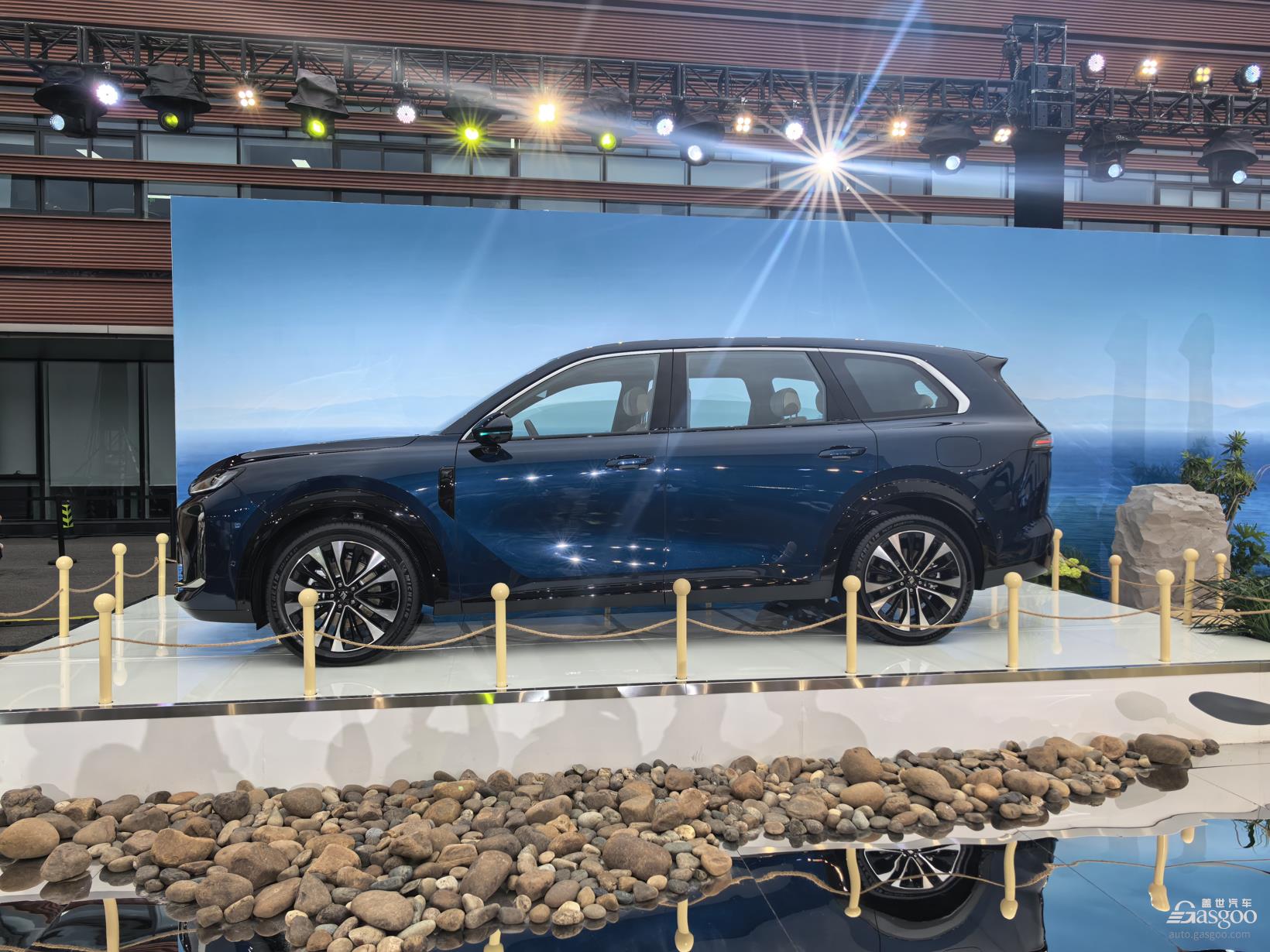
Image Source: Gasgoo
This anchoring effect on price perception could have a long-term impact on the segment that far exceeds the Huajing S's own sales figures.
Reviewing the broader landscape of China's auto industry, the launch of the Huajing S reveals a more fundamental shift: competition in the Chinese market is moving from the stacking of homogenized configurations to more intense price-level confrontation. This conflict is driving a new round of deepened consumer insight. For the core large six-seat demographic — families of four or more — the brand premium is being recalculated. When a six-seat SUV with a starting price under 150,000 yuan can simultaneously offer Huawei intelligent driving, class-leading space, and comprehensive safety, this is no longer just a price promotion. It is the birth of an entirely new value standard.
In summary: For the domestic large six-seat SUV market, the Huajing S provides a direct yet hard-to-ignore answer: price and technology can be rematched around what consumers truly need. This answer may force the entire market's pricing system to start over.
In the family segment — where the decision-making chain is most complex and sensitivity to value is highest — whoever breaks the implicit logic that "high price equals good quality" the fastest will seize a long-term advantage in user preference. The Huajing S has already marked the official starting line for this new round of competition.


