



Gasgoo Munich-The seasonal slowdown in China's passenger car market deepened in July, as downward pressure continued to mount.
Data from the China Passenger Car Association (CPCA) shows retail sales of passenger cars reached 1.461 million units, marking a 20.9% year-on-year decline and an 8.8% drop from June. For the first seven months of the year, cumulative retail sales fell 20.3% to 10.173 million units.

Image source: CPCA
Amid the broad downturn, structural shifts are coming into sharper focus: internal combustion engine (ICE) vehicles are losing ground rapidly under the weight of high fuel prices, while the retail penetration rate of new energy vehicles (NEVs) breached the 65% threshold. The gap between domestic brands and joint ventures continues to widen. As these factors converge, a profound industry reshuffle is unfolding.
Domestic Brands Break 70% Share; Joint Ventures Show Glimmers of Hope
According to the CPCA, retail sales for domestic brands hit 1.04 million units in July—a 14% annual drop and a 6% monthly decline. Yet, their share of the domestic retail market climbed to 71%, up 5.4 percentage points from last year. This sustained rise signals that domestic brands have firmly secured dominance in the Chinese market.

The resilience of domestic brands stems from a dual engine of NEVs and exports, rather than relying solely on domestic retail growth. On a wholesale basis, which includes exports, domestic automakers sold 1.733 million units in July, up 9% year-on-year. That makes them the only camp to achieve positive growth, even as overall industry wholesale volume slipped 0.2%.
Exports have played a crucial role. In July, domestic brands shipped 775,000 units overseas—an 87% surge that accounted for 84.4% of total passenger vehicle exports. International markets have evolved from a supplementary channel into a second growth curve for top domestic automakers, effectively offsetting the weakness in domestic retail.
The situation for mainstream joint ventures remains challenging. Retail sales for these brands stood at 290,000 units in July, plunging 35% year-on-year and 12% month-on-month—a decline far steeper than the industry average. By origin, German brands held a 12.4% retail share, down 2 percentage points; Japanese brands fell to 10.9%, down 1.9 points; and American brands dropped to 4.2%, sliding 1.0 point.
The retreat across all three major joint venture lineages stems primarily from the collapse of their ICE foundation.
Data shows retail sales of conventional ICE passenger cars plummeted 41% in July, yet ICE vehicles still dominate the sales mix of joint ventures. The technology and brand premiums accumulated over decades are rapidly losing value as the industry shifts from oil to electricity.
Still, the joint venture camp is not without bright spots. Retail sales of NEVs from mainstream joint ventures jumped 36% in July, a growth rate significantly outpacing the domestic NEV sector.
Cui Dongshu, secretary-general of the CPCA, noted that the growth in joint venture NEVs is not merely supported by a low base effect.
For one, leading joint ventures have completed localized iterations, devolving product definition and supply chain management authority to their China teams. By fully integrating into domestic battery and intelligent driving supply chains, they have bridged the gap in smart features while achieving price parity between ICE and electric models. This has allowed them to effectively capture replacement demand from their massive base of existing ICE owners.
At the same time, a decline in domestic economy EVs—dragged down by subsidy rollbacks—has objectively opened up market space for joint ventures. Furthermore, some consumers prioritize the chassis tuning and reliability associated with joint venture brands, rather than blindly chasing stacked specifications.
Market performance reflects this shift. Models like the Toyota Bozhi 3X, Nissan N7, and Buick Zhijing E7 are selling well in the 120,000 to 200,000 yuan family segment. This confirms that joint ventures are breaking free from past product dependencies, learning to leverage local supply chains for smart cockpits and driving features while layering in their traditional manufacturing reputation to compete.
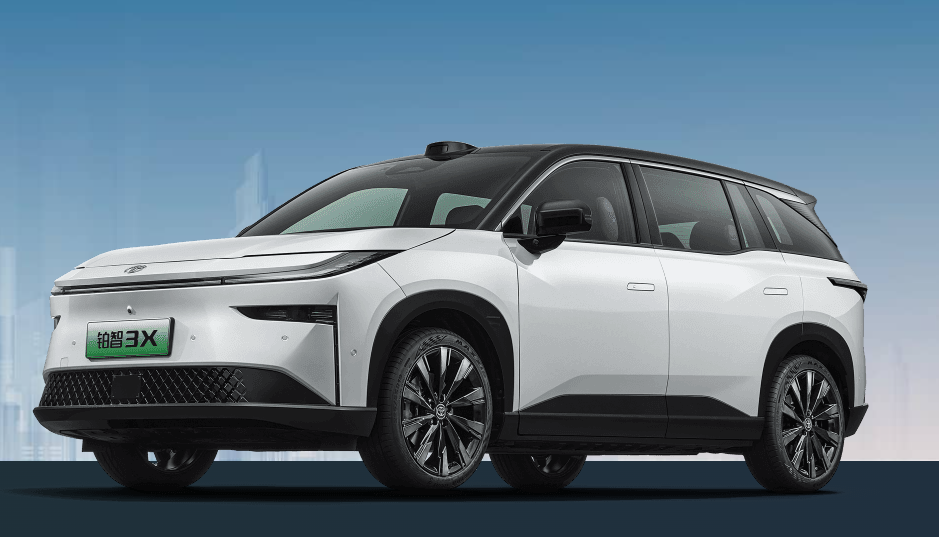
Image source: GAC Toyota
Looking ahead, Cui predicts that joint venture NEV sales will continue to grow, but penetration rates will likely remain low due to product cadence and brand perception constraints, making it difficult to replicate the high growth of domestic brands. If the intelligent iteration of new products fails to keep pace with the market, growth will quickly hit a bottleneck. Conversely, domestic brands need to break into lower segments, reducing reliance on high-priced models to fill the supply gap in the entry-level market.
Exports from joint ventures and luxury brands are also accelerating. In July, these exports surged 108% year-on-year to 143,000 units, growing even faster than domestic brands. International giants are leveraging China's supply chain advantages to serve overseas markets, marking one of the few growth bright spots for the joint venture camp.
The luxury car market is also undergoing an adjustment. Retail sales stood at 130,000 units in July, down 27% annually and 23% monthly. The retail share slipped to 8.7%, a decline of 0.7 percentage points. As sticker prices return to more reasonable levels, the high market share once sustained by premiums is eroding, with some ultra-luxury brands seeing significant sales volatility.
The divergence in production reflects a strategic split. Domestic brands increased production by 12% year-on-year in July, edging up 0.1% month-on-month, maintaining healthy capacity utilization. In contrast, joint venture production plunged 35% annually and 24% monthly, while luxury brand output fell 21%. Behind these production schedules lie differing views on the future: domestic brands are betting on long-term growth in NEVs and exports, while joint ventures are still passively digesting excess ICE capacity.
Market concentration is also intensifying within the domestic camp. Five automakers sold more than 100,000 units on a wholesale basis in July, collectively capturing 50.3% of the market—up 4.3 percentage points from last year. BYD, Chery, Leapmotor, and others achieved high growth of over 20%, while survival space for smaller players continues to shrink, pushing the industry shakeout into a deeper phase.
NEV Penetration Hits New High; ICE Replacement Accelerates
The central narrative in July remained the accelerating shift from oil to electricity. CPCA data shows NEV retail sales reached 951,000 units, down 3.9% year-on-year and 5.8% month-on-month. Meanwhile, retail sales of conventional ICE vehicles totaled just 510,000 units, a massive 41% annual plunge.
Amidst this divergence, the retail penetration rate of NEVs climbed to 65.1%—up 11.6 percentage points from last year and 2.1 points from June, marking a new historic high. For every three passenger cars sold in China today, two are new energy models, solidifying the structural shift where NEVs outsell ICE vehicles.

Image source: CPCA
The core driver of this trend is not an explosion in NEV demand, but the rapid contraction of ICE demand. Geopolitical conflicts have driven international oil prices higher, and significant cumulative increases in domestic gasoline prices this year have raised the cost of owning an ICE vehicle, directly dampening consumer willingness to buy.
Structural optimization is also occurring within the ICE segment. Retail sales of pure ICE vehicles dropped 44% in July, while conventional hybrids fell only 4%, demonstrating significantly greater resilience. For consumers not yet ready to switch to pure electrics, hybrids offer a compromise that balances cost with usage habits, accelerating the hybridization of the ICE market.
The NEV market is experiencing intense internal divergence. On the wholesale side, NEV passenger car sales reached 1.446 million units in July, up 21.3%. Pure electric vehicles accounted for 958,000 units, up 28.6%, while plug-in hybrids reached 387,000 units, up 14.6%. Extended-range vehicles totaled 100,000 units, down 7.5%. Pure electrics are driving growth significantly more than plug-in or extended-range models.
Polarization is even more pronounced across vehicle segments. B-class electric vehicle wholesale sales jumped 35% to 299,000 units, capturing 31% of the pure EV market, demonstrating strong resilience in the mid-to-high-end segment. Conversely, the entry-level market suffered a precipitous decline: A00-class pure EV wholesale sales plummeted 50% to 65,000 units, accounting for just 7% of the pure EV market—a drop of 10.7 percentage points from last year.
The causes behind the pattern of "high-end strength, low-end pressure" are complex. On one hand, new national safety standards for NEVs took effect in July, significantly raising thresholds for crash safety and battery thermal runaway protection. This spiked compliance costs for low-end models, accelerating the clearance of non-compliant products. On the other hand, new model launches are trending larger. Of the NEVs launched between January and July, 56% were over 5 meters long, while only one model was under 4 meters. This contraction on the supply side has directly led to a shortage in the entry-level market.
This also validates the logic behind joint venture NEV growth: domestic brands have actively or passively retreated from the entry-level market, leaving a competitive window for joint ventures in the 120,000 to 200,000 yuan range. However, the long-term contraction of the entry-level market is unhealthy; only when mass-market EVs truly gain volume can the auto market achieve sustainable growth.
Exports are another major engine for NEV growth. In July, NEV passenger vehicle exports soared 147.8% year-on-year to 540,000 units, accounting for 58.8% of total passenger vehicle exports—up 14 percentage points from last year. Pure electrics made up 59.5% of NEV exports, while plug-in hybrids accounted for 35.9%. The share of plug-in hybrids and extended-range vehicles in exports continues to rise, becoming a new growth highlight.

Image source: Huaban.com
In terms of export structure, A00- and A0-class pure electric vehicles accounted for 42.2% of pure EV exports, an increase from last year, indicating that economy EVs remain the primary force for going global. Meanwhile, domestic brands are deepening their overseas infrastructure. The share of completely knocked down (CKD) exports is rising for some automakers, and accelerated local production layouts are further consolidating the growth resilience of overseas markets.
The concentration effect at the automaker level continues to strengthen. Twenty manufacturers sold more than 10,000 NEV units on a wholesale basis in July, collectively capturing 93.6% of the total. BYD held the top spot with over 410,000 wholesale units, followed by Geely, Chery, Leapmotor, and Tesla China. Retail share for "new forces" reached 26.8%, up 5.4 percentage points, with their pure EV share rising sharply to 77.6%, indicating a sharper focus on specific technology routes.
Crucially, the logic of NEV competition is shifting. With the implementation of new standards and the cooling of the price war, the industry is moving from pure price-based "excessive rivalry" toward value competition centered on technology, safety, and quality. Fast charging, battery safety, and intelligent experiences are replacing low prices as core purchasing factors, and automakers at the bottom lacking core technology will exit faster.
Weak Recovery in August, Policy Support Builds Momentum for "Golden September"
Following the July trough, all eyes are on the market's direction in August. Given the current macroeconomic environment and industry trends, August is expected to show a pattern of "weak aggregate recovery and strong structural divergence." While the market decline is likely to narrow steadily, momentum for a full recovery is lacking. The industry will consolidate at the bottom, paving the way for the "Golden September, Silver October" peak season.
Weak macro consumption remains the core constraint on recovery. In July, the CPI rose slightly year-on-year but fell month-on-month; the PPI rose annually but declined monthly; and the PMI dropped below the boom-bust line, indicating declining manufacturing sentiment and cautious consumer expectations. For big-ticket items like cars, consumer wait-and-see sentiment is strong, meaning the pace of terminal demand recovery will inevitably be gradual.
The impact of high fuel prices will persist. Significant price hikes for refined oil products in July will continue to suppress ICE consumption in the near term, keeping demand for traditional ICE vehicles under pressure. This implies that the NEV substitution effect will continue to release, with the penetration rate likely remaining around 65% in August. The structural divergence between oil and electricity will not reverse.
Policy support is beginning to form a floor. In July, the state explicitly stepped up counter-cyclical adjustments to boost domestic demand, with automobiles as a key lever for consumption promotion. As supporting policies like trade-in subsidies are optimized, expectations for consumer support are rising. This will provide a bottom for the auto market in the third quarter, driving a gradual recovery.
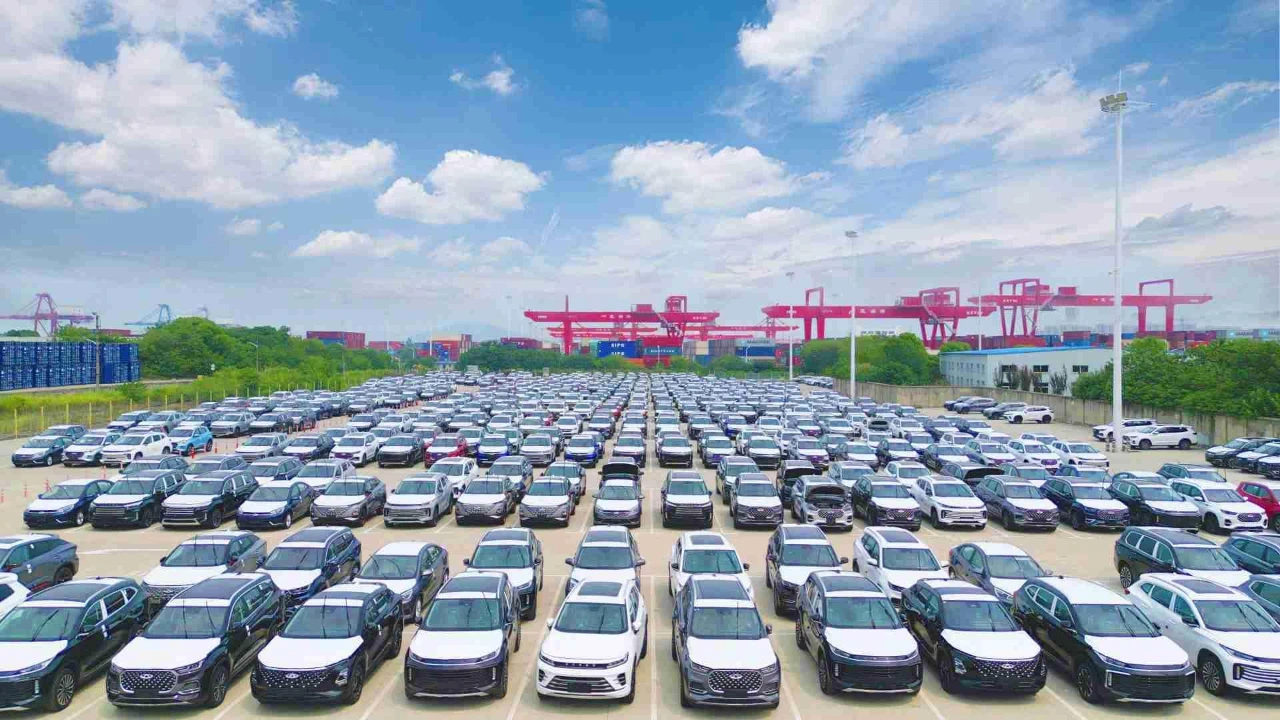
Image source: Chery Automobile
Changes on the supply side are also worth watching. Following the implementation of new standards, the first batch of compliant models is hitting the market, injecting vitality. However, the trend toward larger vehicles persists, and the shortage of economy models cannot be resolved in the short term. The demand gap in the entry-level market will remain, constraining the strength of the overall recovery.
Healthy inventory depletion has created room for recovery. Due to cautious production planning, manufacturer wholesale sales exceeded production by 30,000 units in July, while domestic wholesale was 127,000 units lower than domestic retail, indicating the industry is in a destocking channel. From January to July, industry-wide inventory fell by 640,000 units. Inventory risks have been fully released, steadily easing operational pressure for manufacturers and channels, laying the foundation for a rebound in the upcoming peak season.
Exports will continue to play a supporting role. In July, passenger vehicle exports grew nearly 90% year-on-year, accounting for 41% of manufacturer sales. Strong overseas demand has effectively stabilized wholesale volumes and capacity, alleviating pressure on domestic retail. Globally, China accounted for 31% of the world's auto market and 62% of the NEV market in the first half of the year. The long-term trend for export growth remains unchanged, making it a critical growth pole for the auto market.
But industry worries can't be ignored, most prominently the issue of weak profitability. In the first half of 2024, the auto industry's sales profit margin was only 3.8%, far below the average for industrial enterprises.
Regarding this situation, Cui Dongshu of the CPCA analyzed that while the "two new" policies (trade-in and equipment upgrades) have indeed boosted sales, profitability in the auto sector lags behind other consumer goods. This stems from a combination of factors: the industry's heavy-asset nature, declining consumer purchasing power and willingness to spend, rapidly rising costs, and a lack of bargaining power in the supply chain. Coupled with rigid investments in intelligent R&D and battery technologies, this has resulted in a scenario of "higher volume but thinner profits," with policy benefits accruing more to consumers than to enterprises.
In Cui's view, improving industry profitability requires a two-pronged approach. On one hand, the industry must be guided from price wars to value competition, enhancing supply chain clout by optimizing product structures and increasing export share to tap into overseas profits. On the other hand, companies need to reduce costs through technology and expand revenue from overseas operations and the aftermarket. Policy makers should also optimize the direction of the "two new" policies to guide the industry toward balancing scale expansion with profitability.
The squeeze on automakers—high upstream costs and fierce terminal competition—will be hard to reverse in the short term. This determines that the upcoming competition will not revert to an all-out price war, but will shift toward value competition, enhancing profitability through technological and product optimization.
Overall, the auto market in August is in a consolidation phase, building strength at the bottom. With the implementation of consumption-stabilizing policies and improving base effects, the year-on-year decline is set to narrow steadily. The industry is officially entering a mature stage of "value-driven growth and structural optimization." Trends such as the contraction of ICE vehicles and expansion of NEVs, the rise of domestic brands and adjustment of joint ventures, and high export growth alongside weak domestic recovery will persist. For all automakers, finding the balance between scale and profit will be the central challenge in the second half of the year.


