



Gasgoo Munich- In early 2026, Mercedes-Benz made strategic adjustments to the suggested retail prices of models like the C-Class, GLB, and GLC in China. In the auto industry, price cuts are usually seen as a defensive move, especially for a brand that calls itself the "inventor of the automobile."
China’s luxury car market is undergoing a structural overhaul. Local challengers are attempting to replace the mechanical aesthetics established by German automakers with digital technology.
Although Mercedes faced challenges during its digital transformation, its history shows a clear pattern. Its strength lies in recalibrating its brand definition during periods of change.
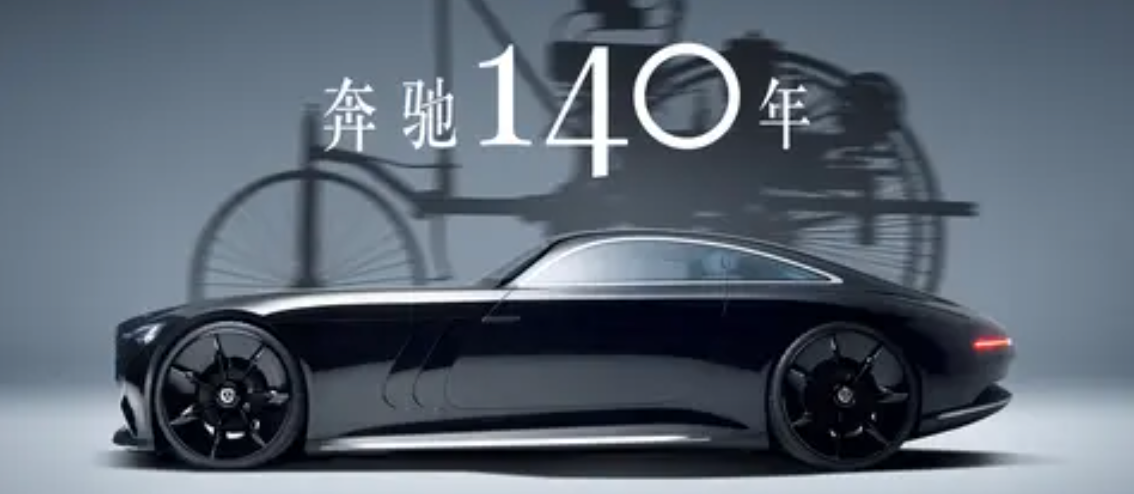
Image Credit: Mercedes-Benz
Past and Present: Establishing and Correcting Order
The history of the automobile industry is a technological shift away from the horse-drawn carriage. On January 29, 1886, Karl Benz secured patent No. 37435. This three-wheeled gasoline-powered device marked the beginning of the internal combustion engine era.
Initially, Mercedes-Benz did not have prestige. In Mannheim, this noisy vehicle was viewed as a disruption to horse-drawn traffic. Karl Benz was rigorous and conservative. His wife, Bertha Benz, commercialized the invention.
During that test drive, she verified the engine's durability. She even used a hairpin to clear a fuel line and leather to reinforce the brakes. This tradition of improving technology through practice became integral to the Three-Pointed Star brand.
In 1926, to counter the economic collapse in Germany following World War I, Daimler and Benz merged. It was a strategic merger for survival. After thirty years of rivalry, the firms agreed to unite rather than compete in a shrinking market.
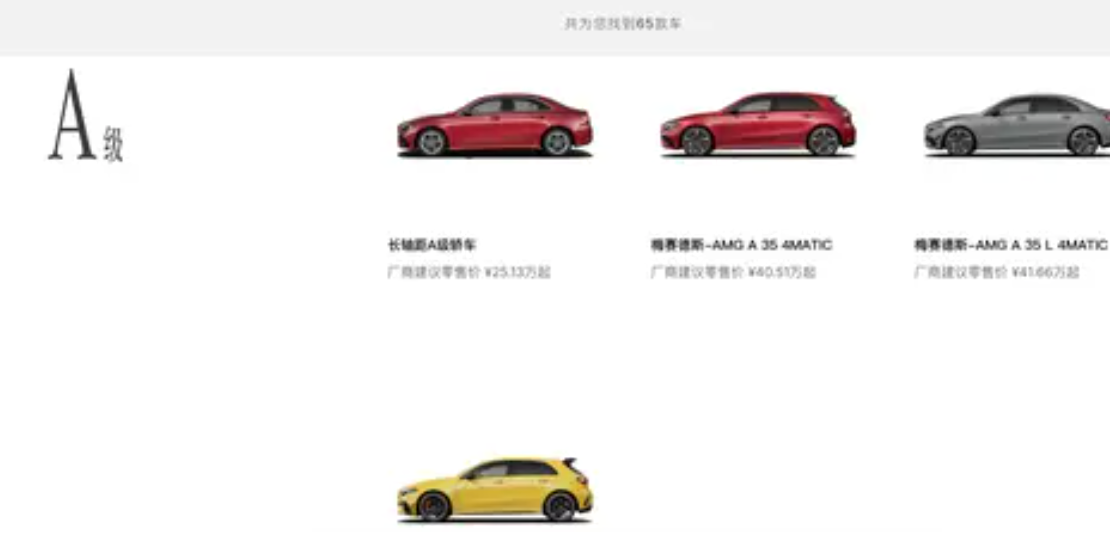
Image Credit: Mercedes-Benz
Mercedes-Benz’s greatest contribution to the auto industry lies in establishing the two cornerstones of luxury: "safety" and "hierarchy."
In the 1950s, while other manufacturers were still chasing speed, Mercedes engineer Béla Barényi introduced the concept of the "crumple zone." He argued that in a physical collision, energy absorption is more critical than rigidity. This engineering application of the law of conservation of energy cemented Mercedes’ leadership in safety technology.
Fifty years ago, Mercedes established a clear matrix of symbols: "S" for top-tier luxury (Sonderklasse), "E" for the mid-range backbone (Einspritzmotor), and "C" for entry-level compactness. The success of this strategy lies in providing a standardized symbol of social status.
This sense of order allowed Mercedes to survive several oil crises and economic recessions. Regardless of market fluctuations, as long as the Three-Pointed Star remained a symbol of social status, its profitability remained stable.
China's Indispensability
If the European market provided Mercedes-Benz with its lineage, the Chinese market has reshaped its operations over the past four decades.
Substantive contact between Mercedes and China began in the 1980s. When Mercedes established a general agency in China in 1986, the market was still an unfamiliar landscape.
For that generation, the Mercedes W140 (known colloquially as the "Big Benz") was not just a vehicle, but a symbol of authority. The premium derived from this brand prestige fueled two decades of high growth.
Market leadership can lead to complacency. Early sales in China relied heavily on imports, resulting in high prices and slow feedback loops for after-sales service.
Image Credit: Mercedes-Benz
This situation fundamentally reversed after the establishment of Beijing Mercedes-Benz in 2005. Mercedes began to realize that to gain a foothold in the Far East, it had to balance "German craftsmanship" with "Chinese demand."
After 2015, China officially became Mercedes-Benz’s largest single market globally. This shift in metrics fundamentally altered the power structure at the company’s Stuttgart headquarters.
Chinese consumers’ preference for "rear legroom" accelerated the R&D of long-wheelbase models globally. Chinese users’ demands for "interior ambiance" pushed Mercedes to invest significant engineering effort into ambient lighting and screen designs.
The center of gravity for R&D has also shifted. The R&D centers established by Mercedes in Beijing and Shanghai are no longer merely "localization" outposts; they are deeply involved in the underlying development of autonomous driving and voice interaction.
By 2026, the Chinese market's role for Mercedes has changed. It is no longer just a profit center, but a driving force for the brand’s transformation.
The rapid growth of local Chinese EV startups has forced Mercedes to confront its shortcomings in software. The price adjustments in early 2026 are less a concession on profit and more a response to competition in China.
Mercedes faces a fiercely competitive market. If it fails to respond with flexible pricing, its competitive advantage risks being eroded by the shift to intelligent vehicles.
Moreover, Mercedes is moving quickly to catch up. Mercedes is introducing the MB.OS operating system. By partnering with local tech giants for advanced autonomous driving, it aims to redefine the brand for the intelligent age. This ability to self-innovate is often the hardest part of transformation for traditional giants.
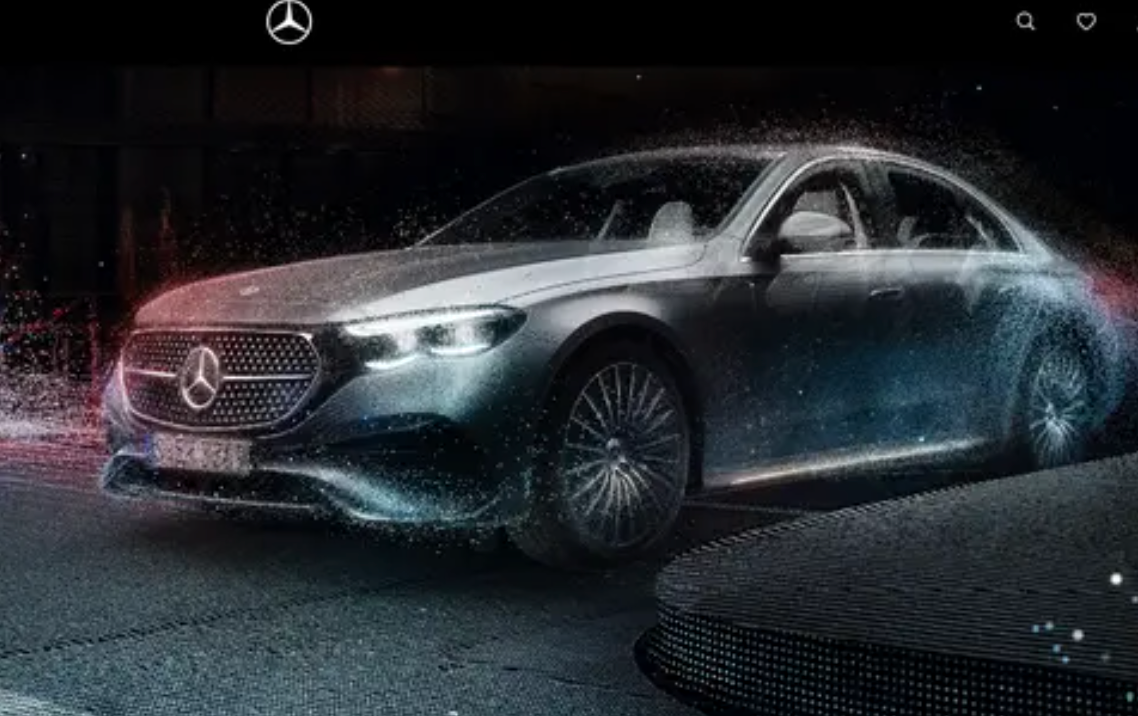
Image Credit: Mercedes-Benz
The history of Mercedes-Benz is an evolutionary history of finding common ground amidst crises. From the Mannheim workshop in 1886 to modern digital factories, it has proven one thing. True luxury is defined by the ability to adapt to trends.
The Chinese market has become the most variable "stabilizing anchor" in Mercedes-Benz’s global layout. It is both the foundation of sales volume and the catalyst for technological change. Facing market volatility in 2026, Mercedes chose to proactively adjust—a reflection of the realism this century-old brand employs during cyclical transitions.
As history shows, every major inflection point in the auto industry is accompanied by a loosening of the old order. For Mercedes, the current "distress" may well be the start of the next growth phase. In this race named "Future," Mercedes is still on the road, and the Chinese market is undoubtedly the most important and significant stop on its way to the finish line.


