



Gasgoo Munich- Tesla CEO Elon Musk made it clear on a recent earnings call: "Tesla's biggest competitor in the field of humanoid robots will come from China."
He emphasized that China's formidable strengths in both artificial intelligence and manufacturing will make it Tesla's most powerful rival.
While this isn't the first time Musk has publicly praised China's technological prowess, it is the first time he has so explicitly positioned the country as the top competitor in the humanoid robot arena.
A Rush to Capital Markets: China's Robot Army Accelerates Its Rise
The global humanoid robot market is experiencing explosive growth, and rapid advances by Chinese firms are reshaping the competitive landscape. Musk's candid assessment reflects the substantial progress China has made in fusing artificial intelligence with robotics.
Chinese humanoid robot companies are rising at astonishing speed, forming a "Chinese contingent" that can no longer be ignored.
Unitree is seen as the strongest contender in the humanoid robot space. In September 2025, the company announced it expects to submit listing documents to the stock exchange between October and December of that year.
The announcement did more than signal a dash for the capital market; it also laid bare the company's fundamentals. In 2024, revenue from Unitree's quadruped robots, humanoid robots, and components accounted for 65%, 30%, and 5% respectively. Notably, 80% of its quadruped robots serve civilian sectors such as research, education, and consumer markets, while humanoid robots are focused entirely on civilian use—clearly outlining the core business profile of the robotics firm.
Beyond Unitree, LEJU ROBOT and Deep Robotics have explicitly targeted A-share listings since the second half of 2025. Meanwhile, leading players like Agibot, Fourier Intelligence, and Beijing Galbot Co., Ltd. have successively completed equity reforms.
This intensive rush to the capital markets by Chinese companies is the result of shifting industry stages and mounting funding needs. As the sector moves into a new phase of scaled delivery, companies require larger, more transparent financing platforms to support their next stage of development.
Kaiyuan Securities predicts that the humanoid robot industry will cross the "1-to-10" inflection point in 2026, moving toward "10-to-100," with mass production and commercialization at the core.
In-House Chips and Line Adjustments: A Full-On Counteroffensive Against Chinese Rivals
Tesla is not sitting idly by as Chinese rivals rise. On the earnings call, Musk outlined a multi-dimensional response strategy—ranging from capital investment to chip autonomy—showing a posture of full engagement.
On the capital front, Tesla is entering a phase of significantly accelerated spending. The company's CFO stated that capital expenditure will exceed $20 billion in 2026—more than double the roughly $8.5 billion level seen in 2025.
This massive investment will support the operation of up to six factory projects, as well as the R&D and mass production preparation for the Optimus humanoid robot.
Regarding chip strategy, Musk made it clear: to avoid external supply constraints, Tesla needs to build its own chip factories to support long-term strategies like autonomous driving and robotics. This statement highlights the priority Tesla places on supply chain autonomy.
Even as he acknowledged the strength of Chinese competitors, Musk remained confident in his own company's products.
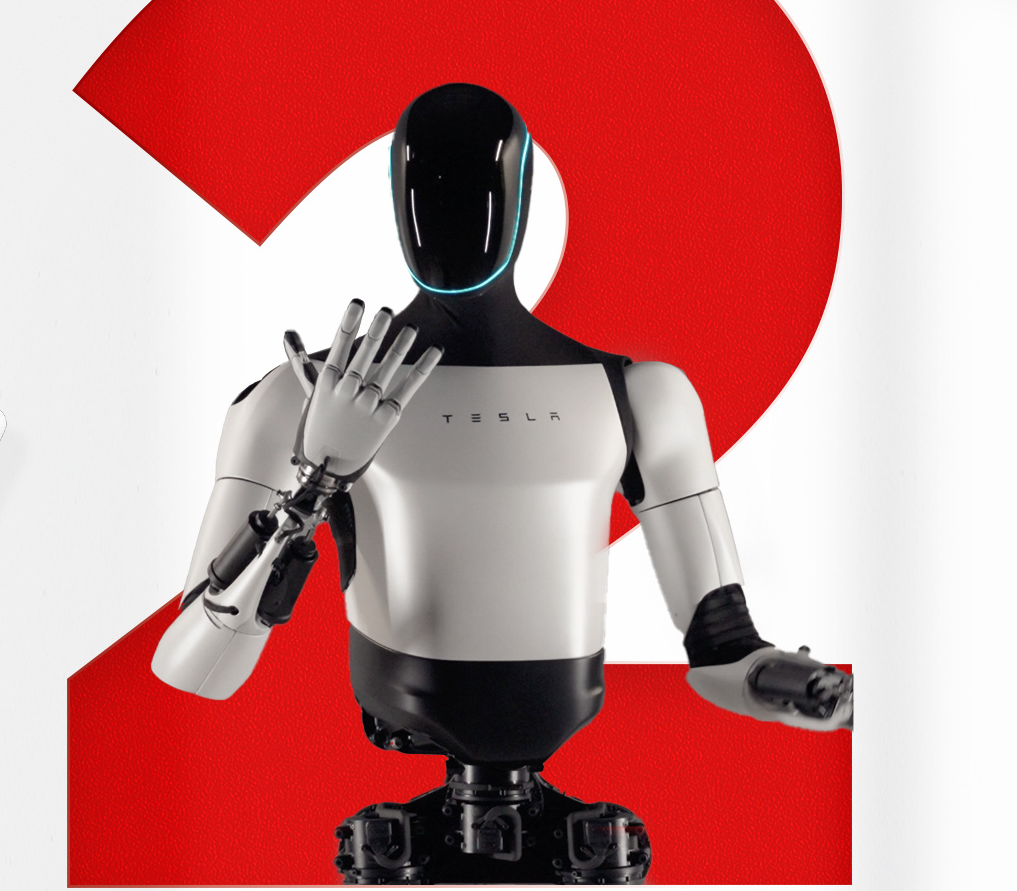
Image source: Tesla's Weibo
He emphasized: "As it stands, Tesla's Optimus is more capable than any humanoid robot from a known Chinese company, particularly in areas like artificial intelligence, hand design, and electromechanical dexterity."
With Tesla's mass-production third-generation Optimus set to launch this quarter, Musk's high praise for Chinese rivals reveals a new reality in global technological competition.
Tesla is accelerating its humanoid robot program, with the first-generation Optimus production line currently being installed. The company even plans to gradually halt production of the Model S and Model X, converting its Fremont factory to manufacture Optimus robots.
Even as Tesla speeds up the Optimus project, Musk's assessment of Chinese rivals suggests this race is only getting tighter.


