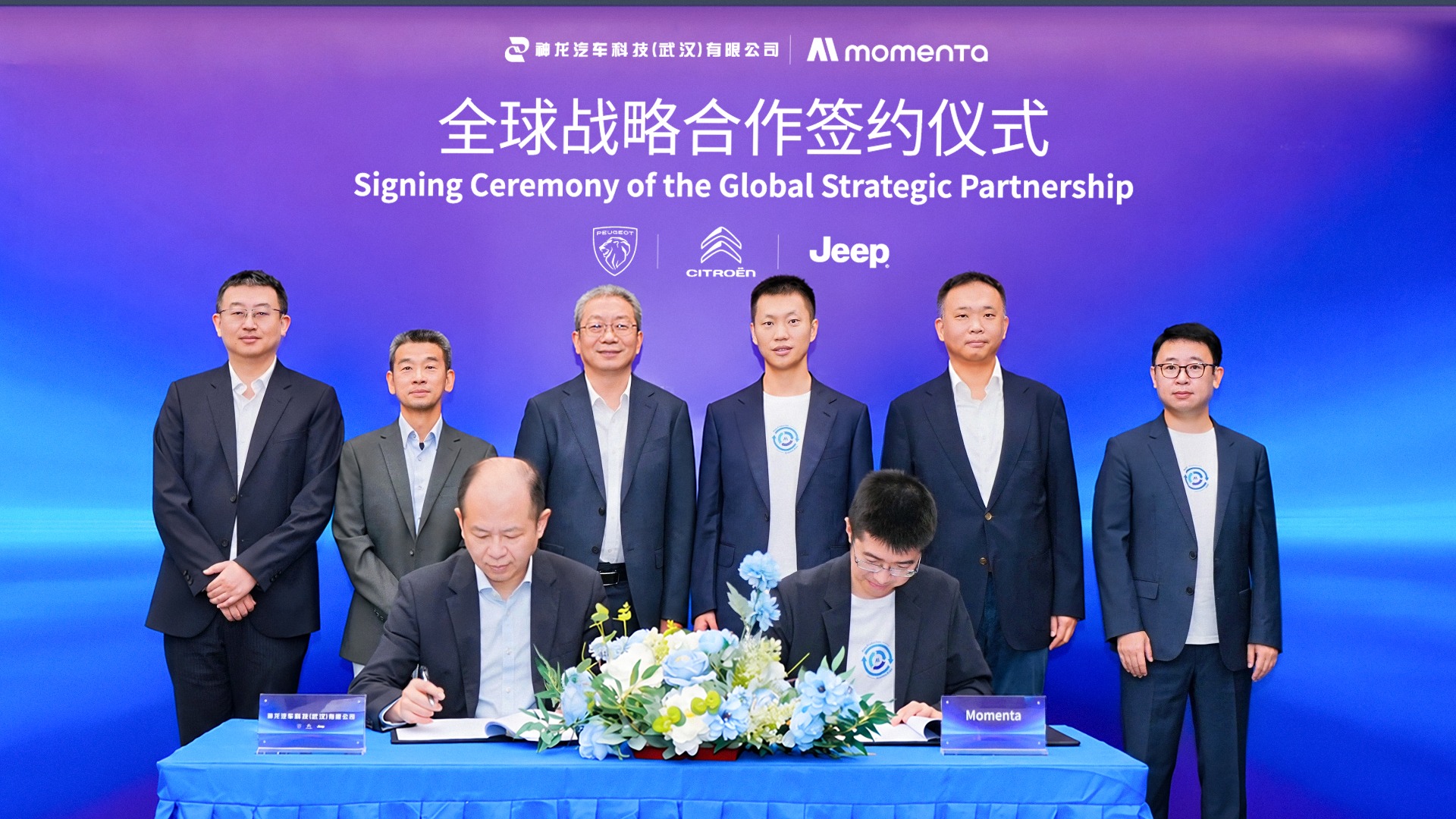
Gasgoo Munich-"If the past three years were Indiemicro's 'planting' season, the trees are now blooming—and the next three years promise a bumper harvest," Zhuang Jian, founder, chairman, and general manager of Indiemicro, said in a recent interview with Gasgoo.
That momentum is already being validated. While China's passenger car retail sales slumped roughly 20% in the first half of the year, Indiemicro posted solid revenue growth. Its four new product lines each generated over 10 million yuan in revenue, marking their entry into the mass-production harvest phase.
Image source: Indiemicro (same below)
Founded in 2017, Indiemicro took a road less traveled: developing automotive-grade mixed-signal chips. By sticking to the philosophy of "building hard forts and fighting dull battles"—a strategy of relentless grit—it bridged the gap from zero to one, then scaled from one to many. Today, its chips are in mass production across hundreds of models with cumulative shipments exceeding 500 million units. Its client roster spans most domestic joint ventures and Chinese brands, alongside international heavyweights like Volkswagen, Hyundai Motor Company, Ford, and General Motors.
Now, emerging from three years of high-intensity investment during that "planting" phase, Indiemicro is priming itself for a new growth spurt.
The 'Boutique' Strategy: Digging Deep into Niche Markets
In the first half of 2026, the trend toward vehicle "upsizing" in China became unmistakable. Large models claimed a growing share of sales, while features like "starlight roofs" and ambient lighting surged in popularity. That demand is translating directly into chip consumption. As Zhuang puts it, large SUVs were the popular choice in the first half, with each vehicle carrying more Indiemicro chips than ever before.
That trend plays right into Indiemicro's wheelhouse. Zhuang defines the company's path as a "product boutique"—a stark contrast to the industry mainstream. He observes that many players are chasing a "supermarket" model, sprawling across categories to cover every conceivable field. Indiemicro is doing the reverse: actively focusing its resources on key battlefronts and selected vertical markets.

Zhuang Jian, Chairman and General Manager of Indiemicro
For Indiemicro, "automotive mixed-signal chips" are precisely the track worth digging into. Centered on this, its business spans core applications like automotive lighting, micro-motor drives, touch sensing, and radar. It offers a rich portfolio of products and solutions in every niche. Leveraging a wealth of proprietary IP and automotive-grade mass-production experience, Indiemicro has become one of the few domestic suppliers capable of addressing core applications across lighting, motor control, and smart sensing.
"A boutique targets a specific clientele—and brings back very loyal customers," Zhuang explains. His version of a "boutique" isn't just about making a single chip; it's about providing deeply customized solutions for specific application scenarios, extending service all the way to product definition, technical architecture, and even business negotiations.
The core logic, Zhuang stresses, is that dominating a single niche builds a stronger long-term moat than dabbling in multiple markets. Once that bond is established, customers rarely switch suppliers. This strategy not only reduces the pressure of head-on competition with generic chip giants but also allows Indiemicro to erect unique barriers in every niche it enters.
High-Intensity Investment Pays Off as Four New Product Lines Hit Harvest Time
If the "boutique" strategy defined *what* Indiemicro would do and *how*, the company's heavy R&D spending over the past few years answers the question of *why* it would succeed.
Indiemicro has steadily increased its R&D investment in recent years, surpassing 100 million yuan in 2025. Where did that money go?
In recent years, while cementing its lead in interior lighting control chips, Indiemicro funneled resources into four new product lines: exterior lighting control, micro-motor drives, touch sensing, and ultrasonic radar. All four orbit the company's core competency—automotive mixed-signal chips—and represent the practical application of its "boutique" philosophy.
Zhuang calls this the "planting" phase—a time to build comprehensive product capabilities and market barriers in key directions. Now, that strategy is paying off.
In automotive lighting, Indiemicro has built the most comprehensive domestic chip portfolio and integrated software-hardware solutions, covering everything from headlamps and taillights to grille lights, interactive lighting, and interior illumination. In micro-motors, it has deepened its presence in valve control and air vents while expanding into higher-power pump chips. Its touch sensing chips are now used across the full reading light series of top domestic new energy brands and have spread to door handles, steering wheel hands-off detection, and anti-pinch systems, with volume shipments taking off last year. The first generation of ultrasonic parking radar chips has already shipped, while the second generation is slated for mass production in the second half of the year.

According to Zhuang, the four new product lines are moving at different beats. Micro-motor drives, launched earlier, currently lead in absolute revenue. Touch sensing and exterior lighting are growing fastest—the primary engines of growth—with revenue multiplying several times in the first half. Ultrasonic radar chips are expected to accelerate further in the second half.
In the first half of this year, all four new product lines achieved mass production, signaling Indiemicro's formal entry into the "blooming" phase. Zhuang expects a "bumper harvest" ahead: "All four product lines have now entered the supply chains of top automakers and Tier 1 suppliers."
He describes this strategy as "building hard forts and fighting dull battles"—focusing on a single domain, polishing products with meticulous effort, and building long-term trust. That persistence has been the defining characteristic of Indiemicro's journey from zero to one, and from one to many, over the past nine years.
To Zhuang, "building hard forts" means erecting deep technological and product barriers in a chosen lane that competitors cannot easily breach. "Fighting dull battles" means avoiding shortcuts and relying on luck, instead accumulating trust step by step through continuous iteration and customer validation. He admits the company faced early rejection and went through multiple iterations before reaching mass production: "But we never changed direction. We just kept moving forward on this track."
He emphasizes that R&D spending won't taper off now that the "planting" phase is over. "We will continue to invest." This means that even as Indiemicro enters the "harvest" phase, it is already stockpiling ammunition for the next round of growth.
Accelerating Global Expansion: From China to the World
Building on its four product lines, Indiemicro has distilled a "4+1" platform strategy: the four lines plus a global expansion push.
It is important to note that the "boutique" route does not conflict with the "4+1" platform strategy. Zhuang offers an analogy: "It's like Armani or Gucci—they have many clothing categories, but they aren't as exhaustive as a supermarket." Indiemicro's platform is a "boutique platform" that digs deep into a few selected core directions, rather than expanding horizontally without boundaries.
Globalization is that critical "1" in the strategy. Zhuang reveals that Indiemicro has accelerated its overseas footprint in recent years, expanding sales channels in Europe, Detroit, South Korea, Japan, and India, and appointing multiple distributors to serve global clients more efficiently. Overseas revenue now accounts for 20% to 25% of the total, with products used by international brands like Volkswagen, Hyundai Motor Company, Ford, and General Motors.
More importantly, the depth of relationships with overseas clients is deepening. Zhuang cites a telling case: through a Japanese Tier 1 supplier, Indiemicro chips are being used in the taillights of a European luxury brand. Significantly, the project was not developed in China but at a design center in Japan.
Zhuang takes pride in this. He notes that Japan's "Big Three" automakers are all doing business with Indiemicro now, while European luxury brands like BMW and Mercedes-Benz have already offered design-in opportunities. "In the past, it was hard for us to enter their supply chains. But now, facing competitive pressure from Chinese automakers, they are actively turning to Chinese suppliers for cooperation."

Beyond direct recognition from foreign automakers, the wave of Chinese automakers going global offers Indiemicro another route to international expansion. As Chinese clients expand overseas, Zhuang notes, Indiemicro is expanding right alongside them as part of the local supply chain.
From "following clients overseas" to "directly entering the global R&D systems of foreign automakers," Indiemicro's globalization is shaping up as a virtuous cycle where internal and external loops reinforce each other.
Capitalization Drive: Leveraging 'Organic + Inorganic' Growth
As the "harvest" phase fully kicks in, Indiemicro is harnessing the power of capital to drive a strategic evolution from product-focused to ecosystem-focused.
In 2026, listed company Xinbang Intelligent is moving forward with a major asset restructuring to acquire Indiemicro. Once completed, Indiemicro will become a wholly-owned subsidiary. With a public listing platform, Zhuang says, Indiemicro can drive growth through a dual engine of "organic and inorganic" expansion: "Before, investors were putting money into us. Now, we have the capacity to invest outward."
He believes the most worthy direction for investment is "embedded physical AI." He plans to make investments and acquisitions around this theme, including edge computing chip companies and AI algorithm teams. The goal is to fill ecosystem gaps and fend off commoditized competition.
Why "embedded physical AI"? It reflects Zhuang's reading of industry trends. He sees EE (electrical/electronic) architecture evolving from distributed to centralized computing—a shift redefining the role of endpoint chips. Traditionally, sensors processed signals before uploading data. Now, with computing power centralized at the top, the endpoint's job is simply to "collect raw data and upload," skipping the preprocessing step. This shift impacts data transmission, interface protocols, and the very logic of chip design. Zhuang believes this trend will arrive quickly.
He uses a concrete example to explain this change: with ultrasonic radar, the traditional approach requires engineers to write extensive rule-based code to determine if an obstacle is a "hanging" object or a "low-lying" stone strip. In the future, with embedded AI, the system "learns from this raw data," allowing the AI to judge and respond based on the most primitive, unprocessed signals. The engineer's job shifts from "writing rules" to "training models and calibrating data." That is the core logic of "embedded physical AI."
But Zhuang is clear that one company cannot make this leap alone. "Ultimately, it's a battle of ecosystems, like Nvidia's CUDA." Indiemicro intends to build a physical embedded AI ecosystem, using specialized sensors and actuators as its hardware "hooks."
In his view, computing power shouldn't be the sole dimension of competition. The key lies in "who can aggregate this data"—the data format, the model, the parameters. Those are the core. "Because the model changes depending on the form of your sensors and actuators." In other words, whoever defines how sensor data is generated establishes the model based on their hardware architecture. This is precisely why Indiemicro is using actuators and sensors as its entry point to build a physical AI ecosystem.
In the next stage, leveraging its public listing, Indiemicro can maintain internal R&D while using mergers and acquisitions to accelerate its technology and market positioning, speeding up the realization of its physical AI ecosystem. For Indiemicro, the "boutique" strategy hasn't changed, but the road is widening. From a "boutique" to an "ecosystem builder," it is attempting to use the dual levers of capital and AI to pry open the new battlefield of physical AI for the next decade.