



Gasgoo Munich- Late February 2026: During German Chancellor Friedrich Merz's visit to China, a symposium of the Sino-German Economic Advisory Committee and a flurry of corporate signings have captured the global automotive market's attention. With deepening dialogue between Gotion and Volkswagen executives, and the official launch of a "battery passport" pilot between CATL and BMW, cooperation in the Sino-German automotive sector has moved beyond simple capacity trading. It has officially entered a new cycle defined by "digital compliance co-governance" and "global standard co-construction."
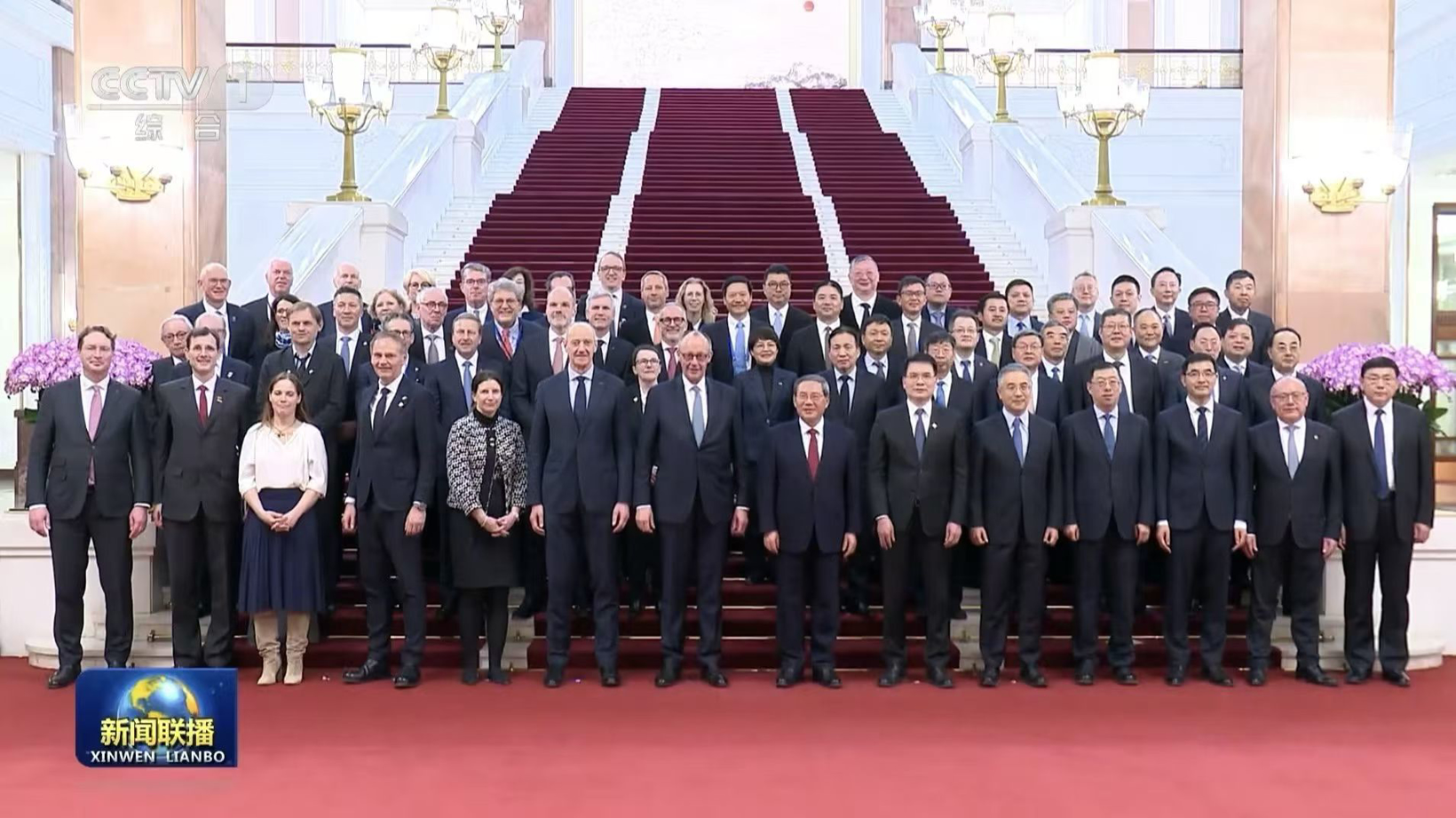
Image credit: Screenshot from CCTV News
Top-Level Play: Gotion High-tech and Volkswagen's Globalization of the "Standard Battery"
At the Sino-German Economic Advisory Committee symposium held in Beijing on February 25, Li Zhen, chairman of Gotion High-tech, engaged in in-depth exchanges with German executives including Oliver Blume, chairman of the Board of Management of Volkswagen Group.
1. The Sample Significance of Deep Binding Volkswagen is Gotion's largest shareholder, holding a 24.29% stake as of the end of September 2025. Their collaboration has transcended traditional supplier relationships—Gotion is not only the first mass-production supplier for Volkswagen's "Unified Cell" strategy but also a global strategic pivot for the automaker's LFP technology pathway. In November 2025, Gotion held a ceremony in Hefei for the mass delivery of Unified Cells, planning to deliver high-performance LFP and other standard cells to Volkswagen Group from 2026 through 2032.
2. Core Analysis
Global Capacity Synergy: The dialogue between the two sides signals that experience from Gotion's UC (Unified Cell) plant in Hefei is being rapidly replicated to Volkswagen's facilities in Germany and North America.
Low-Cost Strategy Support: Between 2026 and 2027, the penetration rate of LFP batteries in Volkswagen's entry-level MEB platform models is projected to exceed 40%. Gotion aims to leverage economies of scale to help Volkswagen compete for share in the affordable EV market.
Key Breakthrough: CATL and BMW Sign New "Digital Global Expansion" Plan
On February 27, CATL and BMW signed a memorandum of understanding to advance a cross-border data pilot for the "battery passport." This represents more than just technical cooperation; it is a major institutional innovation addressing geopolitical compliance challenges.
1. Breaking the EU Battery Regulation's "Digital Wall" Starting in 2027, the EU will mandate battery passports. The core of this pilot lies in resolving the conflict between "data security" and "transparency":
Compliance Path Exploration: The two sides are attempting to establish a data interaction mechanism that complies with China's *Data Security Law* while simultaneously meeting EU PEF (Product Environmental Footprint) standards.
Full Lifecycle Decarbonization: The cooperation covers carbon footprint tracing from mineral extraction to secondary cascading utilization, aiming to convert "carbon compliance" into a "market access credential."
2. Deepening Supply Chain Synergy The long-running partnership between CATL and BMW, which began in 2012, has evolved from early "technical support" to today's "standard reciprocity." Through the battery passport pilot, the two are working to fuse Chinese high-efficiency manufacturing data with German rigorous compliance systems into a universal industry template.
Three Underlying Trends in Sino-German Cooperation
The industrial signals released by this diplomatic event indicate that the Sino-German automotive supply chain is undergoing a "resilience reconstruction."
Digitalization as the "New Currency" of Green Trade The battery passport is more than a spec sheet; it is a "green pass" for entering the European market. The success of the CATL and BMW pilot will provide a replicable compliance template for the global expansion of China's battery industry.
From "Going Global" to "Putting Down Roots" The interaction between Gotion and Volkswagen proves that Chinese suppliers have deeply embedded themselves into the R&D foundation of German brands. This deep coupling of "equity, technology, and production" is the most effective defense strategy against potential tariff barriers and trade protectionism.
Shift in Standard-Setting Power Chinese companies' first-mover advantage in power batteries is being converted into global standards through cooperation with German enterprises. Whoever holds the power to define battery passport data will control the hub of the global new energy value chain for the next decade.
The "second half" of competition in the Sino-German automotive industry will no longer depend solely on horsepower or charging speed, but on who can more efficiently complete the "low-carbon + digital" transition. The moves by Gotion and CATL signal that Chinese battery companies are making a pivotal shift from "capacity giants" to "rule makers."


