



Gasgoo Munich- "Will SAIC-GM renew?" That was the question industry insiders posed to Gasgoo back in July, as Honda and GAC unveiled their own contract extension.
Here it is. On August 5, SAIC Motor and General Motors officially signed a strategic renewal agreement, extending their joint venture by 20 years, pushing the horizon to 2047.

Image Source: SAIC-GM
SAIC-GM says the renewal will allow it to further leverage China's strengths in user insights, R&D, manufacturing, and supply chain efficiency. The goal is to push products defined, developed, and built in China onto the global stage—shifting the country's role from a recipient of global technology to a source of innovation and a global supply hub.
Yet, specifics on execution were sparse at the event. Instead, SAIC-GM quickly shifted the spotlight to a new pure electric model: the Zhijing L7. The move sends a clear signal: for the near future, the company's focus in China remains electrification, centered on the Buick Zhijing premium EV series.
A Renewal Within Expectations
Remarks from top executives at the signing ceremony set the tone for the renewed partnership.
SAIC Motor Chairman Wang Xiaoqiu said SAIC-GM aims to be a pioneer in the "JV 2.0" era. Moving forward, the two shareholders will leverage technology, branding, distribution, and localization to empower the business. The target: launch 30 new energy vehicles by 2030.
General Motors CEO Mary Barra echoed that sentiment, noting the renewal reflects confidence in the industry's future and a commitment to Chinese customers. SAIC-GM will continue its "In China, For China" strategy, accelerating local operations while exporting locally developed products to global markets.

Image Source: SAIC-GM
The renewal comes as no surprise.
Viewed against the backdrop of the global auto industry, China's weight is too significant for any multinational to ignore—General Motors included.
By 2025, China's new energy vehicle exports will account for over 60% of the global total, with power battery capacity exceeding 70%. From batteries and motors to smart cockpits and autonomous driving, China has built the world's most complete NEV supply chain. For a giant like GM, China is no longer just a sales market—it is a critical pivot for the electric transition.
While SAIC-GM's performance hasn't matched its peak, adjustments have been constant. The shift to electrification—starting with the Velite series, followed by the Ultium platform, and culminating in last year's launch of the premium Buick Zhijing brand—has been deliberate. It hasn't been the fastest path, but each step has been solid.

SAIC-GM NEV Sales Jan-Jun 2026
The numbers tell the story. In the first half of 2026, SAIC-GM's new energy vehicle sales approached 50,000 units—an 81% year-on-year surge that far outpaced the industry average for joint ventures. The Zhijing E7 was the clear driver. This plug-in hybrid SUV, launched in April, racked up over 20,000 sales in the first half, frequently topping the charts for joint venture EVs. The Zhijing Century, meanwhile, claimed the top spot in the luxury new energy MPV segment priced above 400,000 yuan.
SAIC-GM's new energy penetration rate hit 20%, the highest among mainstream joint ventures. "Compared to other joint ventures, SAIC-GM is performing well in new energy," said Li Yanwei, an expert committee member at the China Automobile Dealers Association.
More importantly, SAIC-GM is profitable again.
After shrinking profits in 2022 and 2023 and a temporary loss in the first half of 2024, the company turned the corner in the second half of that year. It has now posted profits for seven consecutive quarters. For General Motors, there is little reason to walk away from a joint venture that remains profitable, leads the pack in electrification, and sits atop China's complete supply chain.
Still, details revealed at the signing were scant. Attendees told Gasgoo that the specifics of the collaboration and the roadmap for the next two decades remain unclear.
A 20-year contract serves as a vote of confidence. Combined with the debut of the Zhijing L7, the renewal sets a positive tone for the second half of the year.
Renewal: More Than Just a Sales Recovery
SAIC-GM's confidence in signing a 20-year deal is well-founded. Beyond sales and profits, the company has built deeper assets.
Start with R&D. PATAC (Pan Asia Technical Automotive Center), established in 1997, was China's first Sino-foreign automotive design and development center. Over two decades, it has poured over 10 billion yuan into facilities. Today, its R&D team exceeds 3,000 people, with a portfolio of more than 6,000 patents.

Image Source: SAIC-GM
Leveraging two major campuses in Shanghai (Jinqiao and Tangzhen), three branches in Shenyang, Yantai, and Wuhan, and four proving grounds in Guangde, Heihe, Turpan, and Golmud, PATAC has constructed a complete R&D, testing, and verification chain capable of independent full-vehicle development.
In its early years, PATAC focused on adaptive development, localizing GM's global platforms. Recently, it has shifted entirely to original development. In 2022, the center launched its Intelligent Systems and Software Engineering division, targeting smart driving, cockpits, software-defined vehicles, electronic architecture, and vehicle control. It has since built a digital and software workforce numbering in the thousands.
In autonomous driving, PATAC gained experience in vehicle control and chassis integration through the localization of Super Cruise and the GL8 NOP highway pilot project. Recognizing a gap in in-house high-level model development, PATAC partnered with Momenta in 2025. PATAC handles chassis and electronic control engineering, while Momenta supplies its R6 Flywheel large model algorithms—a deep technical integration.
The Xiaoyao Super Fusion Architecture, launched in 2025, stands as a hallmark of PATAC's independent R&D. Paired with a locally developed electronic and electrical architecture, it solves the issue of slow iteration associated with older global platforms. It supports over-the-air updates and provides the hardware foundation for the Zhijing L7's advanced autonomous driving features.
Compared to most joint ventures, SAIC-GM is ahead in localized R&D. That is why Wang Xiaoqiu insists the company aims to be a pioneer in the JV 2.0 era.
PATAC plays another, often overlooked role: it is known as the "West Point" of the Chinese auto industry. Over two decades, its alumni in R&D, engineering, and management have spread across domestic brands, startups, and suppliers. These talents now permeate the entire sector.
Brand equity is equally hard to replicate. Take the Buick GL8: on the market for nearly 30 years with over 2 million units sold, it has long dominated the high-end business MPV segment. Precisely tailored to business needs, its lineup spans the 200,000 to 700,000 yuan price bracket, covering both gasoline and plug-in hybrid powertrains, consistently leading the segment.
Combined with Buick's massive user base and Cadillac's luxury foothold, this creates a formidable brand moat for SAIC-GM.

Image Source: SAIC-GM
Global reach is a unique advantage that sets SAIC-GM apart from most domestic automakers. Leveraging GM's global distribution network, the company began exporting years ago. Wuling-branded models, for instance, have long been exported globally under the Chevrolet badge.
A new wave of exports is underway. By October 2026, the Buick Zhijing E7 is set to launch overseas, targeting markets in Korea, Southeast Asia, the Middle East, and South America.
The traditional joint venture model—where the foreign partner provides the product and the Chinese partner sells it—has been reversed. Now, the Chinese side defines, develops, and builds the cars, using GM's global network to export them. For General Motors, SAIC-GM is no longer just a sales entity in China; it will increasingly handle the R&D and manufacturing of global new energy models. This logic underpins the long-term renewal.
New Stage, New Beginning
Interestingly, the renewal comes just one week after a leadership shakeup at SAIC-GM.
On July 28, SAIC Motor announced a major reshuffle: Lu Xiao, former president of SAIC-GM, moved to head SAIC Motor Passenger Vehicle, while Xu Ping, former president of components giant Huayu Automotive, took the helm at SAIC-GM. The synchronized leadership changes across four core units—SAIC Motor Passenger Vehicle, SAIC-GM, SAIC Volkswagen, and Huayu Automotive—have been dubbed "Reshuffle 2.0" by the industry.
Lu Xiao, a technocrat who joined PATAC in 1997, was the first Chinese chief engineer for a GM global platform. Since taking the helm at SAIC-GM in August 2024, he has driven a comprehensive smart-electric transition. He oversaw the rollout of the locally developed Xiaoyao architecture, established the premium Buick Zhijing brand, and filled out the new energy lineup across sedans, SUVs, and MPVs.
In two years, SAIC-GM emerged from a slump of falling sales and losses. Its new energy penetration rate hit number one among joint ventures, and it delivered seven straight quarters of profit. That track record belongs to Lu Xiao.

Lu Xiao, Image Source: SAIC Motor Passenger Vehicle
That is why his move to SAIC Motor Passenger Vehicle is widely seen as an effort by SAIC Group to replicate the successful smart-electric transformation proven in the joint venture sector across its own-brand operations.
His successor, Xu Ping, also hails from PATAC.
Xu Ping has worked at SAIC-GM and PATAC since 1998, holding roles including deputy director of powertrain, executive director of project management, and executive deputy general manager of PATAC. He also served as executive director of planning and development at SAIC-GM. He possesses deep, comprehensive knowledge of R&D, product planning, and operations.

Image Source: SAIC-GM
Both men are deeply rooted in PATAC and represent the technocratic wing of the SAIC system. This "like-for-like" succession suggests SAIC-GM's transformation momentum will not be disrupted. Established strategies, such as the evolution of the Xiaoyao architecture and the expansion of the Zhijing lineup, are likely to continue smoothly.
Yet, deeper shifts may lie beneath these personnel moves.
Lu Xiao moved from a joint venture to an own-brand unit; Xu Ping moved from a parts supplier to a joint venture. Add to that the synchronized leadership changes at SAIC Volkswagen and Huayu Automotive. This is not a simple rotation. It appears SAIC Group is dismantling the silos between own-brands and joint ventures, and between automakers and suppliers, allowing technology, talent, and experience to circulate within the group.
Following the renewal, SAIC-GM's localization will deepen further.
Historically, joint ventures relied heavily on their foreign partners for R&D, supply chains, and products. Now, however, the cost advantages and speed of innovation in China's new energy supply chain are exerting global influence. SAIC-GM's Xiaoyao architecture and Zhijing brand are both products led by local teams.

Image Source: SAIC-GM
Moving forward, this localization could extend from products to the entire system. Expect greater resource sharing between SAIC-GM, SAIC Motor Passenger Vehicle, and Huayu Automotive, creating a larger internal loop for R&D, procurement, and supply chains.
There are precedents. Geely has successfully integrated technology and platforms between Volvo and its own brands. Similarly, Chery and Jaguar Land Rover co-created the FREELANDER new energy brand, leveraging shared platforms to complement technical resources.
SAIC Group holds a strong hand: own-brands like Roewe, MG, IM, and Maxus; joint ventures like SAIC-GM and SAIC Volkswagen; the SAIC-GM-Wuling partnership; and components giants like Huayu Automotive and ZeroPoint. If these resources can be truly integrated into a cohesive localized system, SAIC-GM will have a firm foundation for its next 20 years.
From GAC Honda to GM: Why Joint Ventures Stay in China
SAIC-GM is not the first joint venture to renew, and it won't be the last.
Just over half a month ago, on July 20, GAC Group and Honda signed a strategic renewal agreement, extending their partnership from 2028 to 2038, with the 50:50 equity ratio unchanged. Combined with earlier renewals at SAIC Volkswagen and FAW-Volkswagen, a wave of joint venture renewals is arriving.
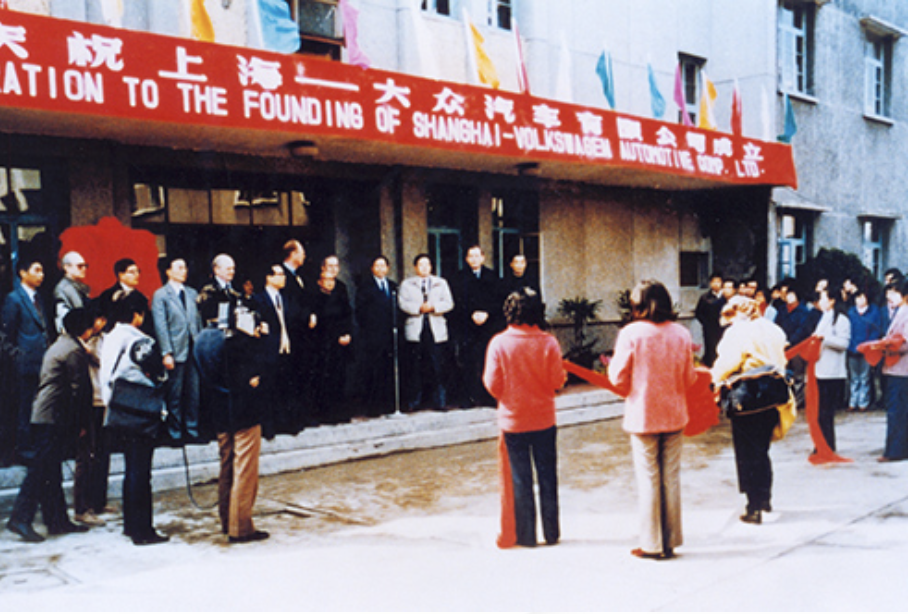
Groundbreaking ceremony of Shanghai Volkswagen Automotive Co., Ltd.
Looking back at the history of China's auto industry, joint ventures are an indelible chapter. The ventures established around the turn of the millennium shouldered nearly half of the industry's growth. Names like the Santana, Jetta, Fukang, Accord, Corolla, and Buick GL8 are woven into the automotive memories of generations of Chinese consumers.
Joint ventures were the inevitable choice for that era. With a weak industrial foundation, China used partnerships to import technology, learn management practices, and train talent, gradually building its industrial base. It is fair to say that without the accumulation of the joint venture era, today's explosion of domestic brands would not have been possible.
But times have changed.
Today, China is the world's largest auto market and the leader in new energy vehicles. Domestic brands have captured over 70% of the passenger car market and more than 80% of the new energy segment.
The situation for joint ventures has shifted from "easy money" to a "struggle for survival." Suzuki, Renault, Fiat, and Jeep are just a few of the brands that have exited China in recent years. Those that remain are enduring growing pains.
Yet, this does not mean the joint venture model is finished. Li Yanwei believes most mainstream joint ventures will renew. In his view, the current struggles are more about economic cycles and the pace of transition than a failure of the Chinese market. "The market volume of over 20 million units a year is still there, and so is the demand."
The brands that chose to leave, he argues, were already weak competitors. Their exit was a strategic contraction, not a sign that the Chinese market lacks value.
More importantly, the significance of the Chinese market for foreign automakers has shifted. In the past, it was simply a place to sell cars and generate revenue. Technology, products, and standards were dictated by the foreign partner, while the Chinese side handled production and sales.
Now, it is different. China is not only the largest single market but also the fastest in new energy technology, the most complete in supply chain, and the lowest in cost. For multinational automakers, China's role is evolving from a sales market into an innovation base and an export hub.
The former "teachers" are now learning from their "students." Almost every joint venture has upgraded its slogan from "In China, For China" to "In China, For China, For the World."
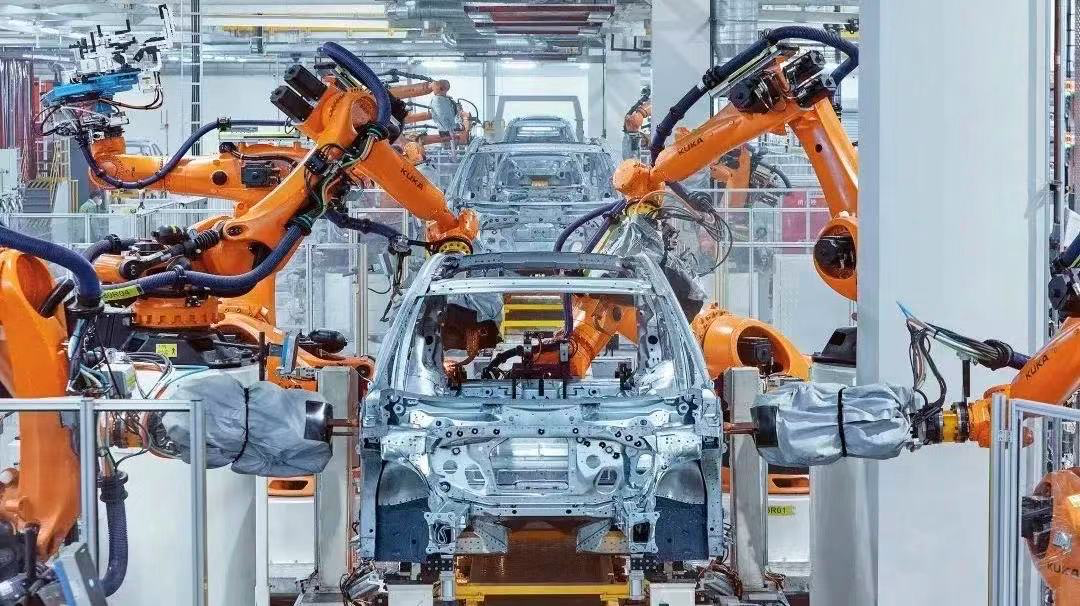
Image Source: SAIC Volkswagen
The CUPRA Tavascan, produced at the Volkswagen Anhui plant, is entirely made in China for the European market and successfully avoided anti-subsidy tariffs. Honda renamed the Dongfeng Honda e:NS2 to the Insight for export back to Japan—the first time a Japanese automaker has shipped a China-developed and China-built new energy vehicle back to its home country.
Nissan plans to transform China into a global innovation and export hub, with some bases already upgraded to core supply centers for Southeast Asia and Latin America. Ford's exports from China have grown 265% over the past four years, with over 180,000 units shipped in 2025. Domestically produced Lincoln Nautilus and Corsair models have successfully entered the North American market.
Even Renault, which exited the Chinese passenger car market, hasn't truly left. It established the ACDC R&D center in Shanghai. Following the success of the Twingo E-Tech, ACDC was upgraded to a global capability center, providing R&D support for Dacia, Nissan, and models in South American markets.
The people may have left, but the industry chain remains.
That is the reality today: whether they sell cars in China or not, multinational automakers cannot bypass China's new energy supply chain. This is especially true for the joint ventures that remain. They must not only sell in China but also develop, procure, and export globally from China.
From this perspective, the renewal of joint ventures is not just a vote of confidence in the Chinese market, but a strategic choice. In the global race for electrification and intelligence, those who best leverage China's supply chain and talent advantages are the ones most likely to win.
In Conclusion
Twenty-nine years ago, when SAIC-GM was established, it was dubbed Shanghai's "Project No. 1." It set a global record for plant construction speed with "Shanghai Velocity" and began a celebrated chapter of cooperation between the Chinese and American auto industries.
Twenty-nine years later, the two sides are renewing for another 20 years, but the backdrop has changed completely.
Back then, China needed GM's technology and management expertise; today, GM needs China's supply chain and market. Then, it was about bringing technology in; now, it is a two-way street.
The form of the joint venture remains, but its substance has transformed.
Zhou Xiaoying, CEO of Gasgoo, believes joint ventures were once crucial vessels for China's auto industry to learn global technology and establish modern manufacturing systems. But as domestic brands and the smart electric supply chain grow, the traditional model of "technology introduction, local production" is no longer sustainable.
In her view, joint ventures still have value, but they must redefine how they create it: by combining existing brand, manufacturing, distribution, and global resources with China's R&D speed, intelligent capabilities, and supply chain efficiency. The shift must be from "global technology into China" to "Chinese innovation for the world."
"The 20-year renewal of SAIC-GM is a key sample of this restructuring of the joint venture model," Zhou said.
The next 20 years for SAIC-GM will not be a simple matter of "introducing models and selling them locally." It faces the rise of domestic brands, intense competition in new energy, and rapid iteration in intelligent technology. Its task is to integrate China's supply chain advantages and R&D capabilities with GM's global resources to forge a new path for joint ventures.
Whether this path will be smooth is anyone's guess. But at least, both sides have chosen to stay the course.
Twenty years is a long time—long enough to transform an industry. Yet it is also short—merely a segment in the long river of industrial history.
And the story of SAIC-GM continues.


