Gasgoo Munich- RealMan recently announced it has secured nearly 500 million yuan in financing. Led by strategic investments from several well-known listed companies, the capital will be funneled into product R&D and iteration, the construction of the AUTRON super factory, and the deepening of a global ecosystem built on "hardware, data, and a remote operation network."
As one of the earliest domestic players focused on embodied AI infrastructure, RealMan aims to build a system-level platform for the coming era. By combining "reliable hardware, real-world robot data, and a remote operation network," the company seeks to make robots truly practical.
With this goal in sight, the latest round does more than signal industry validation for RealMan's strategic flywheel. It also supplies fresh ammunition for its end-to-end layout — spanning core components to super factories, and real-world data to global networks.
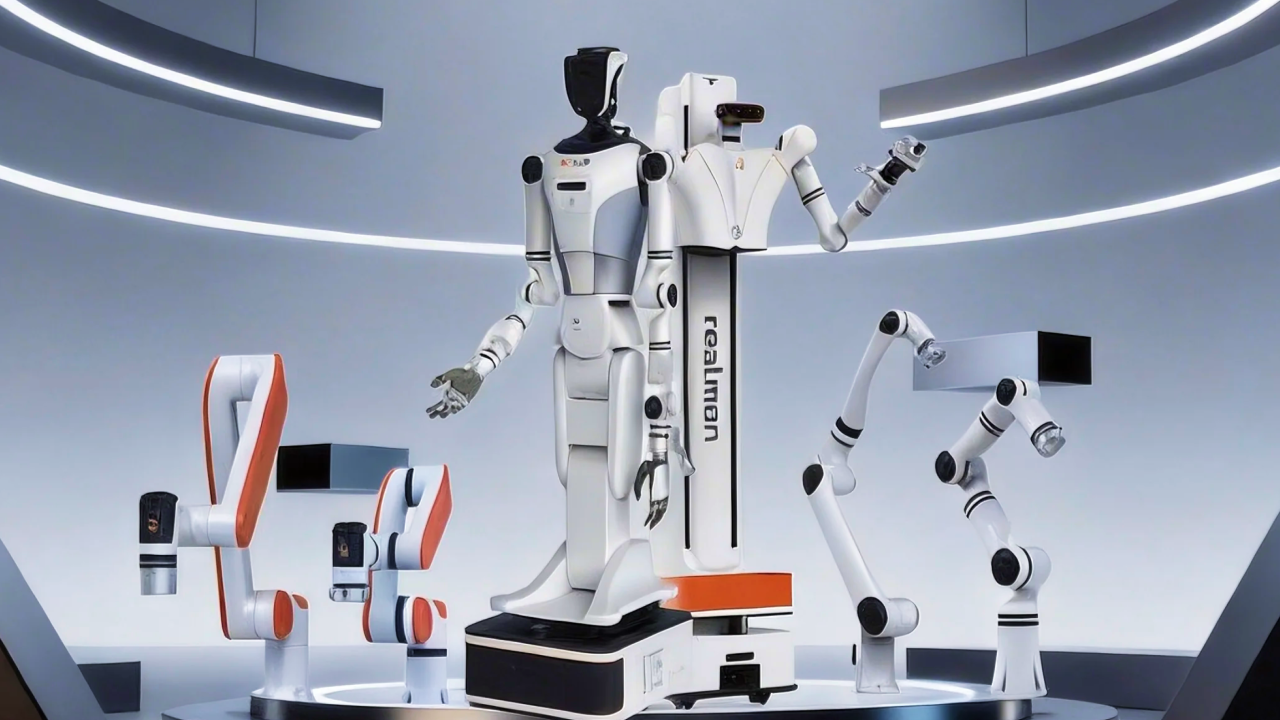
Image Source: RealMan
For Robots to Deploy, Hardware Must Be Reliable
The story of RealMan starts with a set of numbers.
By 2025, annual production capacity for RealMan's self-developed integrated joint modules will surpass 100,000 units. Its robotic arms have secured CR L3 certification, with a mean time between failures reaching 50,000 hours.
What does 50,000 hours actually mean? Assuming an eight-hour workday, that is over 17 years of continuous operation without failure. For robots entering homes, factories, and commercial spaces, hardware reliability is arguably a prerequisite more critical than algorithmic capability. Even the smartest "brain" cannot truly deploy if the "body" fails.
Behind this lies eight years of accumulation by RealMan.
Since its founding in 2018, RealMan has driven technological innovation centered on dexterous robotic arms and precision, durable joints. The company's view is clear: for robots to enter daily life, hardware must be sufficiently reliable.
To meet this goal, RealMan designs its robotic arms to benchmark the length, girth, flexibility, and load capacity of an adult male arm. The aim is to achieve seamless integration with people and their working and living environments, both in form and function.
It is worth noting that in the embodied AI sector, many companies currently opt to source joint modules externally and focus on system integration. RealMan chose a different path: starting from underlying core components to achieve full-stack self-development.
This path may be heavier and slower, but once established, it means total control over product reliability.
Beyond Hardware, Data Is the Moat
If reliable hardware is the first layer of the foundation, then data is the second.
In embodied intelligence, the importance of data is an industry consensus. Yet approaches to data collection vary. Some rely on synthetic simulation, others on teleoperation, and still others on learning from internet videos.
RealMan's solution is the GLN remote operation network.
The system's logic is straightforward: an immersive remote operation interface allows operators to direct robots in real-time to execute tasks in real-world scenarios. This ranges from daily chores like folding towels or moving boxes to specialized tasks requiring expertise, such as pipe gallery inspection and power grid control.
Every remote operation serves a dual purpose: executing a task and collecting real-world robot data.
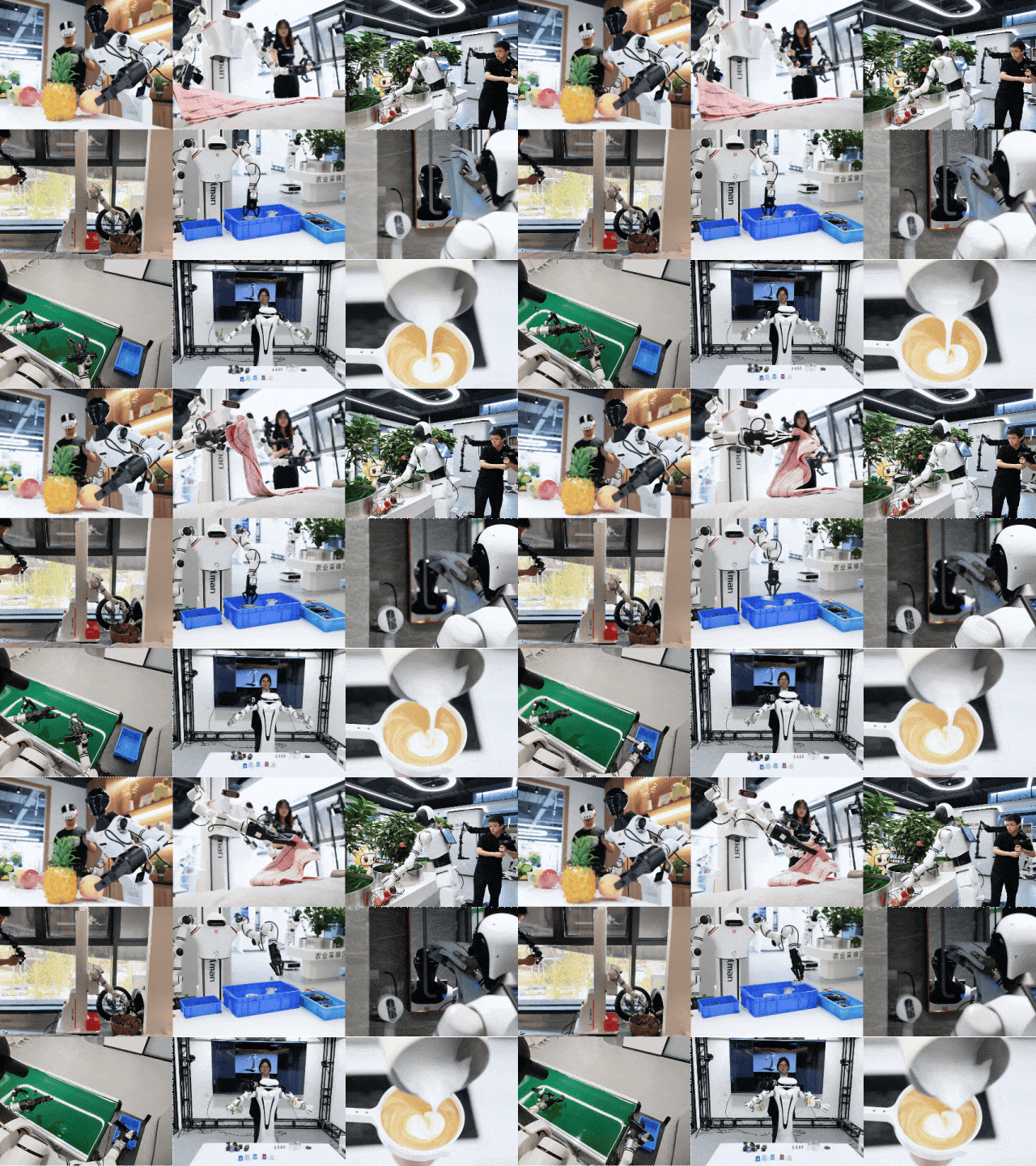
Image Source: RealMan
At CES earlier this year, RealMan demonstrated trans-oceanic operation from Beijing to Las Vegas. During the Beijing TV Spring Festival Gala on Lunar New Year's Day, its robots joined in dumpling-making, simultaneously accumulating data from a real-world setting.
The value of these scenarios lies in this: data is not "acted out" in a lab, but "earned" through actual tasks.
These capabilities are largely due to RealMan's deep accumulation of high-quality data in real-world scenarios. At the Beijing Humanoid Robot Data Training Center, utilizing 108 embodied robot bodies across ten major application scenarios, the company has amassed real-world data covering over a thousand tasks and tens of millions of trajectory segments.
Building on this, the company recently announced it would open-source the world's first high-quality real-robot dataset featuring the most modalities.
This move likely aims beyond simple philanthropy. In the early stages of an industry, open-sourcing data to establish standards and attract developers to iterate algorithms on your hardware and data is, in itself, a way of building an ecosystem barrier.
From 100,000 to 1 Million: Breaking Through Production Bottlenecks
The third layer of the foundation is mass production capability.
Since taking its first step toward globalization in 2024, RealMan has expanded its business across Asia, Europe, North America, and South America. It now serves over 8,000 corporate clients globally, spanning industrial automation, research and education, and commercial services.
A client base of 8,000 is rare among embodied AI startups. A closer look suggests several implications: the product has achieved standardized delivery capabilities, the customer base has expanded from "early adopters" to "practical users," and scenario coverage has diversified.
To better break through industry production bottlenecks and secure scaled delivery, RealMan plans to leverage the AUTRON super factory in 2026. The facility will host flexible, mixed-line, and large-scale manufacturing capabilities, with a target annual capacity of 1 million joint modules.
Scaling from 100,000 to 1 million units would, if achieved, elevate RealMan's supply chain bargaining power, delivery capabilities, and cost control to a new tier.
Particularly in the embodied AI sector, production capacity is emerging as a new bottleneck. As more robotics companies move from R&D to mass production, the ability to supply core components will determine who can actually deliver and who is left merely demonstrating prototypes.
RealMan's decision to double down on its super factory at this juncture suggests it sees this trend clearly.
Notably, driven by full-stack self-development of core components and scaled delivery, RealMan's operating cash flow entered a virtuous cycle in 2025.
It is important to recognize that while most startups in the embodied AI race are still burning cash, this signal indicates that RealMan's business model has achieved a degree of self-sustainability. Against this backdrop, the simultaneous introduction of capital from multiple listed companies in this round further validates that its technology roadmap and product definitions have won the endorsement of the industrial chain.
About Seeds Discovery:
Gasgoo's "Seeds Discovery" column aims to build a service platform connecting startups, industrial ecosystem partners, investment firms, and local governments to deeply empower the upstream and downstream supply chain. Since its launch, the column has been dedicated to uncovering exemplary companies, technologies, and business models that offer inspiration and leadership during the wave of intelligent transformation, thereby driving the growth of innovative forces in the automotive industry. According to Gasgoo statistics, nearly all startups featured in "Seeds Discovery" have successfully connected with industrial ecosystem resources.