



Two months into 2026, two reports from the China Automobile Dealers Association have cast a heavy shadow over the market tone for the year.
By late February, the association's January "Market Pulse" report laid bare a brutal start to a period of policy adjustment: the industry-wide GP1—gross profit margin on standalone vehicle sales—slid to -21.5%. Falling sales, rising inventory, and mounting profit pressure became the collective portrait for dealers at the start of the year. Just a day later, the inventory warning index for February followed: at 56.2%, the figure was down 0.7 percentage points year-on-year and 3.2 points month-on-month, yet it remained above the boom-bust line. Moreover, 76.8% of dealers failed to meet their sales targets.
Yet, amidst the gloom, one set of numbers stands out: 20.7% of dealers managed to boost their profitability in February.
This data from the "Market Pulse" and Dealer Inventory Warning Index reports paints the most authentic picture of the industry at the start of 2026: the deep winter persists, so how are some finding a glimmer of light? As the smoke of the "price war" begins to clear, how are the survival rules for dealers evolving?
The "Three Big Mountains" Facing Dealers at the Start of the Year
According to the January "Market Pulse" report, the industry-wide GP1 stood at -21.5%. This means that for every car sold, dealers lost an average of over one-fifth of the vehicle's price on the standalone sales link alone. Luxury brands are mired even deeper in a quagmire of loss at -26.2%. By this calculation, selling a luxury car with a guide price of 300,000 yuan results in a book loss of nearly 80,000 yuan before rebates are factored in. This isn't poor management—it is the industry-wide chronic ailment of "price inversion." To secure sales targets and obtain year-end rebates from manufacturers, dealers are forced to sell at a loss, trapped in a dilemma where "the more you sell, the harder you fall."
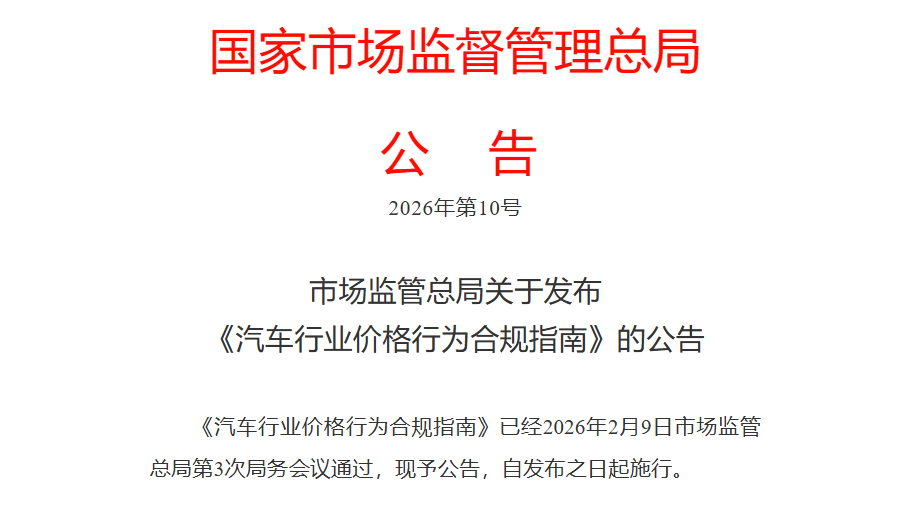
Image Source: Screenshot from State Administration for Market Regulation
In response, the State Administration for Market Regulation issued the "Guidelines on Compliance with Price Behaviors in the Automobile Industry" on February 11, explicitly banning unfair competition practices such as selling below cost and price collusion. A survey by the China Automobile Dealers Association shows that following the new rules, 25.6% of dealers reported some easing of price inversion. Although more than 70% believe no significant change has occurred yet, the hand of policy intervention is beginning to show results. This suggests that restoring dealer profitability at the institutional level is not empty talk; the "cracks" in pricing are gradually being filled by policy.
For dealers, inventory is another mountain weighing on their backs. In January, under the dual impact of policy shifts and demand fluctuations, inventory pressure climbed again. Data from the China Automobile Dealers Association shows the inventory warning index hit 59.4%, down 2.9 percentage points year-on-year but up 1.7 points month-on-month. The policy shift behind this mainly involves the adjustment of New Energy Vehicle purchase tax incentives from "exemption" to "halved collection," compounded by the fact that optimized "Two New" policies—covering new equipment updates and consumer trade-ins—saw subsidy application processes released only later in various regions. This led to intensified short-term consumer wait-and-see sentiment.
Additionally, year-end tax subsidies and promotional pushes by automakers at the end of 2025 cannibalized some demand in advance. Coupled with a later Spring Festival, the concentrated release of pre-holiday purchasing demand was postponed.
Facing this situation, the industry is widely calling on manufacturers to optimize inventory support. The China Automobile Dealers Association explicitly stated it will send letters to manufacturers for brands with inventory coefficients exceeding two months, urging relevant companies to pay close attention to dealer inventory conditions and actively optimize production and sales rhythms. A typical case is the All-China Federation of Industry and Commerce Automobile Dealers Chamber of Commerce, which sent three letters to Mercedes-Benz between December 2025 and January 2026, putting forward specific suggestions such as "controlling dealer inventory coefficients below 1, optimizing rebate realization mechanisms, and setting reasonable assessment targets."
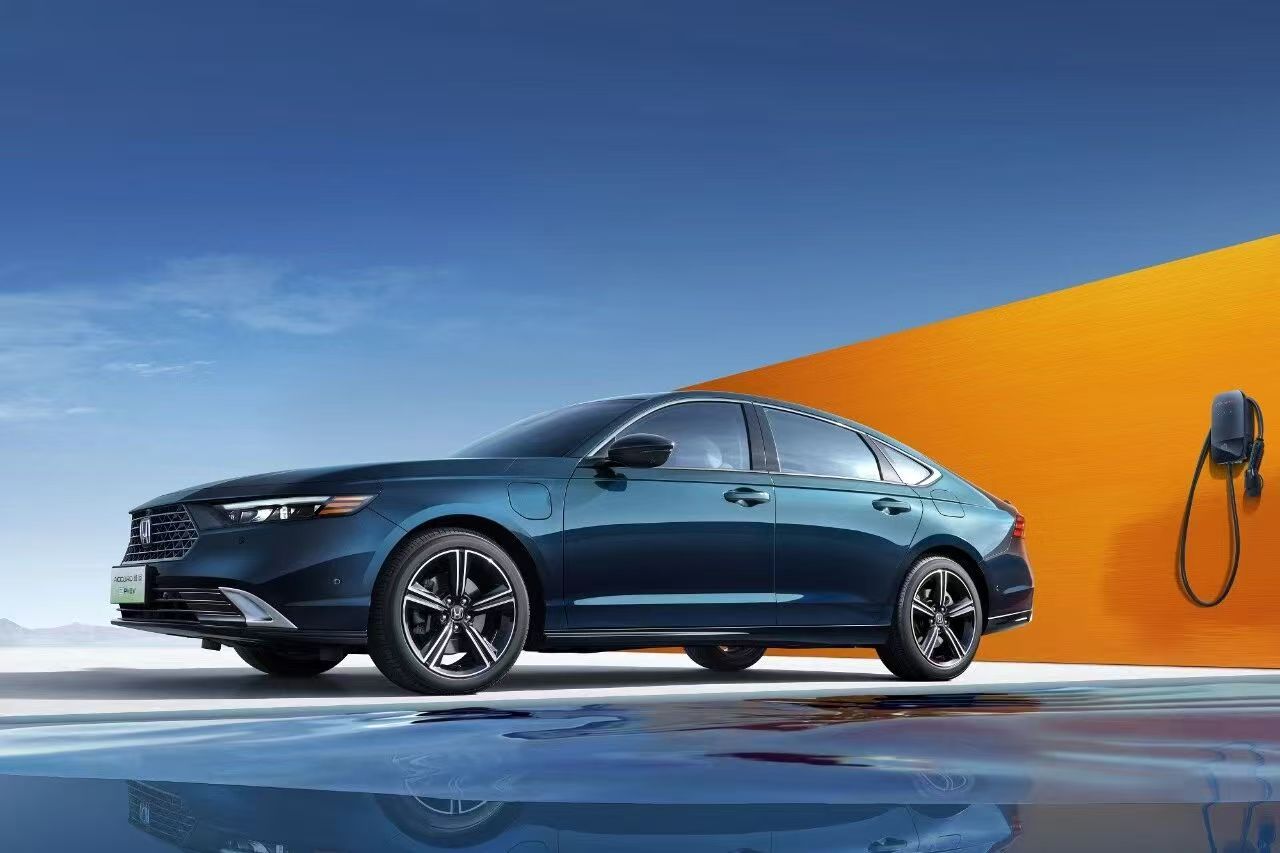
Image Source: GAC Honda
Entering February, the situation diverged. Dealers utilized the pre-Spring Festival window to intensify clearance efforts and actively controlled stocking rhythms. The inventory warning index fell 3.2 percentage points month-on-month to 56.2%, offering some relief from inventory pressure. In the market, brands like XPENG, Zhijie, and Avatr rolled out preferential offers, while GAC Honda offered a straight 100,000-yuan discount for returning customers buying the Accord e:PHEV.
However, while the overall inventory warning index fell month-on-month, structural contradictions persist. The inventory warning index for luxury and imported brands actually rose in February, bucking the trend to reach 59.9%, making it the group under the greatest pressure among the three major camps. Behind this lies a profound product cycle challenge for luxury brands. In January, BMW cut official guide prices for 31 models, including the 3 Series, 5 Series, and X3, by between 4% and 24%. Industry insiders analyze that while this appears to be a concession to consumers, the underlying logic is accelerating inventory clearance to free up market and channel space for upcoming models.
As new car sales become a "profit black hole," after-sales service has become the "cash cow" that dealers hold tightly. A veteran industry figure who also runs an auto repair shop told Gasgoo bluntly: "Selling cars is making less and less money; if after-sales can be stickier, there will be more revenue." He further noted: "In the new energy era, maintenance frequency for NEVs has dropped significantly. Pure electric vehicles basically have no oil or filter changes, while hybrid maintenance is comparable to fuel vehicles."
In recent years, after-sales chain brands backed by major platforms have accelerated expansion and integration. Tuhu and Tmall, for instance, have lowered parts costs through bulk purchasing, squeezing the 4S shop after-sales share to some extent. However, the veteran mentioned believes such chains have limited impact on traditional repair shops: "Fast repair shops like Tuhu mostly have Class 2 qualifications and can mostly handle quick maintenance; they cannot perform deep mechanical or electric repairs. When there are powertrain failures or smart driving issues, they are as helpless as we are—only a 4S shop can handle it."
During the warranty period, owners returning to 4S shops to maintain warranty eligibility is standard after-sales protection. However, as some dealers face tight cash chains or even exit the network, maintenance packages bought by owners cannot be honored, which has led to a certain degree of customer churn.
Notably, this insider also sees structural opportunities: "As the NEV parc increases further, while overall business volume shows a downward trend, profit per transaction is higher. For example, in the past, a BBA headlight assembly costing 20,000 or 30,000 yuan was already considered high. Now, the pricing of assemblies for many NEVs is in the hands of the enterprises themselves, with fewer choices, and many are full-width lights. Some automakers even hope to increase corporate profits through later parts replacement, so now some NEV headlights reach an exorbitant 60,000 or 70,000 yuan."
According to the January 2026 "Market Pulse" report, although the loss on GP1 remains high, GP3—which includes gross margins from all businesses including sales, after-sales, and derivatives—achieved a small profit after overlaying finance, derivative businesses, and manufacturer rebates.
This set of data is crucial: it proves that even in an industry environment where selling cars generally incurs losses, those dealers who can deeply cultivate the after-market, maximize user lifecycle value, and refine derivative businesses can still find a new fulcrum for survival.
A Multi-Party "Relief Operation"
Facing the squeeze of these "three gates," a multi-dimensional "external rescue" operation—comprised of policy protection, manufacturer concessions, and association problem-solving—is unfolding.
In January, the trade-in policy shifted from "fixed subsidies" to "percentage-based subsidies on vehicle price," initially triggering consumer wait-and-see sentiment. But entering February, the policy level landed a heavy punch.
For example, the "Guidelines on Compliance with Price Behaviors in the Automobile Industry," a document containing 28 measures, not only drew a red line against "selling below cost" but also encouraged platforms to issue risk alerts for significantly low prices. As mentioned earlier, 25.6% of dealers have already felt the inversion ease.
Meanwhile, the application process for local "Two New" subsidies is gradually becoming clearer. Cities like Beijing and Chongqing are continuously improving the car consumption business environment by issuing consumption vouchers and implementing "one-code check" and "white list" systems, paving the way for a mild market recovery in March.
Manufacturers and dealers are fundamentally a "community of destiny." Facing the continued operational pressure on dealers, leading brands are also adjusting strategies.
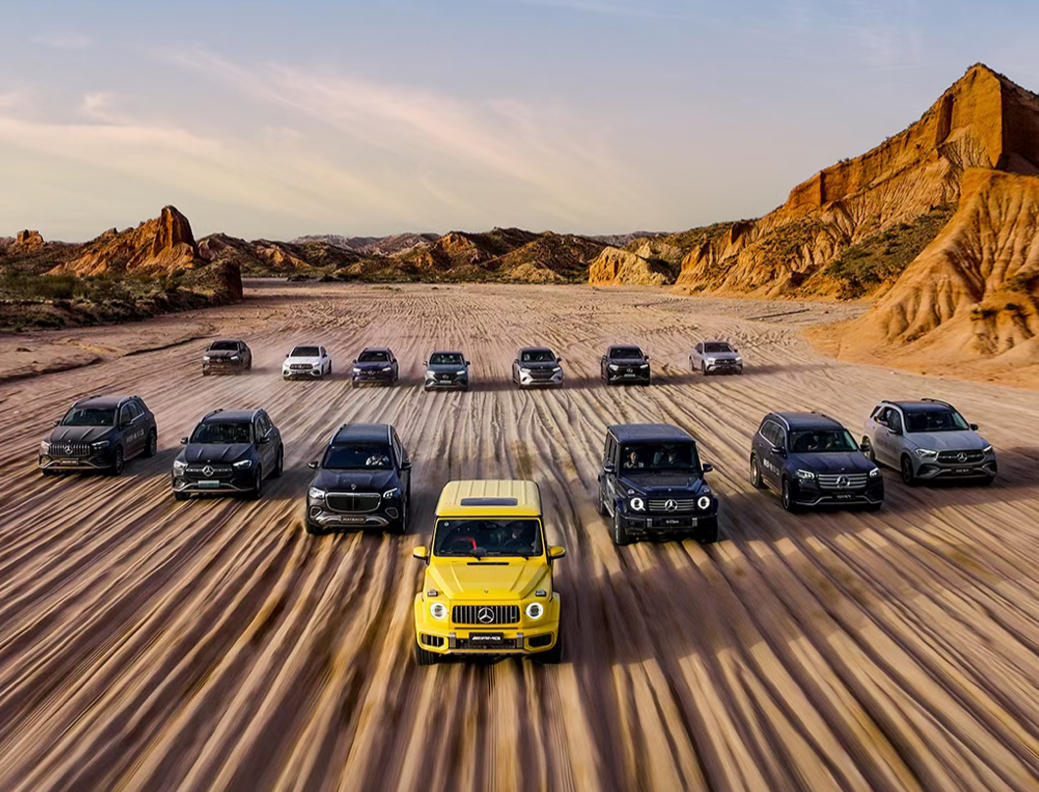
Image Source: Mercedes-Benz
The January "Market Pulse" report already mentioned some luxury brands actively lowering guide prices to protect dealer interests. In February, this trend deepened further, with the three German luxury brands—BMW, Mercedes-Benz, and Audi—successively initiating adjustments to official guide prices. Among them, the maximum adjustment for main-selling models like the Mercedes-Benz C-Class, GLC, and GLB was around 12%, aimed at reducing fluctuations in terminal transaction prices and stabilizing dealer gross margins on new cars.
To cope with market changes, Porsche plans to retain only 80 core dealers by 2026. In the third quarter of 2025, BMW reduced its 4S stores by 36, while Mercedes cut 64 4S stores and 11 2S stores. A dealer insider admitted frankly in an interview: "This year, definitely more stores will close than last year. Those forced to close last year were still hesitating; this year, there's no need to think—close immediately." This consensus of "cutting off the arm to survive" is forming between manufacturers and dealers.
Additionally, regarding long-standing industry pain points such as price inversion, inventory pressure, rebate cycles, and exit mechanisms, the China Automobile Dealers Association is promoting the formation of a normalized manufacturer-dealer consultation and resolution mechanism. At the same time, it continues to carry out a series of docking activities like "Walking into Production Enterprises" to build communication bridges, and actively guides financial institutions to provide sufficient credit support for new and used car sales, attempting to relieve the dealers' urgent financial needs from the capital end.
What Did the "Survivors" Do Right?
External "blood transfusions" can only delay the crisis; the true path to survival lies in "internal blood generation." What exactly did those 20.7% of dealers who improved profitability during the winter do right?
As the internal combustion engine market continues to shrink, embracing new energy has become a definite direction. Relevant data shows that by 2025, 37% of luxury brand dealers had already pivoted to new energy businesses. The expansion speed of new energy brand dealer networks is three times that of traditional brands, a trend profoundly reshaping the landscape of automobile circulation channels.
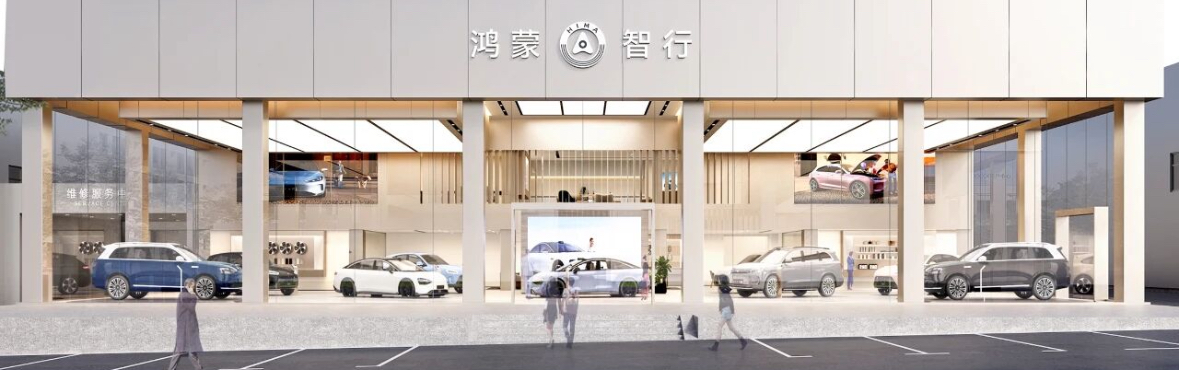
Image Source: HarmonyOS Mobility
The most representative case is Zhongsheng Holdings, China's largest dealer group. It is reported that Zhongsheng has secured 50 HarmonyOS Mobility authorizations and decisively converted some BBA stores through "store flipping" renovations. Head enterprises like Yongda Group are also following suit.
When opening revenue sources is difficult, cost cutting becomes the primary task. Dealer groups have begun to actively close unprofitable stores, while brands are also pushing for lightweight channel transformation.
At Lincoln's year-end media communication in January, Jia Mingdi, President of Lincoln China, stated that the brand had driven 34 dealers to complete lightweight transformation under the "Spark Prairie" lightweight strategy, reducing operating costs by 34%. Additionally, 25 new lightweight stores were opened, minimizing showroom area to 400 square meters with a per-store investment of 1.6 million yuan, alleviating the heavy asset pressure on dealers.
Furthermore, the "fusion store" model has begun to emerge, where a single dealership operates two or more car brands simultaneously. This differs from the common "multi-brand store" of the past by emphasizing deep coordination and space sharing between brands rather than simple coexistence. Through resource sharing and space optimization, these stores improve operational efficiency to cope with systemic challenges such as declining customer traffic and rising costs.
The GP3 data for January has already proven that what truly allows dealers to survive is capability beyond new car sales.
Beyond selling cars, various players are displaying their skills in after-sales. For instance, FAW-Volkswagen launched the "Joyful Journey 2.0" plan, using services like lifetime warranty on original parts and one-hour express maintenance to lock in user return visits. AITO has built a "Smart Enjoyment Service System," achieving second-level generation of over 70% of fault diagnosis reports and pioneering free service if basic maintenance exceeds 45 minutes. The common aim of these measures is to transform after-sales into the "ballast stone" for user retention.
Take Lincoln, for example. By optimizing its after-sales structure, it achieved a service absorption rate (the ratio of after-sales profit to dealer operating costs) exceeding 100%—meaning a store can sustain itself solely on after-sales revenue. Behind this result lies its effort in after-sales and service: regarding after-sales, Lincoln introduced extended warranty policies for users with warranties about to expire, effectively boosting return rates. On the service side, Lincoln plans to divide the country into eight major cultural clusters, customizing differentiated service standards based on regional user habits, pushing stores to transform from traditional "sales centers" to "user operation centers."
Yongda Auto also delivered a solid report card in the after-sales sector. In the first half of 2025, Yongda's after-sales revenue reached 4.784 billion yuan, with maintenance and repair revenue at 4.66 billion yuan. The gross margin for maintenance and repair was 40.35%, and the service absorption rate was 84.2%, an increase of 5.6 percentage points from the same period in 2024.
Yongda's success is no accident. On one hand, Yongda has built sticky products around "replacement, accidents, and maintenance," boosting user return rates through value-added services like extended warranties and maintenance packages. On the other hand, the smart battery maintenance equipment released by its subsidiary, Juhui Electric Tech, shifts after-sales from "passive repair" to "active maintenance," solving the pain point of range degradation for NEV owners and improving per-vehicle output value and margin space. Simultaneously, Yongda achieved quality and efficiency improvements in its after-sales network by shutting down inefficient outlets and concentrating resources on leading new energy brands like HarmonyOS Mobility.
Conclusion:
At the start of 2026, Chinese auto dealers submitted an answer sheet of "ice and fire."
On one side, an industry-wide GP1 of -21.5%; on the other, a profit increase for 20.7% of dealers. On one side, an inventory warning index of 56.2%; on the other, 25.6% reporting eased price inversion. Two sets of seemingly contradictory data outline the authentic picture of the industry adjustment period: widespread losses persist, yet structural opportunities have emerged.
Those dealers still profitable in the winter either decisively pivoted to the new energy track, compressed costs through lightweight transformation, or built after-sales from an "ancillary business" into a key profit support. As the era of "easy money" ends, the value of "meticulous cultivation" begins to gradually stand out.
The multi-party rescue from policy, manufacturers, and the association has bought a precious adjustment window for the industry. But what truly determines one's fate remains the dealer's own ability to adapt.


