



Gasgoo Munich-Spring 2026, and the embodied intelligence race is still burning hot.
Just days ago, Galbot and Noetix Robotics announced new funding rounds totaling more than 3.5 billion yuan. Then in February, the dexterous hand sector had its own moment in the spotlight: Inspire Robots wrapped up back-to-back Series C1 and C2 rounds worth several hundred million yuan.
Gasgoo noted a formidable lineup on the investor roster: the China Mobile Chain Leader Fund, the Beijing Artificial Intelligence Industry Investment Fund, Shenzhen Capital Group (SCGC), Fortune Capital, and Qiming Venture Partners. It's a rare coalition of state-backed funds, industrial capital, and market-oriented institutions.
The company also dropped a telling figure: shipments of its dexterous hands topped 10,000 units in 2025.
What does 10,000 units really mean?
In today's auto industry, selling 10,000 units a month is routine. But for dexterous hands, that volume marks a new global record. By comparison, Shadow Robot—a UK-based veteran founded in 1997—has long seen its annual shipments linger in the hundreds.
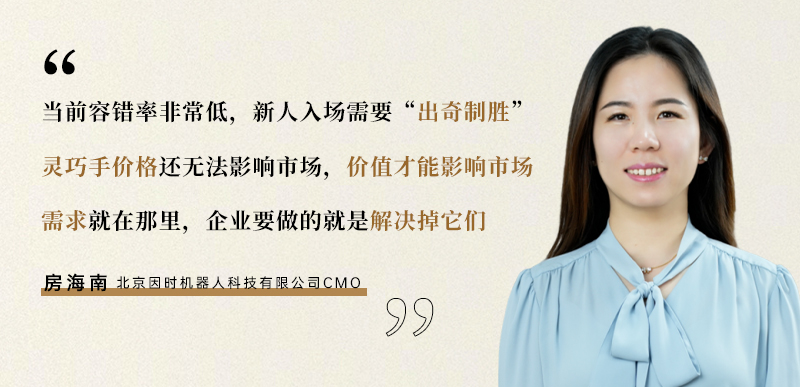
Fang Hainan, CMO of Inspire Robots, humbly attributes the surge to being in the right place at the right time. "We were lucky just to survive until the tailwind arrived," she says.
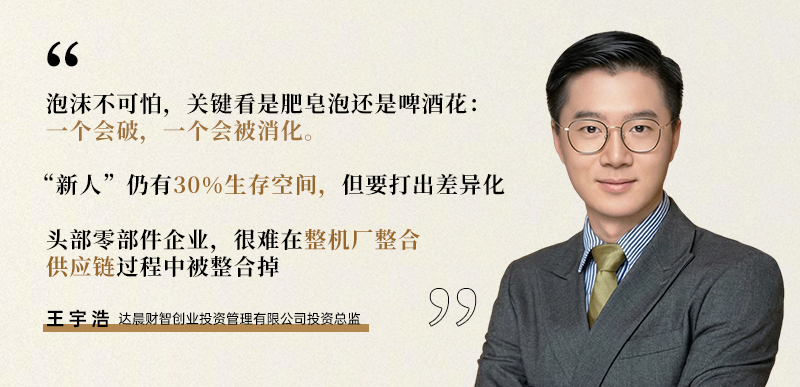
Wang Yuhao, an investment director at Fortune Capital, sees it differently. He argues that "timing" is really just the sudden release of accumulated energy. "Of all the embodied intelligence startups we've backed in the last two years, InTime is the most pragmatic and restrained team," he says.
What is the logic when a company waits nearly a decade for its breakout moment, or when investors have to push a startup to do PR in the middle of a funding frenzy?
By tracing Inspire Robots's path, we try to decode the complex equation of the dexterous hand business: choosing a technology roadmap, managing the pace of funding, navigating supply chain dynamics, and surviving the bubble to secure a seat at the table.
The Cold Bench and the Tailwind
"Ten years ago, we didn't know where the market was."
Back in 2016, when Inspire Robots's founders launched their startup, they had no clear sense of the coming embodied intelligence wave.
"Back then, the bottleneck was core components," Fang recalls. The founders, all with backgrounds in robotics, had worked on various projects since their university days. They realized that both industrial and collaborative robots were constrained by a single bottleneck: core motion parts.
So they targeted a niche, overlooked space: micro servo electric cylinders. These integrated linear joints combine a servo motor, reducer, encoder, and driver—essentially acting as "micro muscles" for robots.
In 2016, Inspire Robots's first-generation dexterous hand and its first micro servo electric cylinder were born almost simultaneously.
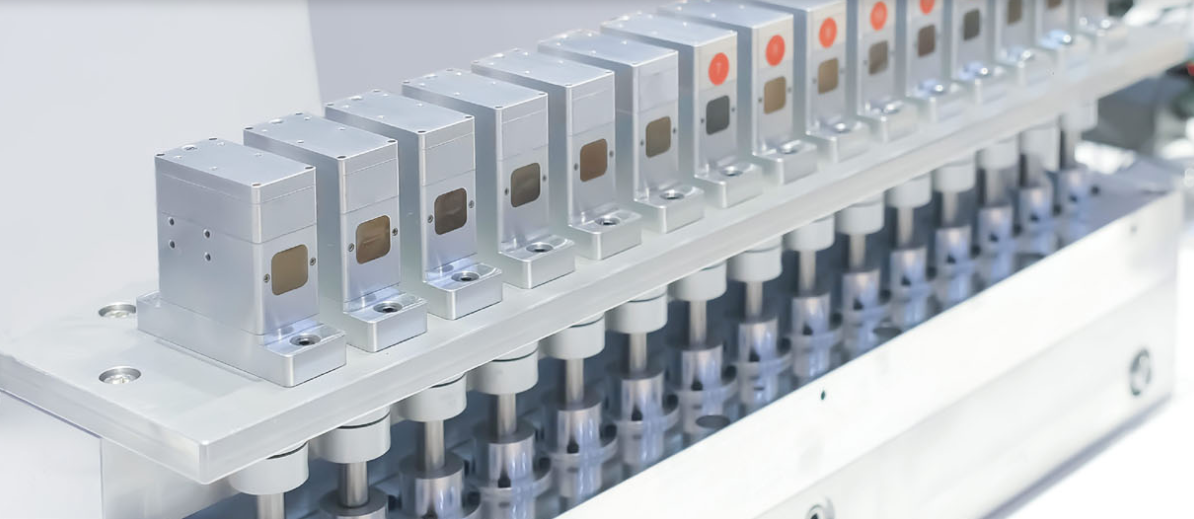
Image source: Inspire Robots website.
But building the component was just step one. The bigger question was: who would buy it?
"We knew there weren't many matching applications for dexterous hands back then; the field was largely a blank slate," Fang says.
She isn't exaggerating. The robot market was far quieter then. Industrial robots relied mostly on two-finger grippers, collaborative robots were just getting started, and humanoid robots were still "showpieces" confined to labs like Boston Dynamics.
Dexterous hands were considered the "Patek Philippe of robotics," with a single imported unit costing hundreds of thousands, even millions, of yuan.
"To be honest, there was an element of showing off our tech," Fang admits. "But we also believed that commercial robotics would eventually need universal end-effectors."
It's a classic case of components coming before product definition.
Over the next few years, they followed an "inside-out" path: using volume applications in industrial and medical sectors to fund their nascent robotics ambitions.
"We predicted that the robotics industry wouldn't generate significant volume for us within a decade," Fang says. So Inspire Robots pivoted, applying its core micro servo technology to industrial and medical fields first.
High-volume reuse in other industries not only drove down costs but, more importantly, kept the company alive long enough to see today.
From its founding in 2016 to the official commercial launch in 2020, Inspire Robots endured a long four-year hibernation.
There were no market trends to ride, no capital narratives to spin—just the relentless grind of refining craftsmanship and optimizing the supply chain.
In 2020, Inspire Robots launched its dexterous hand, pricing it under 100,000 yuan. It was a sensation—the first time a domestic dexterous hand became truly "affordable."
But the real turning point didn't arrive until 2023.
That year, breakthroughs in AI and the buzz around Tesla's Optimus transformed humanoid robots from lab concepts into a global tech obsession. As the end-effector enabling fine manipulation, the dexterous hand went from niche to mainstream overnight.
"Before 2023, we had probably sold a total of just over 1,000 units," Fang says. In 2024, that number hit 2,000, reaching break-even. By 2025, it surged to 10,000.
The tailwind had arrived.
But opportunity favors the prepared.
Is the Margin for Error "Dead"? Can Newcomers Still Board the Train?
As the sector heats up, a sharp question emerges: is now still a good time to enter the dexterous hand market?
Wang Yuhao offers a measured capital perspective. "The humanoid robot direction is solid. Dexterous hands, as high-value, high-barrier core components, should logically support more than one key supplier," he says.
But he shifts gears quickly: "The opportunity looks massive, but breaking in is actually incredibly hard."
His reasoning: first-mover advantages are becoming barriers. Robot manufacturers typically train models paired with specific dexterous hands. Once that deep integration is set, switching costs are steep. "Considering the difficulty of switching for top manufacturers, the need for re-adaptation, and commercial factors, the first movers have a clear edge."
Fang Hainan is even more direct: "The margin for error right now is incredibly low."
She explains that usage volumes are scaling up fast, while competitors are already highly mature. "If you want to enter now, you absolutely have to win by surprise."
But where can that surprise element come from?
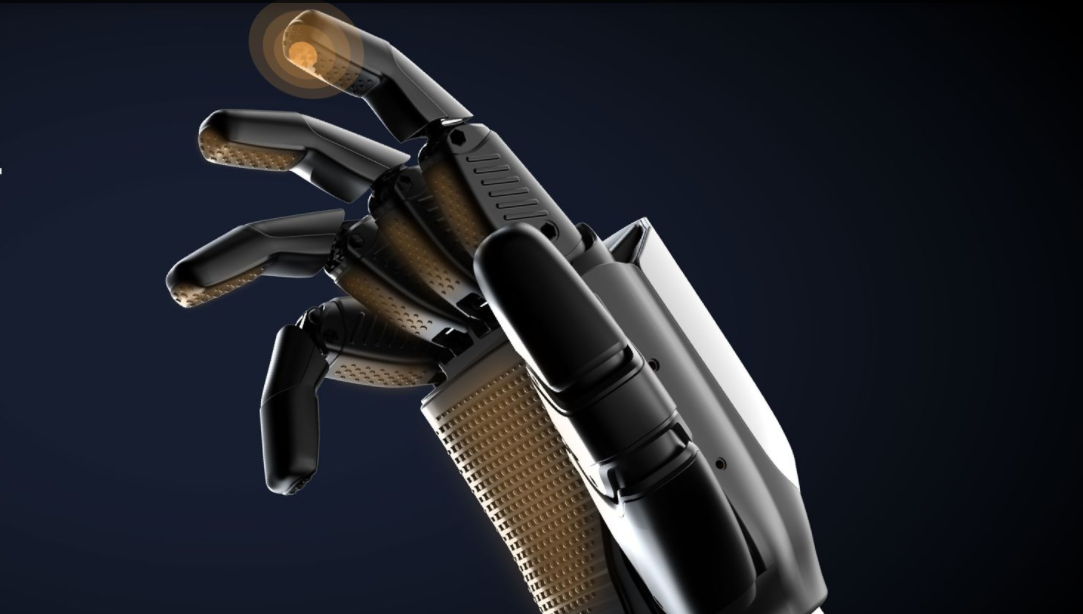
Image source: Inspire Robots website.
Wang Yuhao observes that some newcomers are trying to differentiate via technology routes. Inspire Robots made its name with a linkage drive based on micro servo cylinders, so others are pursuing rope drives or direct drives.
"If the sector is big enough, even with a stable top tier, there might be 30% of the market left for potential rivals," Wang says. Plus, early research customers often prioritize degrees of freedom and flexibility over stability, giving differentiated routes some breathing room.
But Wang stresses a specific theory: the "Impossible Triangle" of dexterous hands. Dexterity, grasping ability, and reliability—you can't easily have all three. "If I had to choose one, reliability comes first."
There's also the practical issue of training costs. "Whose hand do I use to train my model? Switching suppliers later could impact the model's entire performance," Wang notes.
This means that in the current dexterous hand race, time has become a moat.
How to Get Money to "Chase You"?
Behind the "Instant Match" Series C Funding
As mentioned earlier, 2026 began with a bang for Inspire Robots. The company announced the completion of Series C1 and C2 rounds, totaling several hundred million yuan.
The investor roster is impressive: the C1 round was co-led by the China Mobile Chain Leader Fund and Shenzhen Capital Group; the C2 round was led by the Beijing Artificial Intelligence Industry Investment Fund. Qiming Venture Partners, Fortune Capital, Primavera Capital, Boyuan Capital, and TCL Ventures are also on the list.
Regarding the Series C, Fang reveals a subtle detail: "We didn't actually go out fundraising publicly in 2025. This was a case of investors and us hitting it off immediately."
Unlike previous rounds, she explains, the significance of this Series C goes far beyond capital requirements—it's focused on resource synergy.
The entry of the Beijing AI fund and Shenzhen Capital Group sends a clear signal: dexterous hands have risen from a commercial sector to a strategic bottleneck that national policy aims to break through.
The logic of industrial capital is straightforward enough. But amidst the funding buzz, Wang Yuhao keeps returning to one word: pragmatism.
"InTime is the most pragmatic and restrained team I've backed in embodied intelligence," he says. "For the past two years, we investors have been the ones pushing them to do PR and tell their story."
Why is that?
Image source: Inspire Robots website.
The "Soap Bubble" vs. "Beer Foam" Theory in the Midst of a Bubble
In the current embodied intelligence sector, the topic of bubbles is unavoidable.
"Every major technological breakthrough is inevitably accompanied by a bubble," Wang Yuhao admits. But he distinguishes between two concepts: benign bubbles and malignant ones.
"You have to distinguish between 'soap bubbles' and 'beer foam,'" he argues. Soap bubbles eventually burst and vanish without a trace. Beer foam, on the other hand, gets absorbed and digested, settling into calm.
"Benign bubbles push leading companies to accelerate breakthroughs and bring quality capital together," Wang says. Just like the mobile internet era back then, the same applies to embodied intelligence now. The key to distinguishing a "good" bubble from a "bad" one is whether a company's valuation matches its performance and technical strength.
"When we invested in InTime, we had a 'dual-drive' logic," Wang says. First, 80% of a dexterous hand's cost comes from the micro servo cylinder—InTime's foundation. With shipments in the hundreds of thousands, they have a structural cost advantage. Second, InTime has the capability to iterate across the board: they haven't just mastered linkage drives; they have reserves in rope drives and direct drives too.
"We saw many startups trying to differentiate with rope or direct drives," Wang says. "But after deep discussions with the InTime team, one thing became clear: InTime isn't limited to linkages. They just believe that at this stage, obsessively chasing high degrees of freedom isn't valuable. Stability and lifespan come first."
That attitude—"technologically capable but restrained"—actually gave investors more confidence.
Surviving the "Bubble"
What Comes After "10,000 Units"?
What reassures capital most is shipment volume and market share. Once capital, technology, and product align, the industry enters a phase of market validation.
For dexterous hands, has the true volume cycle arrived? Is "mass commercialization" finally visible on the horizon?
As Fang Hainan puts it: The demand is there; the company's job is to solve it.
But the process of "solving" it requires a sound business strategy.
In 2025, Inspire Robots's dexterous hand shipments hit 10,000 units.
It took just one year to go from 2,000 to 10,000 units. Fang knows what this implies, but what truly keeps her alert isn't the number itself—it's where those 10,000 units actually went.
"Most are still following the robot bodies into POC (Proof of Concept) scenarios," she says. But it's a massive step forward: they are now reaching the solution level, laying the groundwork for future replication.
This raises a more fundamental question: As the industry celebrates breaking the 10,000-unit mark, who will sell the next 100,000 units to actual end users?
Driven by market demand, the real barrier is shifting from single technical metrics to comprehensive capability.
Wang offers an answer from an investment perspective: "Dexterous hands are advancing in sync with the humanoid body and the 'brain.' The body is maturing, the brain is converging, and the core task for dexterous hands right now is to collaborate closely with customers, expand market share, and boost satisfaction."
"Startups need the ability to break through at a single point to build influence," Wang says. In the growth phase, they pursue mass production of that single product. Next, they need to fill out the product shelf: different series and models under one technical scheme. Beyond that comes validation and shipment of multiple product lines across different scenarios.
"InTime is at that stage now," Wang concludes. "Having validated multiple technical routes, they are pushing further downstream."
The Contradiction Between Low Prices and the "Impossible Triangle"
The reality, however, is that a price war has already begun before the industry has achieved widespread profitability.
Regarding the "price war" chatter in the dexterous hand industry, Fang is blunt: "Price competition exists right now, but dexterous hand prices don't yet move the market—only value does."
Fang does the math: "A dexterous hand needs at least six motors. Even the cheapest motors on the market cost a few hundred yuan each. If a dexterous hand is priced at 500 yuan, how much does each motor have to cost?"
She analyzes that the root of the current price war is that "products haven't actually reached enough usage scenarios yet." A healthy market logic, where value drives price, hasn't formed.
This reveals a fundamental contradiction: in this early stage, where technical paths haven't converged and application scenarios haven't exploded, is talking about extreme cost reduction premature?
Wang views this from a capital perspective: "This is an inevitable byproduct of being in the middle of a hype cycle and a bubble." Some companies raise money at valuations that don't match their performance, and to justify those valuations, they have to grab market share through low prices.
"But the price war won't last; it's definitely a phase," he believes. It will wipe out a batch of competitors, and those left standing will have a much easier time.
Image source: Inspire Robots website.
Robot Makers vs. Dexterous Hands: The "Substitution" Theory Doesn't Hold Up
There is no denying that any industry exploring its development path faces multifaceted challenges. Beyond internal iteration and rival competition, dexterous hand makers—as component suppliers—must find a balance between supplying robot makers and dealing with those makers developing their own hands in-house.
When top humanoid robot companies start developing their own dexterous hands, where does that leave third-party suppliers?
It's a question that cannot be ignored.
"There's room for both Apple and Android," Wang analogizes. Some top manufacturers will inevitably choose full-stack in-house development, while more will choose to partner with third parties. The key lies in the ratio—and the ROI.
"We've seen many robot makers claim recently that they've 'developed their own dexterous hands,'" Wang says. But you have to look at it in two parts: What does "in-house" mean? Is it completely autonomous design with outsourced manufacturing, or is it setting specs for a third party to build? The former is true in-house development; the latter is more like "customized procurement."
More importantly, the gap becomes apparent when products actually face downstream validation.
"A specialized vendor like InTime interacts with hundreds, even thousands of customers. The corner cases and solutions they've collected far exceed those of a single chain leader," Wang says. Whether it's performance iteration, handling edge cases, service systems, or cost, third parties have irreplaceable advantages.
"It is very difficult for top component suppliers to be squeezed out when robot makers consolidate their supply chains," Wang concludes.
Looking at the supply chain dynamics of the broader NEV and smart vehicle industry, this judgment seems to hold true.
Epilogue:
At the end of the interview, Wang Yuhao offered a remark that could serve as a footnote to this story:
"The load and robustness metrics everyone advertises are exactly where the industry chaos lies. I don't look at those. I stand from the customer's perspective: which supplier is actually worth choosing?"
The noise will fade, and the bubble will eventually burst. Only the companies truly chosen by customers will remain at the table, waiting for the next decade.
When the next tailwind shifts and a new wave rises, perhaps the question shouldn't be "who can catch the wave," but rather: who is already there, having waited ten years for it?
About Gasgoo's "Smart Drive & Capital Talks":
At the intersection of the global tech revolution and deep supply chain restructuring, China's hard-tech sector is unleashing new variables that are reshaping the industry landscape. Continuous breakthroughs in new energy, intelligence, embodied AI, and other frontiers are rewriting the underlying logic of the century-old auto industry and creating golden opportunities for value reconstruction. Against this backdrop, Gasgoo's brand column, "Smart Drive & Capital Talks," was born.
Jointly produced by Gasgoo, leading investment firms, and tech enterprises, "Smart Drive & Capital Talks" dives deep into a specific niche each issue. We invite founders of tech companies with breakthrough capabilities, industrial investors, and industry experts to decode technology evolution paths, assess commercialization tipping points, and analyze investment logic. By sparking dialogue between tech entrepreneurs and professional investors, we help the industry cut through the fog of development cycles, identify value opportunities, and build an efficient bridge between industry and capital.
Gasgoo aims to establish a new paradigm for value discovery in hard-tech investment by delivering continuous deep industry insights, uncovering new industrial variables, and supporting the market commercialization of China's core technologies.


