



Gasgoo Munich-Gasgoo reported April 12 that at the High-Level Forum on Smart Electric Vehicle Development (2026)—specifically the AI+Automobile forum—Tsinghua University professor Li Shengbo noted that end-to-end training has become a vital paradigm for embodied intelligence. Yet, China's autonomous driving sector still confronts three critical hurdles: data scale, computing power, and algorithm maturity.
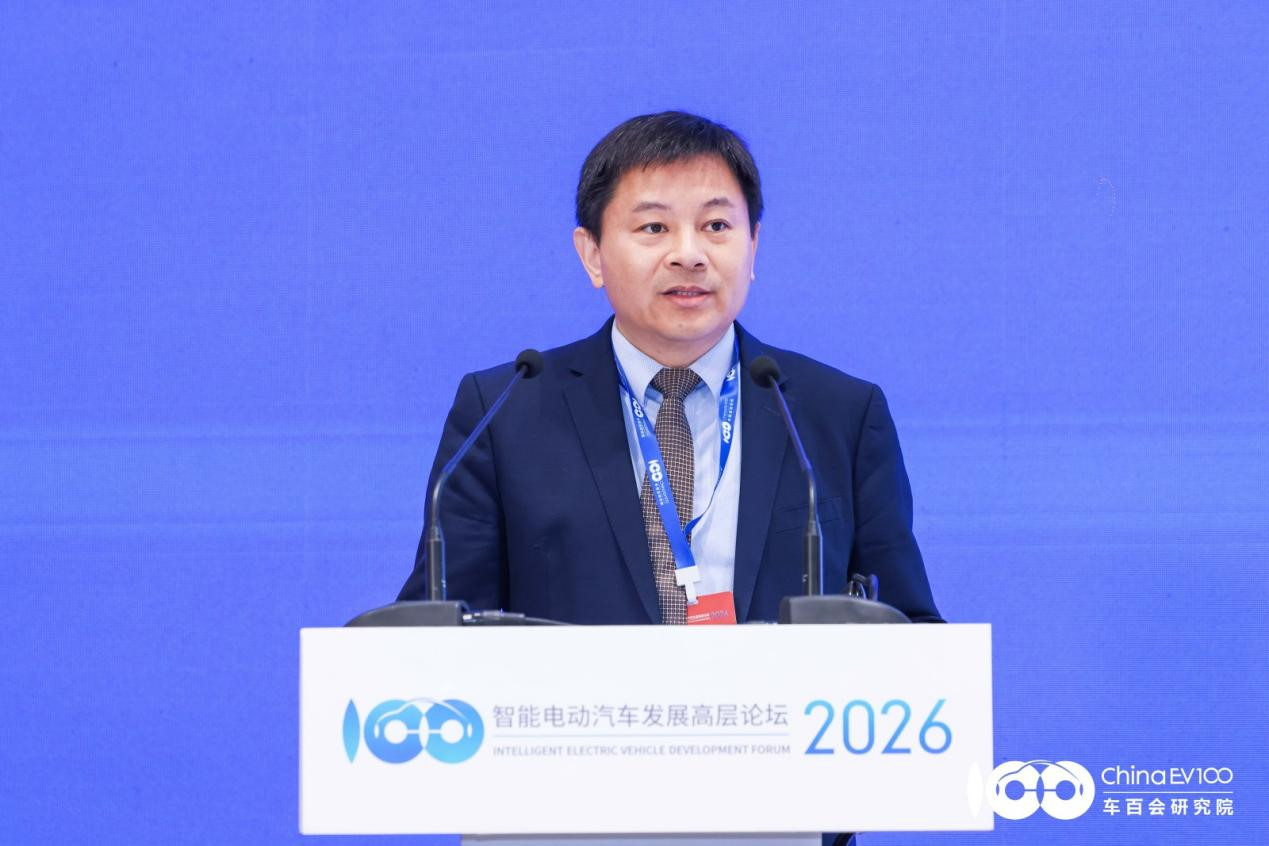
Li argues that simulation technology should be leveraged to expand data generation, while efficient algorithm development takes priority to reduce reliance on traditional data and computing power expansion. Since 2018, Tsinghua University has championed a two-stage end-to-end model that fuses simulation with real-world driving data, alongside developing high-fidelity simulation software and the GOPS reinforcement learning platform. In 2024, the team completed China’s first open-road test of an end-to-end autonomous driving model using a full neural network architecture.
Comparing the field to embodied intelligent robots, Li emphasized that training difficulty is 5 to 10 times higher than for autonomous driving. Data requirements reach the tens of billions, with a parameter threshold of roughly 100B—a challenge the industry widely underestimates. He forecasts that the physical intelligence sector will see a surge of new technologies and enterprises over the next 10 to 15 years, while the era of biological intelligence will take significantly longer to arrive.


