



The Great Wall stands for resolve and defense.
Great Wall Motor often mirrors that spirit. Based in a corner of Baoding, Hebei Province, its vehicles sell around the world — yet the company carries the austerity and straight-backed grit of a frontier stronghold.
That singular temperament is embodied by its helmsman, Wei Jianjun — an executive jokingly dubbed the industry's "ICE straight guy." He projects a steel-like resolve: few words, each one firm, often pouring a bucket of cold water on the sector's bouts of fever.
Among the "old" and "new" car makers, Wei shows the tenacity of an old-school auto hand, along with a stubborn streak that can feel out of step with the moment. That duality is reflected in Great Wall's direction: how has Wei's operating philosophy built Great Wall Motor — and where might it be limiting the company? At pivotal points in the industry's shift, why do Great Wall's choices so often run against the mainstream?
The entrepreneur known as the auto industry's "straight man" may be entering the most complex stretch of his career.
Early to go electric — why still half a beat slow?
By 2025, China's annual penetration of new energy passenger cars is poised to cross the 50% threshold. In plain terms: one out of every two cars sold will be a NEV.
Amid this sweeping transformation, Great Wall Motor's transition pace has been contentious. BYD made a decisive, full pivot from ICE to NEV, while Geely aggressively covered segments through multiple brands. Great Wall Motor's shift looks more like a "well-prepared jog," a half-beat slow that owes much to Wei's belief in "technology done right" over speed.
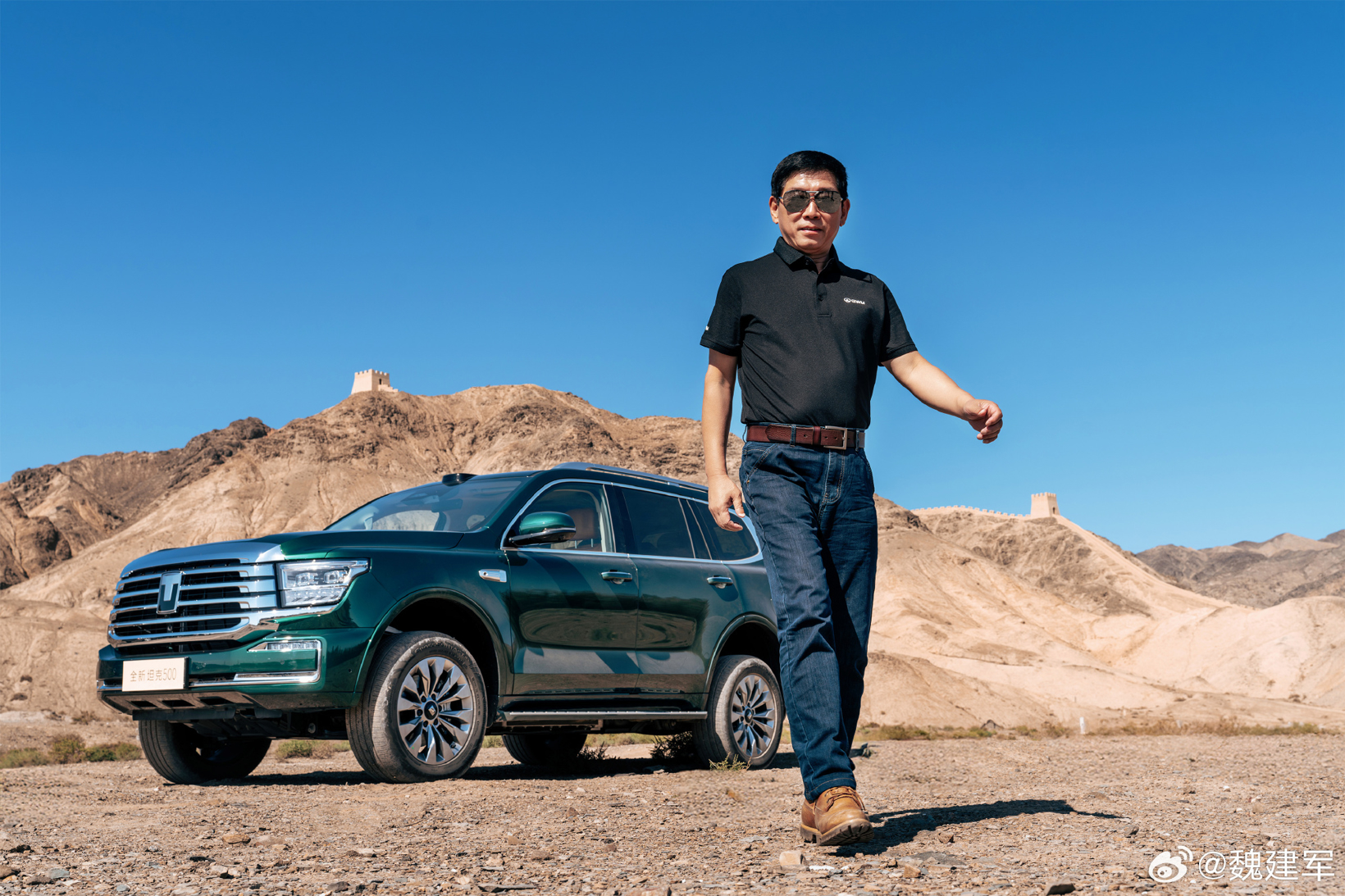
Image source: Wei Jianjun's Weibo
Great Wall's second transformation traces back to 2020.
That year, on the company's 30th anniversary, Wei released "A Letter to Great Wall Motor Partners: How Great Wall Motor Will Get Through Next Year," setting a goal to transform into a global tech company. The L.E.M.O.N. platform, TANK platform and Coffee Intelligence were unveiled in tandem — laying the architecture for NEV and smartization.
Around that time, Tesla's Shanghai Gigafactory began production in January 2019; BYD launched its DM-i hybrid in early 2021. The NEV debate was already red-hot, yet Great Wall Motor refrained from rushing models to market, focusing instead on R&D and platform-building.
Strategically, Great Wall Motor's NEV pivot wasn't late — and it was group-wide. Building on L.E.M.O.N., the company rolled out the L.E.M.O.N. DHT hybrid technology, aiming to redefine hybrids. DHT is a complete system — engine, transmission, drive axle, battery and more.
Notably, months after Great Wall Motor announced DHT, BYD's DM-i "super hybrid" only then arrived.
Even so, that early bet on electrification didn't precisely translate into product sales.
In February 2023, Great Wall Motorheld an online media briefing on its NEV transition. "People say Great Wall Motor is half a beat slow on NEVs — they mostly mean HAVAL," said Li Ruifeng, Great Wall Motor's chief growth officer.
Reviewing the transition, Li admitted Great Wall Motor deviated mid-course. Some NEV products proved ill-suited to the market, missing the first wave of the PHEV boom.
Sales bear that out. In 2022, Great Wall Motor sold about 1.06 million vehicles — down 16.7%. NEV models accounted for 119,900 units. In the CPCA's 2022 wholesale rankings, Great Wall Motor slipped out of the top ten.
That same year, BYD sold 1.868 million vehicles, a 152.5% jump. PHEVs using DM-i and DM-p totaled 946,239 units, while BEVs reached 911,140. BYD's cumulative NEV sales have already topped 3.37 million.
Geely Holding Group's 2022 sales exceeded 2.30 million, up 4.3%. NEV sales were over 640,000, up 100.3%, taking NEV penetration to 27.9%.
So why didn't the numbers follow, despite the technology?
On the industry's race toward electrification and intelligence, Wei shared his view in a recent CCTV interview.
Cars, he argued, are high-value durable goods — fundamentally different from phones, computers or cameras. Problems with those devices rarely threaten human life. Cars involve braking, crash safety and fire risk, directly tied to users' safety. They must be treated with the utmost seriousness.
In short, the "half-beat slow" debate is a clash of logics: the mainstream's "iterate fast, learn by trial and error" versus Wei's long-termism.
Wei has consistently pushed "full powertrain development." Global energy needs are diverse, he says; betting on a single route is unwise.
According to CPCA Secretary General Cui Dongshu, global auto sales reached 90.60 million in January–December 2024, with NEVs at 16.03 million. NEVs accounted for just 19.7% — with BEVs at 11.4%, PHEVs at 6.3% and hybrids at 5.9%, the share of hybrid-electric rising.
Demand also varies sharply across markets. On that basis, Great Wall Motor laid out a four-pronged strategy: broader ICE utilization, diversified NEV pathways, parity between oil and electric, and globalization of strategy — shoring up the ICE base while using multiple technologies to serve different markets.
But that's Wei's rationale. In practice, although Great Wall Motor's hybrid tech came early, it failed to catch the surge in NEV sales — in part because of mainstream consumer preferences. McKinsey's 2024 China Auto Consumer Insights found PHEV/range-extender shoppers primarily weigh range and price, with little demand for performance.
By contrast, Great Wall Motor's DHT uses a multi-speed gearbox, making it more complex than BYD's DM-i. It delivers stronger performance but slightly worse efficiency.
It's hard to deny: in the fast-growing domestic NEV phase, Great Wall Motor's caution has cost it share. CPCA data show 2024 sales at 1.23 million, with NEVs at 26.1% — well below the industry average.
The price of refusing to "involute": Great Wall Motor's two-front game
Great Wall Motor is now fighting on multiple fronts.
Inside the company, it's a tough trade-off between scale and profit.
In the first half of 2025, Great Wall Motor posted a mixed scorecard: revenue of 92.335 billion yuan, up 0.99%; net profit of 6.337 billion yuan, down 10.2%. Sales reached 568,900 units, up 2.52%, with NEVs at 160,000 units, a 23.64% gain.
It's worth noting Great Wall Motor has missed its annual sales target four years running.
Those figures reflect Wei's strategy to "resist low-price involution and focus on high value."
At home, faced with rivals trading price for volume, Great Wall Motor has been restrained — even passive. HAVAL's NEV lineup (Big Dog, Raptor and second-generation HAVAL Xiaolong) is priced between 131,800 and 173,800 yuan, while BYD's comparable models start at 100,000 yuan.
In the 100,000–150,000 yuan bracket, where value-for-money matters most, low pricing remains the most direct path to volume.
ORA, meanwhile, is under pressure. June sales were just 3,283 units. The small EV segment is white-hot, with every major automaker vying for a slice — competition for ORA keeps intensifying.
Great Wall Motor's refusal to join the low-price war — and its push into higher-price, premium territory — is, in principle, a sound way to lift revenue and margins.
In 2026, the premium market will be one of Great Wall Motor's key battlegrounds.
WEY was once a pioneer for Great Wall Motor — and Chinese brands — moving upmarket; its first model, the VV7, topped 10,000 a month in 2017. But it later fell into a prolonged slump due to missteps in technology route, product definition and market timing.
On running a premium brand, Wei once again stands apart from the herd.
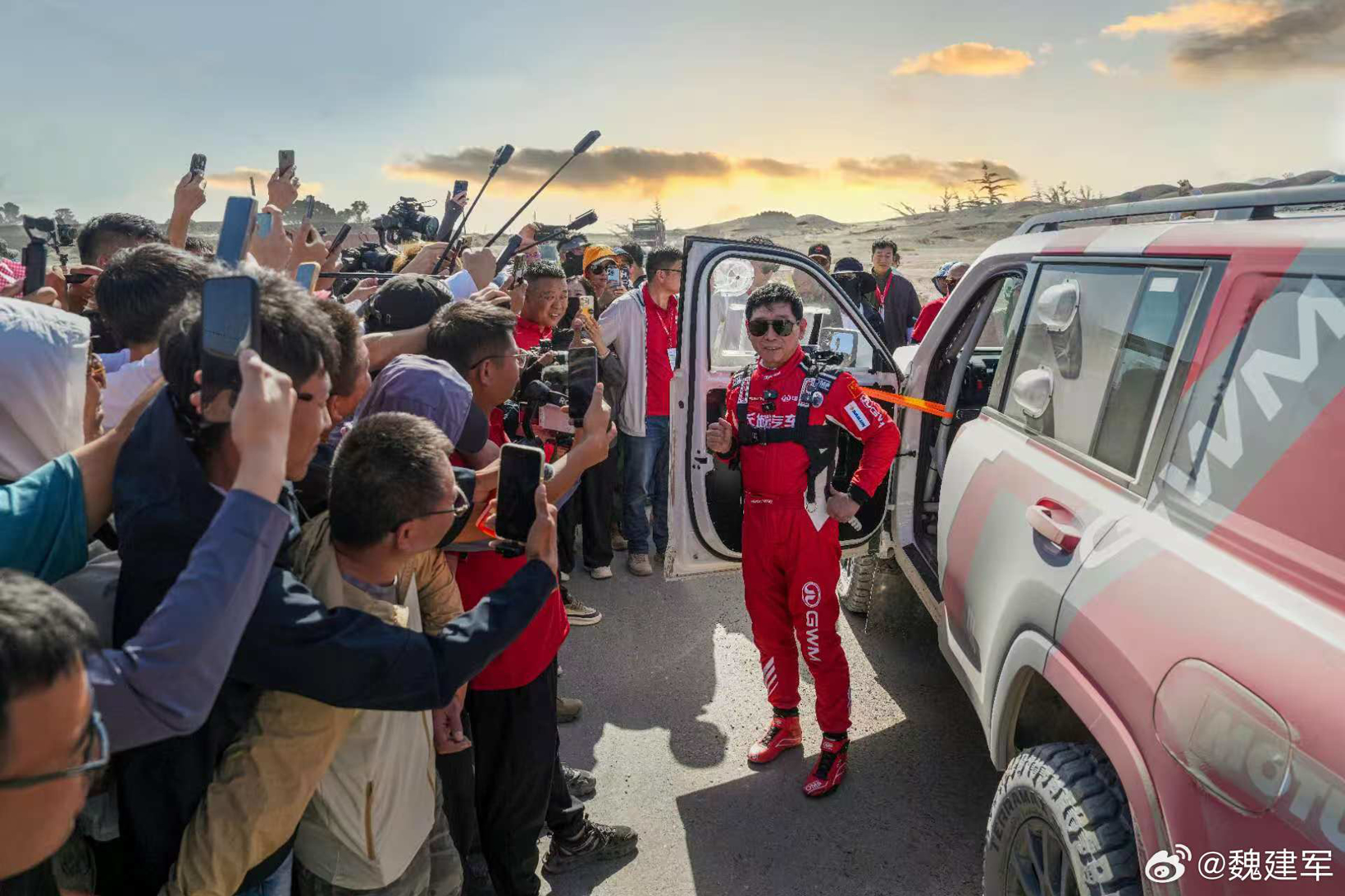
Image source: Wei Jianjun's Weibo
"In truth, every company dreams of going premium," Wei said in a recent interview. But building a successful car brand requires a complex, end-to-end system — and Chinese brands still lack a truly proven case.
Wei says WEY's premium positioning hasn't changed. To focus on high-end, WEY has shifted strategy to double down on "big six-seat SUVs," launching the new Blue Mountain and High Mountain models, while rolling out a large direct-sales network.
In late September, on CCTV Finance's Dialogue program, Wei also offered the first systematic update on Great Wall Motor's supercar project. He made clear the company is developing a product positioned as a supercar — not a concept but the result of long-term strategic preparation and steady execution — aiming to build a "substance-first" supercar that elevates China's auto image globally.
Behind the push into premium and luxury is Great Wall Motor's success with higher-priced models overseas.
In the first half, exports reached 198,700 units, roughly flat year on year — showing resilience amid global market swings.
Great Wall Motor's sales network now spans more than 170 countries and regions, with over 1,400 overseas outlets — a broad footprint. TANK and GWM Pickup are performing steadily in the Middle East, Australia and South America, with brand influence rising. Overseas manufacturing and KD (semi-knockdown) are advancing in tandem, indicating its "localization + channels" strategy is on pace, though expansion will mean near-term spending on marketing and logistics.
For now, Wei seems to be wagering big: accepting domestic share pressure to gain brand altitude and richer margins offshore — waiting for Chinese consumers to return to value rationality. In a red-ocean, stock-market era, it's a steep, solitary path.
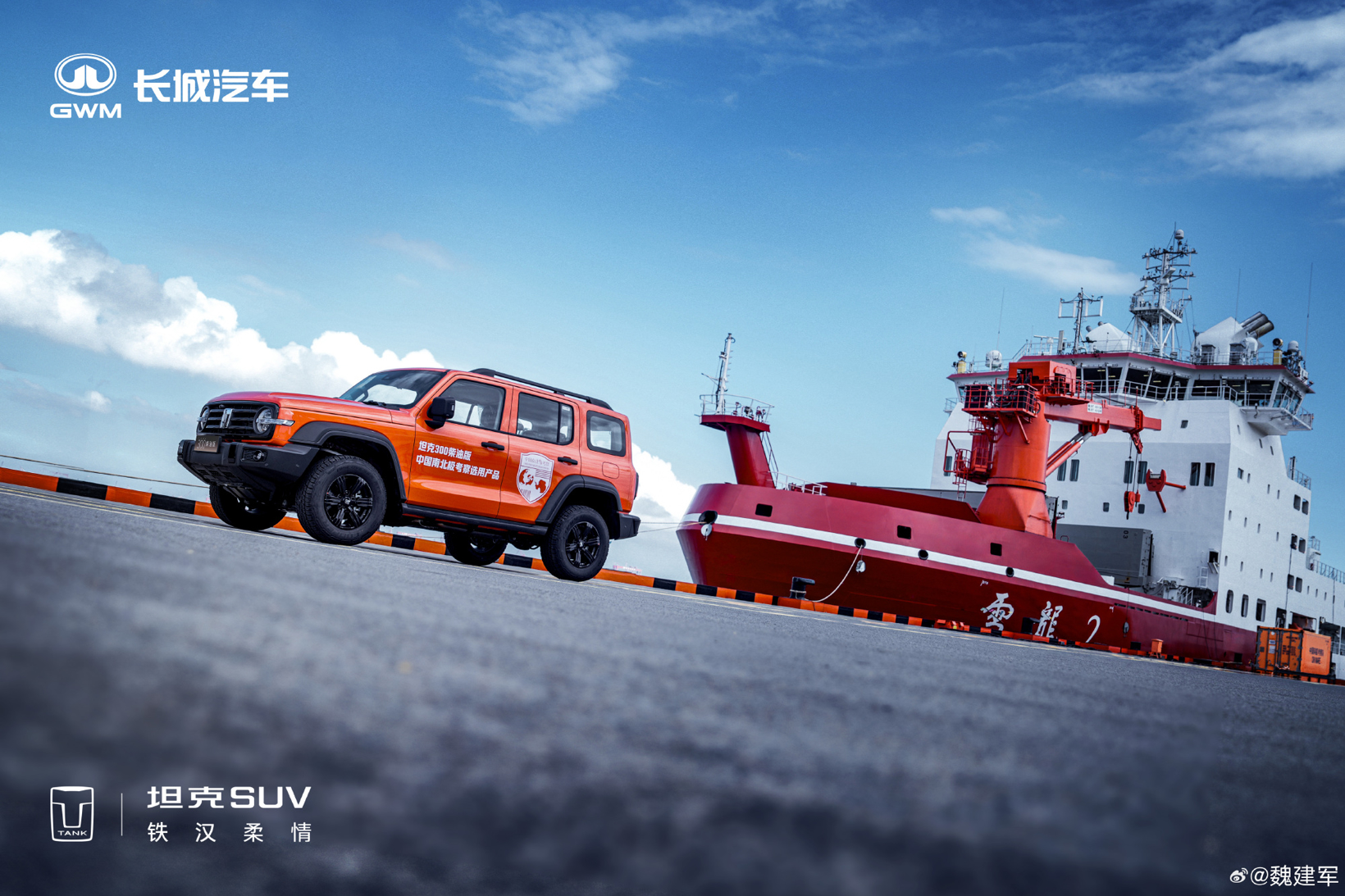
Image source: Wei Jianjun's Weibo
Outside the company, Wei has often stood alone against industry "distortions." He has fired repeated salvos: condemning below-cost dumping as industry destruction, calling out hype in tech promotion, and warning of capital pushing the sector off its essence.
That lonely stance has given Great Wall Motor a brand edge. As trust in automaker claims erodes, its candor has become a differentiator.
The question is whether such straight dealing can withstand rivals "winning with surprise" in a phase of collective sprinting and fleeting windows.
As automakers scramble for electrification and intelligence mindshare — and market share — could Great Wall Motor's methodical approach miss the chance to set the rules? Is Wei's "industry clean stream" persona a prized brand asset, or a high-minded burden?
There's no verdict yet.
Should Great Wall Motor dial down Wei Jianjun's personal imprint?
In 2025, Great Wall Motor faces unprecedented opportunity and strain: NEV penetration trails the industry average and must catch up; overseas performance is strong but needs new growth curves; and its family-style governance increasingly clashes with the demands of a global company.
The bigger challenge may be governance. Evolving from a successful, centralized decision-maker into a modern global public company requires diluting Wei's outsized personal imprint.
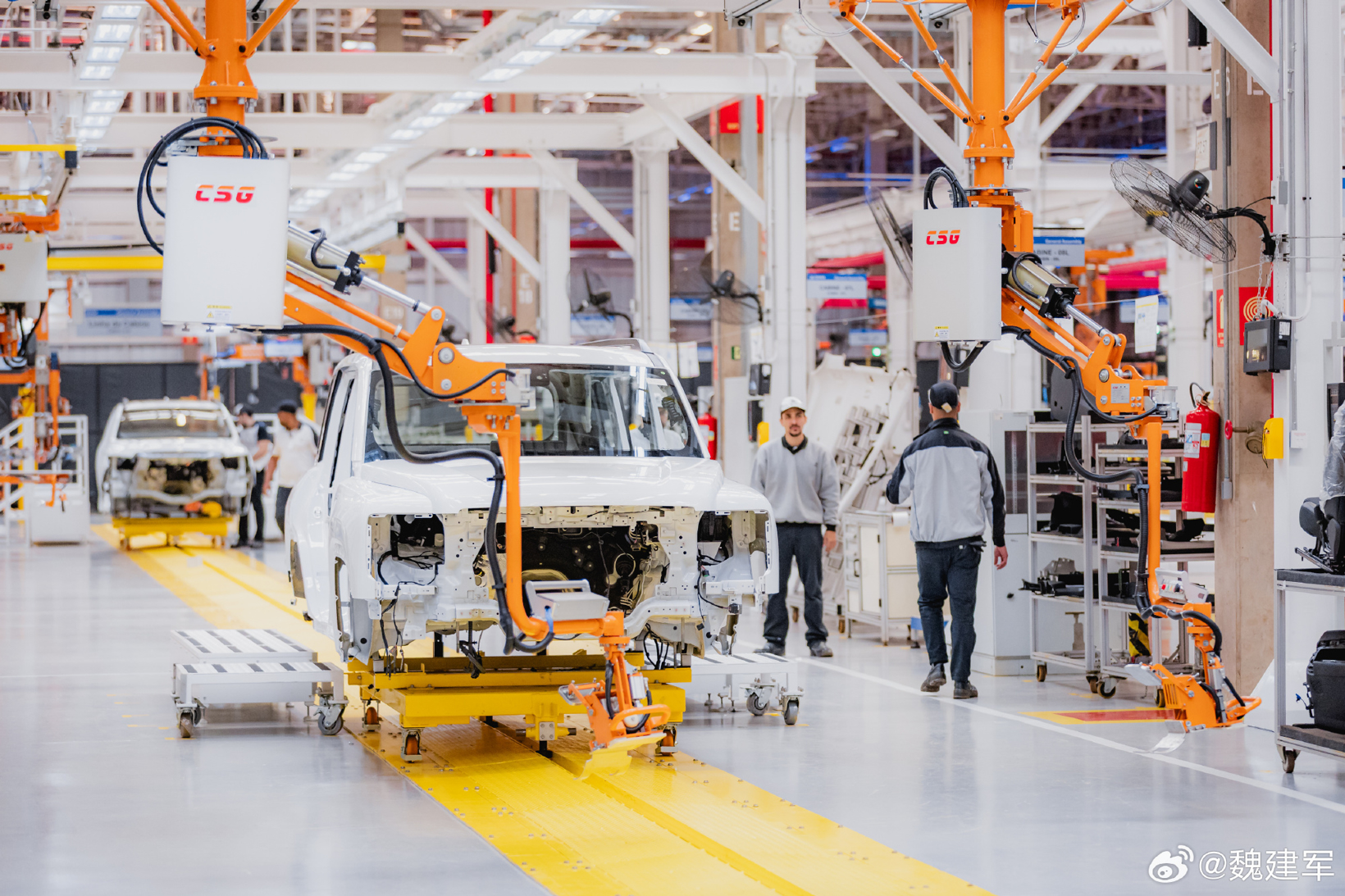
Image source: Wei Jianjun's Weibo
Put simply, balancing Wei's strategic resolve as the company's soul with the agility and verve of a professional-manager system is the question Great Wall Motor must answer over the next decade.
Over that decade, Wei must not only steer through technical and market bottlenecks, but also drive a shift from "old-school car man-led" to modern governance — a test harder than any before.
As the controlling shareholder, Wei's decisions profoundly shape Great Wall's path. Centralized calls can seize opportunities early on, but in the globalization phase they risk slowing decisions and sapping organizational energy.
For Great Wall Motor, Wei's "faith in technology" and "long-termism" are core strengths that shouldn't be casually shaken. Yet professional managers better read market currents and user needs, and their input is vital. Finding a balance that avoids misjudgment from personal calls, while preventing over-dispersed decisions from eroding strategic spine, will test Wei's perspective and judgment.
In a market buffeted by waves of electrification and intelligence, Wei is a commander at an industrial frontier, stubbornly repairing his walls and moats amid the NEV artillery.
When the smoke clears and the second half becomes a grind of system strength, core tech and global reach, will Great Wall Motor's measured pace prove prescient — or a regret at the fork in the road? The answer will be written on the next decade's global auto map.
By then, the market will know whether the bastion Wei guarded was the future — or an island destined to be submerged.


