



Gasgoo Munich- On May 11, 2026, BWI International (formerly BeijingWest Industries, 02339.HK) resumed trading in Hong Kong, surging over 83% at the open. The reason was direct: the night before, it disclosed a bombshell. Consumer electronics giant Luxshare (002475.SZ) conditionally agreed to purchase all equity in its controlling shareholder, BWI Group, thereby indirectly holding about 59.5% of BWI International and becoming the ultimate controlling shareholder.
The news stunned the industry. Some marveled at Luxshare's financial muscle, while others questioned the "fire sale" of BWI. After all, 2026 is seen as year one for mass production of wire-controlled chassis, and BWI's bright future is just arriving. Why agree to be acquired right now? And why would a giant from the "Apple supply chain," known for wire harnesses and connectors, spend heavily to grab a piece of the "chassis"?
What Cards Does BWI Hold?
BWI's roots trace back to 2009. That year, state-backed capital in Beijing formed the company to acquire Delphi's chassis business, securing core patents and production lines for magnetorheological suspension technology. Delphi was once one of the world's largest auto parts suppliers, and its chassis division was the crown jewel.
The deal was seen as a classic case of Chinese parts makers "hunting overseas." BWI became the only company globally capable of developing and mass-producing magnetorheological dampers, boasting over 12 million units of production experience and more than 140 patents.
Magnetorheological suspension sounds like lab jargon, but the results are stunning. The core principle involves damping fluid containing micron-sized magnetic particles; by controlling their alignment with electric current, the system achieves stepless adjustment of damping force in milliseconds.
Put simply, the vehicle dynamically adjusts suspension stiffness 1,000 times per second—stiff enough for corners, soft enough for bumps. To a degree, magnetorheological technology is the fastest-response mass-producible shock solution known today, and it remains irreplaceable.
Gasgoo Institute notes that magnetorheological technology is driving automotive suspension and shock systems toward intelligence and efficiency. With the rapid growth of the new-energy vehicle market and rising consumer demand for driving comfort, magnetorheological dampers show massive potential in the auto sector.
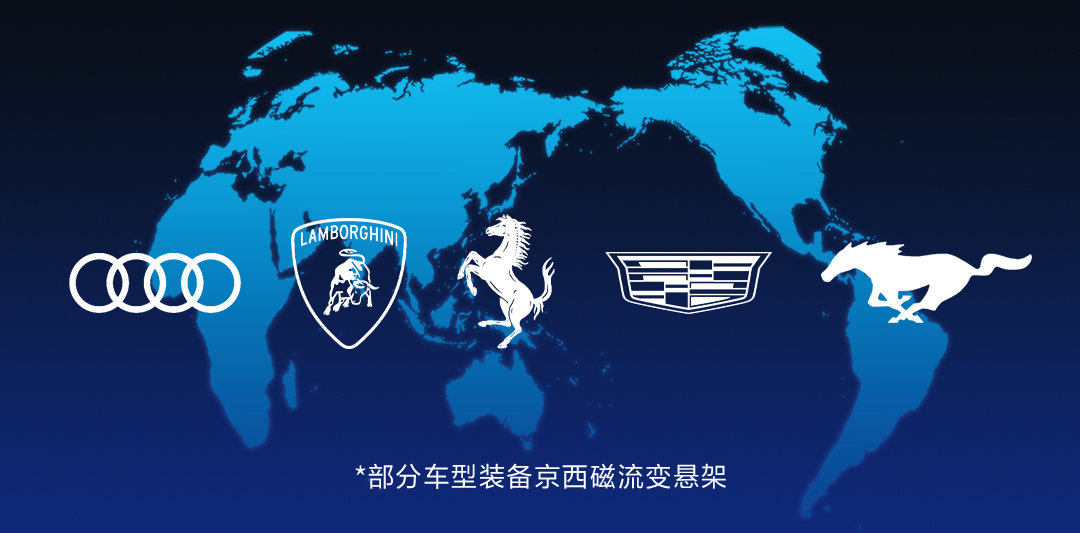
Brands equipped with BWI Zhixing's MagneRide® magnetorheological suspension system in recent years; Image Source: BWI Zhixing
This technology launched in the Delphi era, debuting on the Cadillac STS in 2002. It later spread to ultra-luxury brands like Ferrari and Lamborghini, evolving into the fourth-generation MagneRide® system. It’s no exaggeration to say that for the past two decades, magnetorheological suspension has been the status badge for million-yuan supercars. That history built a formidable technological moat for BWI Zhixing.
Just last November, the Deepal L06—equipped with BWI Zhixing's fully domestic magnetorheological suspension—crashed into the 150,000-yuan mainstream market, kickstarting the democratization of MagneRide® technology.

Image Source: BWI Zhixing
But that’s not all. BWI Zhixing is building a matrix of smart chassis solutions, including electromechanical brake (EMB) systems and MagneRide suspension. Just recently, the company announced that its iDBC1 integrated brake control system (1-Box) entered mass production in Europe for a top global automaker. Another next-gen wire-controlled brake product will hit mass production in North America in June. The two BWI products will power nine models on the group's new platform, with a total value of roughly 2.1 billion yuan.
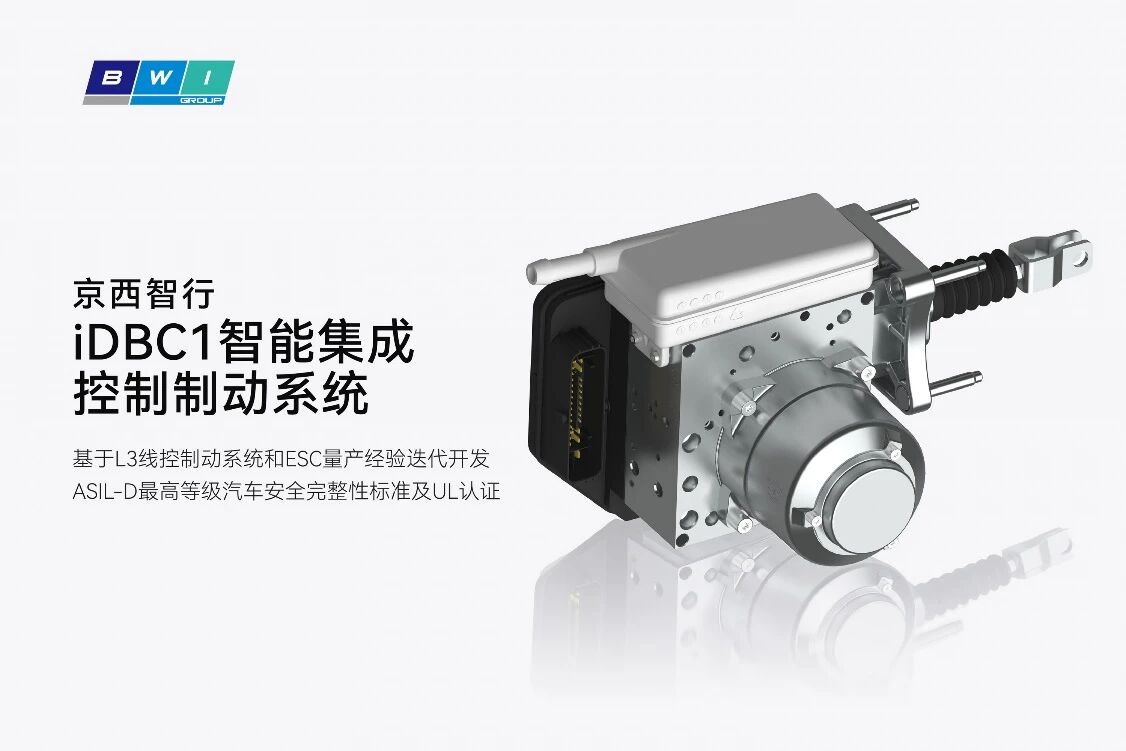
Image Source: BWI Zhixing
As for EMB, the ultimate braking technology, BWI Zhixing’s braking business VP Xue Chunyu told Gasgoo, "As planned, we started EMB line construction and supply chain coordination early this year, aiming for initial mass production domestically by year-end."
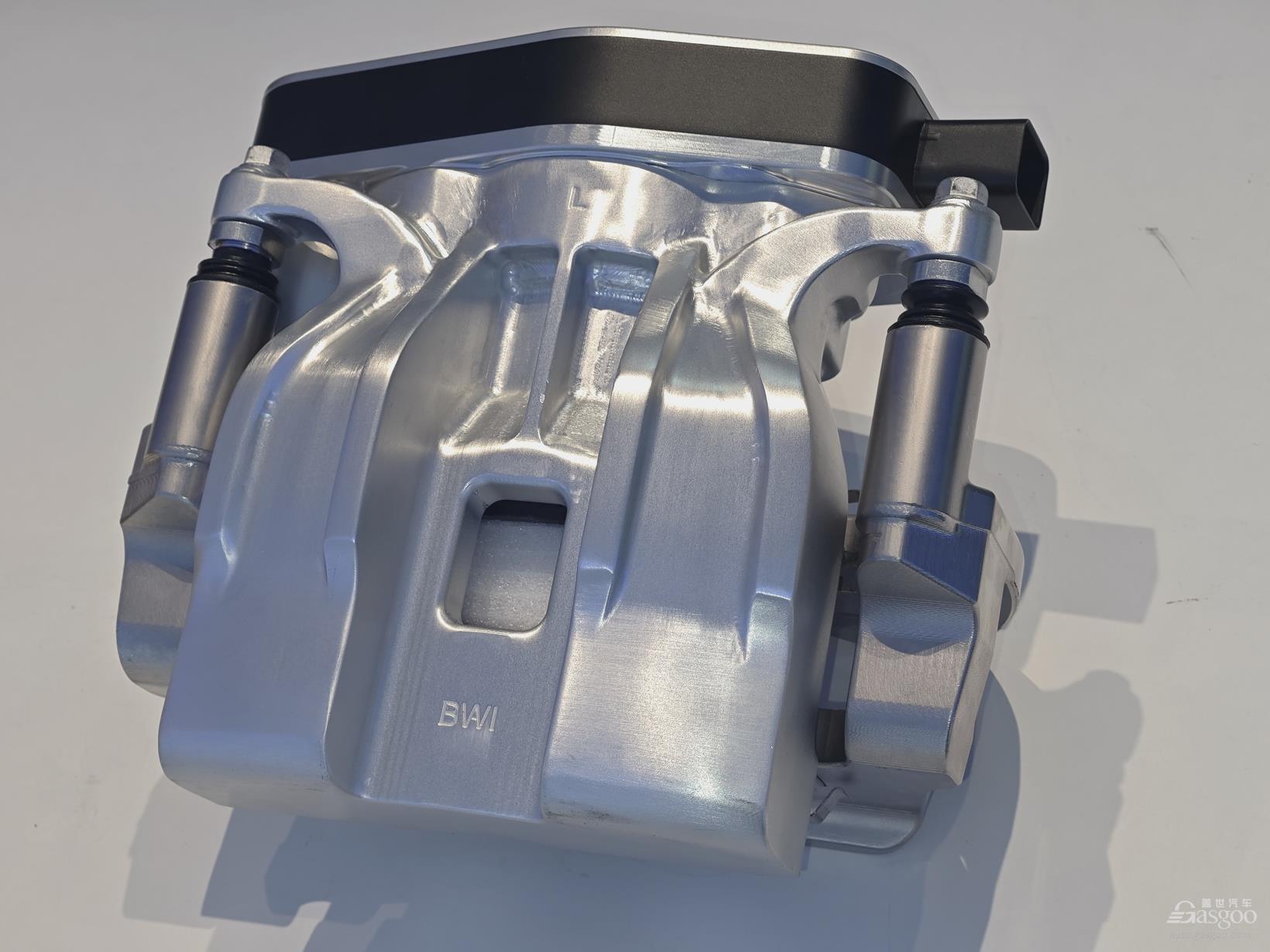
BWI Zhixing's exclusive ball-plate EMB third-generation single-motor prototype
In other words, Luxshare isn't buying a typical auto parts company. It’s acquiring a firm that has cultivated the chassis sector for decades—the first and only Chinese company to firmly establish itself in Europe and America's wire-controlled braking markets. Its magnetorheological suspension is rapidly penetrating the mainstream market, and its EMB tech is already on the starting line for mass production.
What Exactly Is Luxshare Trying to Do?
Zooming back out to Luxshare, the logic of this deal becomes clearer.
Many still see this company as just an "Apple contract manufacturer." But look at Luxshare's 2025 annual report, and the reality is starkly different: full-year revenue hit 332.34 billion yuan, up 23.64%. Automotive electronics revenue surged 185.34% to 39.26 billion yuan, making it the company's second-largest income source.

Image Source: Luxshare
That 185% growth didn't come from nowhere. The real driver was the July 2025 closure of Luxshare's roughly 4.1 billion yuan acquisition of Leoni, the century-old German wire harness giant. Leoni is Europe's largest and the world's fourth-largest auto wire harness supplier, with clients including BMW, Mercedes-Benz, and Volkswagen—covering over 80% of global mainstream brands—and manufacturing bases in 26 countries.
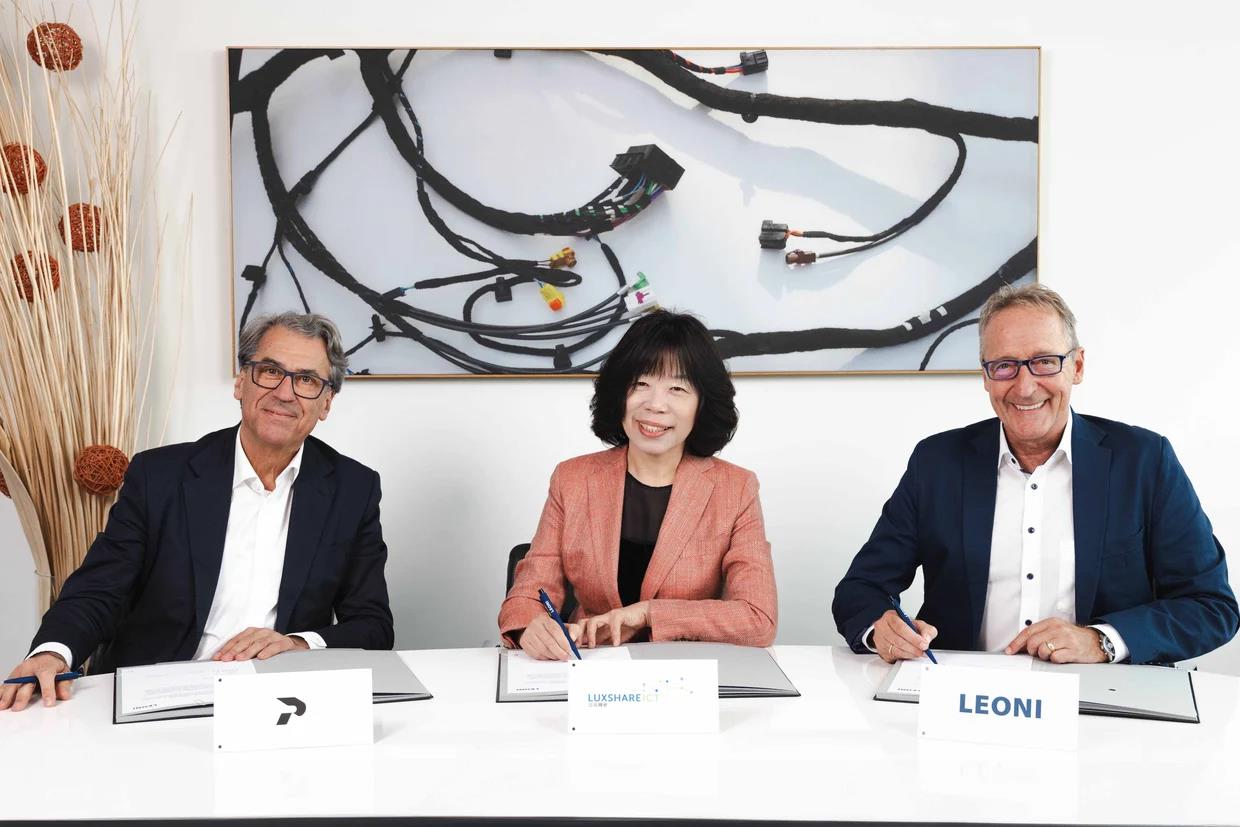
From left to right: Stefan Pierer, Wang Laichun, and Klaus Rinnerberger; Image Source: Leoni
After taking Leoni, Luxshare’s integration efficiency turned heads. Just months after closing, Leoni posted positive net profit for the first time since its debt crisis. Management revealed in a survey that Leoni's net margin could hit around 3.5% in 2027 and exceed 5% in 2029, with new project awards expected to grow about 30% compared to 2024.
This highlights Luxshare's most underestimated core competency: lean manufacturing and cost control. It can unlock significant profit recovery potential for high-value, low-margin traditional auto parts businesses.
Leoni opened the door to wire harnesses and global channels, but Luxshare's automotive ambitions go further. The company explicitly stated in a clarification notice: "The automotive sector focuses on core parts like wire harnesses and connectors, while expanding into system-level products such as smart cockpits, assisted autonomous driving, smart chassis, and powertrain systems."
"Smart chassis" clearly points to BWI.
Clearly, Luxshare's Tier 1 ambitions didn't start today.
As early as its collaboration with Chery and push for whole-vehicle ODM models, the signal was clear: it wants to be a system-level supplier, not a peddler of parts. Previous public information revealed the company’s target for per-vehicle content in its auto business is anchored at the 10,000-yuan level, with peaks potentially reaching 40,000 yuan.
An even earlier clue appeared in 2023. That June, Luxshare and GAC Group jointly founded Lisheng Technology; by September, the first phase of its smart driving control system R&D and production project broke ground. With a total investment of about 3 billion yuan and covering 100 mu, it aimed for mass production in 2024 and an annual output value of roughly 10 billion yuan at capacity.
The essence of the Lisheng project is localized R&D and production of core domain control components. This aligns perfectly with Luxshare's previously stated goal of anchoring per-vehicle value at 10,000 yuan, peaking at 40,000 yuan. Luxshare Chairman Wang Laichun set an even more ambitious target: by the third five-year plan, the auto sector's scale should reach around 200 billion yuan.
To hit that level of per-vehicle value, wire harnesses and connectors alone aren't enough. Industry reports are clear: as autonomous driving levels rise, the execution layer is accelerating the replacement of mechanical parts with electronic components. Wire-controlled chassis is the inevitable trend.
Therefore, acquiring BWI is essentially about completing the puzzle for chassis domain execution assets. It expands Luxshare's auto product lineup horizontally from "wire harnesses + connectors + smart cockpits" to "suspension + braking." It is a carefully calculated system integration.
Why Is Buying Non-Negotiable?
Let’s return to the underlying logic of being a Tier 1 supplier.
Global top-tier suppliers like Bosch, Continental, and ZF don't stick to a single category. Their moat lies in "cross-domain integration": the ability to package suspension, braking, and steering, and deeply integrate with a vehicle's electronic and electrical architecture. Even CATL, China's battery leader, is expanding into chassis. Meanwhile, Fuyao Glass is using continuous M&A to expand from simple glass to canopy assemblies.
To break into the global top ten, Luxshare must fix its chassis weakness. In that sense, BWI is the critical link determining whether Luxshare can evolve from a mere "Connector King" into a true system-level Tier 1.
Capital markets responded positively. On May 11, Luxshare's stock opened higher at 75.5 yuan per share, briefly surging to 78.42 yuan—a historical high that pushed its total market cap past 550 billion yuan.
The Hong Kong market clearly buys the story of a "consumer electronics giant crossing over into chassis assets."
But this is just the beginning. The real test isn't the secondary market—it's the industrial execution ahead. Can Luxshare use its lean manufacturing system to empower BWI, bringing magnetorheological suspension from "supercar exclusive" to 150,000-yuan mainstream models? Can it cross-sell BWI's chassis prowess using Leoni's global client network? Whether it can avoid dropping the ball during technical and organizational integration will determine if this deal becomes a textbook case or a cautionary tale.
Regarding whether BWI’s business will face further adjustments after the acquisition, Gasgoo contacted a responsible person at BWI Group, but received no direct response by press time.
There is no denying it: from closing the Leoni deal in 2025 to announcing control of BWI in 2026, Luxshare completed two major auto acquisitions in just one year. The pace is impressive. Behind this series of moves lies a microcosm of Chinese auto parts companies transitioning from "scaling up" to "strengthening system capabilities."
But that also means the window for Luxshare to prove itself won't stay open for long.


