Tesla has taken another critical step in revolutionizing battery production.
"Achieving mass production of the dry electrode process is a major breakthrough in lithium battery manufacturing technology, and it is extremely difficult," Musk wrote on social media. "Congratulations to the Tesla engineering, production, and supply chain teams, as well as our strategic partner suppliers, on this outstanding achievement."
Traditional wet electrode processes use solvents to coat electrode materials onto current collectors, requiring massive amounts of energy for drying and recovery. Dry electrode technology, by contrast, mixes powdered active materials directly with binders to form electrodes through electrostatic spraying or pressing—eliminating the drying step entirely.
What does this shift mean? Tesla says the dry electrode manufacturing process cuts costs, energy consumption, and factory complexity—all while significantly boosting scalability.
How Dry Tech Disrupts the "Wet" Process
Dry electrode technology isn't a new concept; academia and industry have studied it for years. Yet, scaling it up for mass production has remained a persistent hurdle.
In the traditional wet process, active materials, conductive agents, and binders are dispersed in organic solvents to create a slurry, which is coated onto copper or aluminum foil. The coated foil then travels through ovens stretching dozens of meters for drying, with solvent recovery systems consuming vast amounts of factory space and energy.
Tesla acquired dry electrode patents after buying Maxwell Technologies in 2019. The technology uses a method similar to "powder spraying," mixing cathode and anode materials with polymer binders to form self-supporting films via an extruder, which are then pressed directly onto current collectors.
What looks like a simple process change actually hides significant complexity.
Ensuring even distribution of electrode materials, strong interfacial contact, and sufficient mechanical strength are all technical barriers that had to be overcome during engineering.
After years of continuous improvement, Tesla's engineering team has finally overcome a series of challenges in powder handling, electrostatic spraying, and rolling processes, achieving stable mass production. This breakthrough lowers energy consumption in electrode manufacturing and shortens production lines.
More importantly, dry electrode technology supports thicker electrode designs, which means battery cell energy density could rise. For an EV industry long plagued by range anxiety, this is a critical step toward the goal of making vehicles lighter, longer-range, and cheaper.
A Heavyweight Move
The mass application of dry electrode battery technology will send ripples through the sector, potentially reshaping the entire new energy vehicle landscape over time.
Tesla's in-house 4680 battery pairs with dry electrode technology. A simplified manufacturing process translates to lower capital expenditure and faster capacity expansion.
Tesla can build more battery capacity for the same investment—or significantly slash battery costs per vehicle.
This puts direct pressure on competitors.
While mainstream battery makers still rely primarily on improved wet processes—and are researching dry electrode technology themselves—Tesla has clearly seized the first-mover advantage.
The breakthrough in dry electrode technology also provides critical support for Tesla's goal of selling 20 million vehicles annually by 2030. Simplified manufacturing means factories can be replicated faster, making the battery supply chain easier to scale.
Musk's long-held philosophy of "the machine that builds the machine" is fully embodied in these dry electrode production lines.
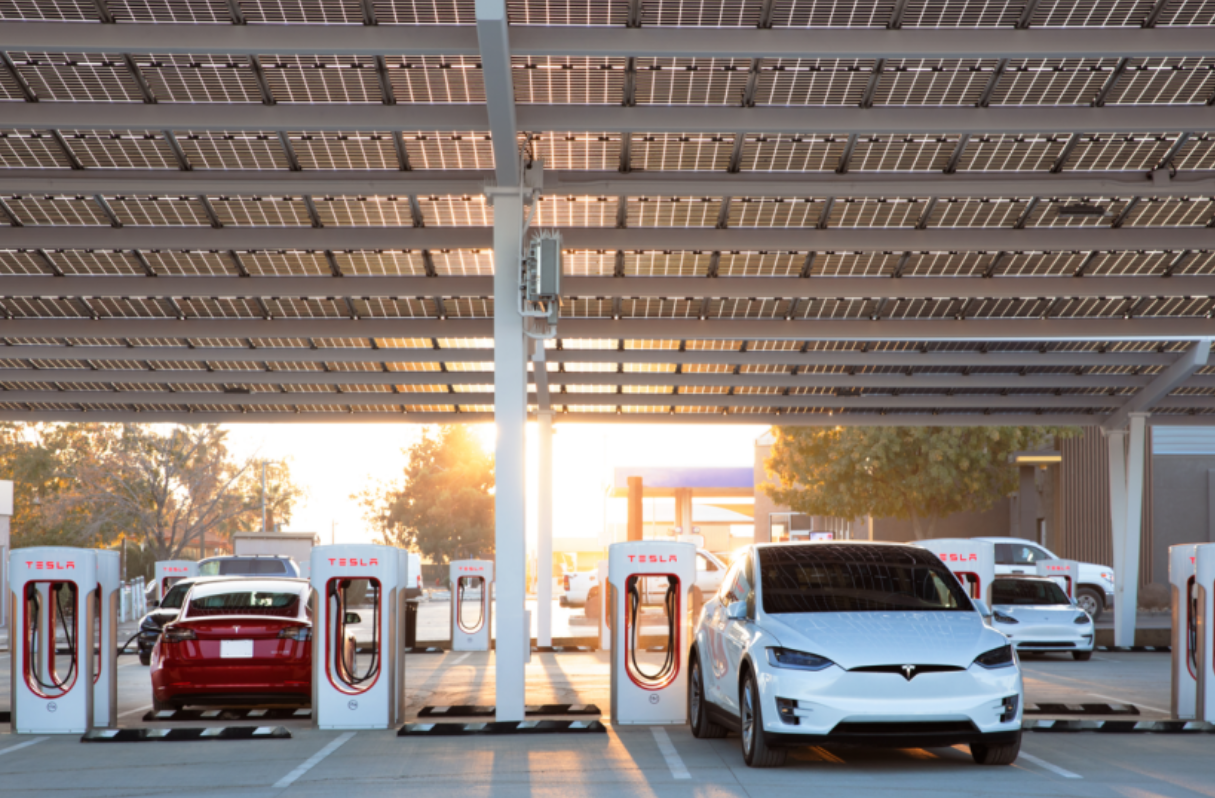
Image Source: Tesla
From an industry perspective, Tesla's success will force the entire supply chain to accelerate innovation. Battery production could shift from being "chemical-intensive" to "physics-intensive," further elevating the importance of materials science and mechanical engineering.
On the materials front, dry electrode technology imposes new requirements for binders, potentially spawning a market for new polymer materials. At the same time, simplified processes could lower the barrier to entry for second-tier battery manufacturers, potentially triggering a new round of market competition.
As the global EV market enters a phase of cost competition, whoever can produce higher-performance batteries at a lower cost will hold the industry's reins. Tesla's breakthrough in dry electrode technology is a heavyweight move dropped at precisely this critical moment.
Ultimately, this battery manufacturing technology race sparked by Tesla will drive the entire industry toward a future that is more efficient, eco-friendly, and economical.
When Musk casually announced this breakthrough on social media, it masked the countless days and nights engineers spent solving problems like powder agglomeration, electrostatic distribution, and pressure control.
The mature application of a technology is often far more difficult—and valuable—than its debut.