



Gasgoo Munich- It’s no secret that U.S. tariff policy sets the world on edge. As one of the largest consumer markets, any shift in Washington’s trade stance sends ripples through global supply chains — and the automotive sector is among the most sensitive to these tremors.
From vehicle assembly to component sourcing, automakers and suppliers alike rely heavily on the global division of labor. Because of this, shifts in U.S. tariff policy rarely stop at one border or a single company. Instead, they ripple out to non-American automakers worldwide — particularly those brands that haven’t yet established deep local production roots in the U.S. — driving up costs, reshaping prices, and forcing a rethink of investment decisions.
Even Chinese automakers that have yet to enter the U.S. in force are watching closely. That’s because tariffs aren’t just about exports; they dictate the pace and cost structure of the entire global supply chain.
Washington has made its latest move. On February 21, the U.S. Supreme Court ruled to adjust the rate on “global import tariffs” to 10%, offering a moment of relief for companies worldwide caught in the crossfire.
Who’s in the Crosshairs?
In response, Trump swiftly invoked Section 122 of the Trade Act of 1974, pushing a new global tariff scheme aimed at raising rates from 10% to 15%. However, the Supreme Court struck down the Trump tariffs, rendering them invalid and leaving $175 billion in duties slated for refund.
Yet, tariffs on specific industries — including automobiles, auto parts, and semiconductors — remain in place. An analysis by Yuankai Securities notes that the Supreme Court’s decision only targeted tariffs imposed under the International Emergency Economic Powers Act (IEEPA). Core tariff policies implemented by the Trump administration, such as Section 232 and Section 301 tariffs, stay in force.
Capital markets reacted fast. Following the announcement, stocks of several automakers with heavy U.S. exposure swung wildly. While shares later recovered somewhat on expectations that the policy could still be reversed, the uncertainty has already been baked into corporate valuations.
Analysts estimate that a 10-percentage-point hike in auto tariffs would add billions of dollars to annual operating costs for some automakers. That would directly erode profit margins and constrain the pace of future investment.
Zhang Xiang, secretary-general of the International Intelligent Transport Technology Association, argues that higher tariffs aren’t a surgical strike against a specific country or brand. Instead, they systematically weaken the price competitiveness of non-American automakers by driving up import costs. For companies still relying heavily on exports, tariff hikes mean a direct increase in per-vehicle costs — a burden that can’t easily be absorbed through supply chain adjustments in the short term.
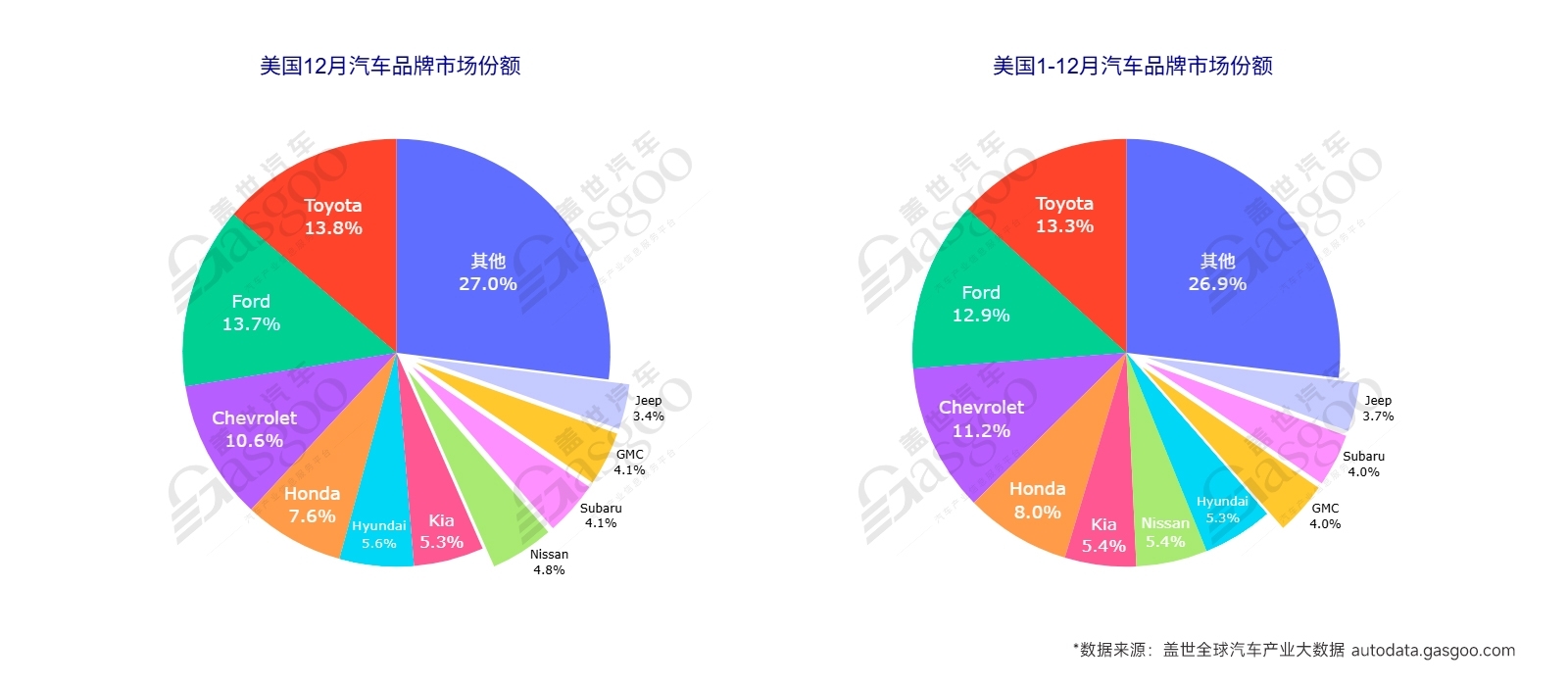
Japanese and Korean automakers are taking the first hit. Take South Korea as an example: data shows that in 2024, the U.S. accounted for 49% of the country’s total vehicle export value. Trump had previously threatened to restore tariffs on Korean cars to 25%. If enforced, annual operating costs for Hyundai and Kia could surge by more than 5 trillion won, potentially slashing operating profit by over 20%.
Toyota faces a similar struggle. The automaker ships roughly 500,000 vehicles from Japan to the U.S. each year. A tariff hike from 10% to 15% would add hundreds, perhaps thousands, of dollars to the cost of every imported car. And while Toyota has steadily expanded its U.S. manufacturing footprint in recent years, it remains unable to fully shield itself from the shock in the short term.
European automakers haven’t been spared either. In the first three quarters of 2025, Volkswagen Group lost 2.1 billion euros due to U.S. tariffs. Shares of BMW, Mercedes-Benz, and Stellantis fell broadly following the news. Although these manufacturers operate extensive factories in North America, their complex global supply chains leave them exposed. Even when vehicles are assembled stateside, a vast number of components still arrive from overseas — and those parts fall squarely within the scope of the retained tariffs.
Data from Eurostat shows that among the eight European nations Trump threatened with tariffs over the Greenland issue, Germany runs the largest trade surplus with the U.S. by a wide margin. Its automotive, chemical, and industrial sectors are poised to take the biggest hit.
Dragged down by U.S. tariffs and a sluggish Chinese market, Aston Martin’s annual losses widened further. The company plans to cut up to 20% of its workforce, or roughly 600 jobs.
For Chinese automakers, the impact is currently felt more in expectations than in reality. Long-standing high tariffs mean that exports of Chinese-brand passenger vehicles to the U.S. are negligible.
Yet, as Zhang Xiang points out, this is far from a spectator sport. Tariffs raise the expected cost of future U.S. exports, meaning that whenever Chinese brands do enter the North American market, they will inevitably face a double squeeze: higher prices and suppressed sales. That is exactly why Chinese automakers are watching the board so intently, even before they’ve placed a bet.
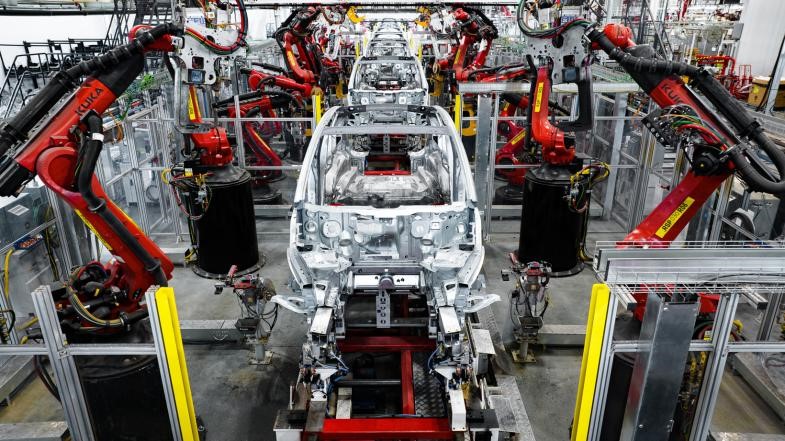
Image Source: Tesla
As automakers feel the squeeze, parts suppliers find themselves in an even more precarious position. The automotive supply chain is rigidly hierarchical, and upstream suppliers have limited bargaining power. The extra costs imposed by tariffs cannot always be passed down the line smoothly.
Zhang argues that when tariffs rise and imported component prices climb, the cost of vehicle assembly goes up. This forces some suppliers into a difficult choice between absorbing margin cuts or shifting their supply strategies. Once that pressure accumulates across the supply chain, it ultimately boomerangs back to the automakers.
That is why shifts in tariff policy are rarely just a matter of internal corporate finance. They ripple through pricing, sales volumes, and investment decisions, altering the rhythm of the entire market.
A Whiplash Tariff Policy
Since Trump returned to the White House, tariffs have become the administration’s weapon of choice for disrupting the global economy. Where the hammer falls and how hard it hits often depend on the diplomatic agenda and negotiating leverage of the moment. From the European Union to Japan, and from South Korea to India, no corner of the auto industry has escaped this tariff storm.
Looking back at the evolution of policy since Trump took office, a pattern emerges: “maximum pressure first, negotiation later.” As far back as his first term, auto tariffs were used repeatedly as bargaining chips in U.S.-Japan and U.S.-EU trade talks. In this current term, however, that uncertainty has been dialed up to a new level.
Consider South Korea. In early 2026, Trump threatened to hike tariffs on Korean goods from 15% to 25%, arguing that the National Assembly had failed to codify the previously agreed trade deal into law. The news sent shares of Hyundai and Kia into a tailspin.
Yet, the “tariff gloom” didn’t trigger a prolonged market crash. The South Korean government moved quickly to reaffirm its commitment to last year’s agreement — keeping tariffs at 15% in exchange for $350 billion in U.S. investment — and pledged large-scale purchases of American energy. Sentiment rebounded rapidly, driving the South Korean market sharply higher over the next two days.
As Zhang Xiang puts it, this volatile policy environment has effectively become the new normal in negotiations: tariff threats are often just leverage to secure investment and procurement deals.
A similar dynamic is playing out in North America. Washington recently threatened to close the Gordie Howe International Bridge on the U.S.-Canada border — a critical artery for the auto industry — sparking fears over supply chain stability. Connecting Detroit and Windsor, the bridge is one of the busiest land trade corridors in the world. In 2023 alone, it handled $126 billion in goods, nearly half of which were vehicles and auto parts.
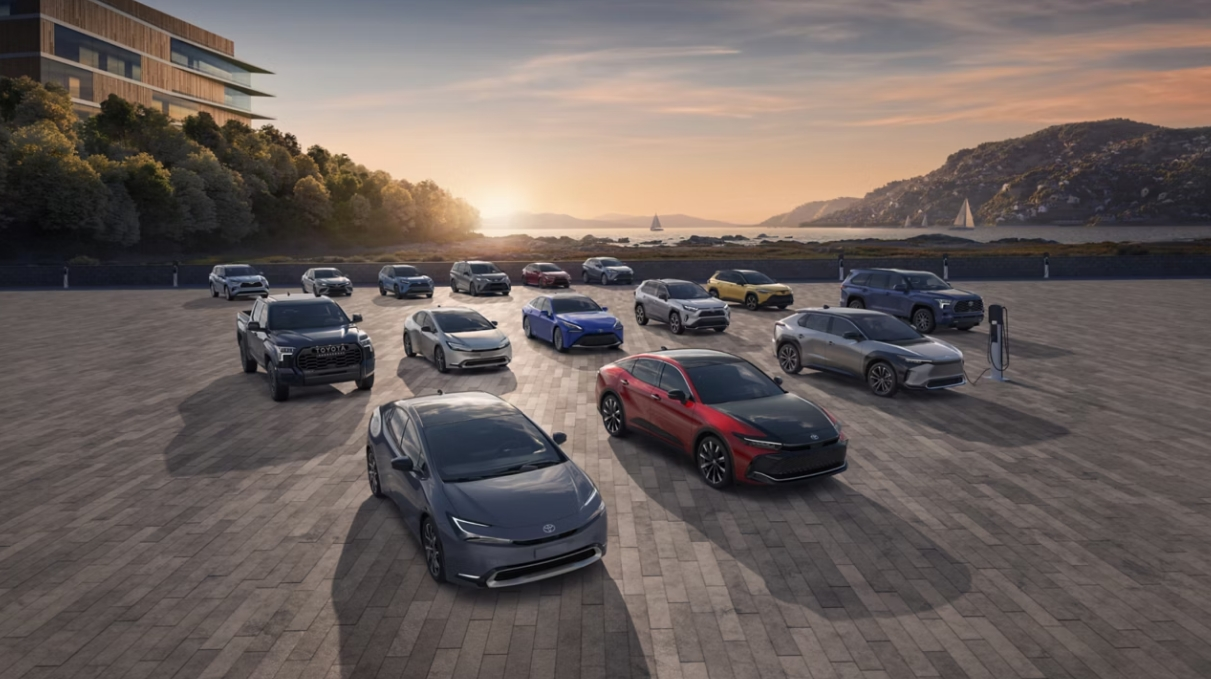
Image Source: Toyota
Similar rounds of negotiation and compromise are unfolding elsewhere. After multiple rounds of talks with the EU, the U.S. cut auto tariffs from 25% to 15%. Following a deal with India, tariffs on certain products were adjusted. And the 25% tariff on Japanese vehicles was reduced to 15% once a trade agreement was signed. Every adjustment reflects the outcome of bargaining at the negotiating table. With this new tariff policy now settled, rates for various countries are set to shift once again.
Zhang notes that current U.S. tariff policy is designed as a “negotiable and adjustable” tool, not a fixed decree. That uncertainty is actually a feature, not a bug — its purpose is to keep pressure on counterparties while preserving room for tactical maneuvering.
By contrast, U.S. tariff policy on Chinese-made electric vehicles appears remarkably “stable” — high rates have long been in place with little sign of easing. The catch is that sales of Chinese-made cars in the U.S. are already negligible, often amounting to only single- or double-digit units annually, so the practical impact of these high tariffs is minimal. Data from Gasgoo Automotive Industry Big Data shows that vehicles exported from China to the U.S. are largely American-branded models being shipped back home.
That doesn’t mean Chinese brands can sit out the tariff game entirely. In January of this year, the Canadian government made a major policy shift: agreeing to phase out the 100% import tariff on Chinese-made electric vehicles and establishing an annual quota of 49,000 units. Canada’s industry minister explicitly stated that the government is actively promoting the creation of joint venture factories with Chinese firms to produce EVs for the global market.
As Canada loosens restrictions on Chinese vehicles in certain areas, the U.S. has quickly signaled a hardening stance on trade and infrastructure issues with its northern neighbor. That has objectively increased uncertainty for Chinese-Canadian automotive trade. Using third parties or regional corridors to exert influence has become a defining feature of the current trade war.
Goal: Reviving Domestic Manufacturing
The core objective behind Washington’s constant adjustment of auto tariffs isn’t hard to guess. Regardless of shifting rhetoric or targets, the underlying logic points in one direction: drive industrial reshoring by raising external costs, and ultimately rebuild U.S. domestic manufacturing capacity. As a pillar of the industrial sector, the auto industry has naturally become a primary focus of this strategy.
On a policy level, the U.S. government repeatedly emphasizes “supply chain security,” “manufacturing resurgence,” and “domestic jobs.” Tariffs are a key instrument for achieving those goals. By driving up the cost of imported vehicles and components and increasing the uncertainty of cross-border production, Washington aims to force multinational automakers to rethink their North American footprint.
The results suggest the strategy is working — to an extent. To protect their U.S. market share, some overseas automakers have begun ramping up investment stateside.
Toyota announced plans to invest $14 billion in a North American battery factory — its first such facility outside Japan — with a further $10 billion earmarked over the next five years to expand hybrid production capacity. Data shows that since 2020, Toyota’s cumulative investment in the U.S. has reached $21 billion, boosting its workforce from 25,000 to 31,000.
The policy has also spurred action from domestic automakers. Ford has recently stepped up its investment in U.S. electrification and battery production. Its plan to build a battery plant in partnership with CATL is driven by very real considerations of local production and supply chain restructuring. Such projects serve not only the automakers' own transition needs but also align with Washington’s goal of keeping critical manufacturing onshore.
Highly globalized industries like semiconductors are shifting under similar logic. TSMC’s push to establish advanced process capacity in the U.S. is a textbook case of Washington using a mix of tariffs, subsidies, and policy incentives to lure high-end manufacturing back home.
Zhang notes that in the short term, tariff policy has indeed altered the logic of corporate decision-making. The question of “whether to build in the U.S.” has shifted from a long-term option to an immediate, pressing concern. But he emphasizes that this reshoring, driven by external pressure, carries its own risks: rising costs and lost efficiency.
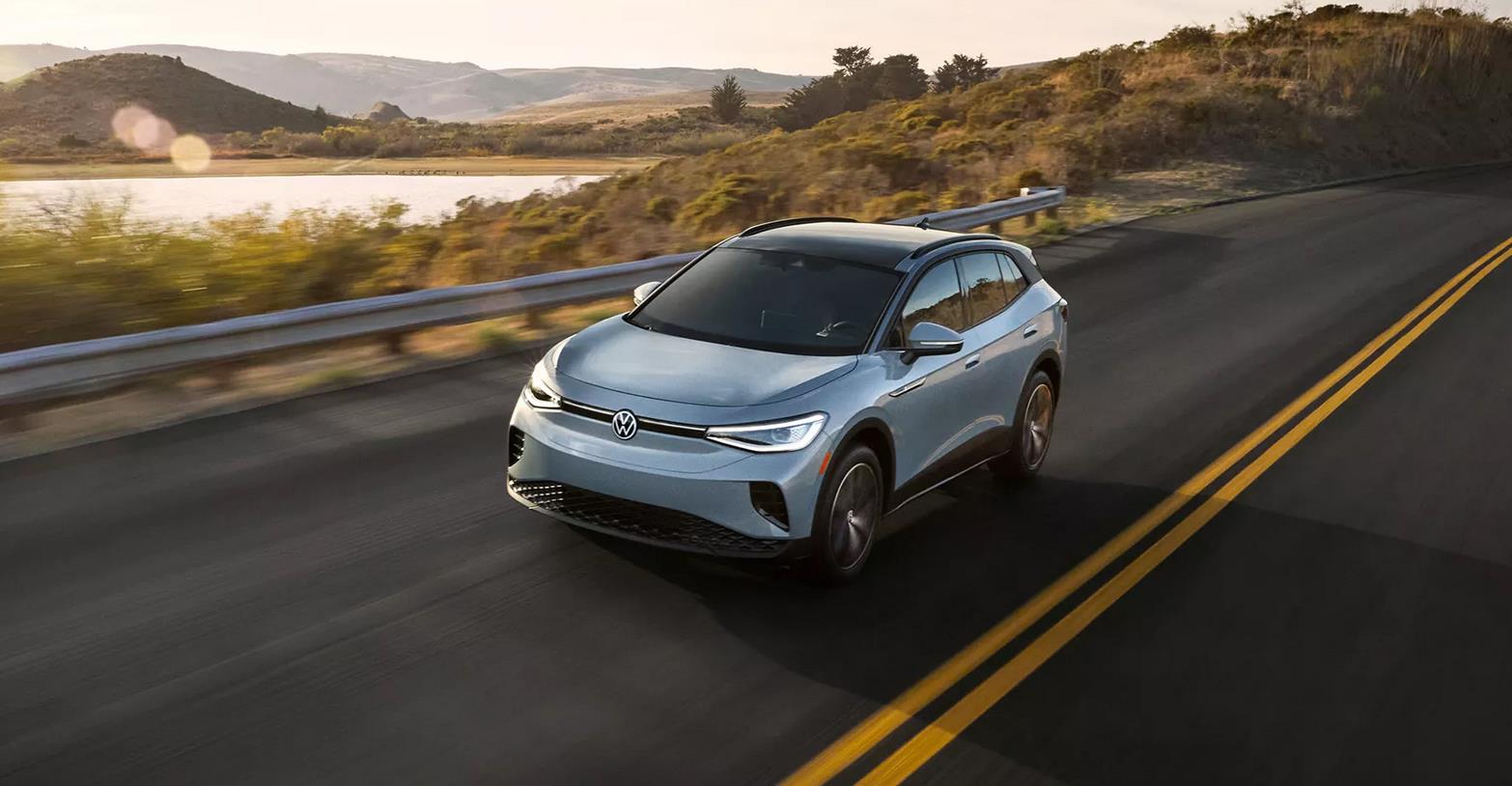
Image Source: Volkswagen
Tariffs have always been a double-edged sword; the harder they are swung, the greater the risk of backlash. In the long run, Zhang argues, U.S. tariffs will fail to protect the domestic auto industry. Because the sector is deeply globalized — a single car contains parts from a dozen countries — tariff policies sever the efficient collaboration between U.S. automakers and overseas supply chains, actually driving up the procurement costs of domestic production.
This is already playing out among some European automakers. Hit by U.S. tariff policy, Volkswagen Group shelved plans for a new Audi plant in the U.S. In a similar vein, Stellantis canceled plans to restart an Ontario factory to build Jeep models, while General Motors announced layoffs at its Canadian facilities.
The deeper cost lies in price transmission and the erosion of competitiveness. Economists at the University of Michigan estimate that tariffs will directly lift the average price of a U.S. vehicle by about $3,000 — at a time when the average new car already costs nearly $50,000. Parts suppliers are even more blunt: tariffs may drive short-term domestic investment, but over the long haul they will inflate vehicle costs and strip the U.S. of its global competitiveness.
Zhang also stresses that tariff policy doesn’t just affect imports; it drives up parts procurement costs for domestic automakers as well — costs that are ultimately passed on to the consumer.
Bottom Line: The Long Road for Chinese Automakers to the U.S.
For Chinese automakers, cracking the U.S. market has always been the elephant in the room. As the world’s second-largest auto market, the U.S. boasts a developed economy and strong purchasing power; its technical standards and market position serve as a global benchmark. Breaking into the U.S. is, in some ways, synonymous with unlocking a critical gateway to the global market. Behind this obsession lies a strategic pursuit of brand value and global expansion.
In reality, the direct impact of the U.S. market on Chinese-made vehicles remains limited. On one hand, sales volumes are so low that even high tariffs are unlikely to deal a substantive blow to operations in the short term. On the other, U.S. tariff policy on Chinese electric vehicles hasn’t shifted significantly, meaning its impact remains largely institutional rather than market-driven.
What truly warrants attention is the internal ripple effect within the North American market. As Canada relaxes restrictions on Chinese electric vehicles in certain areas, the U.S. has quickly signaled potential tariff adjustments and even threatened to disrupt key cross-border corridors with Canada.
Another “back door” into North America is equally uncertain. Mexico has become a key pivot for Chinese brands in the region, with several automakers building plants and gaining market share there in recent years. However, stricter scrutiny of rules of origin under the USMCA, combined with the ever-present threat of U.S. tariff adjustments based on negotiation progress, has severely undermined the stability of the Mexican route.
This means that even if Chinese automakers don’t enter the U.S. directly, their ability to participate in the North American supply chain via Canada or other routes could still be disrupted by external policy shifts.
Zhang suggests that in the current environment, Chinese automakers need patience and timing to enter the North American market, rather than chasing a quick breakthrough. Instead of a direct frontal assault, gradually gaining experience and strengthening compliance capabilities through regional markets may be the more realistic approach.


