



Gasgoo Munich- As competition in the auto sector intensifies, established Tier 1 suppliers are setting their sights on a new frontier: robotics.
Recently, companies like Tuopu Group and Desai SV released their 2025 financial reports. Beyond the usual revenue and profit figures, robotics was a recurring theme. For some, the robotics division is already generating substantial revenue.
For components giants that have spent years deep in the auto sector, robotics is no longer a distant concept—it is a "new business" taking shape.
Yet, by shifting from autos to robotics, can Tier 1 suppliers truly escape the cycle of intense competition?
Auto Tier 1s Crowd Into Robotics
Tuopu Group recently released its 2025 financial report, detailing the latest progress of this Tier 1 leader in the robotics space.
To leverage the robotics boom, Tuopu spun off a robotic actuator business unit in mid-2023. It established an independent management structure and integrated resources to sharpen its business focus.
Among auto Tier 1s, Tuopu was among the first to invest deeply in robotics.
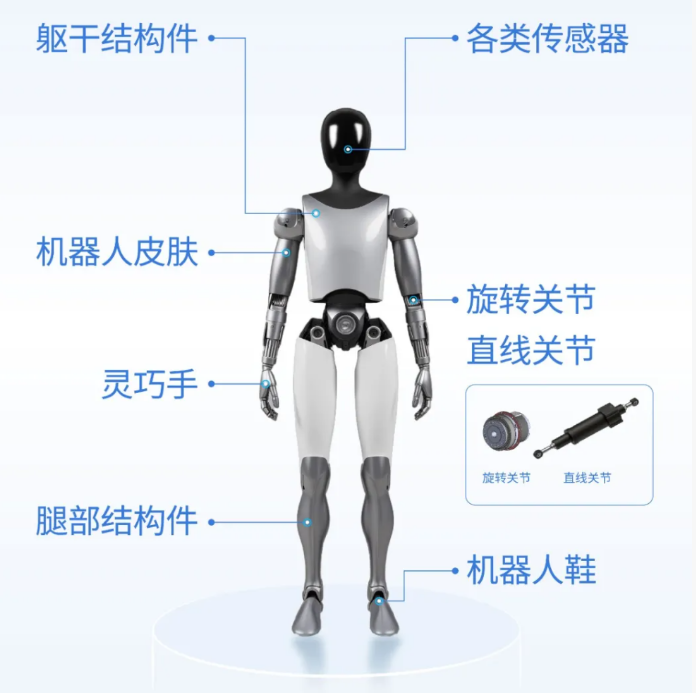
Image Source: Tuopu Group
Today, Tuopu has built a diverse product matrix covering linear and rotary actuators, dexterous hand motors, structural body components, sensors, foot dampers, and electronic flexible skin. Commercialization has already begun.
According to Tuopu's 2025 report, its robotic actuator business generated 13.59 million yuan in revenue last year. While that is a small fraction compared to its total revenue of 27.5 billion yuan, the segment's gross margin hit 28.25%—10 percentage points higher than the 18.04% margin of its auto parts business.
That sends a clear signal: robotics is not only profitable but also more profitable than the core business.
The latest report from Shuanglin Holdings echoes that sentiment.
In 2025, Shuanglin fully entered the fields of humanoid robot core components and advanced smart chassis technologies. In September, it set up a Ningbo robotics components subsidiary, focusing on humanoid robot screws and joint modules.
By the time of the report, Shuanglin had developed inverted planetary roller screws for linear drive joint modules in humanoid robot limbs. It delivered the first samples in June 2025, built a pilot production line, and achieved an actual annual output of 1,500 sets last year.
Building on that, Shuanglin is constructing a first-phase mass production line with a capacity of 100,000 sets, slated to start production this June.
Shuanglin also successfully developed miniature ball screws for dexterous hands and has sent samples to several clients.
In the joint module sector, Shuanglin established full-cycle development capabilities for linear joint assemblies. It has successfully developed linear joint modules, rotary joint modules, dexterous hands, and finger push rod modules for humanoid robots, completing multiple batches of prototype deliveries.
Overall, however, none of these products have yet received formal orders from customers.
That has not stopped Shuanglin from increasing investment. In its report, the company called this move a "key strategic choice for the next decade"—a clear sign of its resolve.
Looking at the broader auto components sector, other Tier 1s are also making frequent moves in robotics.
Minth, for instance, plans to form a joint venture with Leaderdrive in the U.S. to design, manufacture, and commercialize humanoid robot joint modules in North America. It also signed an agreement with AgiBot to collaborate on smart exteriors, wireless charging, joint assemblies, and flexible manufacturing solutions.
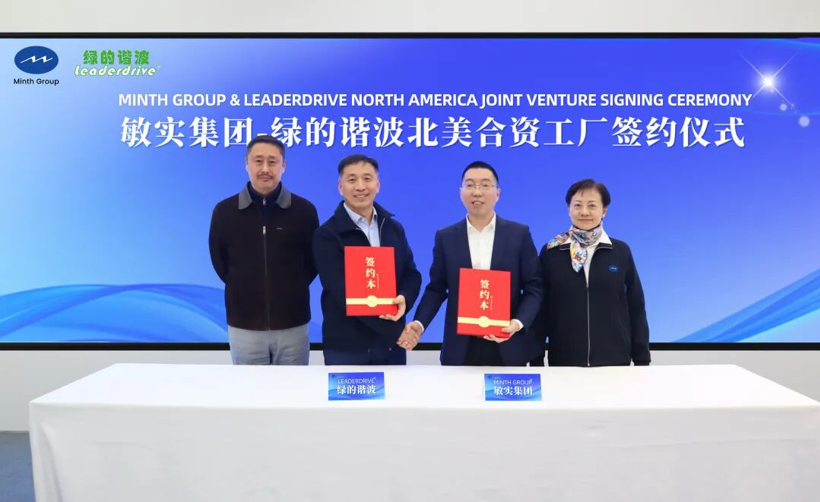
Image Source: Minth Group
Beyond partnerships, Minth is developing integrated joint modules, electronic skin, smart masks, wireless charging systems, and structural body parts. It has built strong ties with major domestic robot manufacturers and completed small-batch deliveries for several clients.
Zhongding entered the race in 2025 through its subsidiary, Anhui Risibot. It has forged deep ties with LimX Dynamics, Chery Robotics, EngineAI, and Fourier Intelligence. Zhongding also co-founded Dingli Kexing with LimX Dynamics and Hefei Flexible Ketian.
In early March, the joint venture rolled out its first humanoid robot. This marked a "major" breakthrough for Zhongding in complete robot production, establishing a full-chain capability spanning core component manufacturing, precision assembly, and system integration.
Other listed Tier 1s—including Desai SV, Joyson Electronics, Sanhua Intelligent, Wanliyang, and Ningbo Huaxiang—are also actively expanding into robotics with notable progress.
In terms of strategy, these companies have mostly set up dedicated internal R&D teams or subsidiaries. Some, like Minth, Joyson, and Zhongding, are also partnering with leading embodied AI startups and forming joint ventures to integrate resources and accelerate product launches.
Regardless of the approach, the logic has shifted from "tentative exploration" to "systematic positioning"—a clear trend in the industry.
The Underlying Logic of Tier 1s' Robotics Pivot
The rush into robotics is not about chasing a fleeting trend. It is an inevitable choice driven by multiple factors.
The first driver is the pressure of industrial transformation.
As competition in the smart EV sector becomes intense, pressure is rippling upstream. Many components firms are facing pressure on earnings growth.
Tuopu is a microcosm of the industry. In 2025, its auto parts gross margin was just 18.04%—not only well below its robotics actuator business, but also a decline from 2024. More telling, its net profit attributable to shareholders was 2.779 billion yuan last year, down 7.38% year-on-year. It was the first time in six years that revenue rose while profit fell.
Against this backdrop, finding a second growth curve has become a strategic necessity for Tier 1s.
By comparison, the embodied intelligence robotics sector is widely seen as the next "trillion-yuan" market. IDC predicts the global intelligent robot hardware market will approach 30 billion USD by 2026. China is expected to lead that growth, with its market surpassing 11 billion USD.
For auto parts companies eager for new growth drivers, that market potential is undeniably attractive.
Tuopu points out that actuators are core to robot motion control. A single robot requires dozens of them, creating a value of tens of thousands of yuan per unit.
The second driver is the high degree of technological kinship between smart cars and robots.
Gasgoo CEO Tina Zhou argues that embodied intelligence robots are not a parallel or separate track from autos. Instead, they share deep commonalities with smart EVs in underlying capabilities, core technologies, supply chains, and application scenarios.
Take the core technical architecture. Both smart cars and robots rely on perception, decision-making, and execution. In the perception layer, lidar and cameras act as "eyes" and "ears." In the decision layer, high-performance computing platforms and complex algorithms serve as the "brain." In the execution layer, motors, reducers, and controllers form the "limbs."
This architectural commonality allows Tier 1s to seamlessly transfer their expertise in automotive electronics, autonomous driving, and powertrain control to robotics.
Tuopu's robotic actuators, for example, evolved from its Intelligent Braking System (IBS). Wanliyang's joint modules are a direct extension of its transmission technology heritage.
Furthermore, cost is a major bottleneck for robot commercialization. The auto parts industry possesses the world's most rigorous cost control, mass precision manufacturing, and quality management systems—expertise in turning engineering challenges into cost solutions that is highly transferable.
Fanzhou Precision states that 70% of the processes for its automotive reducers are identical to those for robotic harmonic reducers. After setting up a subsidiary, Fanzhou Harmonic, last year, it quickly prototyped seven harmonic reducer models. It secured its first orders worth 5 to 10 million yuan, with mass production planned for this year.
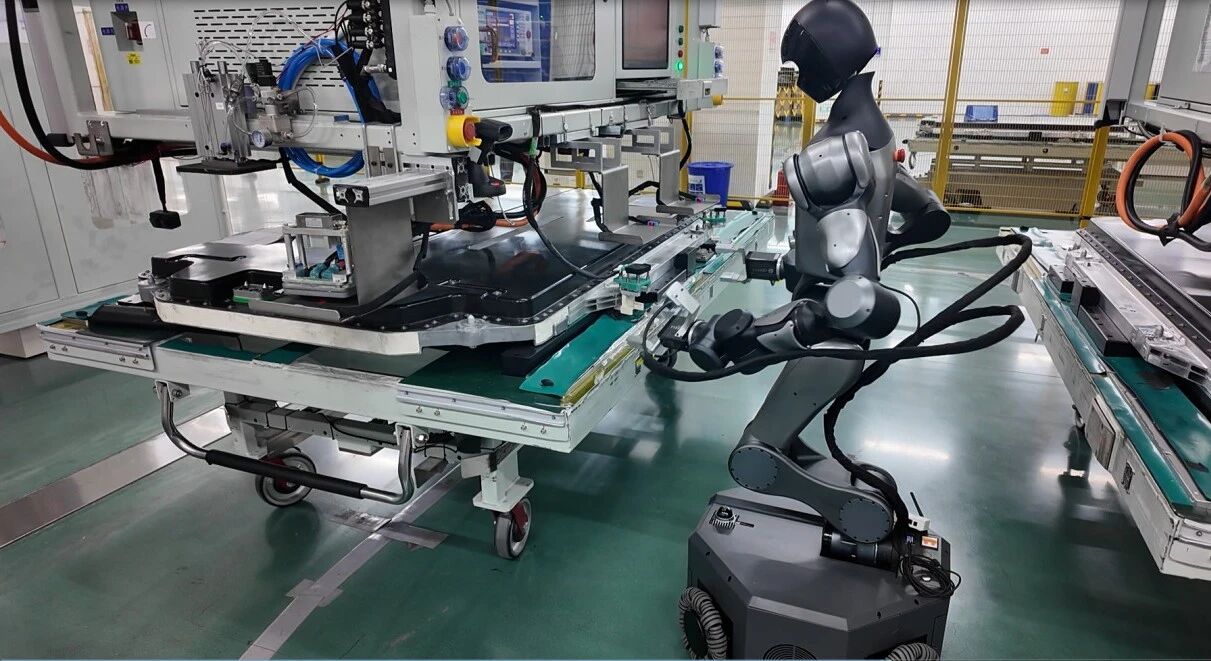
Image Source: CATL
The third driver is the deep synergy between scenario and technology.
Although embodied intelligence applications are emerging in various fields, some insiders believe the auto parts sector could be the first sector for large-scale robot deployment.
Tina Zhou notes that the auto industry is itself one of the most important and realistic scenarios for embodied robots. "Automotive manufacturing is highly complex, intensive, and integrated. Factories naturally offer complex, real-world environments. From logistics and quality inspection to flexible assembly and maintenance, auto plants are not just key testing grounds but potentially the best scenarios for early large-scale deployment."
Xu Guoqiang, Director of the Scientific Research Ecosystem at Qunxian Intelligent, agrees. The auto parts sector offers many scenarios suitable for robots, with mature processes, solid automation foundations, and high talent density. Crucially, product lifecycles are long, meaning production lines remain stable and robot deployments are not frequently disrupted by model changes.
In this sense, auto Tier 1s pivoting to robotics hold a unique dual identity: they are both suppliers to and customers of robot manufacturers.
This creates a strategic synergy. A Tier 1's production lines serve as a real-world "training ground" for its components, while the iterated parts can then feed back to robot makers, optimizing overall performance.
Crossover Advantages Are Clear, But Shortcomings Cannot Be Ignored
As the main force crossing over into embodied intelligence, auto Tier 1s are not starting from zero. They bring deep technical reserves and industrial resources.
Their primary advantage is the ability to manufacture at scale and control costs.
"From an industrialization perspective, the auto industry's long-standing capabilities in complex system integration, engineering, reliability verification, cost control, and supply chain collaboration are exactly what embodied robots need to scale." Tina Zhou argues.
Currently, the robotics industry is still in the "prototype phase." Most startups excel at R&D but lack experience in mass production processes, yield improvement, and cost control. Auto parts companies, however, specialize in turning a "sample" into a "commodity" and driving costs down from "lab prices" to "industrial prices."
Moreover, the auto industry demands extreme reliability and durability. Automotive-grade standards far exceed those for consumer electronics or general industrial products. By introducing this quality system to robotics, Tier 1s can build competitive barriers in scenarios requiring high reliability, such as industrial and special-purpose robots.
Tuopu's ability to achieve a 28.25% gross margin on robotic actuators stems from its years in the auto sector. This includes in-house R&D for permanent magnet servo and frameless motors, experience integrating motors, reducers, and controllers, precision machining capabilities, and the synergy of various R&D and testing resources.
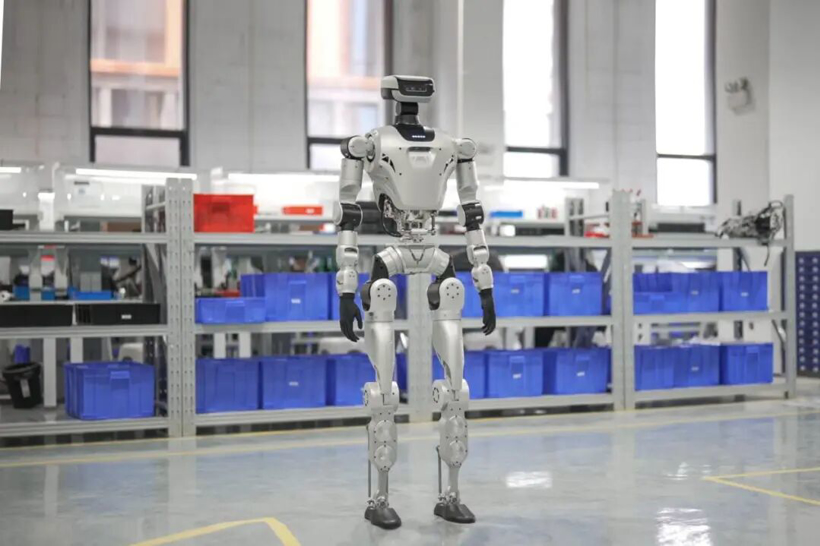
Image Source: Zhongding
Customer and channel resources are another key advantage.
Tier 1s are not just users of embodied robots; their deeply tied automakers are also among the largest potential B2B clients for robots. This means Tier 1s can validate products at lower marketing costs.
Ample capital and risk resistance provide a solid backbone. Robotics may not turn a profit for years, requiring continuous R&D investment. For startups, that means endless fundraising pressure. But for listed companies with stable core businesses and strong cash flow, the strategy of "the core business supporting the new one" allows them to withstand the technology maturation cycle.
Yet, the shortcomings of Tier 1s cannot be ignored.
The main challenge is "strong hardware capabilities but weak software capabilities." Traditional Tier 1s excel in mechanics, materials, and processes. But the core competitive barriers in embodied intelligence are shifting rapidly toward AI algorithms, perception-decision, and data loops.
This means that even if Tier 1s dominate the "execution layer," they may rely on external tech for the "control" and "decision" layers. As the industry moves from "can it move?" to "can it think?", this weakness could become a long-term constraint.
Path dependency is another hidden risk.
In embodied intelligence, auto experience can sometimes constrain innovation. Since core metrics differ, applying automotive logic to technical optimization might fail to meet the unique needs of robotics scenarios.
Moreover, technical solutions for humanoid robots are not yet established. For instance, do humanoids need to be highly anthropomorphic? Which design path should dexterous hands take? There are no unified answers yet.

Image Source: AgiBot
The competitive landscape is equally challenging.
According to the Ministry of Industry and Information Technology, Chinese companies launched over 300 humanoid robot models in 2025 alone—more than half the global total. In such a competitive environment, auto Tier 1s will face difficulties if they cannot respond quickly with competitive products and solutions.
Talent is another hurdle. High-end professionals in AI and robotics are scarce. Tier 1s often find themselves at a disadvantage when competing for talent against tech giants and startups, adding to the difficulty of the crossover.
This does not mean Tier 1s have no chance. While embodied intelligence is popular, commercialization is far from mature. In Tina Zhou's view, what will ultimately determine success is cost, reliability, and delivery capability—precisely where Tier 1s excel.
Conclusion
For auto Tier 1s, this crossover is essentially a race between their strengths and weaknesses.
Their advantage lies in manufacturing, but the deciding factor may be software. They excel at delivering products with high cost-effectiveness, but future competition will likely depend on making products smarter.
Until these two curves intersect, whoever can address their weaknesses first is best positioned to succeed in this crossover race.


