While most were still mapping out their New Year plans, the autonomous driving sector quietly witnessed a notable convergence.
Zhuoyu Technology (ZYT), a provider of autonomous driving solutions, inked separate strategic partnership agreements with ECARX and SiEngine on the very same day. The trio will collaborate deeply on the R&D and mass production of central computing platforms for next-generation smart vehicle electronic and electrical (E/E) architectures.
Strategic Positioning: Why the Dual-Track Approach?
As the new year began, with most companies still finalizing their annual strategies, ZYT was already making its moves. Signing two agreements in a single day—an efficient and precise maneuver—it begs the question: What exactly is ZYT plotting?
To grasp the strategic weight of this move, we first need to know who ZYT is. Founded in 2016, the company has long focused on developing and producing L2-to-L4 autonomous driving systems and core components. In November 2025, it closed a strategic investment round exceeding 3.6 billion yuan, led by FAW Group, pushing its post-money valuation past the 10 billion yuan mark.
Image Source: ZYT
More significantly, the smart vehicle industry is at a tipping point of structural transformation. The traditional distributed E/E architecture—where discrete functions are handled by independent control units—can no longer meet the demands of deep integration between high-level autonomous driving and intelligent cockpits.
Think of it like early computers: every peripheral needed its own control card. Modern computers, however, integrate everything onto the motherboard and CPU. Automotive electronic architecture is undergoing a similar evolution from "dispersed" to "centralized."
The central computing platform is the core of this shift. It acts as the "super brain" of a smart vehicle, centralizing and coordinating the operation of functional units—including autonomous driving, the intelligent cockpit, and body control—that were previously separate.
By announcing partnerships with two companies on the same day, ZYT is making a statement. Its partners, ECARX and SiEngine, represent two of the most critical directions in the intelligent vehicle supply chain:
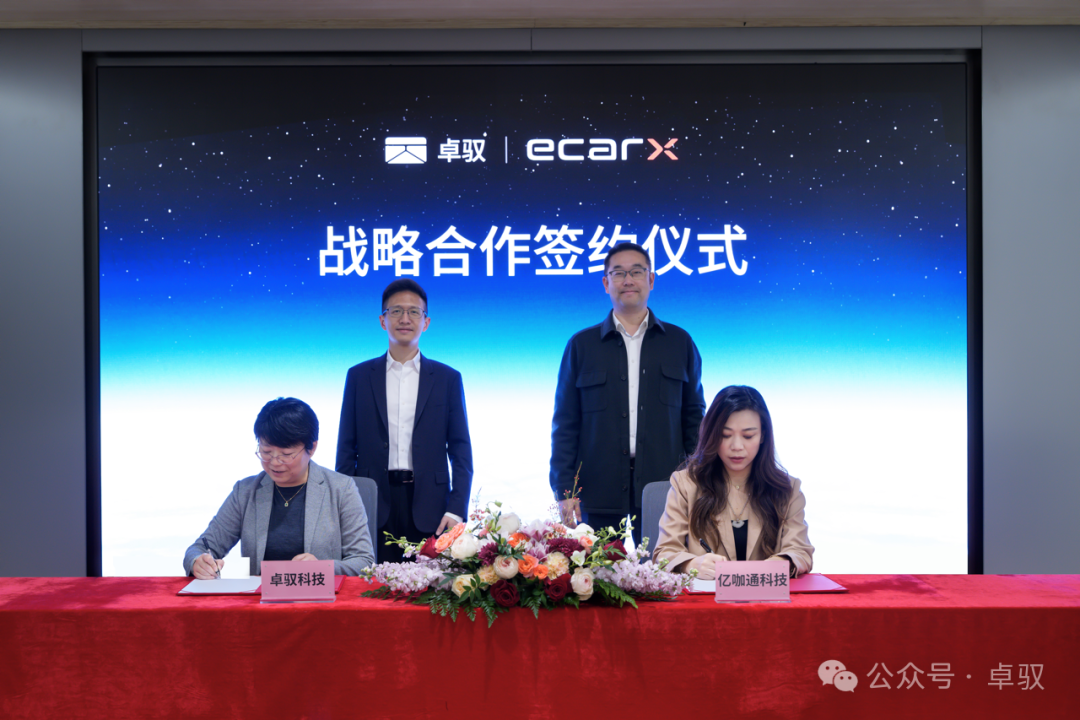
Image Source: ZYT
ECARX, a global mobility tech firm, excels in intelligent cockpit systems and the integration of in-vehicle chips. Notably, the Flyme Auto cockpit system, developed in partnership with Meizu, has garnered significant market recognition.
Crucially, ECARX secured a $45.6 million strategic investment from Zhejiang Geely Holding Group in early 2026, funds earmarked to accelerate the development and deployment of advanced intelligent automotive software and hardware solutions.
SiEngine, meanwhile, stands out in the field of domestic high-performance automotive-grade chips. It has established a dual-track layout for "smart cockpit + autonomous driving." Its "Longying One" cockpit chip has been widely adopted across various models, while the "Xingchen One" chip, designed for high-level driver assistance, entered mass production in 2025. In the third quarter of 2025, SiEngine also closed a Series B strategic funding round exceeding 1 billion yuan.
The technical prowess and industry standing of these partners make it clear: this is no simple resource consolidation. ZYT is effectively weaving an intelligent network spanning hardware, software, algorithms, and ecosystem—a direct play for the most competitive arena in the smart vehicle sector.
The battle for central computing platforms has, at its core, become a battle of ecosystem integration. ZYT understands this well. By partnering with companies that hold dominant positions at different stages of the supply chain, it is building a more complete and competitive technology ecosystem.
The Logic of Collaboration: More Than Just Technical Complementarity
To view ZYT's double signing as a mere exercise in technical complementarity is to vastly underestimate the strategic depth of this alliance. In reality, the "iron triangle" formed by these three firms is reshaping how the smart vehicle supply chain collaborates.
The traditional automotive supply chain is linear: chip suppliers provide the silicon, hardware makers build controllers, software firms develop algorithms, and finally, OEMs integrate everything. While this structure divides labor clearly, it suffers from low synergy efficiency and sluggish innovation.
Central computing platforms demand something entirely different: a deep fusion of "chip computing power + system algorithms." This forces the supply chain to evolve from a linear model to a networked one. ZYT, ECARX, and SiEngine are forging exactly this kind of new collaborative relationship.
The partnership with ECARX focuses on cross-domain convergence between the intelligent cockpit and autonomous driving. Per the agreement, the two will integrate ECARX's cockpit expertise—including the Flyme Auto system developed with Meizu—with ZYT's accumulated strengths in high-level driver assistance.
The goal is explicit: to "deeply integrate multimodal large models and generative AI to drive interaction innovation," and to "deploy cutting-edge VLA models to provide a robust foundation for end-to-end high-level driver assistance."
Simply put, it’s about making the vehicle's "brain" (the autonomous driving system) and its "nerve center" (the cockpit system) work together more seamlessly.
For instance, if the vehicle detects driver fatigue, the autonomous driving system can take control while the cockpit system adjusts the environment—say, lowering the temperature or playing alerting music. The two systems act in unison to provide a comprehensive safety solution.
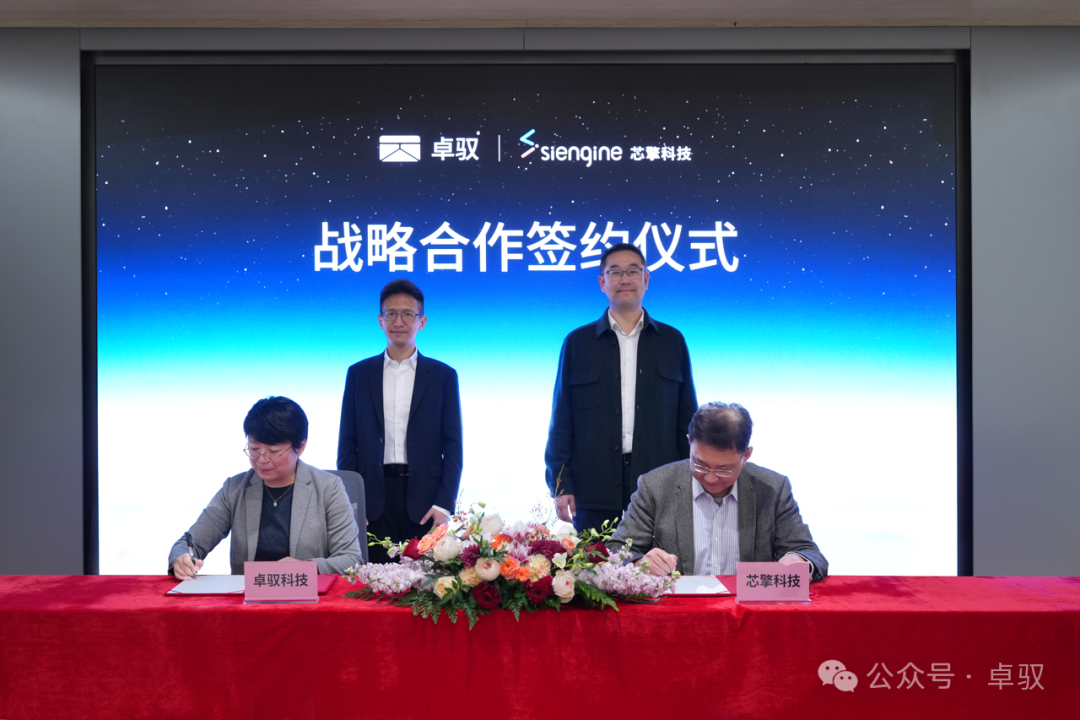
Image Source: ZYT
The collaboration with SiEngine focuses on building a domestic, high-performance computing foundation. SiEngine's "Xingchen One" autonomous driving chip uses a 7nm automotive-grade process that meets AEC-Q100 standards. Its multi-core heterogeneous architecture delivers exceptional performance: CPU computing power hits 250 KDMIPS, while NPU power reaches 512 TOPS.
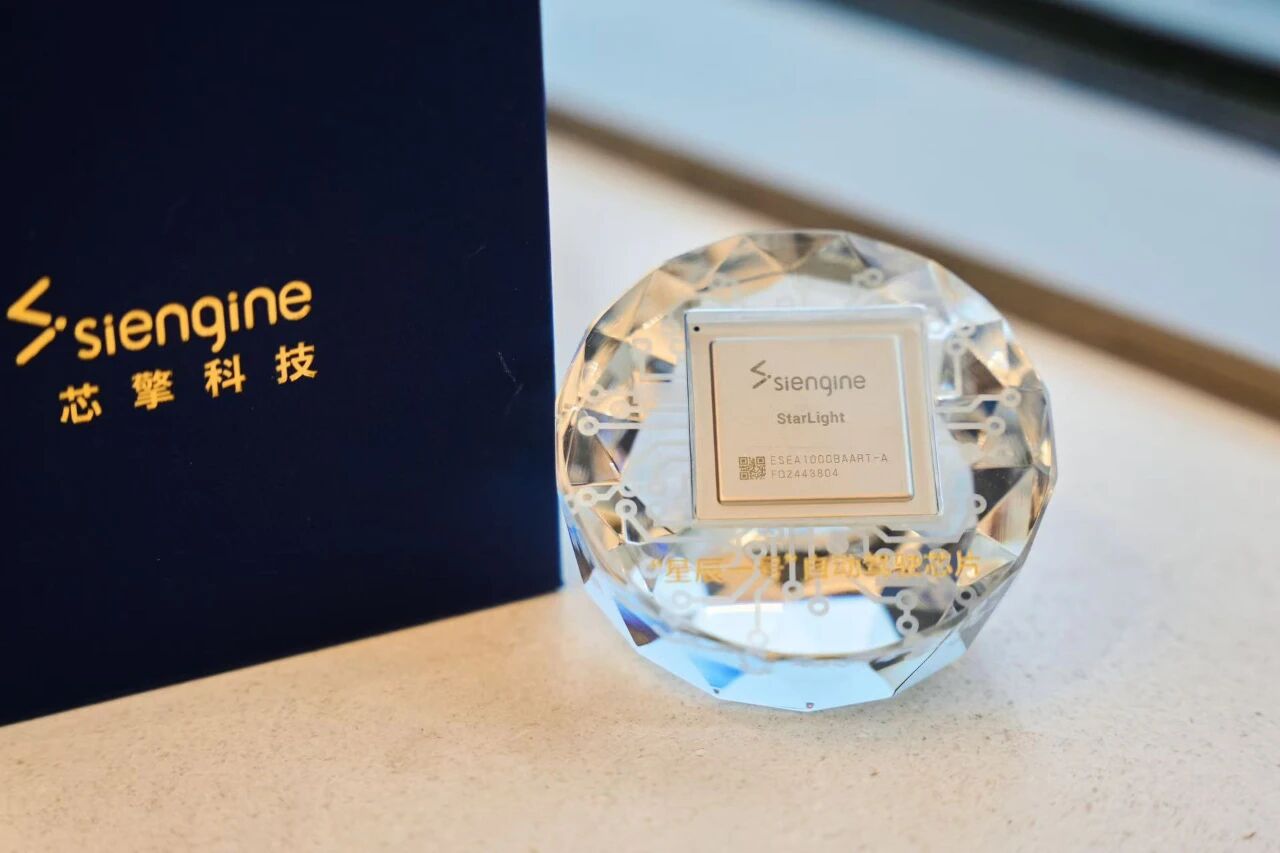
SiEngine's "Xingchen One" autonomous driving chip; Source: SiEngine
What does that level of computing power mean? It is equivalent to processing data inputs from multiple high-definition cameras, LiDAR, and millimeter-wave radars simultaneously, all while making complex driving decisions in real time.
The integrated "chip power + algorithm" platform built by ZYT and SiEngine effectively marries the algorithmic advantages of autonomous driving with the raw power of domestic high-performance chips. The result is a high-level smart vehicle platform that is both highly secure and capable of continuous iteration.
It is worth noting that these two partnerships are not isolated; they share an internal logic. ECARX and SiEngine already have potential for synergy on their technological paths, and ZYT, as the autonomous driving system provider, serves as the critical node connecting them.
This "iron triangle" moves beyond the traditional transactional relationship between supplier and customer, creating an ecosystem of joint R&D, shared risk, and mutual benefit. Given the rapid pace of iteration in smart vehicle technology, this deep collaborative model is clearly more competitive.
Industry Impact: Redefining the Competitive Landscape of Chinese intelligent Vehicles
On the surface, ZYT's double signing is just a partnership between three companies. In reality, it may be quietly reshaping the competitive logic of China's smart vehicle industry.
Globally, the competition has shifted from individual features or technologies to a battle over full-stack capabilities and ecosystem integration. Tesla maintains its lead largely due to its full-stack in-house capabilities, spanning chips, algorithms, and vehicle manufacturing.
However, the full-stack approach requires massive investment and long cycles, making it unrealistic for most companies. The collaboration between ZYT, ECARX, and SiEngine explores a distinctively Chinese path: leveraging deep supply chain collaboration to build an ecosystem capable of rivaling the full-stack model.
This model offers distinct advantages: faster integration of cutting-edge technology, distributed R&D risks and costs, and a more open, inclusive technology ecosystem.
From a market perspective, the outlook for central computing platform solutions is vast. As vehicles become smarter, the transition from distributed architectures to centralized computing has become an industry consensus.
Industry projections suggest the global central computing platform market could reach hundreds of billions of yuan by 2030. Through its partnerships with ECARX and SiEngine, ZYT has secured a vantage point in this race.
More importantly, this model helps break the monopoly of foreign firms in automotive chips and foundational software. By deeply integrating domestic chips with domestic autonomous driving systems, China's smart vehicle industry is building a more self-reliant technological infrastructure.
"By joining forces with ECARX, we will translate our leading driver assistance capabilities into mass-production solutions with extreme economies of scale," said Shen Shaojie, head of ZYT, at the signing ceremony. That statement captures the partnership's core objective: converting technical prowess into market scale.
ECARX Chairman and CEO Shen Ziyu offered a more forward-looking take: "AI is evolving from a 'functional add-on' to the 'core driver' of the intelligent vehicle architecture." This suggests the trio's collaboration is about defining the architectural standards for the next generation of smart vehicles, not just integrating technology.
In terms of industry impact, ZYT's philosophy of "open collaboration" could trigger a reshuffling of the smart vehicle supply chain. More companies may opt to join or form similar ecosystems rather than persisting with closed, full-stack in-house development.
Ultimately, this shift will make the industry more efficient and innovation more dynamic, allowing consumers to enjoy smarter, safer vehicles sooner.
Conclusion:
The signing ceremony is over, but the collaborative R&D has just begun. When asked about the partnership, one unnamed industry analyst remarked: "This isn't simple addition; it's a multiplication effect."
The alliance of ZYT, ECARX, and SiEngine may serve as a warning to those smart vehicle companies committed to full-stack in-house development: in an era of rapid technological iteration, open collaboration may well be more competitive than closed innovation.
As central computing platforms become the industry standard, this ecosystem model based on deep collaboration could redefine the rules of the game in the smart vehicle sector.