



In a normal day, a seemingly routine rear-end collision took an alarming turn when passengers were trapped inside a deformed vehicle for nearly three minutes because its hidden door handles failed to deploy. Footage shared online by a passing driver quickly went viral, sparking a nationwide debate over the safety of flush-mounted door handle designs. That debate has now translated into regulatory action, with a newly approved mandatory national standard signaling the beginning of the end for such designs in China.
A three-year grace period toward the end of hidden door handles
Under a three-year transition plan, hidden door handles are set to be gradually phased out. In early 2026, China's Ministry of Industry and Information Technology approved the "Safety Technical Requirements for Automobile Door Handles," a compulsory national standard that will take effect on January 1, 2027. The regulation lays out four core requirements covering mechanical release capability, sufficient hand-operating space, clear visual identification, and minimum structural strength.
In practical terms, the rule requires that doors must be openable manually from inside the vehicle regardless of whether power is available. Exterior handles must provide roughly 30 cubic centimeters of usable grip space, while mechanical release points must be clearly positioned and labeled. Structurally, door handles must withstand a pulling force of 500 newtons—roughly equivalent to the full strength of an adult tugging on the handle.
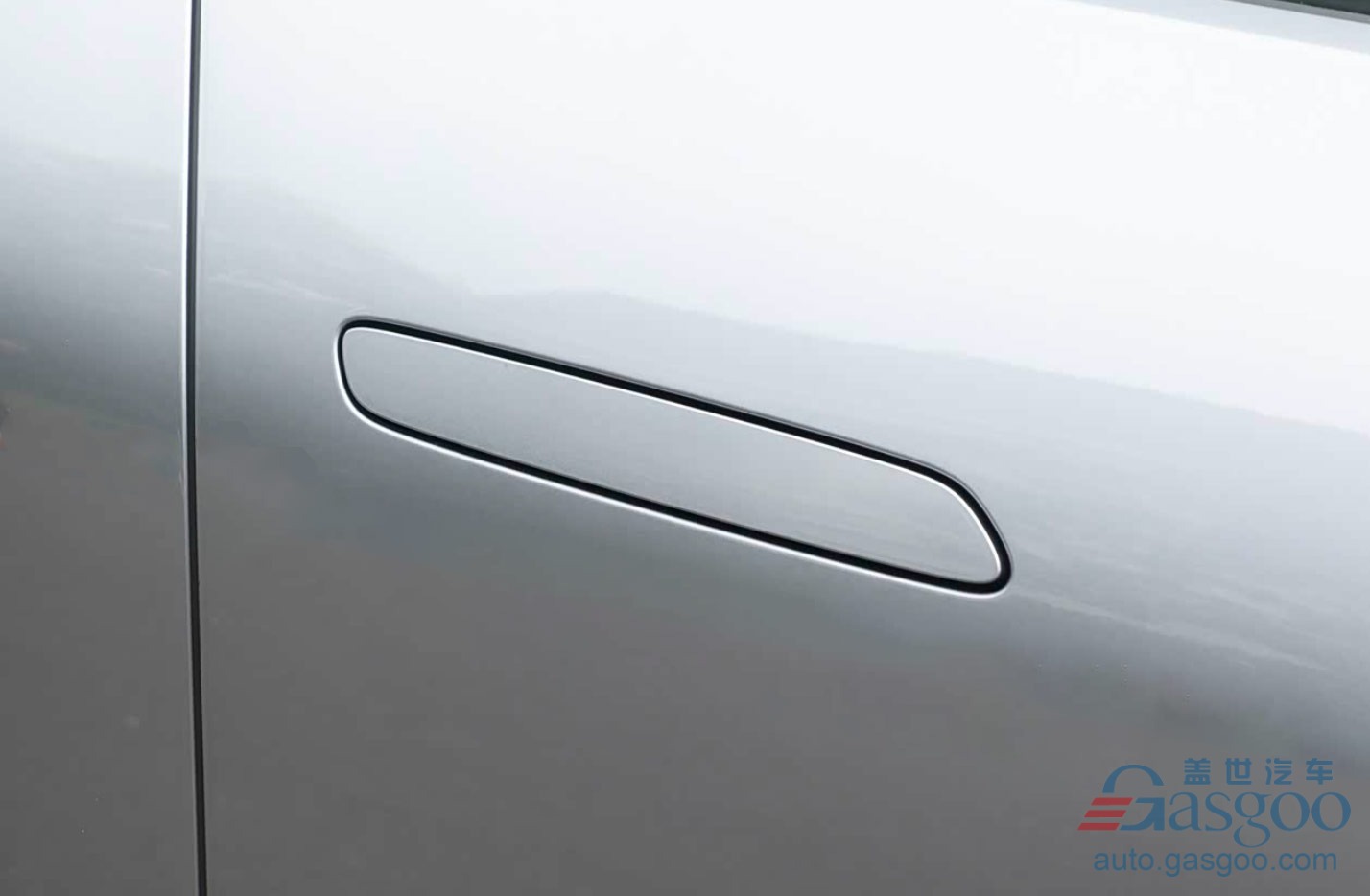
Implementation will be phased. From 2027, newly registered models must comply with all requirements except hand-operating space; from 2028, all new vehicles must meet the full standard. Existing models already on sale will be given until January 1, 2029 to complete necessary modifications. Taken together, the timeline suggests that within three years, hidden door handles will largely vanish from new cars on Chinese roads.
When engineering logic gives way to marketing spectacle
Flush door handles are not a new invention. As early as 1952, the Mercedes-Benz 300SL adopted the concept purely for aerodynamic reasons. More than six decades later, the Tesla Model S brought the design back into the spotlight—but this time, its role had shifted from engineering necessity to visual statement.
As China's new energy vehicle race intensified, hidden door handles quickly became shorthand for "high-tech" styling. By 2025, more than half of newly launched NEV models in the country featured the design, with some leading automakers making it standard across entire lineups. For many consumers, flush handles came to symbolize a car's perceived level of intelligence and sophistication.
That aesthetic shift, however, often came at the expense of function. While automakers have argued that hidden handles reduce drag and extend driving range, independent tests suggest the aerodynamic gains are marginal—often less than 0.01 Cd, translating into only a few extra kilometers of range. By contrast, real-world drawbacks have proven serious: handles freezing shut in northern winters, failing to operate after power loss in crashes, or leaving passengers unable to locate interior releases in emergencies. Against the backdrop of occupant safety, these risks have become increasingly hard to ignore.
Automakers begin course correction
Even before the regulation formally takes effect, automakers have begun to adjust course.
Brands such as AITO have been among the first to revise their designs, with newer models like the AITO M8 adopting semi-hidden solutions that retain a clean look while adding redundant mechanical release mechanisms. GAC Group has confirmed that vehicles including the Trumpchi M8 and AION i60 already meet the upcoming requirements. AVATR has said its new AVATR 12 and 06T were developed in line with the new standard. Meanwhile, Geely, a co-lead unit involved in drafting the regulation, says it will adopt differentiated technical solutions depending on handle type to ensure compliance.
Together, these moves send a clear signal: in China's automotive industry, safety redundancy is reclaiming ground once ceded to visual flair, marking a broader recalibration from design-driven novelty back toward engineering fundamentals.
Beyond door handles: the list of "anti-user" car design
The reassessment of door handle design is only the opening chapter. In the broader push for futuristic styling and technological flair, a growing list of car features has been criticized as "anti-human"—designs that look advanced on paper but undermine everyday usability and safety. Regulators, consumers, and even automakers are beginning to question where innovation should draw the line.
At the top of that list is the near-total disappearance of physical buttons. Large touchscreens and voice control systems have become standard, absorbing functions such as climate adjustment, volume control, and even gear selection. While this approach reduces hardware costs and reinforces a high-tech image, it also shifts drivers' attention away from the road. When screens freeze, lag, or voice commands fail, even a simple task like adjusting the air conditioning can turn into a distraction with real safety implications.
More troubling still is the spread of touch-sensitive controls onto steering wheels. In August 2025, Volkswagen faced a class-action lawsuit in the United States over its ID.4. Plaintiffs argued that the capacitive touch controls on the steering wheel—used instead of traditional buttons—were fundamentally flawed. According to the complaint, even a light, unintended touch could activate adaptive cruise control, increasing the risk of collisions in situations requiring precise maneuvering, such as parking.
Yoke-style steering wheels have also drawn criticism. Their futuristic appearance delivers strong visual impact, but in emergency maneuvers, drivers may struggle to find adequate grip. What was once marketed as bold design innovation is increasingly seen as a trade-off that compromises intuitive control when it matters most.
Panoramic sunroofs inspire similar ambivalence. They brighten the cabin and enhance the sense of space, but under intense summer sun, interior temperatures can soar—prompting viral images of passengers opening umbrellas inside cars. More seriously, large expanses of glass can shatter in crashes, raising concerns about secondary injuries from flying fragments.
Camera-based rearview mirrors have not escaped scrutiny either. In theory, they offer a wider field of view and fewer blind spots. In practice, glare under strong light, unclear imaging at night, motion-induced dizziness at high speeds, and the rare but serious risk of signal failure have all undermined confidence in their real-world reliability.
The return of design ethics: who is driving the shift?
The push to correct these design excesses reflects a broader return to design ethics, driven by multiple forces.
On the regulatory front, a steady stream of mandatory national standards sends a clear message. Starting with door handles, more safety-related design elements are likely to fall under formal regulation. At the same time, consumer attitudes are shifting. As buyers increasingly recognize that flashy aesthetics cannot replace functional reliability, automakers are under growing pressure to rethink their priorities.
For manufacturers, however, change is rarely immediate. Redesigning components involves cost, engineering complexity, and production timelines. From initial design approval to mass production, a vehicle typically requires two to three years. Even with regulatory and consumer pressure aligned, the complete phase-out of problematic designs will take time.
Safety should never be the cost of innovation
Over more than a century, the automotive industry's progress has been defined by incremental gains in occupant protection—from seat belts and airbags to structural crash optimization—each advance shaped by hard lessons learned at the cost of human lives.
As cars increasingly resemble mobile smart devices, designers face a critical challenge: technological sophistication must not come at the expense of basic functionality, and visual novelty cannot override safety redundancy. The rethink of door handles may mark the start of a broader return to rational design—one where, in matters of human safety, any innovation that is merely decorative must ultimately step aside.


