



Gasgoo Munich- Before the spotlight on the first mass-produced unit had even dimmed, the project leader was already walking away—disappearing through the departure gate to Boston.
For the Tesla Cybercab—a machine built for "driverless" ambition—this is more than a sudden executive shake-up. It is a severe test of both direction and confidence as the company climbs toward the peak of future mobility.
On February 18, Tesla celebrated the rollout of its first mass-produced Cybercab at the Texas Gigafactory, beating the original schedule by two months.
Yet, before the celebratory atmosphere could settle, a bombshell dropped inside the company: Victor Nechita, the vehicle project lead, resigned just days after the ceremony.
Nechita's career has run almost parallel to Tesla's modern history. He joined in 2017 as an intern on the Model 3 line, just as the company was enduring what Elon Musk called "production hell."
Over nearly nine years, he climbed the ranks from engineering roles to eventually lead the entire Cybercab vehicle program.
His departure has left this critical project—fresh across the mass-production threshold—temporarily rudderless.
"Talent Hollowing Out" at a Critical Juncture
Nechita's exit is striking not only for the sensitivity of his role but for the timing of his departure.
He shepherded the project from concept to the first unit off the line—a leap from zero to one. Yet, industry veterans know the stretch from prototype to volume production is the true crucible, testing engineering details, supply chains, and cost control. Musk himself has admitted that early production will be "extremely slow."
Losing a leader who knows every intimate detail of the project at this precise moment represents a significant drain of institutional knowledge and a major management challenge.
Even more concerning to outsiders is that this is no isolated incident; it is the latest chapter in Tesla's recent wave of executive departures.
The "exit list" is extensive: In November 2025, Cybertruck program manager Siddhant Awasthi and Model Y program manager Emmanuel Lamacchia both departed.
Over the past two years, Tesla has also lost several core executives, including Omead Afshar, vice president of sales and manufacturing for North America and Europe; Milan Kovac, head of the Optimus robot program; Drew Baglino, an 18-year veteran who led powertrains; Pete Bannon, vice president of hardware engineering; and a manufacturing director who departed in January of this year.
Reports indicate that none of Tesla's original program leads remain for any of its mass-production models: the Model 3, Model Y, Cybertruck, or Cybercab.
This "hollowing out" of talent during a pivotal transition period casts a shadow over the Cybercab—and indeed, over Tesla's entire autonomous driving strategy.
Beyond the Steering Wheel: The Real "Driverless" Dilemma
Yet, compared to the thorny technical and regulatory hurdles, personnel shifts may be the least of Tesla's worries.
The Cybercab is a "pure" autonomous vehicle—no steering wheel, no pedals. Its design relies entirely on Tesla's unsupervised self-driving system.
The reality, however, is that this critical threshold remains uncrossed.
Reports indicate the Cybercab is set to launch with current AI4 hardware, while the AI5 chip—necessary for true high-level autonomy—is not expected until mid-2027. The crux of the problem? Millions of existing Tesla vehicles already equipped with AI4 hardware have yet to deliver on the promise of unsupervised driving.
Tesla even quietly removed the promise of "unsupervised Full Self-Driving" from its marketing materials in September 2025.
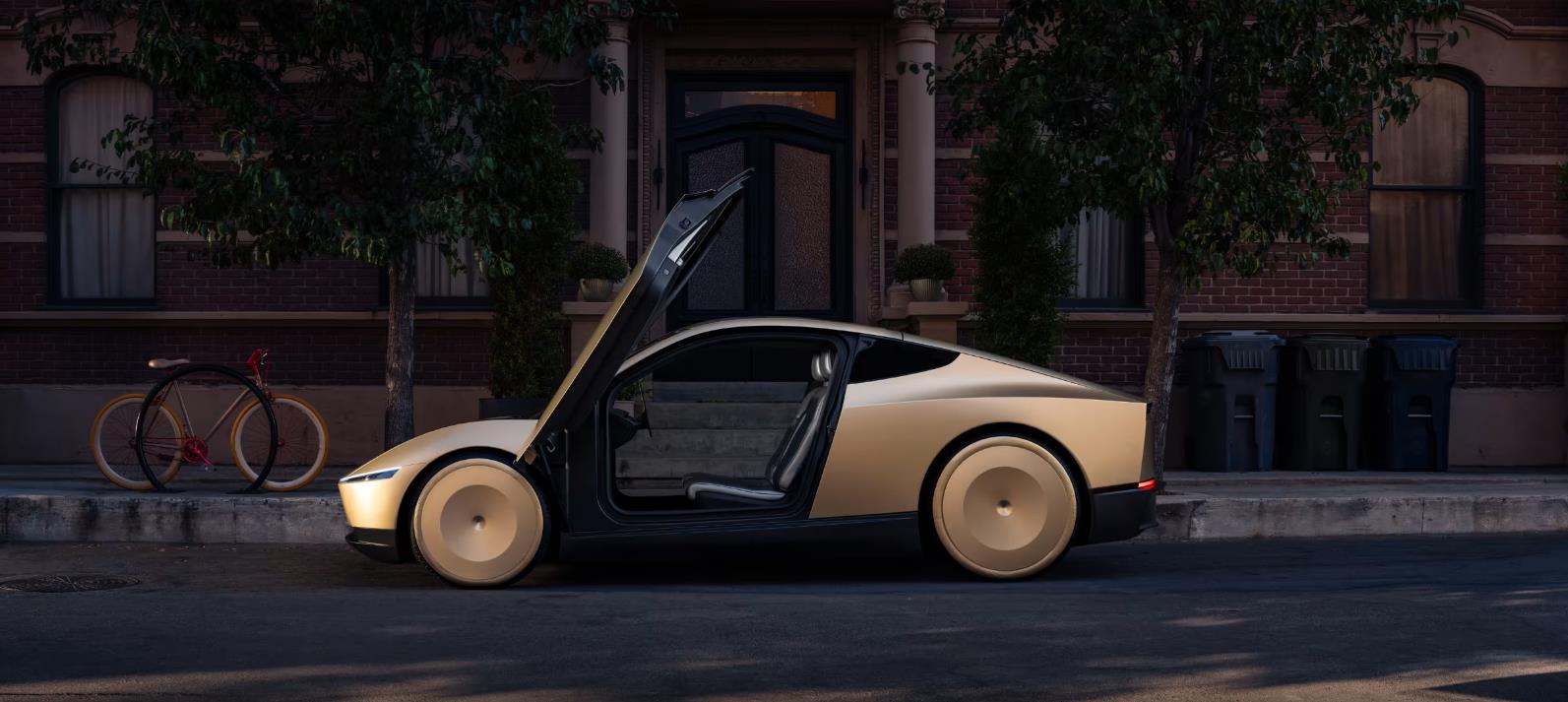
Image Source: Tesla
In January of this year, Tesla publicly launched an "unsupervised" Robotaxi service in Austin, only to suspend it after a single week. The service was reportedly restricted to a tiny geographic area and relied heavily on remote human support, with third-party assessments suggesting its safety could be nine times lower than that of a human driver.
This serves as a stark warning for the software-defined Cybercab: if the autonomous system acting as its "brain" cannot function independently, the sleek cabin—stripped of any backup options—is essentially just an expensive ornament.
Nechita's departure serves as a metaphorical snapshot of the Cybercab project's current state: the warmth of celebration still lingers, but the challenges ahead are already pressing.
For Musk, the need goes beyond a project leader who can execute a concept. He requires an entire ecosystem capable of solving the riddles of engineering, regulation, and business model validation.
In the interim before AI5 arrives, the questions of who will fill the Cybercab leadership void—and who will prove a steering-wheel-free car is truly "drivable"—will be the central puzzle determining whether Tesla can successfully steer its massive ship toward the future.


