



Gasgoo Munich- Gasgoo reported via Teslarati that roughly 60 Tesla Cybercabs appeared outside the Texas Gigafactory production area this past Wednesday. The sighting suggests mass production of the autonomous robotaxi model has officially begun, fueling speculation that it could soon join Tesla's product lineup.
A Gigafactory Texas observer and drone operator, noted on social platform X that this marks the largest sighting of the model to date.
Yet, every unit in this batch—viewed by outsiders as the definitive signal that mass production is underway—features a clearly visible steering wheel. That stands in stark contrast to just two months ago, when Tesla's CEO Elon Musk emphatically reiterated on social media: "Cybercab has no pedals or steering wheel, production starts in April."
From the fearless promise of a wheelless future to the return of the steering wheel in the production model, the Cybercab's debut has turned into a prism.
It reflects not only the unavoidable tension between Musk's penchant for "aggressive time compression" and engineering reality, but also exposes the deep conflicts involved in moving autonomous driving from "conceptual perfection" to "practical viability."
Why did the steering wheel appear?
Musk had previously outlined a future of autonomous driving without steering wheels or pedals. This gold two-seater was positioned as a dedicated robotaxi priced below $30,000, aiming to transform Tesla from an automaker into a high-margin mobility service provider and take aim at the robotaxi market.
In February, the first steering-wheel-free Cybercab rolled off the line at the Texas plant. By March, drone footage from enthusiast Joe Tegtmeyer captured 25 Cybercabs inside the Gigafactory Texas complex, indicating that testing and validation had accelerated significantly as Tesla prepared to ramp up output.
Musk repeatedly doubled down on the April production timeline, though he added a necessary caveat: initial capacity would be "painfully slow," following the classic S-curve of new vehicle launches. Tesla's plan was to produce hundreds of Cybercabs per week at the outset.
But the 60 vehicles seen outside the Texas plant on April 8 offered a contradictory answer: the steering wheel is back.
The question is: if the software is safe enough to operate without human intervention, why does the steering wheel still exist?
A natural inference is that Tesla's Full Self-Driving (FSD) technology has not yet reached the reliability level required to support fully autonomous operation.
In fact, data from Tesla's robotaxi pilot in Austin suggests the fleet's accident rate is roughly four times that of human drivers, with operational availability hovering at just 19%.
The Triple Pressures of Tech, Regulation, and Commerce
The appearance of the steering wheel may not be a design regression so much as a necessary compromise under multiple real-world constraints.
First, compliance with the National Highway Traffic Safety Administration (NHTSA) presents a hard barrier. Under current Federal Motor Vehicle Safety Standards, all cars sold in the U.S. must be equipped with steering wheels, pedals, and mirrors.
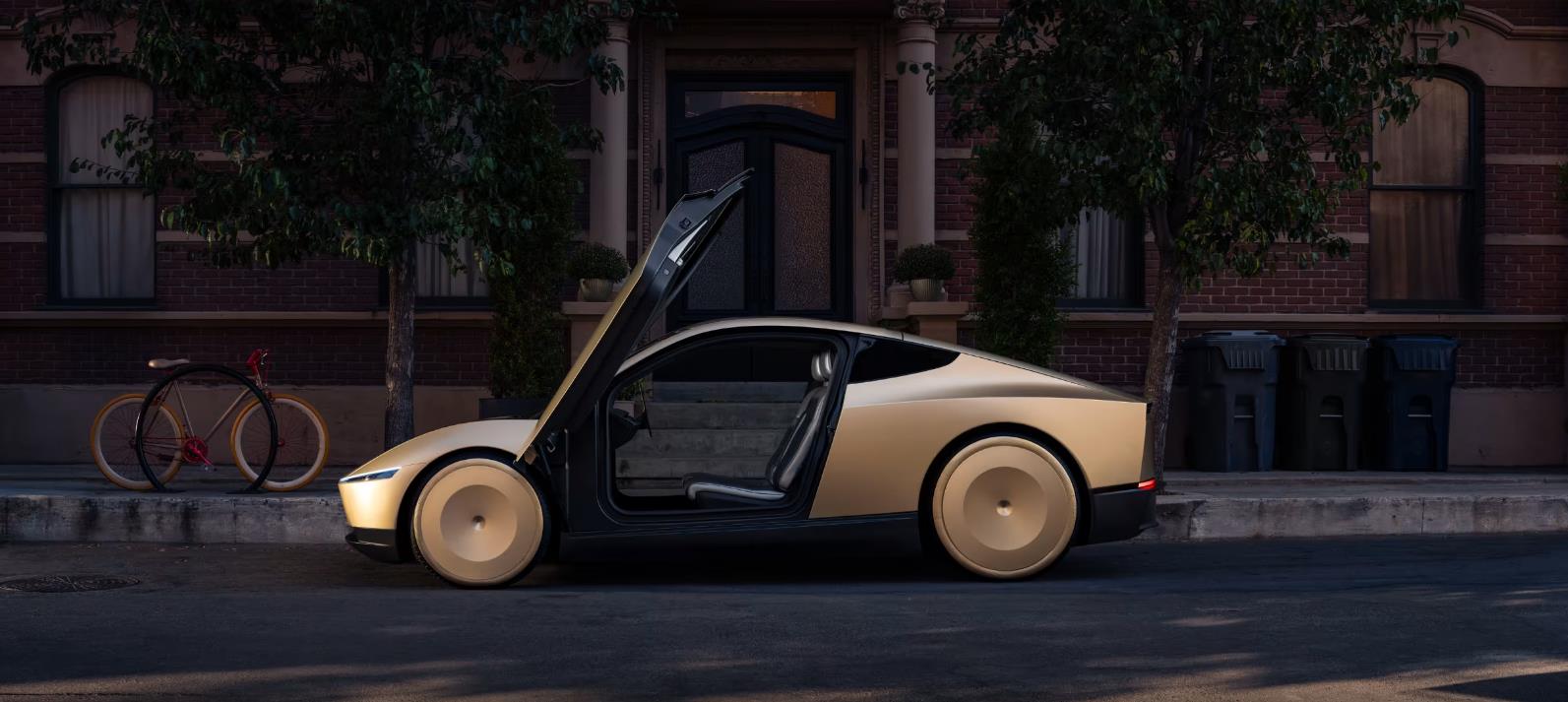
Image Source: Tesla
While the NHTSA can approve up to 2,500 exemptions per automaker annually, multiple media reports as of late February 2026 indicate that Tesla has "not yet formally submitted an exemption application for the Cybercab." The NHTSA has also made it clear that "vehicles without exemptions cannot operate on public roads."
If the exemption has not been granted, it means that even if a steering-wheel-free Cybercab were produced, it could not be legally sold.
Secondly, Tesla's own commercial strategy appears to be quietly shifting.
Morgan Stanley analyst Andrew Percoco noted that Tesla may not sell the Cybercab to consumers in large volumes initially, opting instead to deploy them within its proprietary robotaxi fleet.
In other words, early Cybercabs equipped with steering wheels can serve dual purposes: they allow engineers to validate hardware and software, and they offer flexible deployment within a regulatory framework. They can operate as test vehicles with safety drivers or even be sold as traditional cars, preserving maximum strategic flexibility for Tesla.
Finally, external competition and market pressure cannot be ignored.
Tesla has recently missed market expectations. Meanwhile, Waymo has already launched driverless robotaxi services in multiple locations. Time is of the essence, and Tesla must produce vehicles that are operational and road-ready, rather than remaining stuck at the stage of perfect prototypes.
The start of Cybercab production is, in essence, a dialogue between promise and reality.
While Musk's vision of a steering-wheel-less future remains the ultimate direction, the road to that future requires a steering wheel to "navigate" the present.
For investors and industry observers, the appearance of the steering wheel serves as an admission of real-world constraints—but it also signals that the Cybercab is getting closer to actually hitting the road.
After all, the sighting of 60 actual vehicles represents Tesla's closest step yet toward fulfilling its production promise. The remaining suspense now lies with legislators, engineers, and the market.


