



Gasgoo Munich- Joyson Electronics has teamed up with EnPower to launch a joint venture targeting the power energy market for embodied robots and other emerging intelligent agents, according to Gasgoo.
Named Ningbo Juneng New Energy, the venture focuses on R&D, production, and sales for embodied intelligence power systems. It aims to pioneer solid-state battery technology for these agents, offering an integrated solution covering "cells + BMS + data services" to meet the higher demands for range, safety, and lightweighting in embodied robots.
The partnership between Joyson Electronics and EnPower is not an isolated case in the power battery sector.
Gasgoo notes that over the past six months, companies across the global power battery supply chain have been actively positioning themselves around solid-state batteries for robots. If current trends hold, solid-state batteries—long touted as "imminent mass production" in the EV sector—are poised for large-scale deployment in the robotics sector.
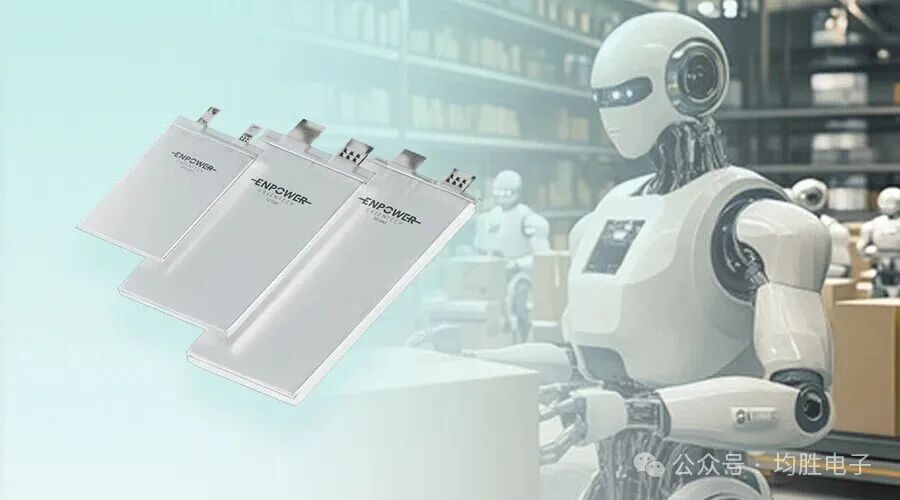
Image source: Joyson Electronics
Robotic Sector Sparks a Solid-State Battery Frenzy
Solid-state batteries, once the hottest topic in electric vehicles, are now fueling an installation boom in the robotics sector.
Chery's Moja Robot recently announced it is actively migrating automotive smart technology to robotic platforms. On the energy front, Moja will deeply integrate Chery's "three-electric" technologies, including solid-state batteries, to enable long-duration continuous operation.
Moja is not the first to announce plans to equip robots with solid-state batteries.
XPENG's next-generation IRON had previously confirmed the adoption of the technology. The XPENG IRON humanoid robot is scheduled for mass production by the end of 2026, with commercial sales starting in 2027. The company aims for a monthly production capacity of over 1,000 units by year's end.
GAC Group's third-generation embodied humanoid robot, GoMate, also utilizes this tech. Powered by GAC's all-solid-state battery, the GoMate boasts a range of 6 hours. GAC plans small-scale production of its humanoid robots in 2026, gradually expanding to mass manufacturing.
Additionally, Zhengqing Robotics' T800—a full-size, high-efficiency humanoid robot launched in late 2025—features a high-performance solid-state power battery developed specifically for humanoids, delivering stable endurance of 4 to 5 hours.
This suggests that solid-state batteries could land in mass-produced humanoid robots as early as this year.
Led by these top-tier OEMs, power battery makers are also ramping up their efforts to develop solid-state solutions for robotics.
In mid-April, Chongqing Tailan New Energy unveiled a solid-state battery solution tailored for embodied intelligence products, having already secured partnerships with leading domestic robotics firms.
Tailan's approach breaks the traditional serial development model of "cell first, system later." Instead, it uses a collaborative design of "cell-integration-drive system" that accounts for mechanical, electrical, and thermal performance under complex dynamic robotic conditions right from the initial design phase.
Currently, Tailan's semi-solid batteries can support continuous discharge at over 15C and 50C pulse discharge for seconds. They offer fast-charging from 10% to 80% in 10 minutes and operate in temperatures ranging from -40°C to 80°C, maintaining stable output even during high-load scenarios like frequent acceleration and gripping.
Farasis Energy has completed the fabrication of large-capacity pouch cells for its first-generation self-developed sulfide-based all-solid-state battery.
The battery uses a sulfide all-solid-state route, achieving an energy density of 400Wh/kg and supporting 8 to 12 hours of continuous robot operation.
Farasis previously revealed that as early as September 2025, it had shipped samples of its first sulfide all-solid-state battery for humanoid robots to leading enterprises. The company has been aligning with industry leaders on requirements, with customer feedback indicating that performance and safety meet expectations.
CALB went even further, completing development of solid-state batteries for robots and aircraft in 2025. With an energy density exceeding 450Wh/kg, the company plans to deliver robot-scale products in the thousands by the fourth quarter of 2026.
Others, including EVE Energy, Sunwoda, WeLan New Energy, and Samsung SDI, are also actively pushing forward the R&D and mass production of solid-state batteries for robotics.
TrendForce predicts that the commercialization of humanoid robots will accelerate significantly around 2026, with global shipments exceeding 50,000 units—a year-on-year surge of over 700%. Under this trend, demand for solid-state batteries is set to explode exponentially, jumping from 0.05GWh in 2025 to 74.2GWh in 2035, an increase of more than a thousandfold compared to 2026 levels.
Why Is the Robotics Sector Racing Ahead with Solid-State Batteries?
In the automotive industry, solid-state batteries have long been recognized as the next frontier in power battery technology.
Yet, despite years of touting advantages like higher energy density and intrinsic non-flammability, the timeline for mass production has been repeatedly pushed back.
The bottleneck isn't purely technical. Demands on EV batteries resemble a decathlon: high energy density, ultra-low cost, a cycle life of tens of thousands, and a supply chain mature enough to support millions of units annually. Each is hard; hitting them all simultaneously is harder.
By comparison, robot requirements are more like a sprint in a few select disciplines—maximizing energy, power burst, and absolute safety within a minimal volume.
This divergence in demand is reshaping the deployment path for solid-state batteries.
Currently, most mainstream humanoid robots rely on high-nickel ternary lithium or LFP batteries. Constrained by the energy density of liquid lithium batteries, as well as torso space and weight limits, most models offer a range of just 2 to 4 hours, with battery capacities typically under 2kWh.
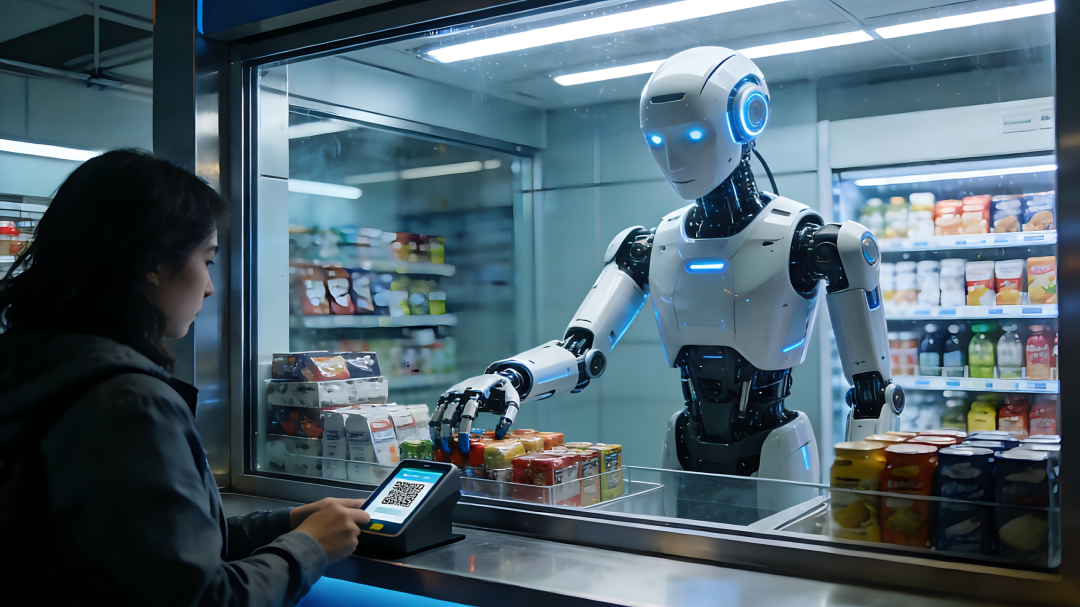
Image source: Tailan New Energy
But in real-world scenarios, many operations require robots to work continuously for 8 to 20 hours—ideally even 24 hours non-stop. This poses a severe challenge to both endurance and charging efficiency.
Solid-state batteries address these pain points directly: they offer higher capacity in the same volume without adding weight, and their non-flammable nature reduces risk within the confined, cramped spaces of a robot's body.
There is also an economic calculation to consider.
A humanoid robot typically holds less than 2kWh of battery capacity, compared to 60-100kWh in an EV. Take Tesla's Optimus Gen2, with its 2.3kWh pack: even if a solid-state battery costs three to five times more than a liquid one, the absolute cost increase for the whole unit is far lower than for a car.
In other words, robotics companies can more easily absorb the premium for high energy density and safety than automakers can. A market that can "afford the price" tends to adopt new technologies faster.
However, the promising outlook comes with challenges that cannot be ignored.
First is the lag in standards.
Hu Chengzhong, a deputy to the National People's Congress, pointed out during this year's "Two Sessions" that national standards for key performance testing of all-solid-state batteries have yet to be released. There is a regulatory vacuum in emerging fields like energy storage, collaborative robots, and humanoid robots, driving up R&D testing costs and hindering cross-scenario expansion and export compliance.
By contrast, in the automotive sector, the GB/T standard "Solid-state Batteries for Electric Vehicles Part 1: Terms and Classifications" is expected for release in July 2026, marking the first national-level definition of solid-state batteries. In robotics, however, standardization remains significantly behind the pace of industrial advancement.
Second is the conflict between customization and standardization.
Currently, robot joint design, form factors, and AI computing power are iterating rapidly, meaning installation space and power needs shift with each design change. This makes standardized mass production difficult. It creates a conflict between highly customized needs and the pressure to cut costs through scale. One of the industry's most delicate moments isn't when technology fails, but when the environment is shifting so fast that the battery must be finalized now.
Moreover, the technological roadmap for solid-state batteries has not converged. Oxide, sulfide, and polymer routes each have pros and cons, with no single dominant path emerging, further complicating large-scale deployment.
Combined, these factors determine that the industrialization of solid-state batteries for robots will not happen overnight. From materials to cells, and from system integration to scenario adaptation, every link requires repeated coordination with upstream and downstream partners. A single misstep stalls the next phase.
Still, the flurry of recent activity shows that all players are on the starting line. The distance from the start to the finish line, however, may be longer than the market expects.


