



Since deliveries began in April 2024, the Xiaomi SU7 has racked up cumulative deliveries of more than 360,000 units in just over 21 months. The achievement has not only upended industry expectations, but also propelled Xiaomi EV from an internet-famous newcomer into a heavyweight contender in China's fiercely competitive new energy vehicle market. With that prominence, however, has come intense scrutiny, with every product move dissected under a microscope.
On January 7, 2026, Xiaomi EV officially unveiled the new-generation SU7, which is scheduled to hit the market in April 2026. The starting price has been raised from 215,900 yuan to 229,900 yuan—an increase of 14,000 yuan. For many consumers, the immediate reaction was sceptical: is Xiaomi EV beginning to "cash in" on its popularity?
A closer look suggests the opposite may be true. Behind the seemingly straightforward price increase lies a fundamental reshaping of the product strategy. This report takes an in-depth look at the most significant upgrades to the new-generation Xiaomi SU7, and explains why the higher price may actually make the car better value.
1. Higher price equals higher value? A reverse move toward "high-spec as standard"
The new-generation Xiaomi SU7 Standard now starts at 229,900 yuan, up 14,000 yuan from the previous model. Yet a detailed breakdown of the added equipment shows that the price increase is well below the actual cost of the new hardware. While Xiaomi appears to have raised the entry threshold, it has in effect sharply increased the intrinsic value of the base model.
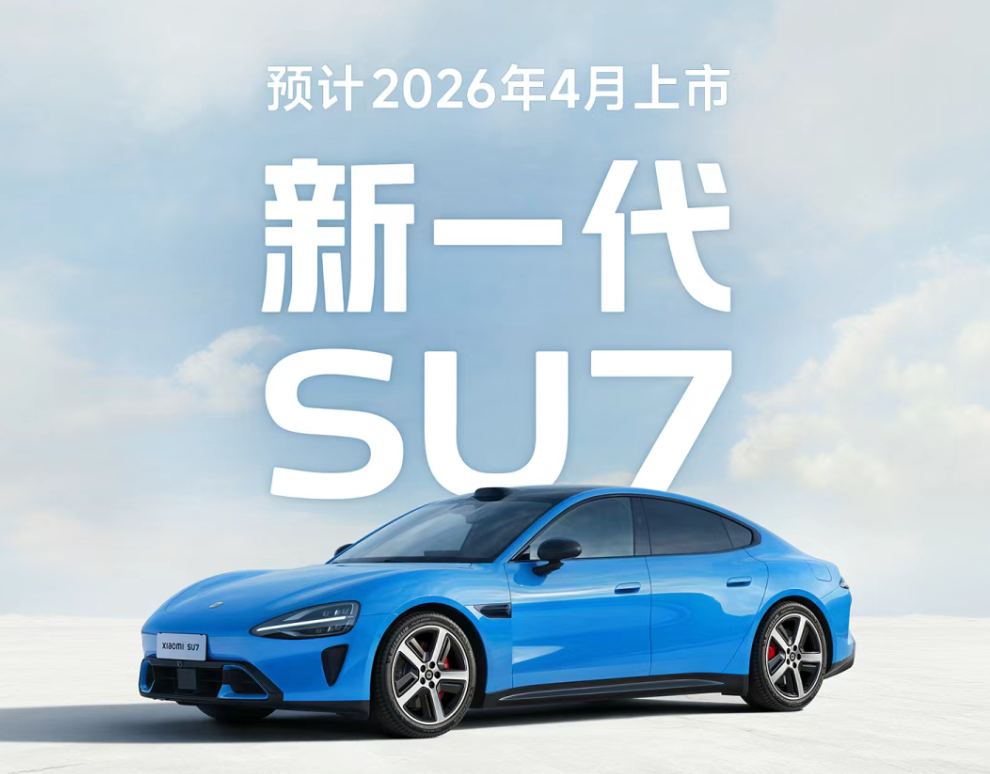
Photo source: Xiaomi EV
Compared with its predecessor, the new Standard version brings down to entry level a range of core hardware that was previously reserved for higher trims, completing a shift toward "high-spec as standard". Key upgrades include:
·LiDAR: a critical sensing component for advanced driver assistance, previously absent from the Standard version.
·752V silicon carbide high-voltage platform: replacing the former 400V architecture, significantly improving charging efficiency and energy consumption.
·V6s Plus high-performance motor: delivering a clear upgrade over the earlier V6 motor in terms of power output.
·Front four-piston fixed brake calipers: enhancing braking performance and overall safety.
·Wider rear tyres (265 mm): improving grip and driving stability.
Some comments on social media platforms argue that these changes simply amount to Xiaomi EV"catching up", bringing the base model into line with mainstream competitors. After two years of intense competition, features such as LiDAR and advanced driver assistance have indeed become a de facto entry requirement in the 250,000-yuan all-electric sedan segment.
Yet viewing these moves as merely reactive risks underestimating Xiaomi EV's intent. The additional hardware cost of LiDAR and the high-voltage platform alone far exceeds 14,000 yuan, a burden Xiaomi has chosen to absorb itself. According to automotive commentator Mr. Song (using a pseudonym), this is less about following the market than about executing an assertive strategic play, with at least three deeper objectives.
First, Xiaomi EV is redefining what it considers "entry level", pushing down features such as dual-chamber air suspension and CDC (continuous damping control) that were once exclusive to higher trims.
Second, it is systematically addressing shortcomings highlighted by early users—particularly in intelligent driving, safety and refinement—while the Pro version's claimed range of up to 902 km directly targets one of the most persistent pain points for battery electric vehicles: range anxiety.
Third, the move lays the groundwork for brand and technology elevation, with the self-developed Xiaomi HAD system fitted across the entire range, creating a large user base for future software and ecosystem expansion.
2. "Smart driving for all": no more trade-offs
The most decisive change in the new-generation SU7 is the move to fully standardised driver assistance hardware. In the previous generation, there was a clear divide between the Standard and Pro versions: the former relied on a vision-only solution without LiDAR, forcing buyers who cared about advanced driver assistance into an uncomfortable choice—pay more or compromise.
The new SU7 eliminates that gap entirely. By making the following core components standard across the line-up, Xiaomi EV has effectively levelled the playing field for high-level assisted driving capabilities:
·One LiDAR unit
·One 4D millimetre-wave radar
·700 TOPS of driver-assistance computing power
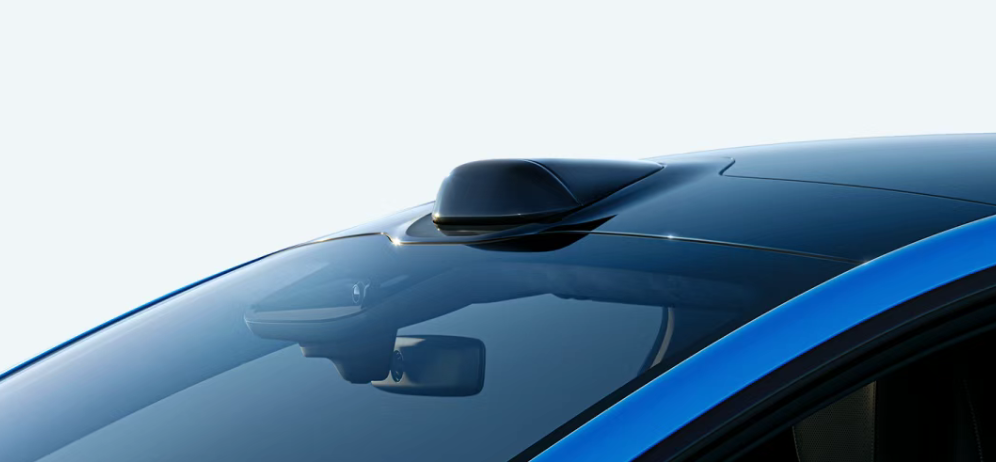
Photo source: Xiaomi EV
As a result, buyers of the 229,900-yuan Standard version and the 309,900-yuan Max version receive the same underlying ADAS hardware and can fully access Xiaomi HAD's end-to-end driver assistance capabilities. The move removes much of the "choice anxiety" that previously plagued consumers.
More than a simple exercise in hardware stacking, this signals a philosophical shift. Xiaomi is pushing intelligent driving away from being an optional upgrade or a badge of hierarchy, and reframing it as a basic right shared by all users of the SU7 range.
3. Leaving the "buzzworthy car" label behind: safety as the new foundation of trust
In the new-generation SU7, passive safety has been significantly reinforced, with multiple upgrades made standard across the entire range:
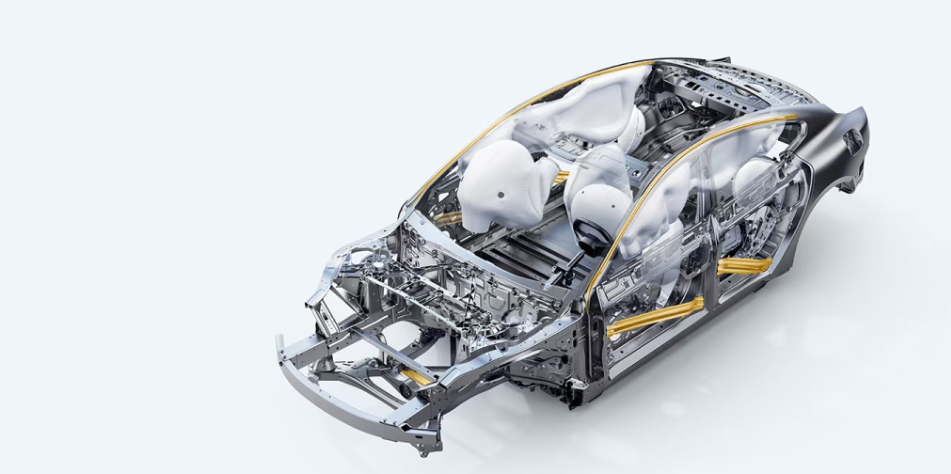
Photo source: Xiaomi EV
·Body structure:
The car adopts ultra-high-strength steel with tensile strength of up to 2,200 MPa to form an "embedded roll-cage" structure. Compared with the 2,000 MPa steel used in the previous model, the strength of critical safety components has increased by 10%, further improving overall body rigidity.
·Airbags:
All versions now come with nine airbags as standard, including newly added rear side airbags that offer more comprehensive protection for back-seat passengers.
·Battery protection:
Addressing one of the most vulnerable areas of pure electric vehicles—the underbody—the new SU7 adds a 1,500 MPa anti-scratch crossbeam, complemented by a "bulletproof" underbody coating. Together, these measures enhance the battery's resistance to impact under complex road conditions.
These uncompromising investments in safety make Xiaomi EV's intentions clear. The company is working to shed the "buzzworthy car" label and build a more durable, mature brand moat, with users' sense of safety positioned as the most solid foundation of the product.
4. Up to 902 km of range: is the Pro version the true all-rounder?
Among the three variants of the new SU7, the Pro version—priced at 259,900 yuan—occupies a pivotal position in the product line-up. Its headline feature is a dramatic increase in CLTC-rated range to an eye-catching 902 km.
More importantly, the Pro version's appeal is not limited to range alone. It also introduces two premium chassis technologies: Closed dual-chamber air suspension and continuous damping control system (CDC).
The addition of these features is expected to deliver a material improvement in ride comfort and handling sophistication. For most consumers, paying an additional 30,000 yuan to secure both ultra-long driving range and a high-end suspension setup represents a compelling value proposition. By combining range, performance, ride quality and advanced driver-assistance capabilities with few obvious trade-offs, the Pro version emerges as the most balanced configuration in the new SU7 range — and is likely to become the primary volume driver.
5. After 360,000-unit deliveries: a major update shaped by broad market feedback
Xiaomi EV's rapid ascent has been striking. As founder and chief executive Lei Jun has noted: "In just one year and nine months, deliveries of the Xiaomi SU7 have exceeded 360,000 units."
That level of success has also placed Xiaomi EV under sustained public scrutiny. The launch of the new-generation SU7 can be seen as a systematic response shaped by extensive user feedback and market debate.
Many of the most persistent discussions over the past year — including concerns over the absence of advanced driver-assistance hardware on entry-level models, charging performance, and safety standards — are directly addressed in the latest update. By making LiDAR and a high-voltage architecture standard across the range, while further reinforcing safety specifications, Xiaomi EV has responded squarely to the market's most pointed criticisms. The changes suggest the company is not merely capitalising on attention, but actively incorporating user feedback into its product iteration cycle.
Conclusion
The new-generation Xiaomi SU7 is far from a routine annual refresh. Instead, it reads as a statement of intent from Xiaomi EV after its first phase of market success — a signal that the company is seeking to move from early momentum to long-term credibility. Through a series of seemingly counterintuitive decisions to add substantial hardware while keeping price increases contained, Xiaomi has strengthened the car's underlying fundamentals and underscored its commitment to a more disciplined, mature development path.
By addressing many of its earlier shortcomings, the new SU7 has narrowed key gaps in product capability. Yet it also raises a new and more strategic question: can a vehicle that has shed its "buzzworthy car" aura and prioritised solidity and trust continue to generate exceptional market attention while building durable brand equity? The answer will ultimately be determined not by launch headlines, but by the market's response over time.


