



Gasgoo Munich- On February 27, Lei Jun announced a major decision during his first livestream of the Year of the Horse: the re-establishment of the "Xiaomi EV Safety Advisory Committee." He invited vehicle safety experts from universities and research institutes, along with specialists involved in national recall investigations, to evaluate and oversee Xiaomi EV's safety from multiple angles. Concurrently, Xiaomi plans to establish a regular public safety communication mechanism for periodic exchanges with car owners and the media.
These measures come less than half a year after Xiaomi EV set the industry record for the fastest 500,000 vehicles to roll off the production line, and only a month after pre-sales began for the next-generation SU7.
Externally, this appears as a proactive reinforcement of Xiaomi EV's product safety system. However, industry observers view these moves as an "emergency repair" of brand trust after being deeply mired in a swirl of quality controversy.
Since launching its first model in 2024, Xiaomi EV has expanded aggressively with a stunning pace. However, several serious accidents that followed have pushed its once-proud "safety" label into the center of a storm.
From high-speed fires to doors locking shut, and from mass recalls to disputes over new national standards, Xiaomi EV is undergoing a severe test, caught between "technological enthusiasm" and "reverence for life."
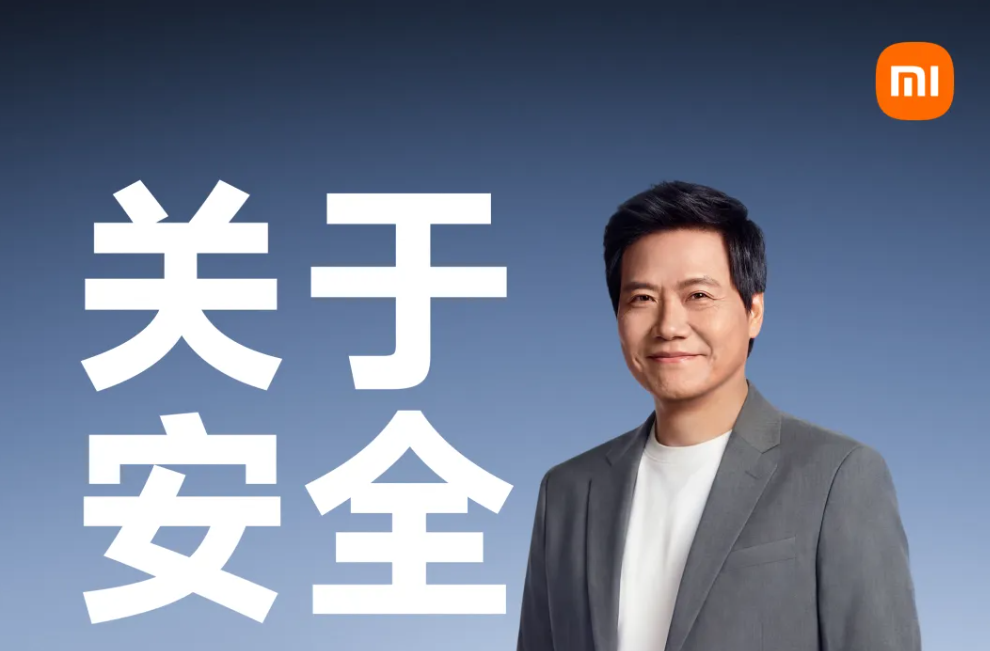
Image Source: Xiaomi EV
Safety Concerns Behind the Success
Behind the slogan "safety above all," Xiaomi EV has weathered several trust crises over the past two years. Reviewing these events helps explain why the company is now rushing to bring in "external experts" to oversee its operations.
For Xiaomi, 2025 was a year of surging delivery volumes—but also the year safety questions were most intense.
March 2025 Anhui Tongling Accident: A Xiaomi SU7, operating in intelligent driving assistance mode, struck a highway median at 116 km/h and burst into flames, resulting in the deaths of three women.
The aftermath sparked debate on two fronts: the smart driving system gave drivers only two seconds to take control when facing construction barriers, exposing a fragile handoff; and after the crash, doors remained locked as hidden handles failed to deploy due to power loss, blocking external rescue.
October 2025 Chengdu SU7 Ultra Collision: A Xiaomi SU7 Ultra caught fire after a high-speed collision on Tianfu Avenue in Chengdu, claiming the driver's life.
Recent forensic findings indicate an impact speed of 167 km/h—far exceeding the 80 km/h limit. The low-voltage system cut power just 9 seconds after the crash, disabling the electronic door release. With no external mechanical handle, rescuers could not open the doors. The cause of death was the vehicle fire, not the collision itself.
Even though the driver was fully liable for drunk driving and speeding, the inability to open the doors triggered deep public skepticism regarding the vehicle's safety design.
If specific accidents are isolated incidents, official recalls confirm the existence of product defects.
In September 2025, Xiaomi recalled 117,000 SU7 Standard Edition units because its "highway navigation assistance" failed to recognize extreme scenarios—a move seen as directly linked to the Anhui crash. Previously, the company had also issued a recall for automatic parking malfunctions.
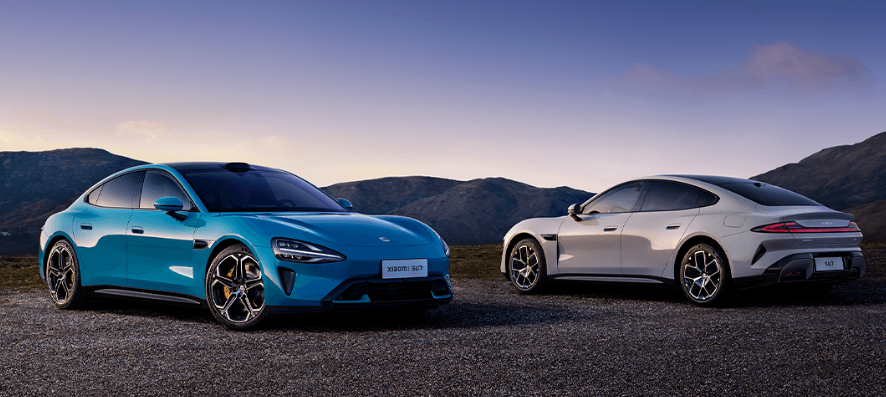
Image Source: Xiaomi EV
In February 2026, the Ministry of Industry and Information Technology issued a mandatory national standard: "Technical Requirements for Vehicle Door Handle Safety." It explicitly states doors must have a mechanical release function and cannot rely solely on fully hidden external handles.
This rule, taking effect in 2027, targets a design weakness in the first-generation SU7 and other new energy vehicles: pure electronic external handles lack mechanical redundancy in extreme power-loss scenarios.
These events point to a core conflict: In the pursuit of digitization, intelligence, and minimalist aesthetics—the "consumer electronics logic"—has the "mechanical redundancy logic" required for vehicles carrying human lives been neglected?
How Can Xiaomi Rebuild Trust?
Facing a storm of public pressure, Xiaomi's leadership, led by Lei Jun, chose not to stay silent. Instead, they used a series of livestreams and strategic shifts to reclaim the narrative on safety. The moves in early 2026 mark a major pivot in Xiaomi's safety strategy.
Entering 2026, Lei Jun has transformed into a "safety advocate." For his February 27 livestream, he specifically chose the battery pack workshop as the venue, inviting experts to explain the safety system in detail.
He emphasized a safety team of over 3,500 and a safety committee with veto power. He also showcased improvements in the new SU7: added external mechanical door handles, standard LiDAR across the lineup, protective coating on the battery pack's underside, and an increase from seven to nine airbags.
Crucially, the new SU7 includes a dedicated backup power supply for door locks located under the second-row seats, separate from the main battery.
The essence of these moves is using "transparency" to counter "negative publicity." Especially after the Chengdu accident findings, Xiaomi is using education to inform the public: power-locked doors in extreme crashes are an industry-wide challenge, and the new model has already preemptively added mechanical redundancy.
During the stream, Xiaomi safety experts detailed the standard investigation process following accidents, explaining regulations that prohibit companies from self-disclosing information during inquiries—an indirect response to previous accusations of "silence."
The newly announced Safety Advisory Committee marks a critical step for Xiaomi, shifting from a "closed self-justification" model to "open co-governance."
Introducing authoritative third parties. By inviting experts from universities and national recall investigations, Xiaomi is essentially bringing in "authoritative sources" to endorse its safety framework.
Their involvement will not only offer multi-angle technical oversight but also boost public confidence in Xiaomi's safety decisions once these experts have signed off on them.
Breaking the "judge and participant" dilemma. After past accidents, Xiaomi often fell into a credibility trap by investigating and disclosing results itself. Now, embedding experts—even those involved in national recalls—creates an internal check-and-balance with a "regulatory perspective."
Xiaomi safety experts also expressed hope for a "Vehicle Safety Alliance" led by national industry associations, aiming to share safety progress and collectively raise industry standards.
Establishing a public communication mechanism. The plan for regular dialogue with owners and the media aims to repair consumer relations damaged by accidents and disputes. It’s not just about gathering feedback; it’s about building a permanent channel for explanation to avoid being caught unprepared when the next storm hits.
Xiaomi's plight is not unique; it is a microcosm of the new energy vehicle industry in the "software-defined car" era. As hidden handles become a trend and autonomous driving is over-hyped, the boundaries of safety are often blurred by the allure of technological novelty. The new national standard is a regulatory correction to this trend.
Rebuilding the advisory committee is, on one hand, a pragmatic response to the painful lessons of the past two years. On the other, it is a necessary hurdle to clear safety-related PR obstacles before the new model hits the market.
For Lei Jun, the original goal of building cars was indeed "safety." But only when that goal survives the test of real collisions, withstands the scrutiny of experts, and endures public examination can the safety forged in that process become the true cornerstone supporting Xiaomi EV's drive into the future.


