



Here are the key developments in embodied intelligence and driver assistance this week:
Unitree Confirms Over 5,500-unit Humanoid Robot Shipments
On the evening of January 22, Unitree Robotics issued an official clarification statement, detailing its 2025 humanoid robot performance for the first time.
The statement revealed that actual shipments of "pure" humanoid robots topped 5,500 units in 2025, while mass production rollouts surpassed 6,500 units. Unitree stressed that these figures cover only full humanoid forms, excluding wheeled or dual-arm variants, and urged the industry to distinguish between robot categories when making comparisons.

Image Source: Unitree Robotics
The figures released by Unitree significantly exceed earlier estimates from multiple market research firms.
According to recent data from CounterPoint Research, global humanoid robot installations reached roughly 16,000 units in 2025, with China accounting for over 80% of that total. Chinese firms—AgiBot, Unitree, UBTECH, and Leju Robot—claimed four of the top five spots in the firm's global ranking, signaling the early formation of a clear industry hierarchy.
Meanwhile, analysis firm Omdia projected total global shipments at around 13,000 units in its "General Purpose Embodied Robot Market Radar" report. It ranked AgiBot, Unitree, and UBTECH as the top three by volume, with AgiBot leading at roughly 5,100 units and Unitree following at approximately 4,200.
Based on Unitree's latest disclosure of over 5,500 units, the company is poised to overtake AgiBot and claim the top spot.
Xiaozhi Take: This "clarification" is a strategic move to claim market position. The race for the top spot in humanoid robotics has turned white-hot.
MagicLab to Take the Stage at 2026 CCTV Spring Festival Gala
On January 23, China Media Group (CMG) and MagicLab jointly announced that the robotics startup has been named the strategic partner for intelligent robots at the 2026 CMG Spring Festival Gala. MagicLab's robots are set to feature prominently in this year's broadcast.
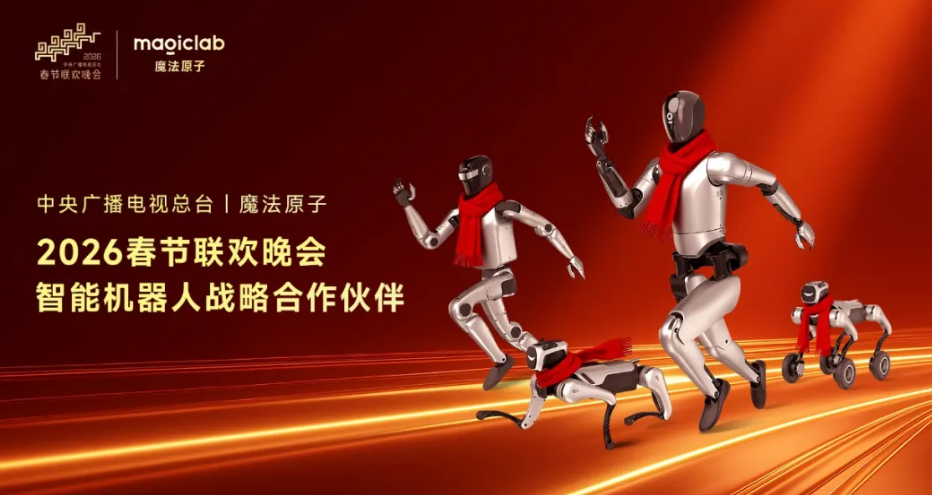
Image Source: MagicLab
That same day, during a global partner conference in Suzhou, MagicLab co-founder Gu Shitao told reporters that the company is pushing ahead with its IPO on an accelerated timeline. He hinted that news regarding its public market debut could emerge later this year.
Gu noted that embodied intelligence remains in the very early stages of commercialization, predicting that the sector's competition will ultimately boil down to a battle for resources, capital, and talent.
Founded in January 2024, MagicLab focuses on the R&D, production, and commercialization of embodied intelligence and general-purpose humanoid robots. Its current portfolio includes the consumer-grade MagicDog, the wheeled MagicDog W, the industrial-grade MagicDog Y1, and the high-dynamic bipedal humanoid robot MagicBot Z1.
The MagicBot Z1, launched in July 2025, stands 1.4 meters tall with 50 bionic joints and a 320° range of motion, delivering impressive athletic capability. It also features intelligent interaction, 360° perception, autonomous navigation, and multimodal dialogue—offering high-value solutions for sectors ranging from research and education to commercial services, industrial operations, and home companionship.
The MagicDog, designed for home companionship and leisure, offers 13 degrees of freedom and low-noise, high-torque motor joints, balancing flexibility with stability.
Xiaozhi Take: For MagicLab, the massive national exposure of the Spring Festival Gala could be a game-changer in capturing mindshare during the coming market battles.
ENGINEAI Responds to Shareholding Reform
Records from Qichacha show that Shenzhen ENGINEAI Robotics Technology Co., Ltd. recently underwent a business registration change. With its name changed, the company was restructured as a joint-stock company (foreign-invested, unlisted).
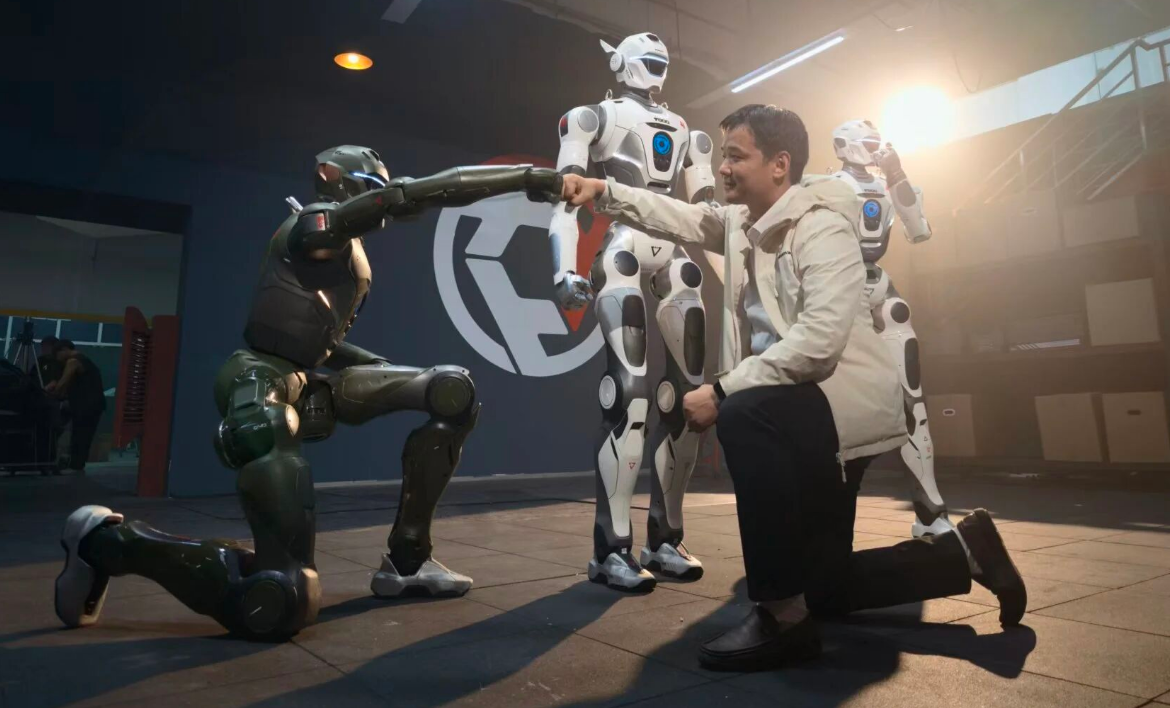
Image Source: ENGINEAI
ENGINEAI outlined three primary objectives for the restructuring: optimizing shareholder and capital structures to create more flexibility for future financing, equity incentives, and strategic investments.
Supporting sustained business expansion and global layout by securing capital for R&D, overseas growth, and supply chain integration.
And safeguarding shareholder rights by building a superior capital platform to attract top talent and premium resources, laying the groundwork for long-term, high-quality growth.
The company clarified that the restructuring will not alter its core strategy, main business, or management team. ENGINEAI remains committed to "empowering humanity through technology and expanding capability boundaries," focusing on embodied intelligence R&D, product iteration, and scenario deployment while steadily expanding its global footprint.
Xiaozhi Take: A wave of restructuring across the robotics sector suggests the industry is collectively entering a new, capital-driven development cycle.
Beijing Establishes First Professional Title Review for Robotics
The Beijing Municipal Human Resources and Social Security Bureau recently issued the "Interim Measures for Professional Title Evaluation in the Robotics Field." By adding a robotics category to the engineering series, the city fills a long-standing gap in professional assessment. The new policy takes effect in 2026, with the first review cycle launching this July.
Beijing is home to over 940 robotics-related companies employing roughly 30,000 people. Until now, the lack of tailored evaluation standards has hindered career progression for these high-tech professionals. The new policy directly addresses industry and talent demands, using a scientific evaluation system to incentivize skilled workers and inject policy-driven momentum into the sector's upgrade.
The measures establish a comprehensive, multi-level evaluation system aligned with industry needs. The review covers four key areas: core components, algorithms and software, whole-machine design and manufacturing, and system integration and application. This ensures professionals across the supply chain—from R&D to deployment—have a clear path for evaluation.
The hierarchy includes four distinct levels—assistant engineer, engineer, senior engineer, and professor-level senior engineer. This creates a full career ladder from young talent to industry leaders, providing a clear roadmap for advancement.
Xiaozhi Take: By pioneering this professional review system, Beijing is not only building a "fast lane" for robotics careers but also signaling how urgently it needs top-tier tech talent.
UBTECH Partners with Airbus
UBTECH recently signed a service agreement with Airbus, the European aerospace giant. The manufacturer has purchased UBTECH's latest industrial humanoid robot, the Walker S2, for deployment in its factories. This marks the first time a humanoid robot has entered the production system of a top-tier global aerospace manufacturer.
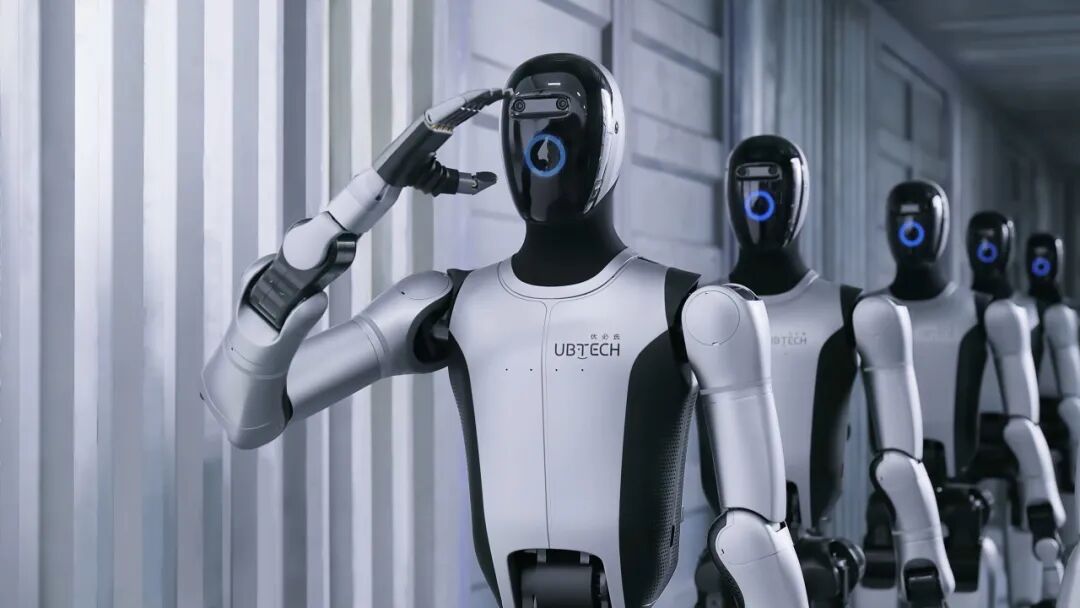
Image source: UBTECH
Under the agreement, the two companies will use this procurement as a starting point to explore and expand applications for humanoid robots in complex, precision aerospace manufacturing scenarios.
This partnership with Airbus represents another key milestone in UBTECH's global expansion. Following last year's strategic alliance with semiconductor giant Texas Instruments, UBTECH has systematically extended its solutions from China to five core sectors: global aerospace manufacturing, automotive, 3C electronics, smart logistics, and semiconductor manufacturing.
Market data reflects this momentum. In 2025, UBTECH secured over 1.4 billion yuan in humanoid robot orders, leading the global market. To meet surging demand, the company is ramping up capacity, targeting an annual production volume of 10,000 industrial humanoid robots by 2026.
Xiaozhi Take: In the short term, the PR value and industry signaling of the Airbus partnership may outweigh the financial value of the order itself.
GAC Aion and DiDi Autonomous Driving Officially Deliver Co-developed Robotaxi
On January 23, GAC Group announced that the next-generation Robotaxi R2, developed jointly with DiDi Autonomous Driving, has been officially delivered at the GAC Aion plant. The first batch of vehicles has already secured road test licenses in Guangzhou.
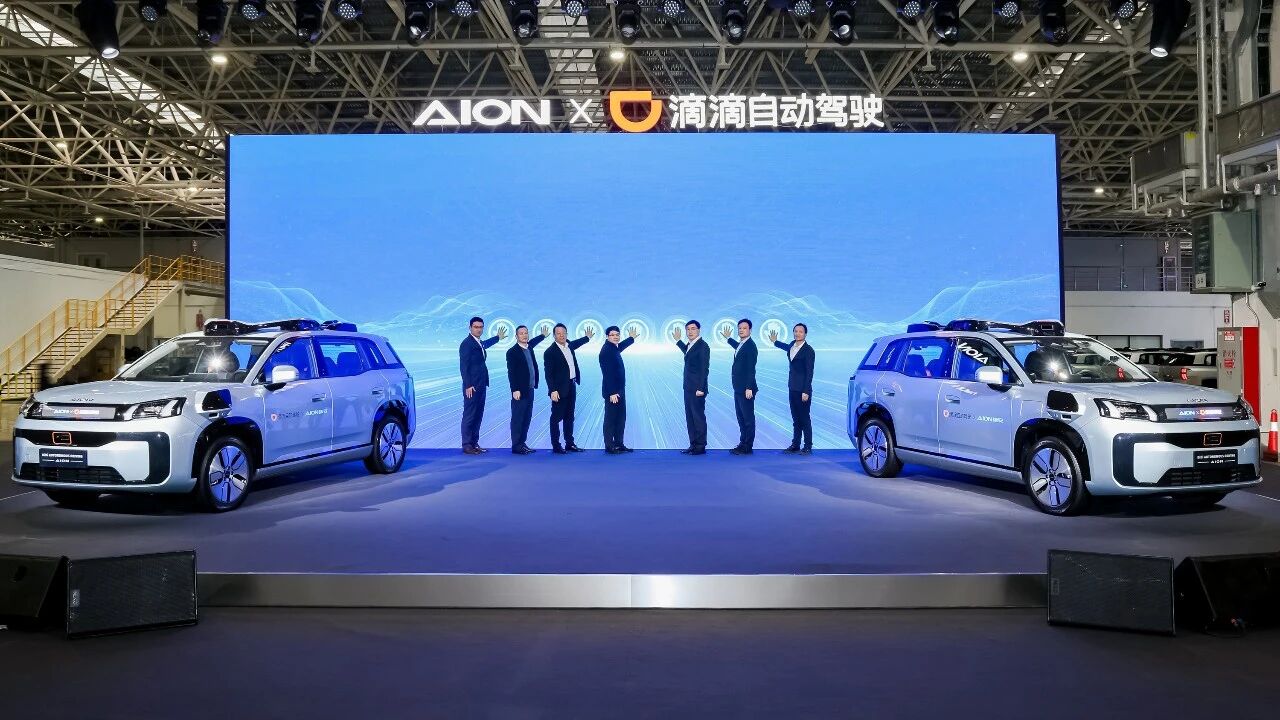
Image Source: DiDi Autonomous Driving
Designed with commercial operations at its core, the R2 is built around three pillars: autonomy, mass production, and commercialization. It achieves comprehensive breakthroughs across four dimensions: technical configuration, safety, ride experience, and operational efficiency.
On the technology front, the R2 is equipped with 33 high-precision sensors and a tri-domain fusion computing brain delivering over 2,000 TOPS of computing power. For passenger comfort and operational adaptability, it features a front interaction screen, a 17.3-inch ceiling-mounted display, and intelligent voice control. The rear cabin has been optimized for commercial use, and a UV sterilization system comes as standard.
Since forming a joint venture in April 2024, DiDi Autonomous Driving and GAC Aion have worked deeply on Robotaxi R&D and industrialization. The delivery of the R2 marks a significant milestone: it is the first time in China that a joint venture between an autonomous driving firm and an OEM has successfully advanced the industrialization of a Robotaxi model.
According to the roadmap, the R2 will begin phased pilot operations in cities like Guangzhou and Beijing in 2026.
Xiaozhi Take: Delivery is just the beginning. The real test for the R2 will be achieving stable, low-cost, large-scale operations in complex urban environments.
QCraft Surpasses 1 Million Vehicles Equipped with Driving Systems
QCraft revealed during its QCraft Day 2026 event that its driver assistance systems have now been installed in 1 million vehicles as of January 2026.
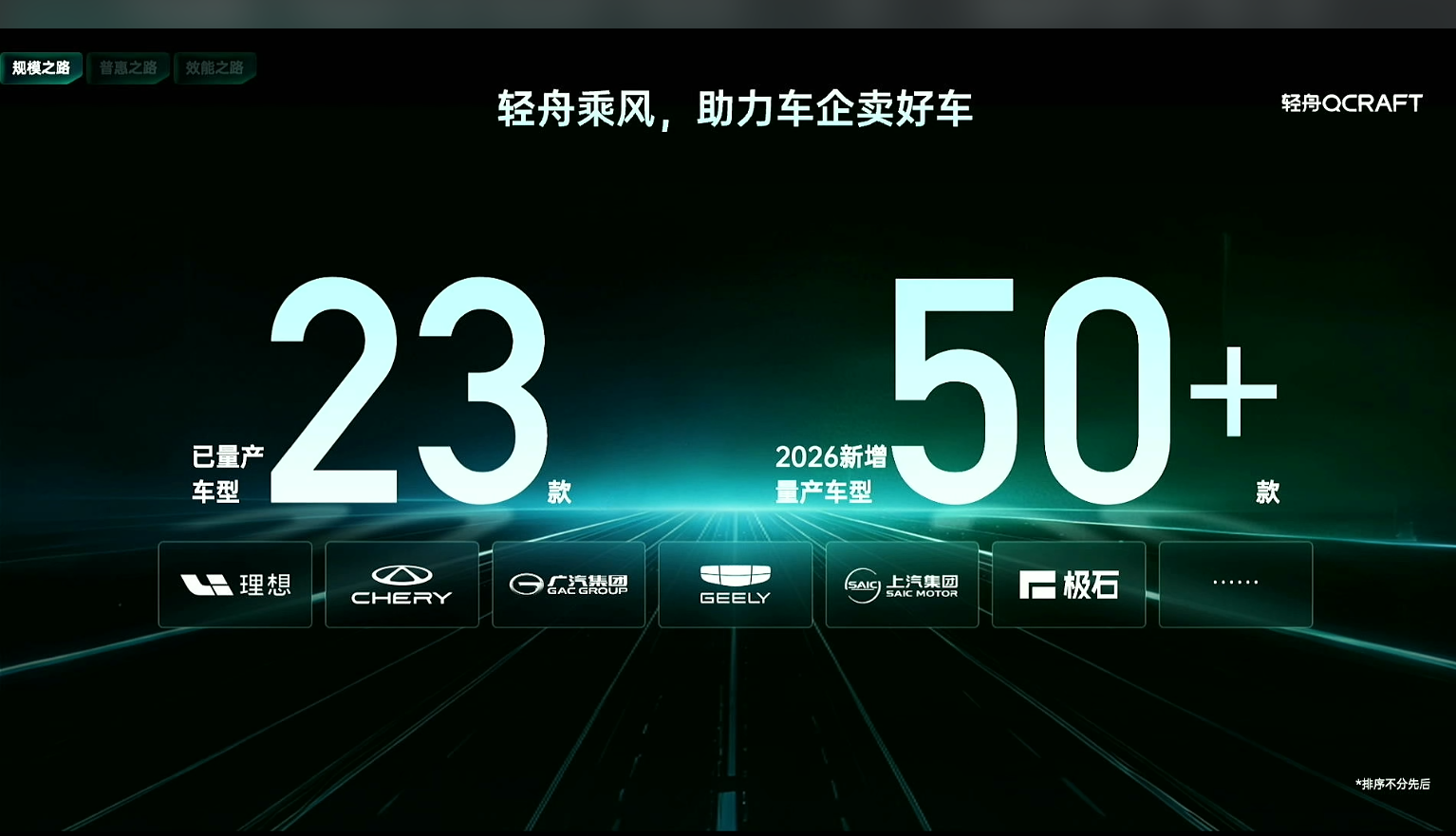
Image Source: QCraft
QCraft currently partners with nearly 10 automakers, supporting the mass production of 23 models for brands including Li Auto, Chery, SAIC, and Geely. In 2026, QCraft expects to add over 50 new models—nearly all featuring city NOA—accelerating the adoption of advanced driver assistance in the 100,000 yuan price segment.
Notably, in April 2025, QCraft launched the world's first end-to-end city NOA solution based on a single Journey® 6M chip. The system went live on January 21, 2026, debuting in the refreshed Li Auto L Series equipped with AD Pro.
Centered on "safe, interpretable end-to-end" technology, the solution leverages deep software-hardware optimization to deliver a 256-TOPS level experience using just 128 TOPS. It operates smoothly in complex road conditions, covering the vast majority of daily commuting scenarios.
QCraft also released its 2025–2027 product roadmap, charting a path from advanced driver assistance to autonomous driving at scale. The plan includes bringing city NOA to the 100,000 yuan price tier, scaling up Robovans, and piloting Robotaxis in 2026. By 2027, the company aims for over 3 million vehicles equipped with NOA, mass production of Robovans in the six-figure range, and large-scale Robotaxi operations.
Xiaozhi Take: The battle for driver assistance has entered a mid-game where "installed base" is king. Market share will determine who holds the leverage—and the survival space—in the next generation of technology.
GAC GOVY AirCab Secures 3.3 Billion Yuan in Cumulative Orders
By January 20, news emerged that GOVY AirCab, the first mass-produced multi-rotor eVTOL from GAC Group's GOVY Technology, has secured over 2,000 tentative orders. With a total value exceeding 3.3 billion yuan, this marks a significant step toward commercialization.
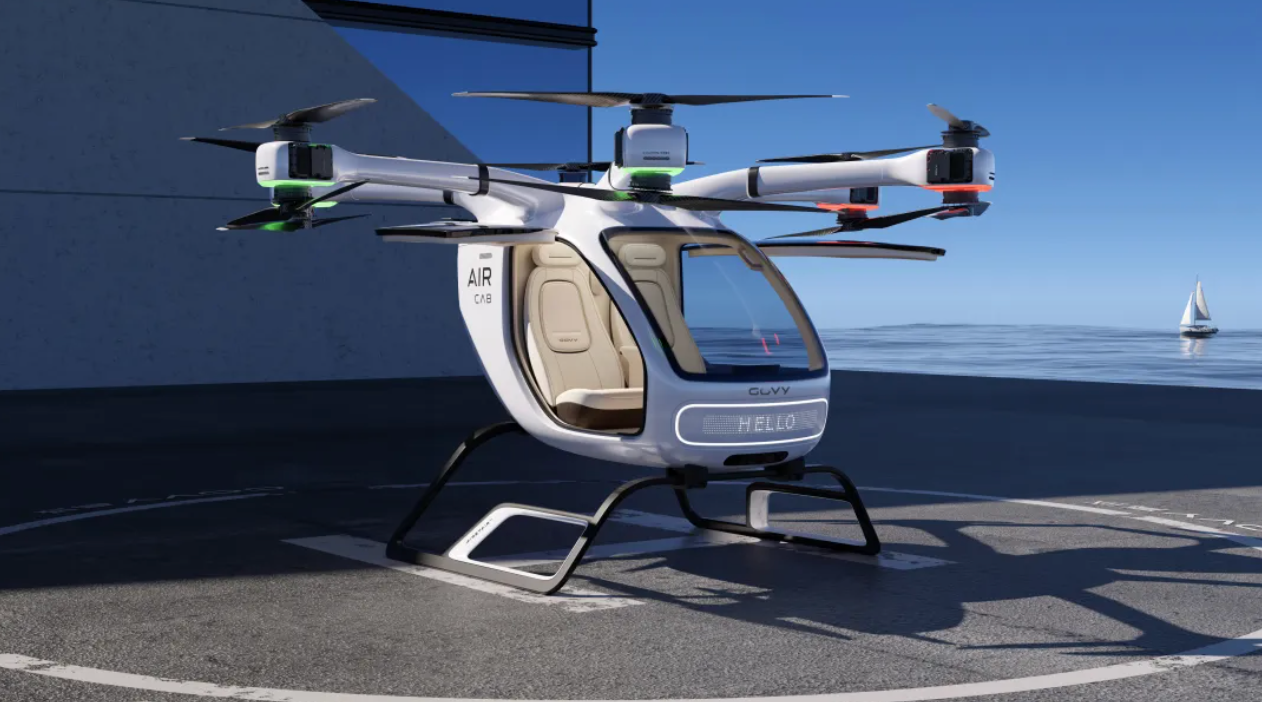
Image Source: GAC GOVY
The official guide price for the GOVY AirCab is capped at 1.68 million yuan—well below the 2 million to 3 million yuan range typical for similar products. This cost advantage is achieved by leveraging GAC's mature EV supply chain and reusing existing technologies.
Focused on low-altitude tourism and short-haul travel, the aircraft has entered the comprehensive airworthiness certification phase. Safety indicators have passed phased verification, with full certification—including type and production certificates—expected by the end of 2026, coinciding with the start of mass deliveries.
GOVY's Guangzhou plant began installing and commissioning production equipment at the end of 2025 and is expected to enter trial production next month. The facility includes general assembly, sub-assembly, composite manufacturing, and painting workshops, supporting the pilot production and PC certification for the GOVY AirCab (GAC-A6).
The AirCab features a six-axis, 12-rotor configuration with a fuselage that is over 90% aviation-grade carbon fiber composite. This reduces weight by more than 30% compared to traditional materials, ensuring structural integrity while optimizing flight efficiency. The two-seater boasts top-mounted rotors and gull-wing doors, with a cabin equipped with 5G, an intelligent assistant, and a fragrance system—blending comfort with a high-tech feel.
Xiaozhi Take: In the shadow of the massive airworthiness certification hurdle, orders remain merely "intentions." Turning that uncertainty into certainty is the true victory for commercialization.


