



Gasgoo Munich-Since 2026, leading battery makers have been rolling out solid-state battery products tailored for embodied intelligence applications.
A telling signal is emerging: a growing number of industry analyses are converging on a single conclusion.
The commercial rollout of solid-state batteries may not happen first in the cost-obsessed electric vehicle sector. Instead, it is likely to find its footing in embodied intelligence—a new frontier with higher tolerance for performance premiums and far stricter demands for volumetric energy density.
The "Battery Shadow War" Over Embodied Intelligence
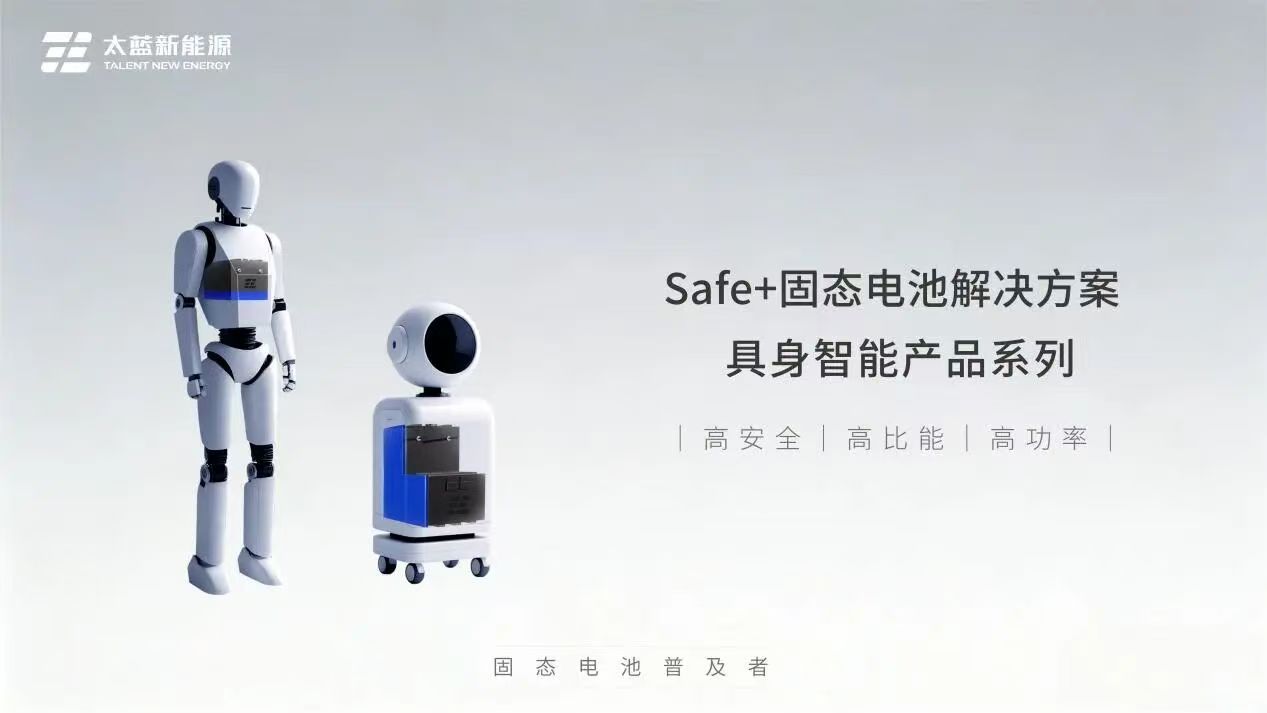
Just recently, Chongqing Tailan New Energy unveiled its "Safe+" solid-state battery solution designed specifically for embodied intelligence. The company has partnered with top-tier domestic robotics firms, delivering the first batch of battery packs for multi-scenario testing.
This marks a milestone for solid-state battery makers in the embodied intelligence space—it is not a concept demonstration or a joint statement, but tangible product delivery.
Source: Tailan New Energy
Tailan is not alone. In mid-April, EVE Energy saw two all-solid-state batteries—the "Longquan No. 3" and "Longquan No. 4"—roll off the production line. The "Longquan No. 2" model boasts an energy density of 300 Wh/kg and a volumetric energy density of 700 Wh/L, targeting humanoid robots, low-altitude aircraft, and high-end AI equipment.
As early as 2025, Farasis Energy began shipping sulfide-based all-solid-state battery samples to top humanoid robot clients. Ruineng New Energy introduced a 21700 large-format cylindrical cell with an energy density exceeding 300 Wh/kg. Meanwhile, global giants including CATL, Sunwoda, SVOLT, and LG Energy Solution are all deepening their layouts in the robotics battery sector.
Notably, overseas players are accelerating their moves as well. LG Energy Solution has started supplying batteries to six global robotics firms and is in talks with Tesla regarding battery supply for the Optimus humanoid robot.
Solid-state batteries are considered the strategic high ground of next-generation battery technology, yet the timeline for commercialization remains uncertain. While new energy vehicles represent the largest application scenario, they may not be the first segment where solid-state batteries achieve scale.
Today, that "shadow war" over embodied intelligence has moved from covert buildup to an open race.
Why Solid-State Batteries May Succeed First in Embodied Intelligence
An industry consensus is taking shape: embodied intelligence, and particularly humanoid robots, is poised to become the "first battlefield" where solid-state batteries achieve large-scale commercialization.
The logic behind this assessment can be understood through three dimensions.
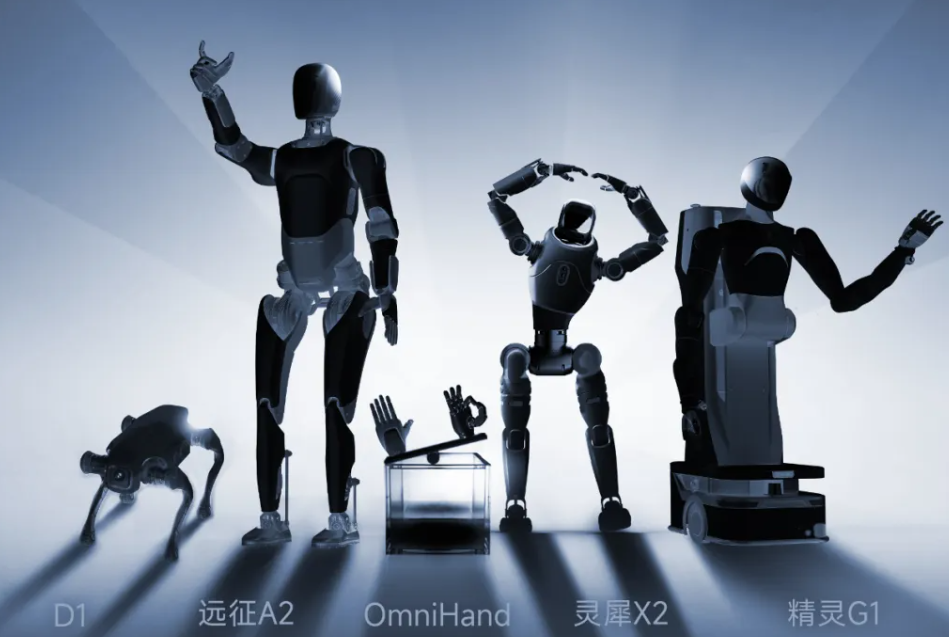
First, demand alignment. The battery requirements for humanoid robots differ vastly from those of traditional automobiles. "Robots have limited dimensions," Peng Zhihui, co-founder of Zhiyuan Robotics, told the company's partner conference on April 17. "While EV batteries can be large, added weight in a robot directly impacts endurance. We need solutions with sufficient energy density." He added, "Solid-state batteries are a promising path, and we are seeing a trend toward gradual mass production, moving from semi-solid to solid-state technologies."
This pain point is universal across the industry. Mainstream embodied robots offer just 2 to 4 hours of continuous operation, falling short of the demands of industrial and logistics applications. Given the cramped internal spaces and extreme sensitivity to weight, mere parameter tweaks to traditional liquid lithium batteries can no longer meet the fundamental requirements of this scenario.
Source: Zhiyuan Robotics
Second, cost tolerance. The biggest barrier to commercializing solid-state batteries is cost. "If cost were no object, AI hardware would ideally switch entirely to solid-state batteries from a theoretical standpoint," notes Mo Ke, founder of RealLi Research. But for electric vehicles selling tens of thousands of units monthly, every yuan saved on battery costs directly impacts the final price tag, making automakers extremely cautious about adopting the technology.
In contrast, the embodied intelligence sector is still nascent. Global shipments of humanoid robots totaled just 15,000 to 20,000 units in 2025, with Goldman Sachs predicting growth to 51,000 units in 2026 and a market size between 15 billion and 25 billion yuan. At this scale, the sensitivity of battery costs within the total unit cost is far lower than in automobiles, making robotics companies more willing to pay a premium for the high energy density and safety of solid-state batteries.
Third, the value of technical validation. The demands of embodied intelligence—extreme energy density, maximum safety, high-rate discharge, wide temperature adaptability, and strict space constraints—essentially serve as a comprehensive stress test for solid-state battery capabilities. Tailan New Energy's "Safe+" solution breaks the traditional serial development model of "cell first, system later." By considering mechanical, electrical, and thermal performance under complex dynamic conditions right from the design phase, this deeply coupled development approach is exactly what is needed to move solid-state batteries from the lab to mass industrialization.
Consequently, the explosion in humanoid robots opens a highly suitable real-world application scenario for solid-state batteries, capable of generating genuine order demand in the near term.
Historically, lithium batteries first achieved commercialization in consumer electronics before gradually moving into electric vehicles and energy storage—a "small-to-large" deployment path. Solid-state batteries are likely to replay this logic: validating the technology, building supply chains, and amortizing costs in niche, high-end scenarios like robots, where space is limited and cost tolerance is higher, before permeating the mass-market, cost-sensitive automotive and storage sectors.
Predictions suggest the global robotics market will surpass $400 billion by 2029. On this trillion-dollar track, the convergence of solid-state batteries and embodied intelligence is no longer a question of "if," but "how fast."
The initial shipment of Tailan New Energy's "Safe+" solution, the intensive rollout of EVE Energy's "Longquan" series, and Zhiyuan Robotics' explicit commitment to solid-state batteries as the key to solving range issues—these signals all point to a single trend: the industrialization of solid-state batteries in embodied intelligence has moved from a buildup phase into an acceleration phase.


