As the global automotive industry undergoes a deep structural transformation, the concept of the Software-Defined Vehicle (SDV) has shifted from vision to large-scale implementation. Meanwhile, the emergence of the AI-Defined Vehicle (AIDV) is propelling the industry into its next stage of evolution. Automotive software capabilities, system and architecture, AI integration, and full-lifecycle intelligence have become central battlegrounds for OEM competitiveness.
As a key participant and enabler of this transition, Silicon Valley-based Sonatus has spent the past seven years building a comprehensive platform—from SDV infrastructure to AI-powered solutions. In a recent interview with Gasgoo, Sonatus Co-Founder & CTO Yu Fang and Senior Vice President of Sales & Business Development Wallie Leung shared in-depth insights on the essence of SDV implementation, AI's role in reshaping the automotive value chain, ecosystem collaboration, and the company's strategic approach to the Chinese market.
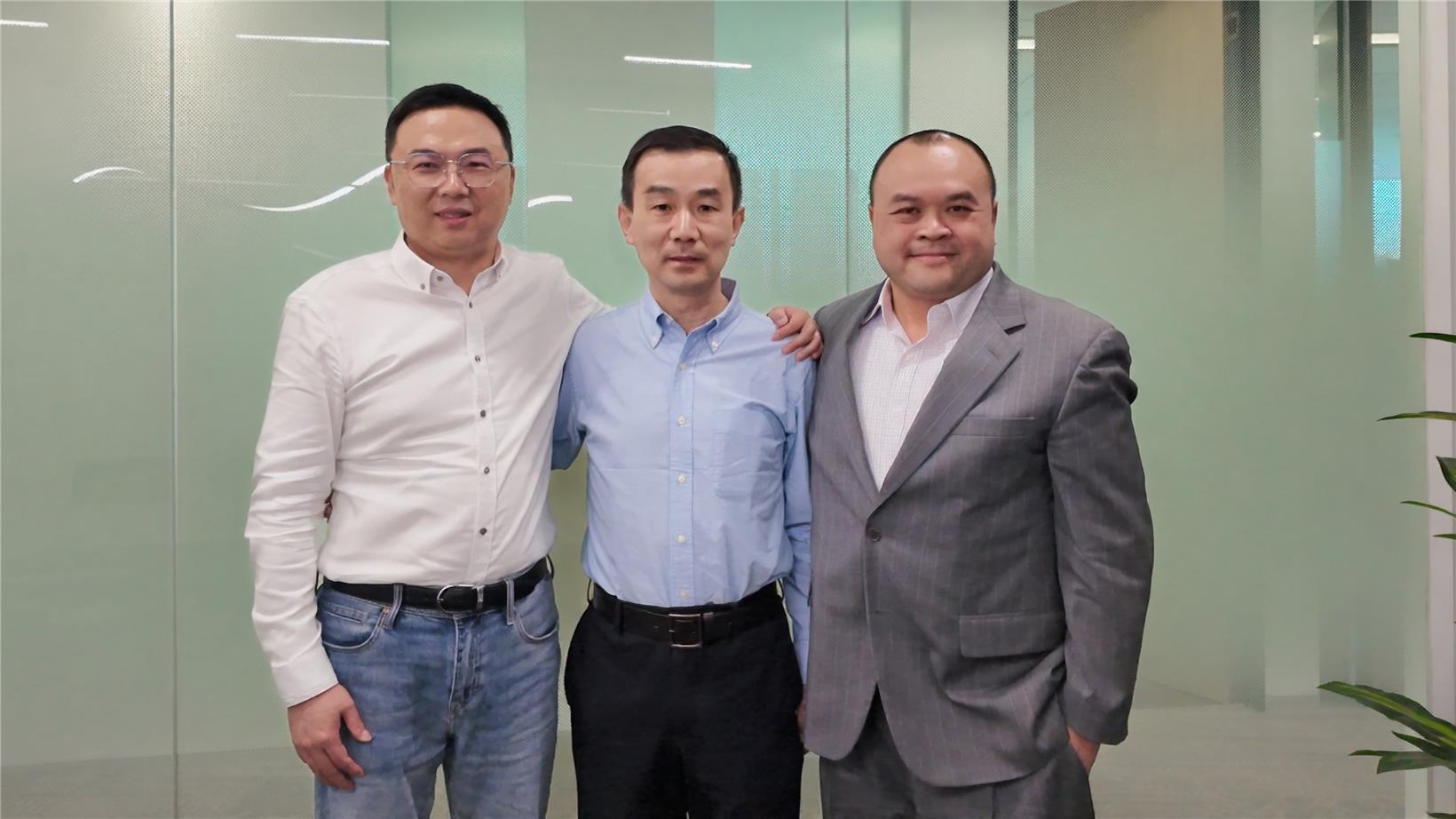
Sonatus Co-Founder & CTO Yu Fang (center), with Senior Vice President of Sales & Business Development Wallie Leung (right), and Country Manager of Sonatus China Steven Ren (left)
Three Core Capabilities of SDV and Sonatus' Foundational Product Architecture
What truly defines a Software-Defined Vehicle? Interpretations vary across the industry. For Yu Fang, SDV is not about simply adding more software; it is about delivering tangible value to both OEMs and end users—value rooted in three core capabilities that form a closed loop of perception, decision-making, and execution.
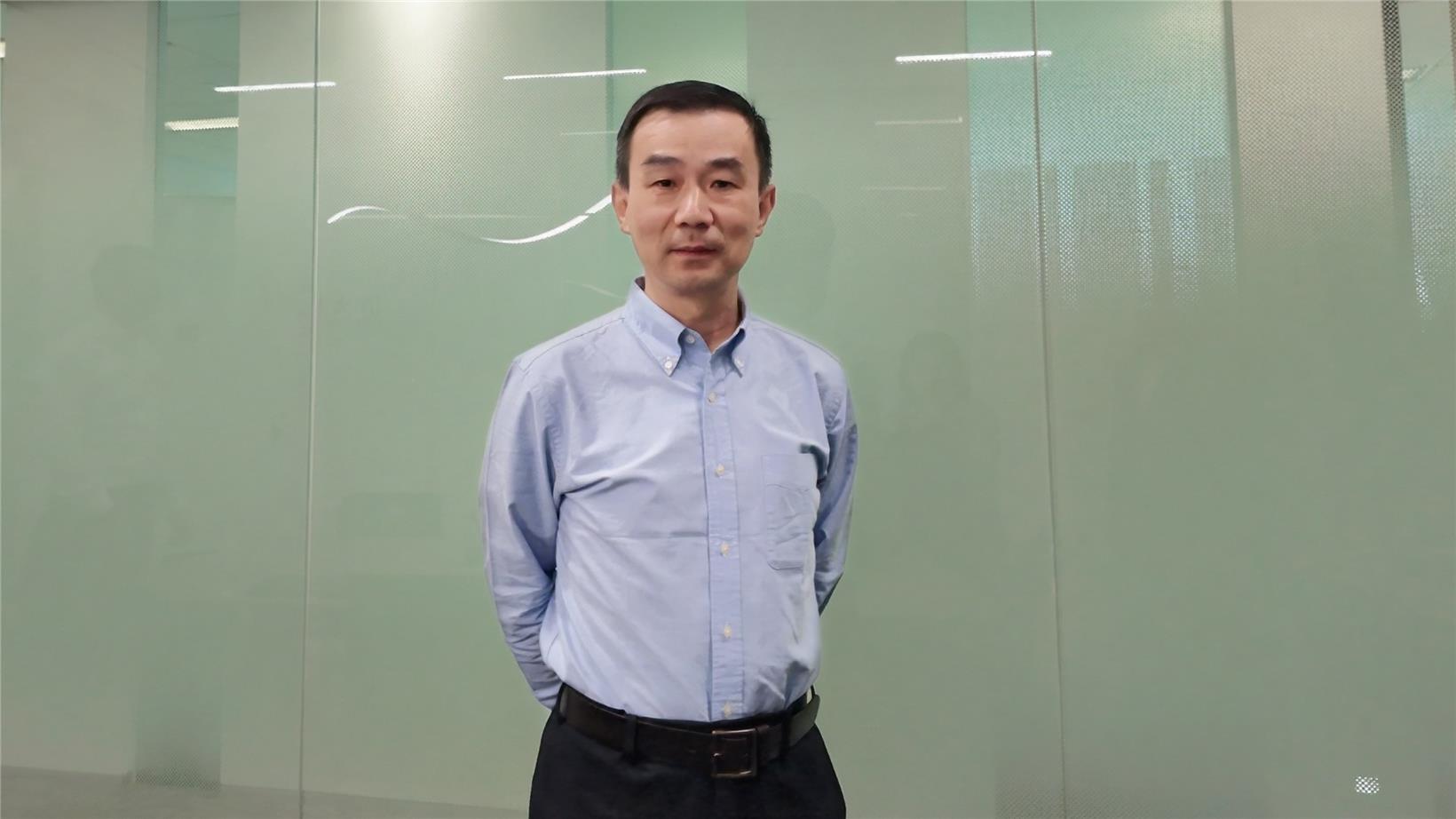
Yu Fang, Co-Founder and CTO of Sonatus
At the perception level, OEMs must gain an accurate understanding of how vehicles operate in the real world and how customers actually use them. At the decision level, OEMs must analyze this information to identify improvement opportunities and enhance vehicle performance. Finally, at the execution level, OEMs must be able to rapidly transform insights into deliverable functions on the vehicle.
This perspective underscores that the essence of SDV is not just "software piling up," but the establishment of full-lifecycle digital operations for the vehicle. In the traditional automotive industry, value creation ended at vehicle delivery. In the SDV era, delivery becomes the starting point of value creation.
Grounded in this understanding, Sonatus set out from day one to bring data-center software-defined concepts into the automotive world, creating a distinctive foundational product suite that includes Software-Defined Networking (SDN), Software-Defined Storage (SDS), and Software-Defined Compute (SDC)—the three pillars that underpin the SDV architecture.
Software-Defined Networking (SDN) enables OEMs to dynamically configure in-vehicle network paths based on software application requirements, without complex firmware upgrades; lightweight configuration is sufficient. This approach is simpler, faster, and more flexible.
Software-Defined Storage (SDS) enables cross-domain data sharing. Traditionally, each ECU maintains separate storage for domain-specific data—for example, the powertrain domain storing power-related data. However, in a software-defined architecture, new applications may need access to cross-domain data. SDS allows different ECUs or domains to share storage resources, enabling applications to read the required data on demand, without real-time cross-domain communication or complex direct interactions.
As modern vehicle architectures move toward centralized computing platforms, multiple applications may run on a single high-performance ECU. Here, Software-Defined Compute (SDC) becomes essential. Through container-based management, it isolates applications, precisely allocates compute resources, and continuously monitors application performance. This allows OEMs to safely and efficiently deploy large volumes of software within a centralized compute architecture.
To address increasing diversity in in-vehicle software assets, Sonatus has also developed a multi-modal OTA solution, supporting firmware, containers, configurations, and hybrid update types—laying the groundwork for true vehicle-level iterability.
SDV as Infrastructure and AIDV as Brain
With the rise of large language models and generative AI, the industry is now exploring the transition from "software-defined" to "AI-defined." However, Sonatus sees AIDV not as a replacement for SDV, but as a deeply synergistic evolution.
"SDV is the infrastructure; AI is the brain," Yu Fang explained. "Without SDV's capabilities in data acquisition, governance, and execution, AI cannot be deployed at the vehicle edge. To build strong automotive AI solutions, you must first have a complete SDV foundation."
Wallie Leung echoed this view: "SDV is the base layer upon which AI capabilities are built. With SDV's infrastructure in place, AI models can access clean, accurate data inputs and run efficiently on edge computing platforms."
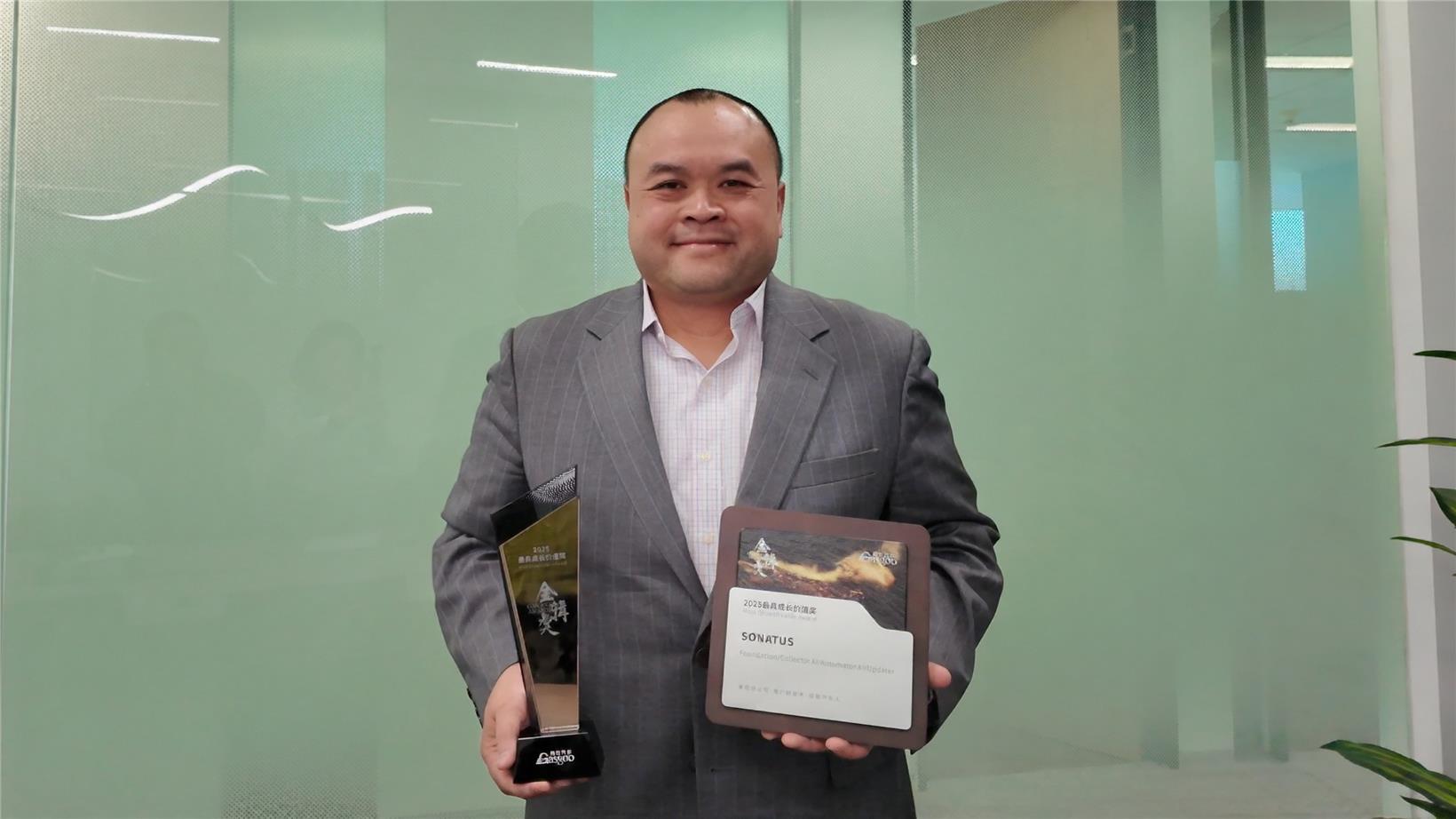
Wallie Leung, Senior Vice President of Sales and Business Development at Sonatus
Regarding AI's value to the automotive sector, Wallie emphasized that AI is not only for in-vehicle features—such as personalized functions, smart diagnostics, or predictive maintenance—but should also be applied to vehicle development, testing, and operations.
"How can AI accelerate vehicle development? How can AI-driven simulation be introduced at the design phase? These are topics OEMs increasingly care about."
Against this backdrop, Sonatus is systematically embedding AI capabilities across its stack, constructing a full AIDV product suite.
Among these, Collector AI and Automator AI together form a complete perception-decision-execution loop. Collector AI enables trigger-based data collection, allowing OEMs to dynamically define data-capture strategies to improve data quality and efficiency. Automator AI allows OEMs to deploy new functions without writing code, significantly shortening the time from insight to feature delivery.
Meanwhile, AI Director and AI Technician showcase Sonatus' deep investment in AIDV. AI Director addresses the core challenge of large-scale AI model deployment—data format inconsistencies across vehicle platforms. AI Technician focuses on diagnostics and maintenance, using AI for prediction, root-cause analysis, and recommending corrective actions to help OEMs reduce warranty and recall costs.
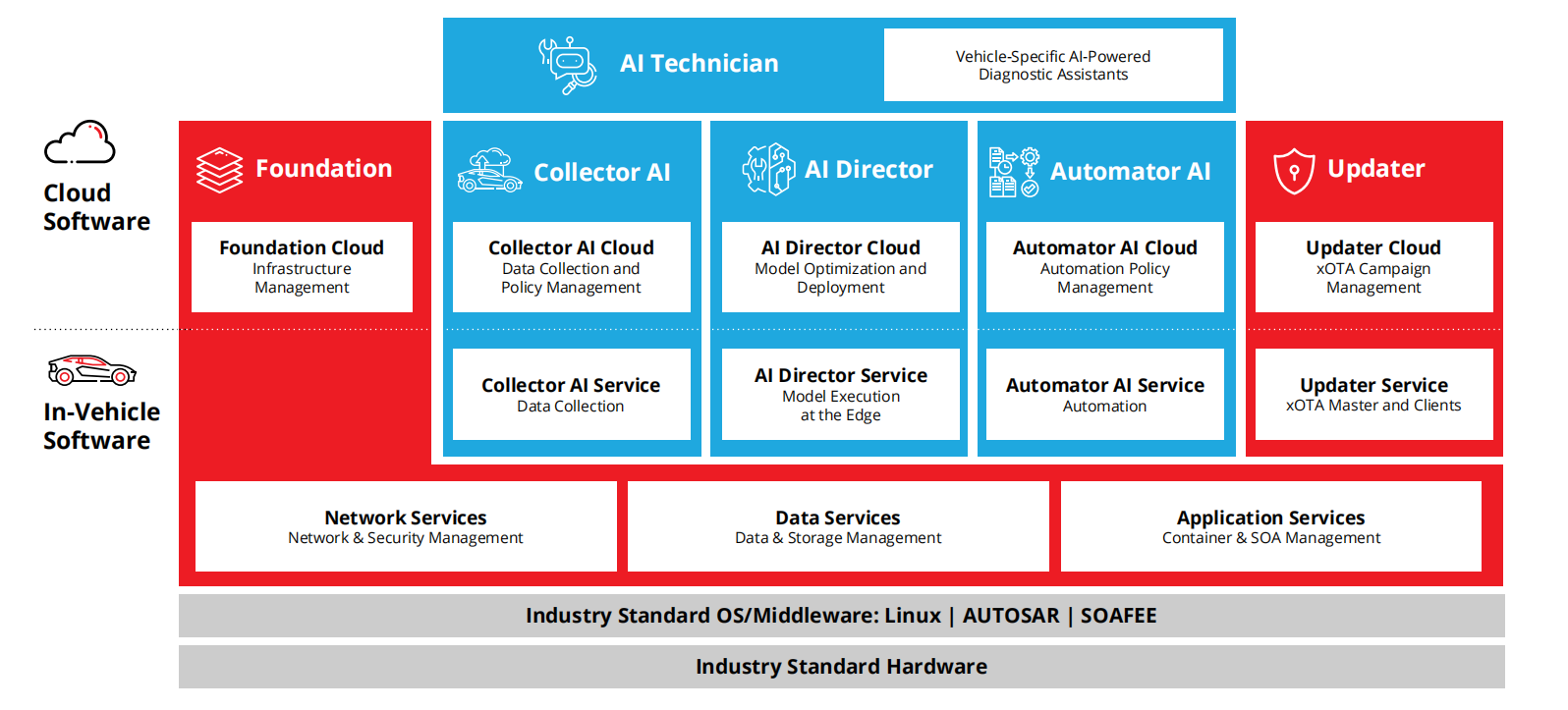
Image source: Sonatus
Yu Fang stressed that future AI applications will increasingly be offered as services: "Instead of embedding AI modules within each application, AI capabilities will be provided as a shared service across the vehicle. This leads to a lighter, more efficient software system."
Building an Open Ecosystem: Collaboration, Standards, and Co-Creation
In both SDV and AIDV development, no company can drive it independently. Ecosystem collaboration becomes essential for scale and a key indicator of competitive strength.
According to Wallie Leung, Sonatus advances ecosystem building on three fronts:
Collaboration with hardware and chip manufacturers: From the early days, Sonatus established strong partnerships with major automotive processor suppliers and Ethernet switch manufacturers to ensure software–hardware compatibility and optimal performance.
Integration with cloud providers: Through partnerships with Google, AWS, and Microsoft, Sonatus enables seamless vehicle-cloud data integration.
Co-creation with AI model companies: "We don't build large models," Wallie noted, "but we help customers and partners deploy models and other AI technologies at the vehicle edge."
This positioning reflects Sonatus' clear understanding of its role within the ecosystem. By leveraging partnerships, the company avoids fragmented or redundant efforts and can focus deeply on its core strengths.
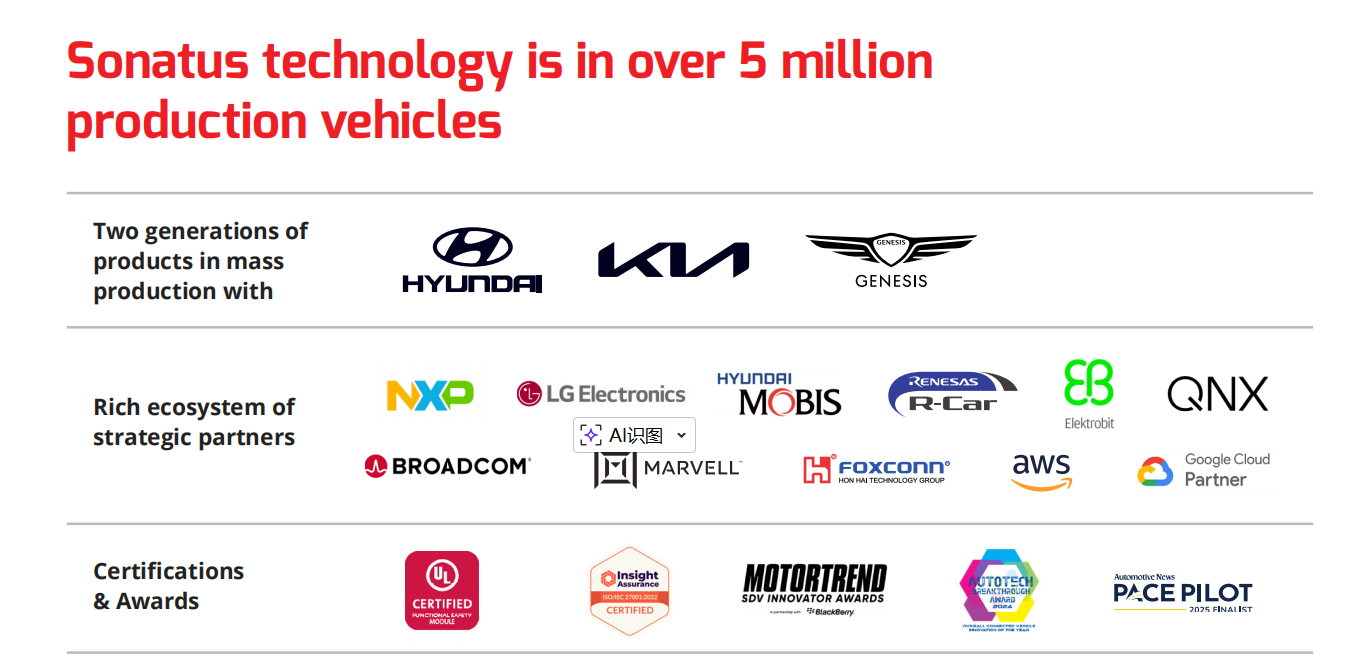
Image source: Sonatus
From an industry perspective, Sonatus places strong emphasis on standardization, supporting AUTOSAR, VSS, and related standards. "Our software runs on POSIX-compliant OSs and is fully compatible with AUTOSAR," Yu Fang said.
Sonatus also provides flexible SDKs and event APIs to simplify integration for OEMs and third-party developers. As Yu Fang stated: "Cross-platform and cross-vehicle software reuse is a major concern for OEMs. Our abstraction layers and standardized interfaces help reduce integration complexity and cost."
China Strategy: Two-Way Empowerment Between Local Innovation and Global Strength
China's leadership in intelligent electrification makes it a must-win market for global automotive software players. "China is absolutely a critical market for us," Wallie said. "New technologies are adopted here at unmatched speed because Chinese OEMs embrace innovation faster than anywhere else."
Wallie specifically highlighted China's unique innovation culture: "When we explored new solutions with a Chinese OEM, they showed an extremely open mindset. Even if there were risks, they were willing to iterate aggressively within six to twelve months. This agile approach is very similar to Silicon Valley."
Such cultural alignment gives Sonatus strong advantages locally. "Competition in China drives rapid innovation," Wallie noted. "Every OEM is trying to differentiate itself through innovation. This environment aligns perfectly with our philosophy."
To better integrate into the ecosystem, Sonatus has established a local China team covering sales, technical support, and is actively participating in POC and SOP projects. Wallie emphasized that China is not only a strategic market but also a source of early signals for new needs: "Many emerging scenarios are first observed in China, helping us anticipate global requirements and shape our product roadmap."
At the same time, as a Silicon Valley company serving OEMs worldwide—from Asia to Europe, the Americas, and India—Sonatus aims to bring its global deployment experience to support Chinese customers.
With Chinese OEMs accelerating their global expansion, Sonatus' experience becomes increasingly valuable. "Chinese automakers selling overseas must support their vehicles across multiple regions," Yu Fang explained. "We have years of experience helping OEMs address data compliance, localization, and cross-regional functional adaptation."
This two-way empowerment—local innovation combined with global experience—represents the distinctive value of cross-border technology companies like Sonatus. In China, Sonatus is not merely a technology provider but a "value hub": global best practices are validated and localized in China, while cutting-edge insights from China feed back into the global roadmap. This creates a powerful flywheel that accelerates product evolution and industry advancement.
Conclusion
From building the foundational infrastructure for SDVs to deploying capabilities for AIDVs, Sonatus consistently plays the role of both architect and enabler. As Yu Fang emphasized, the essence of SDV is not simply adding software but establishing a perception-decision-execution loop. AI then elevates this loop with intelligence and autonomy.
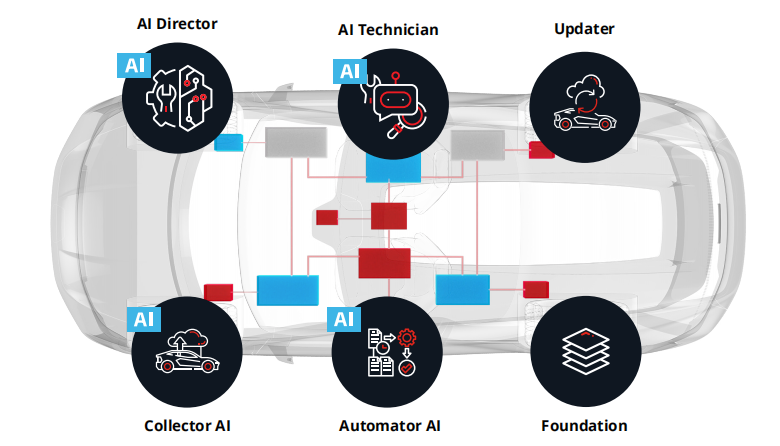
Image source: Sonatus
Looking ahead, Yu Fang envisions future vehicles evolving into "robots capable of self-management, self-diagnosis, and even self-optimization." Achieving this requires both the SDV foundation and the AI-driven brain.
With its robust product architecture, open ecosystem strategy, and deep insights, Sonatus is empowering global OEMs—particularly China's innovation-driven automakers—to accelerate toward a more intelligent mobility future, powered by the twin engines of software and AI.