



Gasgoo Munich- At the recent 2026 Equipment Power Forum, Wu Kai, chief scientist at CATL, announced that the company’s sodium-ion batteries will enter mass production this year. Looking further ahead, he argued that lithium-air batteries are set to become the focal point of the next global battery race. His remarks laid out both the technology ready for deployment today and the challenges the industry must tackle tomorrow.
With electric vehicles becoming ubiquitous and energy storage demand surging, batteries are no longer just components under the hood—they are core technologies determining the trajectory of the entire new energy sector. While everyone compares range, safety, and cost, the real differentiator is always the underlying technology roadmap.
How Do Lithium-Air Batteries Work?
Simply put, a lithium-air battery is a system that uses metallic lithium as the anode and oxygen drawn from the air as the cathode material. It operates almost like it is "breathing": absorbing oxygen during discharge and releasing it when charging—hence the nickname "breathable battery."
Unlike the lithium batteries currently used in vehicles and storage stations, this system does not rely on scarce metals like nickel, cobalt, or manganese for the cathode. Instead, it draws directly on oxygen from the air. This lighter, more direct structure yields a standout advantage: extremely high theoretical energy density.
In layman's terms, a lithium-air battery can store several times the energy of today's high-end lithium batteries at the same weight and volume. If deployed at scale in vehicles, driving ranges exceeding 1,000 kilometers would become commonplace. For energy storage, power plants could occupy less land, provide longer duration, and potentially see lower costs.
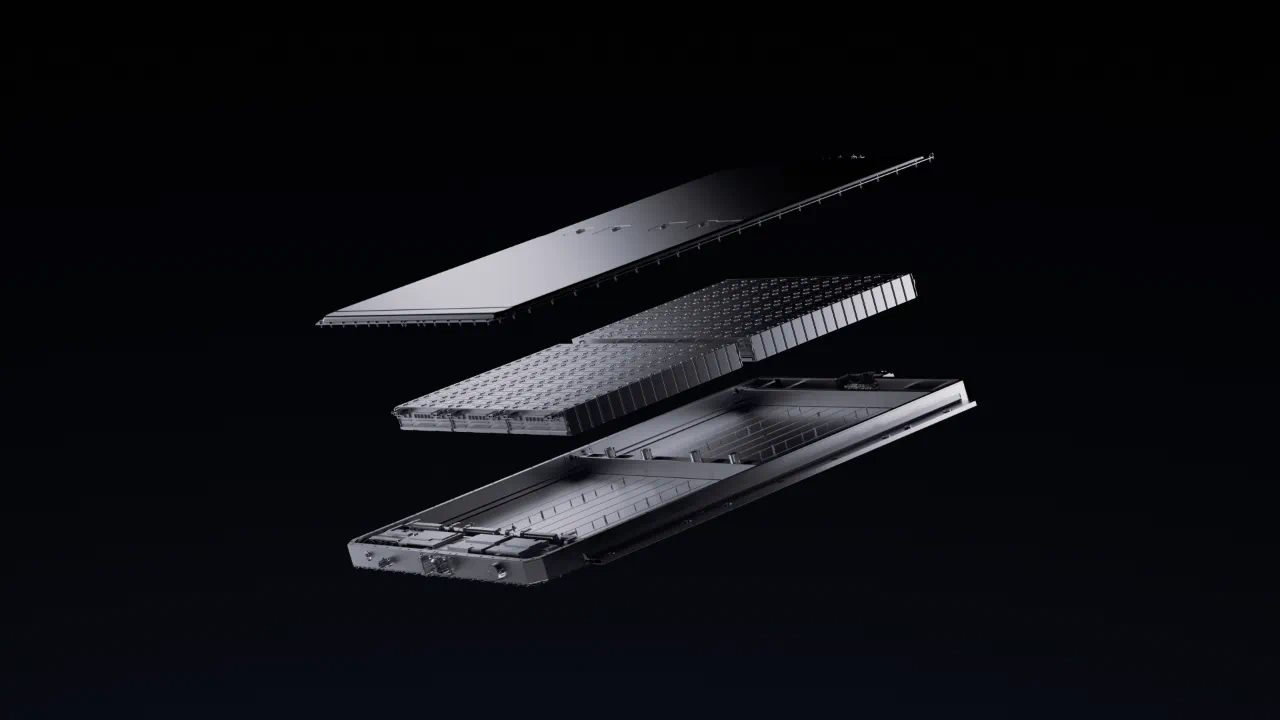
Image Source: CATL
Another practical advantage is its lower dependence on scarce resources. There is no need to scramble for nickel or cobalt; the anode relies primarily on lithium. This makes the overall supply chain more secure and offers room for long-term cost reductions.
In an industry environment characterized by volatile lithium carbonate prices and tight upstream resources, this approach holds significant appeal. As nations move to strengthen resource autonomy and reduce reliance on key materials, the strategic value of lithium-air batteries will only become more pronounced.
For now, however, lithium-air batteries are nowhere near ready for mass production in vehicles.
Air contains water and carbon dioxide, which can interfere with battery reactions and shorten lifespan. The byproducts of discharge are not easily reversible, resulting in low charging efficiency. Electrolytes, interface stability, and packaging processes all remain engineering challenges to be solved.
Lithium-air technology is more of a long-term trump card for the industry than a product that will hit the market in the next year or two. Most leading global companies are still in the stages of material verification, mechanism optimization, and small-cell prototyping. They remain a significant distance from mass production lines, automotive-grade validation, and long-term reliability testing.
Where Will the Battery Industry Go in the Next Five Years?
Over the next five years, the battery sector will not be dominated by a single technology. Instead, multiple paths will advance in parallel, with the most practical solutions reaching the market first.
The first to arrive will be sodium-ion batteries. Their advantages—abundant raw materials, lower costs, and better performance in low temperatures—make them suitable for price-sensitive scenarios like energy storage, low-speed vehicles, and commercial vehicles. With mass production starting this year, sodium-ion is no longer a concept but a reality entering the fray for market share. Given the boom in storage demand and high lithium carbonate prices, sodium-ion is poised to become one of the sector's most definite growth drivers.
As residential, commercial, and grid-side storage capacities expand simultaneously, sodium-ion batteries—leveraging their cost-effectiveness and low-temperature resilience—will quickly fill gaps in low-end and niche applications. They are set to become the mainstream alternative to lithium-ion technology.
The following three to five years will usher in the widespread adoption of solid-state and semi-solid-state batteries.
Put simply, solid-state batteries replace the liquid electrolyte found in traditional lithium batteries with solid materials that are safer and more stable. The result is a battery that is safer, offers higher energy density, and boasts a longer cycle life. They will debut in high-end vehicles in the coming years before trickling down to mainstream models, acting as a key force in reshaping the industry landscape.
Semi-solid-state batteries have already entered the stage of small-batch installation in vehicles, while full solid-state batteries are accelerating pilot testing and process optimization. A true window for mass adoption in vehicles is expected between 2027 and 2030.
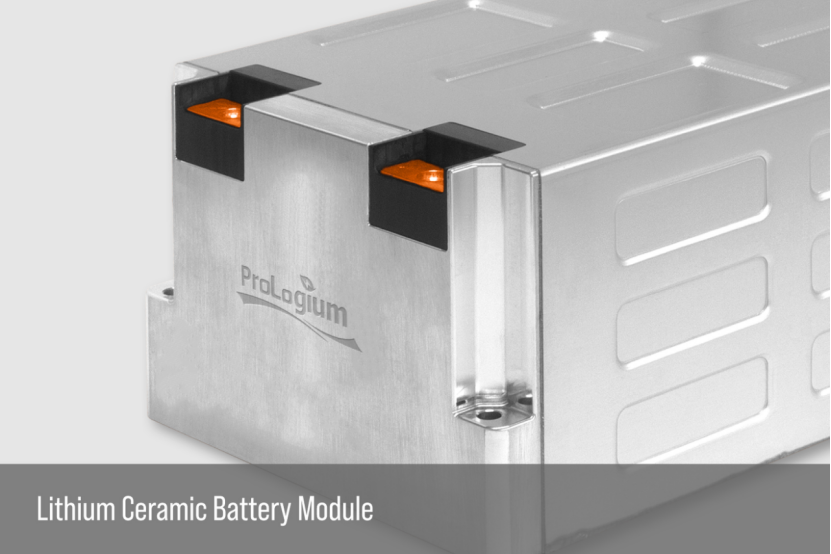
Image Source: ProLogium Technology
Further down the line lie long-term technologies like lithium-air batteries. These solve the "impossible" limits of existing batteries, but they involve long development cycles, massive investment, and high engineering difficulty. For companies, investing now is about securing patents, staking a claim in the race, and building a technical reserve—rather than expecting short-term revenue.
Although such frontier technologies cannot be monetized in the short term, they serve as crucial insurance for maintaining long-term competitiveness and avoiding technological disruption. They represent a strategic high ground that global battery giants are compelled to contest.
Beyond technology itself, market demand is propelling the industry forward. Global energy storage installations continue to rise, with residential, commercial, and grid-side capacity expanding in unison. Lithium carbonate prices remain high, allowing for smooth profit transmission along the supply chain. Materials like separators, copper foil, and aluminum foil are entering a new round of price increases, while strong overseas demand for computing power, AI data centers, and wind power is driving needs for power and energy storage.
These tangible market shifts will define the battery industry's trajectory over the next five years: the advantage will go to those who can mass-produce faster, supply more reliably, and adapt better to specific scenarios.
From the mass production of sodium-ion batteries this year to the designation of lithium-air technology as a long-term direction, the landscape of the battery industry is becoming increasingly clear. In the short term, mature technologies will meet essential needs; in the medium term, solid-state batteries will upgrade the experience; and in the long term, lithium-air batteries will explore the limits of what is possible.
Lithium-air batteries may have opened up the industry's imagination, but the technologies that will truly determine the next five years are those that can be deployed, installed in vehicles, and generate profit. Competition in the battery industry has never been about who has the coolest concept—it is about who is more stable, faster, and closer to meeting real-world demands.


