



GAC AION's compact electric SUV, the AION i60 National Range-Extended 210 Ma Dao Cheng Gong Edition, officially hit the market on March 2, priced at 102,800 yuan.
As a new entry-level variant, the strategy is straightforward: strip away non-essential comfort features to push the price lower. This move positions the model as a key lever for AION to penetrate the 100,000-yuan family new energy SUV sector.
GAC AION has been mired in a prolonged sales slump. Previous efforts to reverse the downturn, such as the AION V, fell short of expectations and failed to become reliable sales mainstays.
Against this backdrop, the AION i60—launched in November 2025—quickly became the brand's best-seller. In December 2025, its first full sales month, sales surpassed 10,000 units. Although January 2026's seasonal slowdown caused a month-on-month dip, the new Ma Dao Cheng Gong edition aims to optimize the lineup. The goal: reach a wider audience of price-sensitive buyers, reignite demand, and sustain the model's momentum.
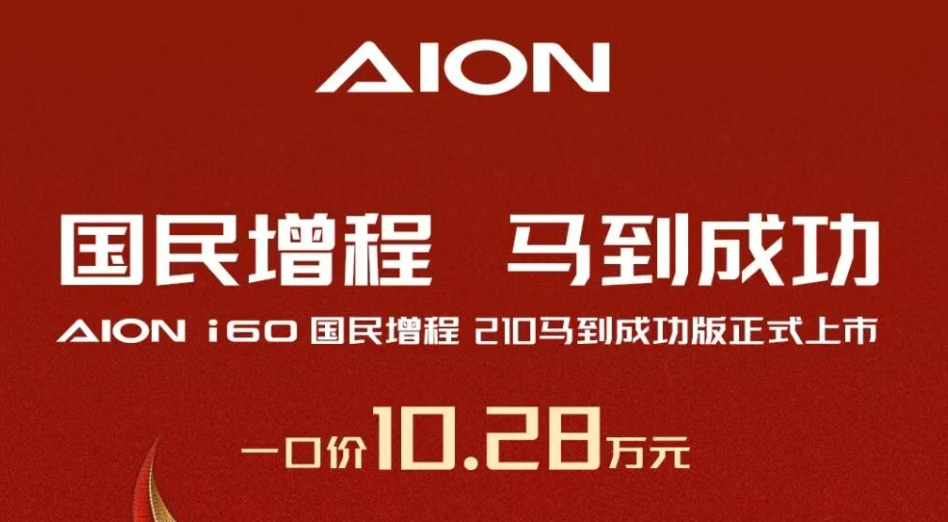
Image Source: AION
i60's Breakthrough Path
AION's sales decline is no anomaly; it stems from a tangle of factors. The core dilemma is an over-reliance on fleet sales for ride-hailing and taxis. As that sector saturates, growth is stalling, while the pivot to retail family buyers has proven difficult.
In 2023, AION's strong fleet presence helped it sell over 480,000 vehicles, securing a spot in the industry's top three. Yet 2024 and 2025 brought clear setbacks. Once-dominant models like the AION S and AION Y fell out of the 10,000-unit monthly club in 2025, their competitive edge steadily eroding.
To turn things around, GAC AION pushed into the compact SUV segment with the AION V, targeting essential family needs. However, a misalignment between features and pricing meant market performance fell short.
While the AION RT and AION UT added some sales, they failed to achieve scale, leaving the brand's overall growth unsupported. Worse, AION's previous focus on pure electric left it lagging as the range-extended and hybrid markets surged. The brand missed out on that growth wave, deepening its troubles.
Under pressure, GAC AION launched its first range-extended compact SUV, the AION i60, in November 2025. Offering both pure electric and range-extended powertrains priced between 109,800 and 135,800 yuan, it aimed straight at the core 100,000 to 150,000 yuan family segment, plugging a gap in AION's lineup.
Positioned as a large five-seater, the i60 pitched long range, low consumption, and high value—hitting the sweet spot for families. It quickly gained market traction.
The highly anticipated i60 delivered. Within a month, it became the brand's best-seller. December 2025 saw sales of 10,804 units, lifting AION's total monthly sales to 42,140. While still down year-on-year, it marked the brand's best sales month of the year.
Even during the seasonal slowdown in January 2026, the i60 held the top spot, proving to be the primary engine behind AION's sales recovery.
Building on that success, GAC AION rounded out the lineup on March 2, 2026, with the launch of the National Range-Extended 210 Ma Dao Cheng Gong Edition.
Based on the standard Range-Extended 210, this version is priced at 102,800 yuan—a 7,000-yuan cut. The logic is simple: strip non-essential comforts while keeping core strengths intact. It's a precise play for budget-conscious families.
On the equipment front, AION cut the passenger power seat, rear armrest cupholders, power tailgate with memory, leather steering wheel, and vanity mirror lights. These features have minimal impact on daily driving and can often be added later.
Power, range, safety, and tech remain untouched. It still carries the 1.5L range extender, offering 210 km of pure electric range and 1,240 km total range, along with 3C fast charging and the GSD driver-assist system—ensuring fundamental practicality and safety aren't compromised.
This strategy of trimming comfort to preserve core capabilities lowers the barrier to entry without sacrificing competitiveness. It is a calculated maneuver for the price-sensitive segment.
i60's Rise and AION's "Hit-Product Anxiety"
The launch of the Ma Dao Cheng Gong edition isn't mindless price slashing. It reflects a calculated reading of market demand and the competitive landscape.
First, it fills a pricing void to capture lower-tier demand. At 102,800 yuan, the i60 dips into the sub-100,000 yuan SUV market, addressing demand in tier-3 and tier-4 cities and counties. This corrects the model's previously high entry point, offering a price edge over rivals like the BYD Yuan PLUS, Geely Galaxy E5, and Leapmotor B10.
Second, it shores up competitiveness in a fierce market. The 100,000-yuan family NEV SUV segment is crowded with look-alike products and intensifying price wars. A cheaper entry model reinforces the i60's value-for-money image, boosting its ability to draw buyers.
Third, it aligns with core family priorities. Entry-level buyers prioritize range, safety, and efficiency over comforts like a powered tailgate. This strategy matches product value exactly with what these users want.
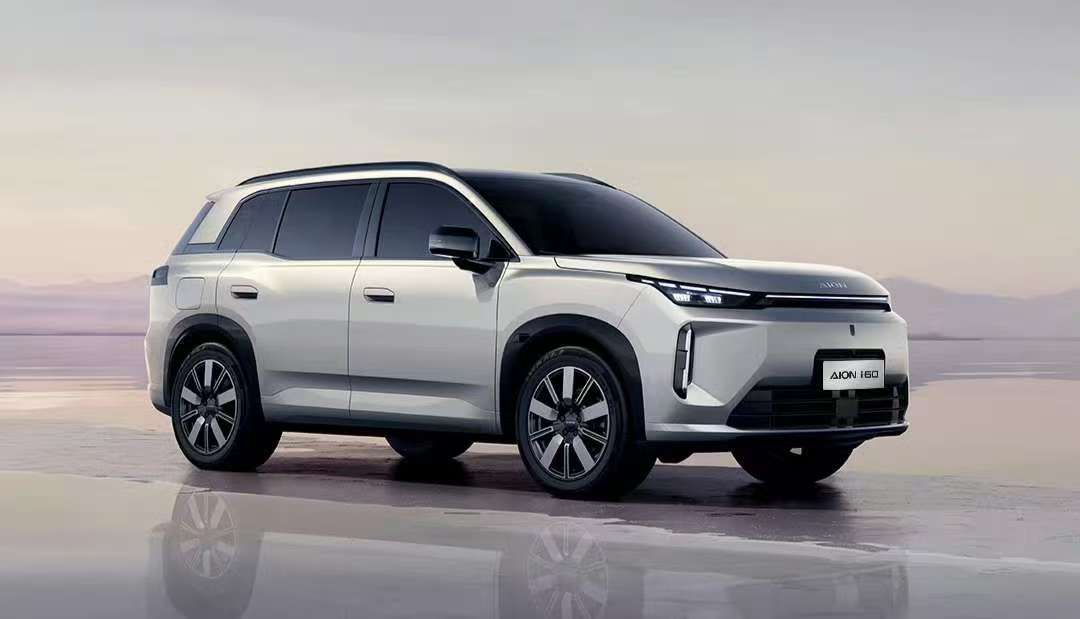
Image Source: AION
The arrival of the Ma Dao Cheng Gong edition offers clear upside for AION's sales recovery.
For starters, it cements the status of the flagship model. Since the i60 is already AION's top seller, this new trim should further stimulate sales, easing the pressure from January's decline and sustaining momentum to provide a stable sales floor.
Second, it lifts the brand's overall sales. As AION's most potent model, i60 growth will pull the entire brand up, helping AION climb out of its prolonged slump and regain market share.
Finally, it optimizes the product mix. Adding an entry-level trim creates a "sales-driver at the bottom, profit-maker at the top" structure. This balances scale with profitability, steering AION toward a healthier portfolio and reducing over-reliance on a single price point.
Yet challenges remain. First, the seasonal headwinds and broader market pressure. Consumer appetite is weak in early 2026, and competition is fierce. Factors like adjustments to NEV purchase tax policies and aggressive promotions by internal combustion engine vehicles mean even a new entry-level model may not fully offset external headwinds. A significant rebound will be difficult.
Second, rivals will react quickly. The 100,000-yuan NEV SUV arena is a battlefield. Competitors like BYD, Geely, and Leapmotor are likely to counter with price cuts or their own entry-level trims, rapidly eroding the i60's price advantage.
Third, there is the risk of consumer pushback. Some buyers may balk at the missing features. If dealerships fail to clearly communicate the logic—preserving core tech while cutting non-essentials—it could hurt the model's reputation and conversion rates.
The launch of the Ma Dao Cheng Gong edition signals that GAC AION has formally embraced a "mass-market sales-first" strategy. It is abandoning blind pursuit of the high end to focus on the mainstream family sector—a critical adjustment to fit the current climate.
At the same time, the i60 validates the viability of a dual powertrain strategy—combining range-extended and pure electric options. AION is likely to replicate this approach across other models, rounding out its portfolio and fixing its previous oversight in the range-extended segment.
The playbook—democratizing core technology while stripping away non-essentials for precise pricing—offers a template for other domestic brands navigating price-sensitive markets.
In the long run, sustained i60 success would help AION rebuild confidence and revitalize dealer networks, laying the groundwork for future products and tech upgrades. But the outcome hinges on product reputation, service, and the shifting competitive landscape. Whether AION can secure a steady recovery through this precise strategy remains to be seen.


