



Gasgoo Munich- As competition intensifies in 2026, NIO is rapidly fleshing out its product lineup. At a recent Beijing spring exchange event, NIO co-founder and President Qin Lihong outlined the 2026 launch plans for the NIO and ONVO brands: 2026 will be a banner year for product releases. Starting in the second quarter, the ONVO L80, flagship SUV ES9, and the all-new ES7 will debut sequentially, while the all-new ES6 is slated for the second half of 2027.
From trickling down flagship technology to refreshing core models, NIO aims to cement its position in the high-end pure-electric market through multi-brand synergy and mass production of core tech. The strategy is also designed to find sustainable growth drivers following its first quarterly profit.
Precise Positioning Across Multi-Brand Lineup
According to Qin's timeline, NIO and ONVO will roll out four new models over the next five months. Leading the pack are the NIO flagship SUV ES9 and the ONVO L80. The ES9 tech launch is set for April 10, with market pricing and sales starting in late May and deliveries beginning June 1. The ONVO L80 is expected to hold its tech briefing around April 20, hit the market in mid-May, and start deliveries shortly after. Additionally, the all-new ES7 is scheduled for delivery between July and August, while the all-new ES6 won't meet consumers until the second half of next year.
In terms of positioning, the ES9 serves as a technological benchmark for the brand's upward move. MIIT filing data shows the vehicle measures 5,365 × 2,029 × 1,870 mm with a 3,250 mm wheelbase, making it longer than traditional full-size fuel SUVs like the Rolls-Royce Cullinan. For power, the ES9 packs dual motors—180 kW at the front and 340 kW at the rear—for a combined output of 520 kW, paired with a CATL 102 kWh ternary lithium battery pack offering CLTC ranges of 580 km to 620 km across three versions.
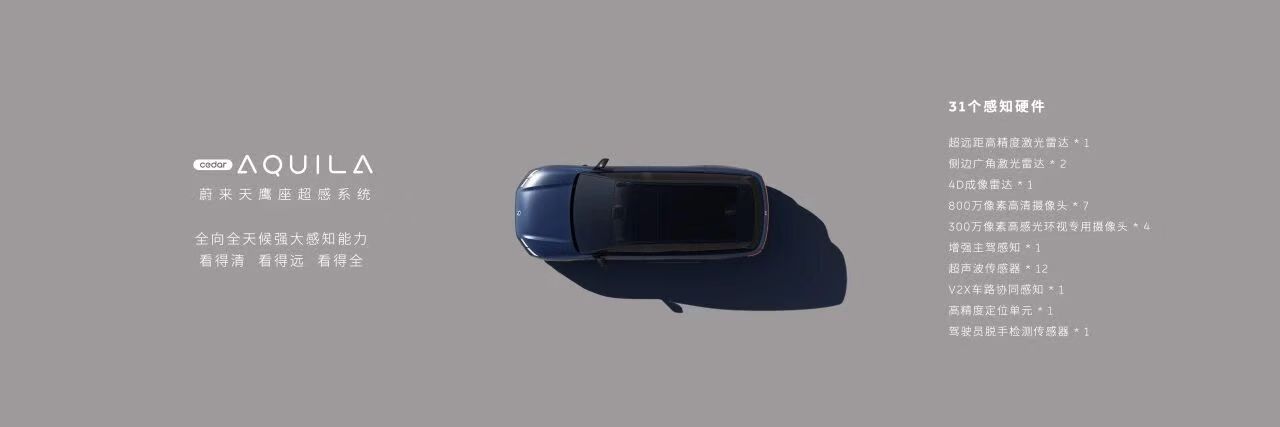
Image source: NIO
Even more notable is the trickle-down of intelligent features—Qin revealed the ES9 will fully carry the core tech system from NIO's flagship ET9 sedan, including three LiDAR units, the AQUILA super-sensing system, and the SkyRide intelligent chassis system with adjustable height. During the exchange, Qin stressed that the ES9 will achieve a more accessible entry price through different configurations. William Li has publicly stated his belief that the ES9 will "become the most competitive pure-electric model in its price bracket."
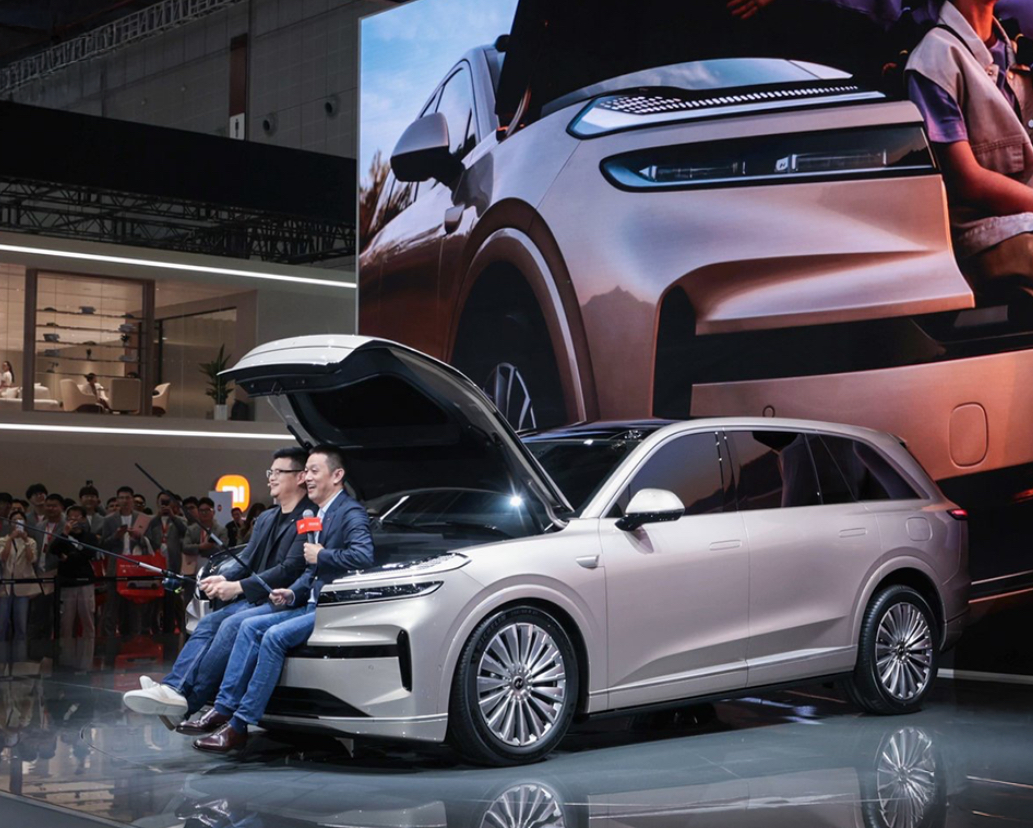
Image source: ONVO
Unlike the ES9's tech-benchmark role, the ONVO L80 is internally defined as this year's most critical volume driver. Positioned between the ONVO L60 and L90, it is a large five-seat SUV focused on space and practicality. In terms of power, the L80 continues on NIO's NT3.0 platform, offering both single-motor (340 kW max output) and dual-motor (440 kW max output) versions, with an expected 85 kWh battery pack.
The tight rollout schedule reveals NIO's precise slicing of market segments. The ES9's flagship positioning aims to solidify NIO's technological image in the pure-electric market above 400,000 yuan, while the ONVO L80 needs to capture mainstream family replacement demand in the 200,000 to 300,000 yuan price band. Meanwhile, the generational refresh plans for the ES7 and ES6 are clearly slated for the third quarter of 2026 and the second half of 2027, respectively.
The Profit and Scale Game Behind the Product Blitz
This dense product planning is not an isolated decision; it underpins NIO's core operational goal for 2026—achieving full-year profitability. Just early this February, NIO released a profit forecast: based on a preliminary assessment of unaudited consolidated management accounts, the company expects to record an adjusted operating profit (non-GAAP) of approximately 700 million to 1.2 billion yuan in the fourth quarter of 2025. This marks the first time since its founding 11 years ago that NIO has posted a quarterly adjusted operating profit.
This turnaround stems from a convergence of factors. On the sales front, NIO delivered 124,807 vehicles in the fourth quarter of 2025, meeting its previous guidance. December alone saw 48,135 deliveries, a record high. By brand, NIO delivered 31,897 units, marking five consecutive months of sequential growth; ONVO and Firefly delivered 9,154 and 7,084 units respectively, showing the initial emergence of synergy across the three brands.
Crucially, the product mix has improved. The ES8, priced over 400,000 yuan, accounted for 22,256 deliveries in December—nearly 70% of the NIO brand's monthly sales—becoming the core engine pulling up gross margins. NIO CFO Qu Yu broke down the margins during the Q3 2025 earnings call: the ES8 carries a 20% gross margin, while NIO's "5566" models (ES6, EC6, ET5, ET5T) sit between 15% and 20%, and the ONVO L90 is also in the 15% to 20% range.
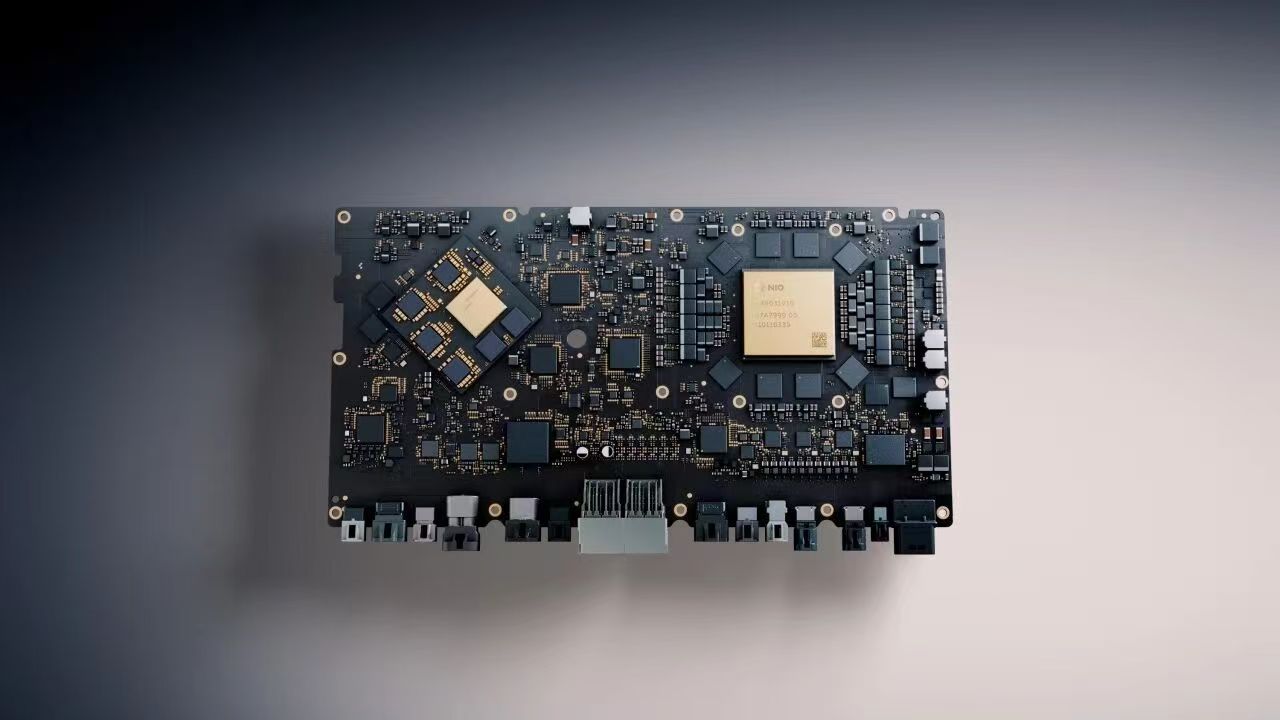
Image Source: NIO
The cost-reduction effects of in-house technology are also visible in the financials. NIO President Qin Lihong revealed during the performance exchange that the in-house Shenji NX9031 chip offers computing power equivalent to four industry flagship chips, cutting costs by over 10,000 yuan per vehicle. "Factoring in VAT and gross margins, this translates to a price concession space of 20,000 yuan." This means NIO is attempting to convert core R&D into pricing power at the terminal level.
Building on this progress, William Li has clarified the path to profitability for 2026 on multiple occasions. At the ceremony for the 1 millionth mass-produced vehicle this January, he stated the sales goal is to maintain 40% to 50% year-on-year growth while "improving growth quality." Based on 2025 cumulative sales of 326,000 units, the 2026 target implies 456,000 to 489,000 units. Li also outlined plans to launch two new models in the second quarter and one in the third, potentially achieving monthly sales of 50,000. Regarding margins, he noted that "including three new models, there will be five large vehicles for sale in 2026," and a high sales mix of large vehicles is expected to push the comprehensive gross margin to 20%.
Yet, moving from a single quarterly profit to full-year profitability faces headwinds. On one hand, while penetration in the premium pure-electric market above 300,000 yuan is rising, it remains low; establishing consumer acceptance of pure electric vehicles still takes time. On the other hand, raw material volatility and chip supply uncertainty pose tests for NIO's cost control. Industry insiders point out: "Competition is even more intense this year, placing higher demands on NIO's product strength... how to continuously deepen cost reduction and efficiency while expanding overseas is a problem NIO must face."
From the ES9's tech trickle-down to the ONVO L80's space-focused strategy, NIO is trading product density for market share and using tech reuse to amortize R&D costs. But for a company that has just turned the corner to profitability, the market performance of every new model will directly influence the quality of its full-year profit target. In the coming months, as four models enter the delivery cycle, NIO's true ability to hold its ground in the high-end pure-electric race will face the market's verdict.


