



As new-energy vehicles top a 50% penetration rate in China and the industry enters a crucial phase of strategic recalibration, how the legacy joint-venture giants pivot — and whether they succeed — has become a key barometer for where the market is headed.
In early 2026, SAIC Volkswagen made its move with a new model, the ID. ERA 9X. The company says the strategic stalemate is over. This year will be the turning point in its NEV transition — and the starting gun for a strategic counteroffensive by one of China's longest-standing joint ventures.
China's Ministry of Industry and Information Technology (MIIT) has now posted the ID. ERA 9X's product details. The 6-seat range-extended model measures 5,207 mm long, 1,997 mm wide and 1,810 mm tall, riding on a 3,070 mm wheelbase — making it the largest SUV by size across Volkswagen Group.
As Volkswagen Group's first — and for now only — 9-series model globally, the ID. ERA 9X is being positioned as a full-fledged German flagship SUV. This isn't a simple product refresh, the company says, but a deep experiment under SAIC Volkswagen's "Joint Venture 2.0" to recast how competition is defined. In an interview with Gasgoo and other media, Tao Hailong, Party Secretary and General Manager of SAIC Volkswagen Automotive Co., said: "China's auto industry has shifted from years of aggressive, disorderly expansion into a phase of strategic adjustment. Especially since March, a series of events has forced the industry to rethink the path forward. One clear sign is that the focus of competition is moving toward value."
The ID. ERA 9X is the rallying cry for that "Joint Venture 2.0" era at SAIC Volkswagen.
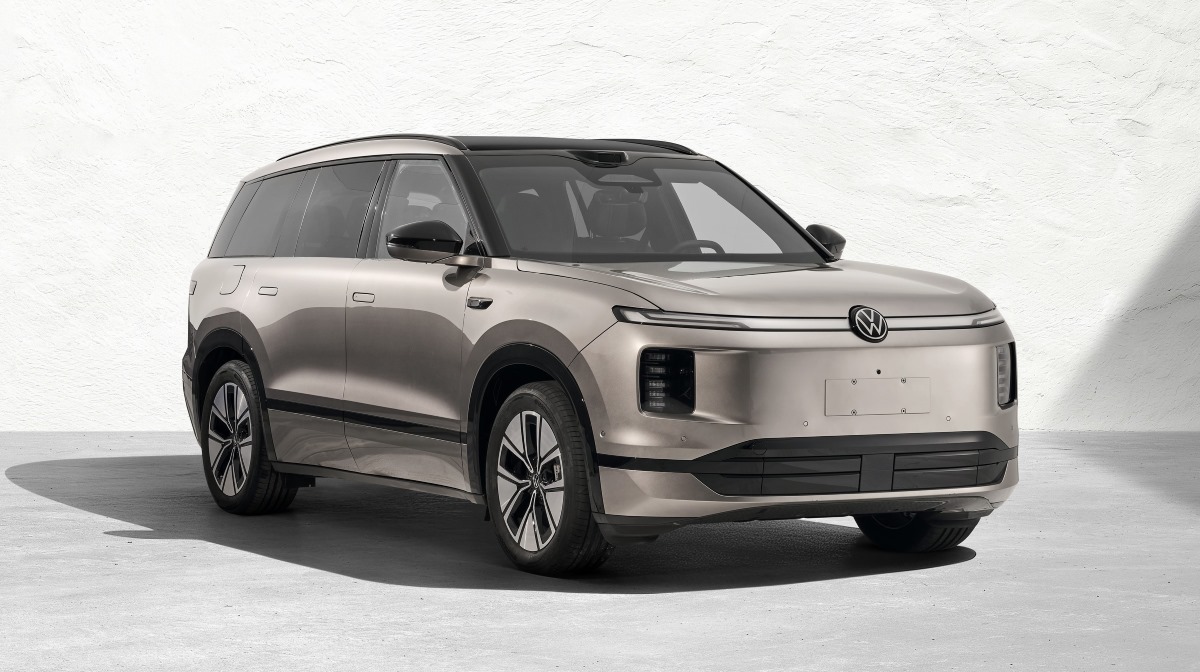
Image: MIIT website
The JV giant turns
China's joint-venture era began with a simple trade: market access for technology.
In the "JV 1.0" phase, foreign partners supplied mature platforms and technology while Chinese partners localized and built the market. As Tao Hailong bluntly put it: "In the past, the products European firms sold in China were not developed for Chinese demand, but imported after regulatory adaptations of what they already had in Europe." That system worked in the ICE era, built as it was on stable, slow-moving tech and Western-led design and demand standards. The recent global waves of electrification and intelligence, however, have upended that old order.
The disruption has been most pronounced in China. The country is not only the world's biggest NEV market; it has also forged a unique lead in smart cockpits, driver assistance and user ecosystems — increasingly shaping the direction of global tech itself. The old teacher-student roles have quietly flipped.
Against that backdrop, the core of "JV 2.0" is clear: move from tech-import JVs to China-led, locally innovated JVs.
As a product of SAIC Volkswagen's "JV 2.0," the ID. ERA 9X, by the company's account, has been built from zero to one specifically for China — signaling a shift from being a taker and adapter of global products to a definer and creator for the Chinese market.
To grasp what launching the ID. ERA 9X means now, you have to view it through two intertwined lenses: the industry's transition from EV popularization to deeper intelligence and value; and how legacy JVs, after losing their first-mover edge, rebuild core competitiveness.
Tao Hailong calls 2025 the wrap-up of SAIC Volkswagen's "strategic standoff," a frank admission that traditional JVs like Volkswagen faced pressure on both share and mindshare in the first half of the EV shift. Unlike rivals that went all-in with higher risk, SAIC Volkswagen chose to defend the core while striking in unconventional ways — a strategy shaped by the inertia and strengths of a vast organization.
The "defend" part is about safeguarding the base. Tao has stressed repeatedly that "we must stay at the table." Keeping Volkswagen-brand ICE sales in the million club in 2025 was no accident, but the payoff from continued investment in combustion technology. That ICE base, in turn, provides the cash flow, supply-chain leverage and channel stability essential for the transition — a solid launch pad for what comes next.
The "strike" is the soul-deep change — the core of SAIC Volkswagen's response to future competition. The "imported" product-development model of JV 1.0 is fading in an era where intelligence defines experience and China sets the pace. JV 2.0, at heart, is a structural shift of product definition and development leadership to China. That demands a full R&D and marketing system rooted in the local market, tightly integrated with global resources, and capable of rapid response.
SAIC Volkswagen has mounted a thorough internal overhaul to that end, introducing GTM (Go-To-Market), IPD (Integrated Product Development) and IPMS (Integrated Product Marketing & Sales) processes drawn from the tech industry to build an organization that is "fast, agile and responsive." Tao concedes this is hard, requiring a break from deeply ingrained tech-first thinking and step-by-step routines.
It is also resetting relations with dealers, promising "no forced stocking" and "no price wars" to shift the channel from short-term haggling to long-term value co-creation.
The ID. ERA 9X is the tangible embodiment of that JV 2.0 "strike." It carries a double mandate: in the market, as a flagship, it must be a tip of the spear into a high-end NEV arena dominated by China's upstarts; internally, it is the litmus test for the new organization and processes. Its outcome will answer a bigger question: can a 40-year-old JV with deeply intertwined Chinese and foreign interests truly evolve its organizational DNA — with enough agility and creativity to regain a voice in a high-end NEV market where new players wrote the rules? In that sense, the ID. ERA 9X is both a product under scrutiny and a progress report on SAIC Volkswagen's transformation.
How well does the ID. ERA 9X fit the market?
Strip away the marketing, and the ID. ERA 9X's product definition reveals an engineer-led value stance — leaning on system-level engineering to tackle hidden pain points that shape long-term experience and safety.
That choice reflects confidence in its core strengths.
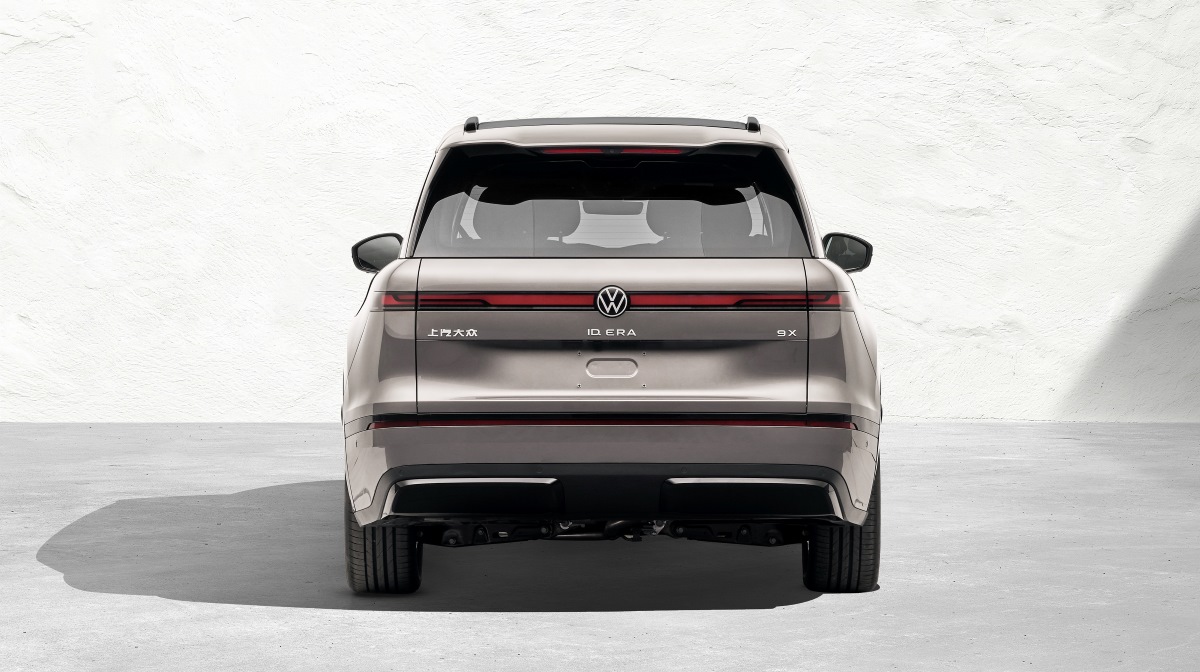
Image: MIIT website
The car's central engineering spend targets the Achilles' heel of range-extended EVs: the drop-off in experience when the battery is depleted.
China's EREV segment is bustling. Many brands once focused on pure EVs are rolling out or planning range extenders. Yet owners often accept trade-offs: many range extenders are adapted from existing ICE engines rather than purpose-built for the EREV duty cycle — high-efficiency generation bands, frequent start-stop, and NVH priority. The result is a widely felt gap: a hero when fully charged, a laggard when running depleted.
The ID. ERA 9X's hybrid takes a higher-cost, harder path. As Tao Hailong put it: "We're chasing consistency between full-charge and depleted states in a range-extended model."
The pack is substantial: a 65.2 kWh battery from CATL, good for more than 400 km of CLTC all-electric range to cover daily commuting. And building on Volkswagen's vaunted EA211 engine, SAIC Volkswagen has poured resources into a range-extender-specific program.
"In 30%-40% of real-world use, the range extender will start the engine, so it's neither optional nor only for emergencies," said Fu Qiang, Executive Vice President of Sales and Marketing at SAIC Volkswagen. "Many range-extended models see a 50%-150% drop in power when depleted; we've kept that within 5%." That pursuit reflects German engineering at its core: value placed on reliability across conditions and predictable performance. The fabled "German quality" has always meant that a complex system should deliver stable, controllable output in any state.
Still, in today's market, deep engineering virtues don't automatically translate into advantage. They're implicit, hard to grasp in a showroom or a spec sheet. In the battle for first impressions, the nuanced gains from powertrain calibration may communicate less efficiently than a giant screen or a flashy interaction. For the ID. ERA 9X, turning engineers' core value into consumer-perceived, purchase-driving appeal will be a real test.
On intelligence, the ID. ERA 9X takes a pragmatic path. It introduces several firsts in assisted driving and the smart cockpit. Its ADAS stack, co-developed with Momenta, will incorporate distinct software assets and definitions.
There's also a safety-focused touch: Fu Qiang says the second row gets a Smart Surface feature. Children and older passengers face risks when alighting, often needing reminders to check for oncoming traffic. Smart Surface can display whether pedestrians or vehicles are approaching from the rear-quarter as the door opens. And there are many such practical features oriented around safety and quality, he added.
Design-wise, the ID. ERA 9X stakes out flagship ground with Volkswagen Group's largest SUV footprint and a blend of Chinese and German aesthetics. It targets multi-child families seeking space, presence, quality and brand heritage — a sizeable and growing segment, but an increasingly crowded red ocean. In a class where "big" is table stakes, the question is whether its disciplined proportions — a 4x wheel-to-axle ratio and a 1:2 glass-to-body ratio — and a "Tri-Line" design that uses three character lines to define the body, can deliver a distinct, compelling sense of German flagship appeal.
What to expect for ID. ERA 9X
Now that the ID. ERA 9X is on MIIT's public list, it's expected to make its formal debut in April. SAIC Volkswagen's brief is clear: the model has a dual-market mission — to fortify the base and open new territory.
Fu Qiang outlined two core target users: those who demand German-grade quality and overall product excellence; and younger buyers who value NEVs for their intelligence in particular. To appeal to both, the ID. ERA 9X leans on two messages — a "max-level German flagship SUV" and a "no-shortfall experience." The strategy bets on unified, high-standard all-round capability: German craftsmanship, safety and driving feel for the first group; flagship-scale space, presence and features for the second.
In other words, it's not built as a niche toy. The aim is to be the rational, low-risk choice for a broad set of high-end family users.
SAIC Volkswagen has set two core requirements for the new model.
Commercially, it needs to win on sales. Fu Qiang was unequivocal: "On sales, this car must get into the front of the pack." The logic, he said, is simple: "Competition in NEVs is fiercer than in ICE. Stand out or be out. We want every NEV we launch to rank at the front of its segment. Only with scale can you achieve cost and profit advantages — that's the premise for survival." In short, the ID. ERA 9X can't be a mere halo car; it has to be a volume pillar.
For the brand, the car must refresh Volkswagen's image in the NEV era. Fu Qiang was candid: "In ICE, Volkswagen is consistently top-tier on awareness and favorability. In NEVs, awareness is fine, but favorability is lacking and the image isn't distinctive." As the flagship of the ID. ERA line, the 9X is meant to show users a "different, more impressive Volkswagen."
Look ahead and you see a complex picture of opportunity and challenge for the ID. ERA 9X.
If its promise of "no performance drop when depleted" holds up, that could become powerful word of mouth, addressing a common EREV anxiety and creating a clear point of differentiation. As the NEV base expands and safety or quality incidents pile up, some buyers may shift from chasing gimmicks to prioritizing safety, reliability and quality. The ID. ERA 9X's emphasis on German safety standards and dependable DNA could find resonance. It also won't be fighting alone: according to Fu Qiang, SAIC Volkswagen plans to roll out 6 new NEVs in 2026. With the 9X firing the first shot in a brand refresh, follow-on models that span more price bands and niches could deliver a cluster effect, systematically reversing today's disadvantages in NEVs.
Even so, as a late entrant into a market where high-end Chinese models like the Li Auto L9 and Aito M9 have built strong user communities and loyalty, the ID. ERA 9X faces a steep mental barrier — and the window is narrowing. It must also price a package that includes German-grade craftsmanship, a bespoke range extender, advanced safety and full intelligence sharply enough for a hyper-competitive market. Whether consumers accept that pricing will directly determine how close it gets to its sales goals.
In sum:
SAIC Volkswagen's ID. ERA 9X is a studied strategic play. Rather than continue the ID.3, ID.4 X, ID.6 X naming logic, it adds "ERA" — an unmistakable signal. The new line is meant to usher in a new era for SAIC Volkswagen.
In the market, the 9X carries twin heavy lifts: break out on sales and rebuild the brand. The path won't be smooth, but the openings are clear — solve real pain points to stand apart, ride a shift back toward "reliability" as a core value, and leverage brand and system strengths to strike late yet land hard.
The ID. ERA 9X has taken the stage. Its very presence is a statement — and its fate will shape not just SAIC Volkswagen's future, but serve as a test case for all JVs trying to survive in a new era.


