



Gasgoo Munich- Mercedes-Benz plans to end vehicle production at its COMPAS plant in Aguascalientes, Mexico, by the end of 2025.
Meanwhile, a Mercedes-Benz spokesperson said the internal combustion engine version of the compact GLB crossover is scheduled to cease production in May 2026.
Launched in 2015, the COMPAS joint venture was once hailed as a cornerstone of cooperation between Mercedes-Benz and the Renault-Nissan Alliance. The plant, built with a combined investment of roughly 1 billion euros from Mercedes-Benz and Nissan, started production in 2018 with an annual capacity of 230,000 vehicles and an initial workforce of 3,600. Yet in the eight years since, the factory has never operated at full capacity, remaining under constant review.
On February 12, Gasgoo noted that Mercedes-Benz's CFO signaled the shutdown of the Mexican joint venture would reduce capacity by 100,000 units.
This is not a simple story of closing a plant to stop the bleeding; it is a carefully orchestrated global reshuffling of production geography. Mercedes-Benz is shifting capacity away from the high-tariff risks of North America and mid-to-low-end internal combustion engine lines, concentrating them instead in Hungary—a cost-effective hub and testing ground for electrification.
The so-called "reduction in capacity" is, in reality, a forced acceleration of capacity efficiency.
Under the U.S.-Mexico tariff wall, the joint venture becomes a "geopolitical sacrifice"
On the surface, the decision to close COMPAS marks the natural end of a seven-year joint venture between Mercedes-Benz and Nissan. The deeper driver, however, is the severe volatility in North American trade policy.
When it launched in 2018, this plant was high on expectations.
The name COMPAS derives from "Cooperation Manufacturing Plant Aguascalientes," signifying a collaborative manufacturing facility in Aguascalientes. It was designed to leverage Mexico's cost advantages and geographic location to serve North American and global markets.
The plant's construction was once a model of industry heavyweights joining forces, witnessing deep cooperation between Nissan and Mercedes-Benz in technology sharing and production optimization.
Yet over the past decade, the global auto industry has weathered waves of electrification and intelligence, compounded by the pandemic and supply chain crises. Operational pressure at the facility has mounted. Despite the massive initial investment, its efficiency and profitability have increasingly come under question in the face of shifting market dynamics.
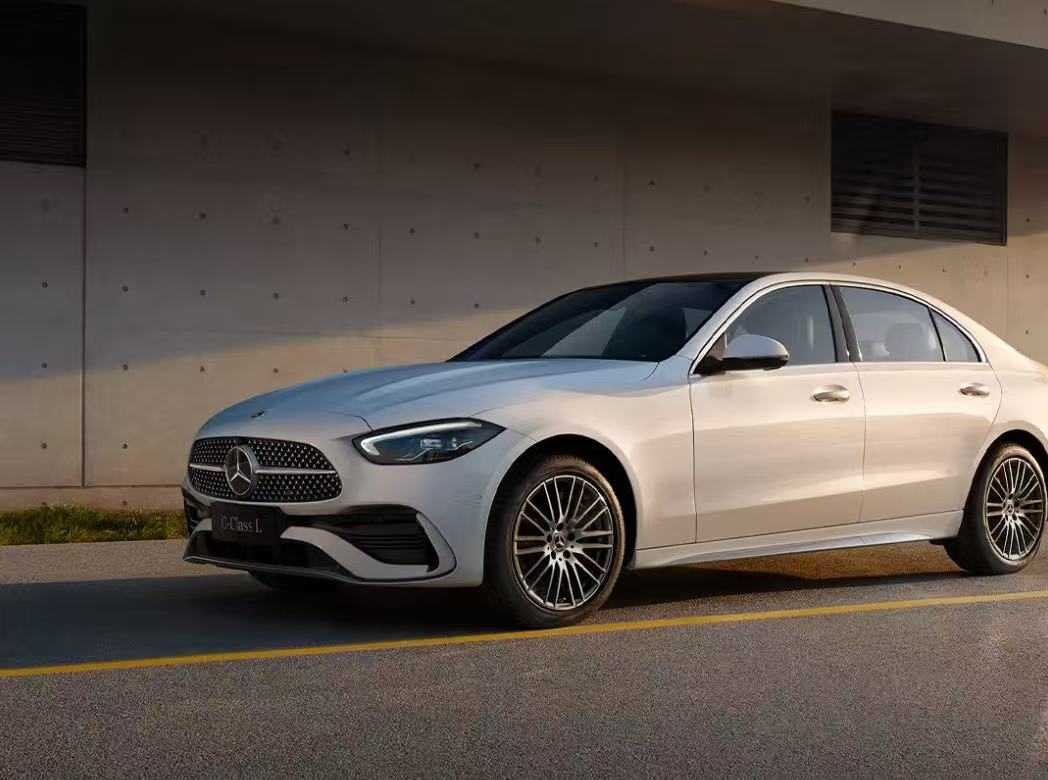
Image Source: Mercedes-Benz
The true fatal blow comes from U.S. tariff policy. Starting in April 2025, the U.S. will impose a 25% tariff on imported passenger cars, effectively shattering the economics of exporting Mexican-made vehicles to the U.S. An even deeper chill stems from the upcoming renegotiation of the USMCA in 2026.
The fate of the COMPAS plant proves that as global trade enters a "policy-driven" era, capacity layouts relying solely on cheap labor have become high-risk wagers. Mercedes-Benz's decision-making logic has shifted from "where is it cheaper to build?" to "where is it safer to build?" When Mexico's political compliance costs and tariff risks hit a tipping point, withdrawal became the only rational choice.
Hungary takes the baton: A capacity shift east from "scattered layout" to "core agglomeration"
Looking only at the Mexico closure, it is easy to misinterpret this as "Mercedes-Benz downsizing." But zoom out to the global production map, and a clear blueprint for geographic capacity reconstruction emerges.
According to Auto News, Mercedes-Benz has decided to transfer all A-Class production operations from its Rastatt plant in Germany to its manufacturing base in Kecskemét, Hungary, located about 100 kilometers from Budapest. Since the Kecskemét facility already hosts a portion of the A-Class production line, the full transfer presents no operational hurdle. Beyond being a simple adjustment for a single model, this move represents a strategic shift in Mercedes-Benz's current cost structure and capacity allocation.
This is not a contraction, but a "capacity relocation": forcibly concentrating scattered mid-to-low-end internal combustion engine capacity from Germany and Mexico into a single hub in Central and Eastern Europe.
Hungary's emergence as the winner is no accident.
Mercedes-Benz has previously clarified that new models will be produced at its Kecskemét plant in Hungary. The all-electric GLB, equipped with EQ technology, is slated to launch in spring 2026, with hybrid variants following later that year.
At the same time, the Rastatt plant in Germany frees up capacity. This is a clear tiered transfer: Germany handles high-value-added products, Hungary handles volume electrified products, and Mexico is out.
A deeper strategic signal is that Mercedes-Benz is abandoning the traditional logic of a "global multi-point footprint," pivoting instead to a minimalist model of "core markets plus core plants." This model is better suited to the electrification era: battery supply chains require deep regional synergy, where scattered layouts mean spiraling logistics costs; platform-based models require single factories to shoulder larger volumes to amortize R&D investment in electric drive systems.
While Volkswagen still hesitates over tariff costs for its U.S. Audi plant, and Japanese firms wait in Mexico for the final verdict on USMCA negotiations, Mercedes-Benz has already voted with its feet: exiting the North American policy quagmire, betting on Central and Eastern Europe's cost-competitive manufacturing base, and concentrating its limited capital firepower on electrified production lines that can truly deliver volume.
This is not a retreat, but a revolution in capacity geography. And for those competitors remaining in Mexico, waiting for policy clarity, Mercedes-Benz has left behind not just an empty factory, but a cautionary precedent worth heeding.


