



As 2026 began, William Li, founder, CEO, and Chairman of NIO Inc., was at it again: securing fresh capital.
Just prior, Mirattery, NIO's battery asset arm, closed a 1 billion yuan C3 round, bringing its Series C total to nearly 2 billion yuan. That was quickly followed by chip subsidiary Anhui Shenji securing over 2.2 billion yuan in its first funding round, pushing its post-money valuation close to 10 billion yuan.
Both deals land squarely on the two core pillars of NIO's long-term strategy: battery assets and intelligent chips.
During NIO's years of heavy cash burn, the former was criticized as "asset-heavy and slow to yield results," while the latter was ridiculed as a money pit that overestimated its capabilities.
This time, however, the narrative has shifted.
Mirattery has attracted a wave of investment from state-backed entities like Hefei Construction Investment and Hefei Economic Development Zone, while Shenji has drawn top-tier industrial capital, including IDG Capital and China Fortune-Tech Capital.
Once dismissed as financial dead weight, those heavy assets are transforming into "hard assets" that rivals will struggle to replicate. And NIO, once known primarily for burning cash, is now answering its critics with tangible returns.
On Tech Investment, NIO Has Always Spent Where It Matters
NIO's profitability has long been a subject of intense scrutiny in the automotive world.
Back in early February, the company issued a profit forecast projecting an adjusted operating profit of 700 million to 1.2 billion yuan for the fourth quarter of 2025.
Li then outlined two key goals for the year: financially, NIO aims to achieve full-year profitability in 2026 on a non-GAAP basis; for vehicle sales, the target is sustaining 40% to 50% annual growth, with a goal of 5 million units by 2035.
Underpinning that fourth-quarter profit was a shift in how NIO approached spending throughout the year.
At the start of 2025, Li laid out three core visions to an internal audience: doubling sales, achieving a quarterly profit in Q4, and continuing to build systematic capabilities. The guiding principle for reaching them was simple: "Save where you must, spend where you should."
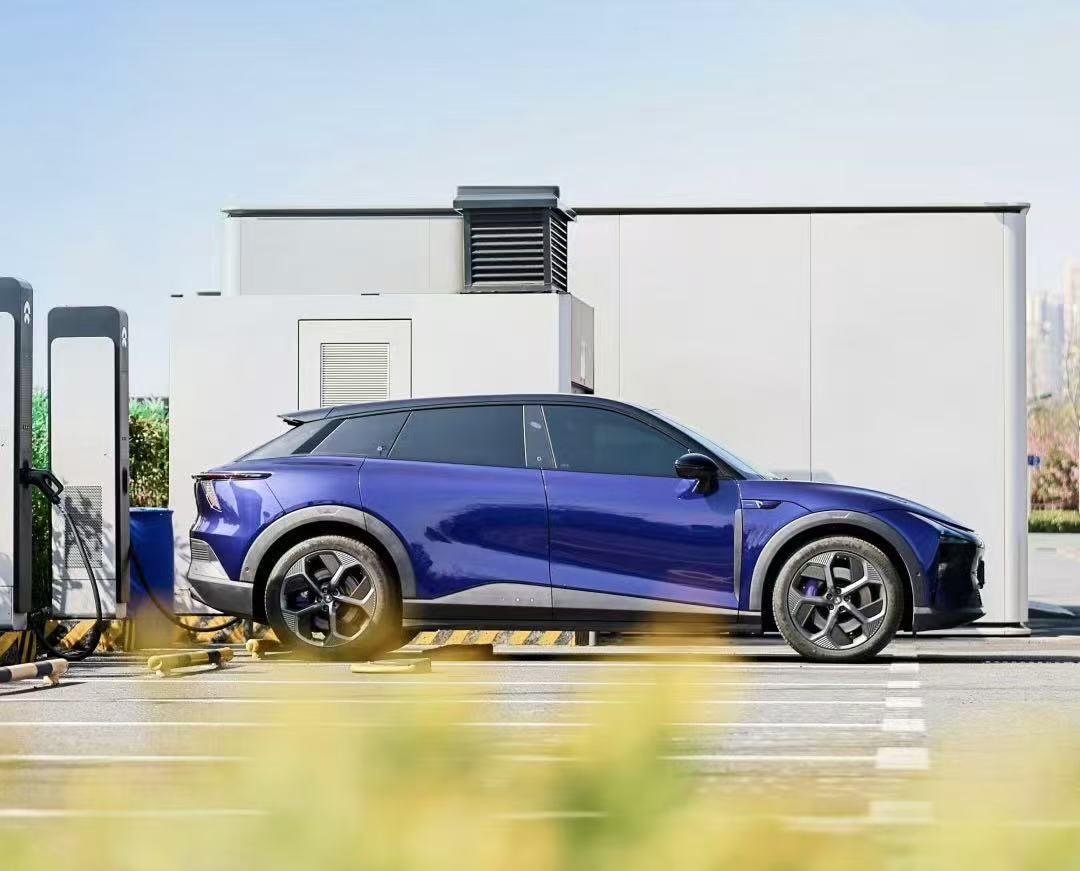
Image source: NIO
Behind those nine words lies a profound operational transformation.
In January of that year, NIO implemented a CBU (Core Business Unit) mechanism, requiring every major division to establish its own cost settlement center. R&D projects had to define expected returns at the outset and undergo closed-loop assessments upon completion.
An internal executive explained that the goal of the CBU system is clarity: ensuring the company understands exactly why money is being spent on specific projects and what return that cost generates.
This pragmatic approach to accounting stands in stark contrast to NIO's early image of spending at any cost. Crucially, "saving" doesn't mean stopping spending—it means spending where it counts.
Li has publicly stated: "NIO is the first automaker listed in three markets. We've invested nearly 60 billion yuan in R&D, yet our intangible assets on the balance sheet are just $4 million. That's because we hold ourselves to the highest financial standards. Where the money has gone is crystal clear and transparent—that is a requirement we place on ourselves."
Despite the push for efficiency, NIO's R&D spending in the first half of 2025 still exceeded 6 billion yuan. Li's reasoning: "NIO focuses on the 'long-term needs' of intelligent driving. This technology must deliver value and reduce accidents."
On July 1, 2025, Li wrote in a lengthy social media post: "In exploring self-developed chips, we've paid our dues and are destined to face doubt and misunderstanding. But we believe in doing the hard work, making progress day by day, and achieving success through persistence."
That same day, he announced that the application performance of the "Shenji NX9031"—the world's first self-developed 5nm automotive-grade intelligent driving chip—had met design targets, marking a preliminary milestone in NIO's chip strategy.
Even as NIO delivered a profit, industry observers remain cautious. Cao Guangping, a partner at Chefu Consulting, noted in an interview with Gasgoo that while Tesla has achieved significant profitability through intelligence-driven innovation and cost-cutting, most NEV makers struggle. In his view, NIO's profitability is weighed down by three heavy burdens: massive R&D spending, hefty investment in battery swapping, and extensive service networks.
When battery swapping stations were dismissed as "money pits" and 60 billion yuan in R&D spending was ridiculed as wasteful, few believed these "heavy assets" would one day become "hard assets."
Behind the Doubts Lies an Unshakable Technological Foundation
If the operational shift in 2025 answered the question of "how to spend," then Mirattery and Shenji provide the answer to "where to spend."
Mirattery has secured state-owned assets' backing, while Shenji has shipped over 150,000 chip sets and achieved a valuation approaching 10 billion yuan in the capital markets.
The Mirattery story began in 2020, when NIO partnered with CATL and others to establish a battery asset company and launch Battery as a Service (BaaS). Consumers could choose a "vehicle-battery separation" model to lower the upfront purchase cost, while Mirattery handled the full lifecycle of the batteries, creating a closed loop from operation to recycling.
The model faced skepticism from the start. NIO had to front massive battery procurement costs, tying up capital on its balance sheet. One industry insider put it bluntly: "It's too heavy. Only NIO would dare to play this game."
Yet Li's logic has always been clear: batteries are the core asset of electric vehicles. Whoever masters their lifecycle management can build a long-term moat in energy services.
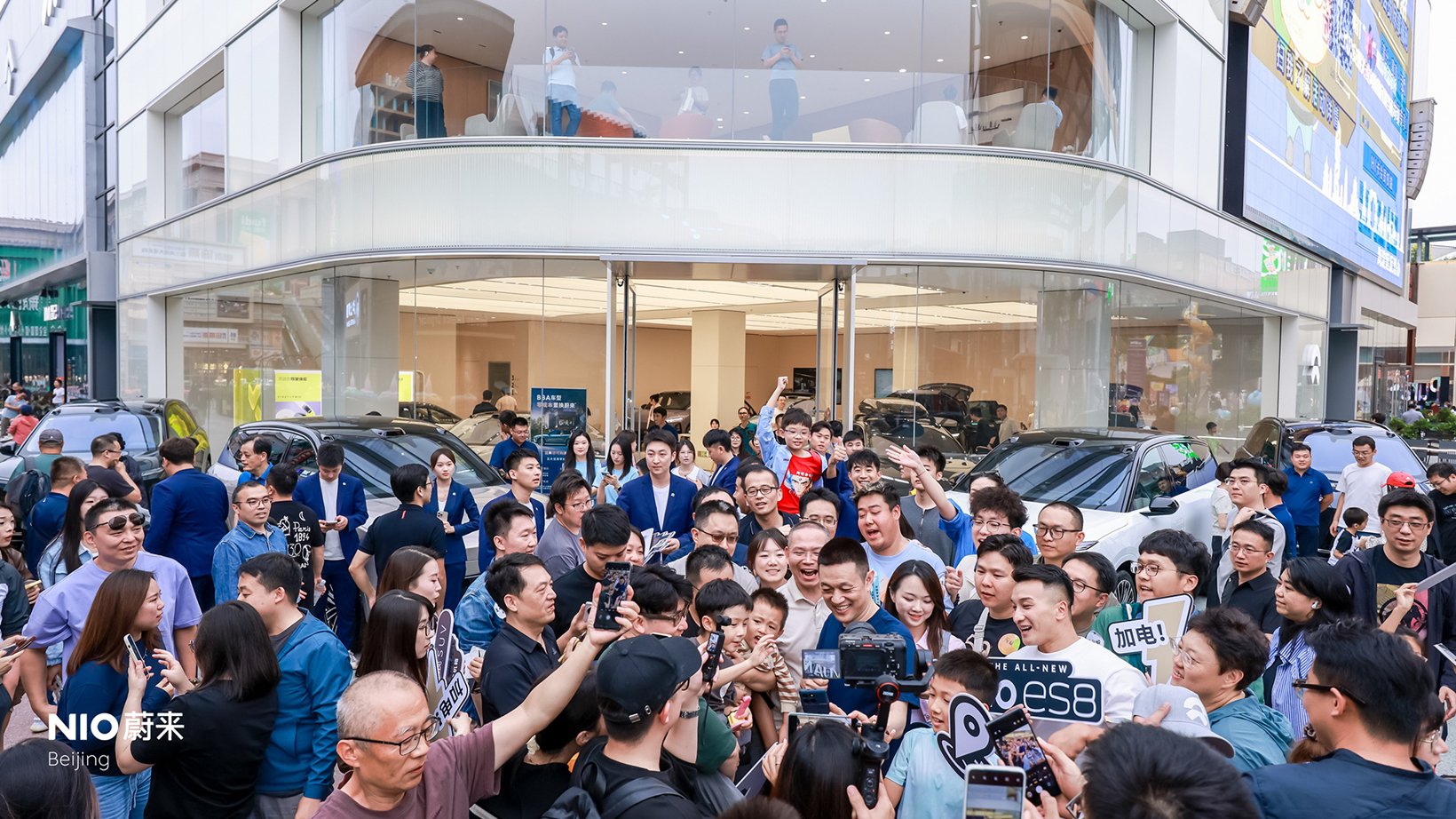
Image source: NIO
By February 2026, Mirattery's operational battery assets exceeded 42 GWh, serving over 550,000 users. By the end of 2025, the company had filed 196 patent applications, with invention patents accounting for roughly 60% and battery technology patents making up over 85%.
The Shenji story started later, and carries even more weight.
In 2021, NIO decided to develop its own intelligent driving chips. The skepticism was relentless: "Why should a carmaker build chips?" "When will billions in R&D ever pay off?"
Developing a single automotive-grade chip is estimated to cost between 3 billion and 4.5 billion yuan. Li did the math: "The R&D cost for the Shenji NX9031 is roughly equivalent to building 1,500 battery swapping stations." But he remains convinced that the chip is the "digital heart" of a smart car—and in the era of intelligent competition, that heart must be controlled in-house.
In July 2024, the 5nm automotive chip "Shenji NX9031" successfully taped out. By March 2025, it debuted in the flagship ET9 before rolling out to all new NIO models. As of the February 2026 financing announcement, cumulative shipments of Shenji chips had surpassed 150,000 sets.
Li ran another set of numbers: self-developed chips "deliver roughly 10,000 yuan in cost savings per vehicle." Based on the main brand's 2025 sales of 179,000 units, and excluding future R&D costs or external sales, the initial investment could be recouped in about 18 months.
That means Shenji has already begun its transition from a pure "cost center" to a "profit center."
To achieve these goals, Li outlined NIO's three core tasks for the year: unwavering investment in technology and product R&D continued construction of battery swapping infrastructure and sales networks; and sustained organizational reform across the company.
Li added that the challenge this year is to "do the most with the least," fully optimizing the CBU (Customer Based Unit) mechanism to drive efficiency and cut costs.
Riding the Tide: State Backing and Heavy Bets from Industrial Capital
In this funding round, local state-owned entities like Hefei Construction Investment and Hefei Economic Development Zone became new shareholders in Mirattery. Behind the chip business lies a roster of top-tier industrial capital, including IDG Capital and China Fortune-Tech Capital.
The closing of these two deals in February 2026 marks the moment these long-term bets began to pay off.
For Mirattery, the 1 billion yuan C3 round brought the total Series C funding to nearly 2 billion yuan. Notably, new shareholders Hefei Construction Investment and Hefei Economic Development Zone are both state-owned. Combined with previously introduced investors like Haining Economic Development Zone, Hainan Chengmai, and Meishan Dongpo, the strength of state capital in Mirattery's shareholder roster has grown significantly.
Why the rush of state investment? The answer lies in the industry's prevailing winds.
Under the "dual carbon" goals, the recycling and cascaded utilization of retired power batteries are seen as a new blue ocean. As the NEV fleet grows rapidly, battery asset management has become a critical link. Its full lifecycle digital management is essential for cutting costs, improving efficiency, and promoting resource recycling. The concentrated entry of multiple local state-owned entities signals that state capital is accelerating its layout in niche segments of the NEV aftermarket.
In February 2026, Mirattery successfully issued the world's first holding-type power battery REIT, raising 501 million yuan. This marks Mirattery's transition from a mere "asset holder" to an "asset manager." Batteries are no longer a burden weighing on the balance sheet; they have become "hard assets" that can be securitized and generate stable cash flow.
For Shenji, a first-round funding of over 2.2 billion yuan closed on February 26, valuing the company at nearly 10 billion yuan. Investors included local state-owned entities Hefei State Investment and Hefei Haiheng, alongside industrial capital firms like IDG Capital and China Fortune-Tech Capital. Post-deal, NIO retains a 62.7% controlling stake.
Industry insiders point out that the mass commercialization of Shenji chips breaks the monopoly of international giants in the high-end automotive chip sector. This financing will help domestic chips overcome technical barriers and accelerate industrialization.
Even more noteworthy is that Shenji's business boundaries are expanding. Beyond serving NIO, the company is actively exploring emerging scenarios like embodied robotics and Agent reasoning, planning to launch chips and smart hardware solutions for the AGI era. This path of "internal incubation plus external financing" mirrors the evolution of Amazon AWS from an internal service to a standalone business.
As Li told employees before the Chinese New Year: "Do the biggest things with the smallest budget." Spinning off the chip business for independent operation is a direct application of that philosophy.
How to Understand NIO's "Hard Asset" Logic?
Mr. Cao adds that for startups to fundamentally turn their finances around, relying solely on financing won't suffice in the long run. The real solution lies in cracking the profitability model for pure EVs and using core technological innovation to make electric vehicles genuinely surpass internal combustion engine cars in function and performance.
This perspective offers a useful contrast to NIO's "hard asset" logic. NIO has chosen a different path: neither abandoning battery swapping nor cutting R&D, but instead using scale to dilute costs, asset securitization to unlock value, and technology to build barriers. Whether this path will succeed will be critically tested by NIO's performance in 2026.
Viewing Mirattery and Shenji together reveals a clear picture: NIO's early expansion—once criticized as "overreaching" and "profligate"—is now generating value from two directions simultaneously.
Mirattery proves that a heavy-asset model can work—building user stickiness and an energy service network to attract state capital. Shenji proves that heavy tech investment can be monetized—mastering core computing power through in-house chips to attract heavy bets from industrial capital.
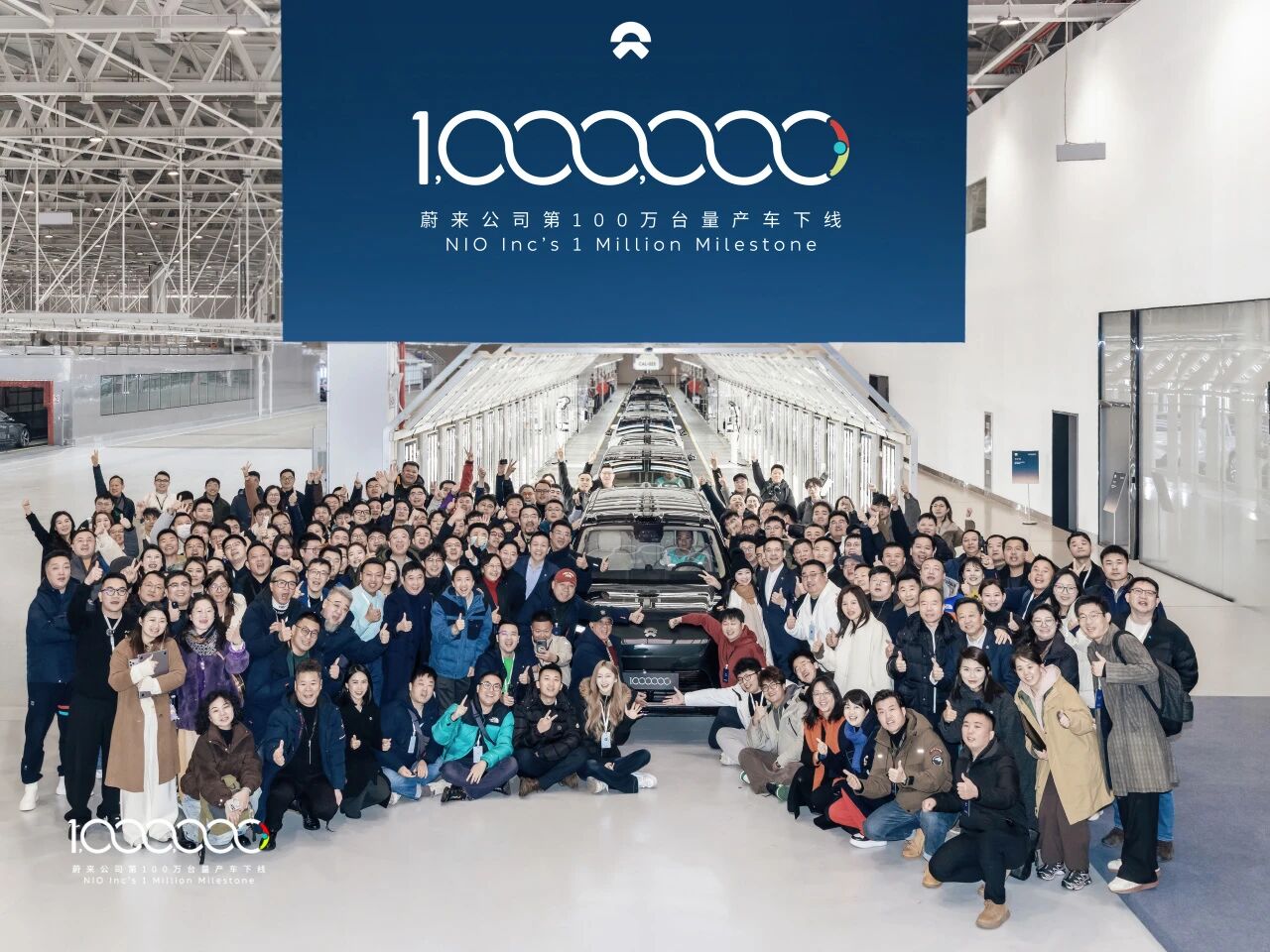
Image source: NIO
One commercial, one technological—both point to the same conclusion: NIO's heavy investments from years past are evolving into competitive barriers that rivals will find difficult to replicate.
This transformation is underpinned by three layers of logic:
First, scale effects are diluting fixed costs. NIO delivered 326,000 vehicles in 2025, up 46.9% year-on-year; reaching the 1 million cumulative sales mark in January 2026 significantly lowered the unit costs of heavy assets like swapping stations and R&D platforms. NIO Vice President Shen Fei once revealed that in Shanghai, as long as swapping stations can be built, they turn a profit—"Shanghai does 9,000 swaps a day, and is close to hitting 10,000."
Second, asset securitization is broadening monetization channels. Mirattery's battery REITs and Shenji's external financing both use the power of the capital market to "unlock" early investments, giving heavy assets liquidity and an independent valuation.
Third, strategic value is winning external validation. State-owned capital entering Mirattery and industrial capital betting big on Shenji signal that the market is beginning to understand NIO's game—layouts once mocked as "money pits" are now churning out profitable businesses.
Against the backdrop of increasingly fierce competition, the significance of this "hard asset" logic is becoming even more pronounced.
In the second half of the smart car era, the competitive focus is shifting from electrification to intelligence. With architectures like end-to-end, VLA (Vision-Language-Action), and world models coming online, intelligent driving R&D demands more from on-board inference chips. The fact that top manufacturers like XPENG, BYD, and Li Auto are all laying out their own chip strategies confirms this trend.
At the same time, the battery—being the most core and expensive component of an EV—means lifecycle management capability is becoming an automaker's "second growth curve." As purchase tax subsidies fade, the BaaS battery rental model gains a competitive edge because the battery price is excluded from the taxable base. Li predicts that by 2030, the penetration rate of new energy vehicles will exceed 90%, with pure electrics accounting for over 80%.
That means now is the critical moment to lay out these "hard assets."
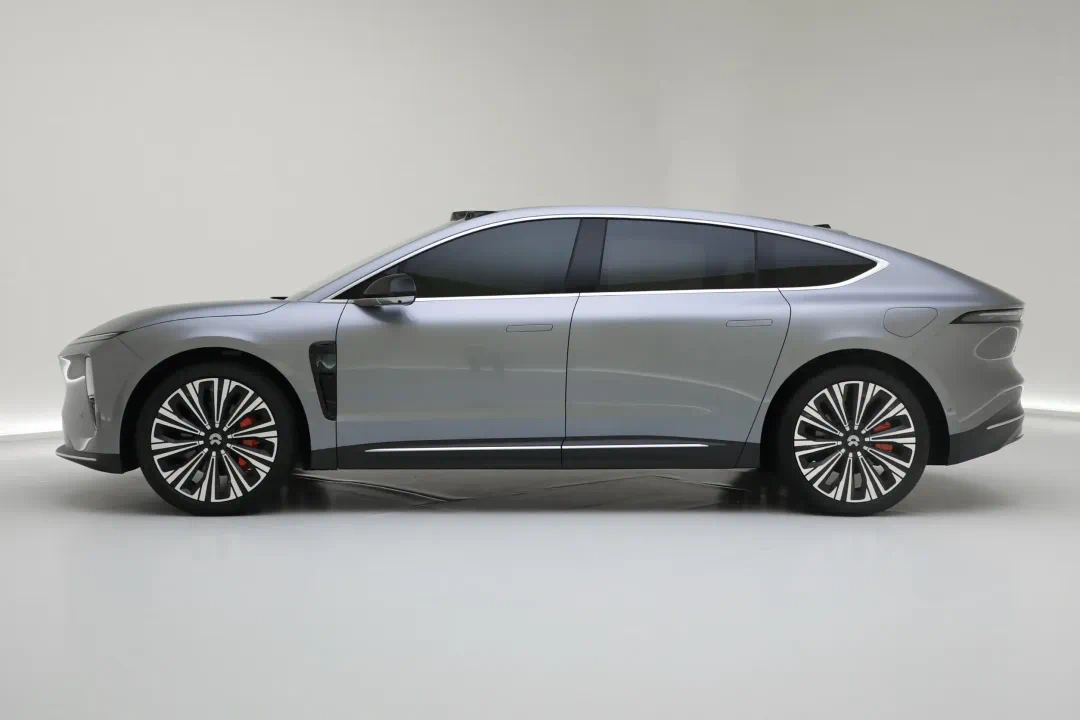
Image source: NIO
Notably, 800 battery swapping stations have already been integrated into the grid's peak-shaving system, potentially contributing an additional 500 million to 1 billion yuan in annual revenue. The self-developed chip, once deemed a doomed venture, now not only saves about 10,000 yuan per vehicle but has also secured a valuation of nearly 10 billion yuan in the capital markets. The money that was "visibly lost" is transforming into a competitive barrier that rivals cannot replicate.
From "burning cash" to "making money," from "cost center" to "profit center," from "heavy assets" to "hard assets"—NIO's "harvest season" has only just begun. And the technologies and models it persisted in amid the skepticism are becoming its greatest source of resilience for navigating the cycles ahead.


