



Gasgoo Munich- The U.S. auto market showed resilience in 2025 despite supply chain turmoil, tariff policies, inflation, and high interest rates. Full-year sales reached about 16.2 million. This was the best performance since 2019, with a year-on-year increase of roughly 2%.
However, this performance reflects a complex landscape. It indicates a market where leading firms strengthened their position rather than a universal recovery.
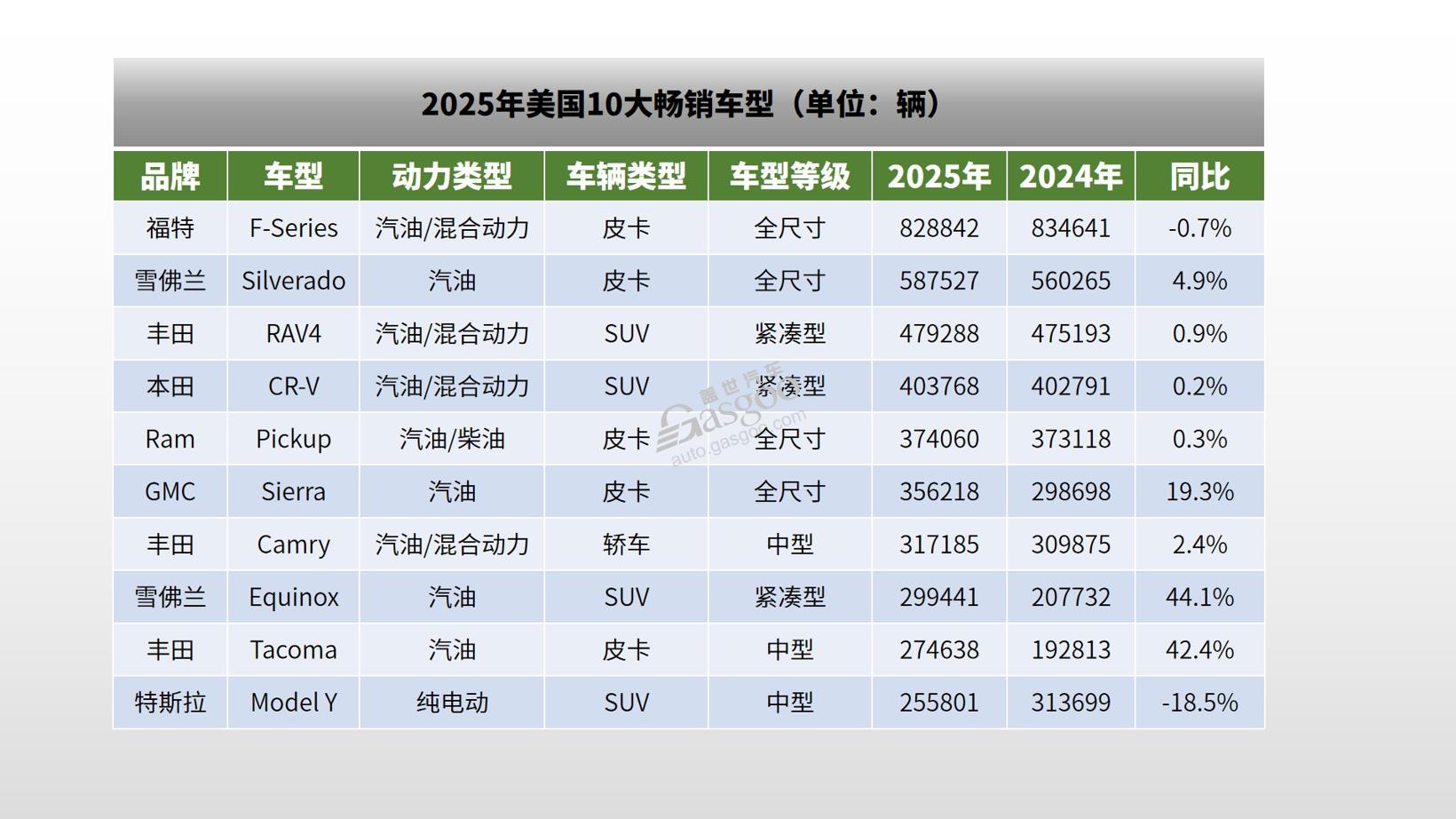
The list of best-selling models highlights a clear trend: pickup trucks and SUVs dominate. Five of the top ten models in 2025 were pickups, and four were SUVs. The Ford F-Series led with over 828,000 sales. It remained America's best-selling vehicle for the 44th consecutive year. Sedans had only one representative: the Toyota Camry.
Data fluctuations reveal underlying shifts in consumer behavior. The 2025 market was shaped by two policy milestones: tariff hikes triggered advance purchases, and the expiration of the federal EV tax credit spurred a buying frenzy in the third quarter.
This rush caused a market cooldown in the fourth quarter, with pure electric vehicle (EV) sales falling sharply. Tariffs kept average transaction prices high. Elevated ownership costs remain a threat to the industry.
The 2025 top ten list is more than a sales ranking. It illustrates the interplay between economics, culture, psychology, and policy. It shows what values consumers prioritize in a mature market.
Data source: Gasgoo Automotive Industry Big Data Platform
Why Pickups Are the Dominant Force in the U.S. Market
Although cumulative sales dipped slightly by 0.7%, the Ford F-Series reached nearly 830,000 units. It retained the annual sales championship in the U.S. market with a clear lead.
These figures are a key profit pillar for Ford Motor Company.
The Chevrolet Silverado followed in second place with 587,500 units, up 4.9% year-on-year. Combined with the GMC Sierra (356,000 units, up 19.3%), this marked General Motors' best performance in the full-size pickup segment in nearly 20 years. The Ram Pickup series ranked third with sales of 374,000 units. The Toyota Tacoma saw a strong recovery in the mid-size segment, with sales surging by 42.4% year-on-year.
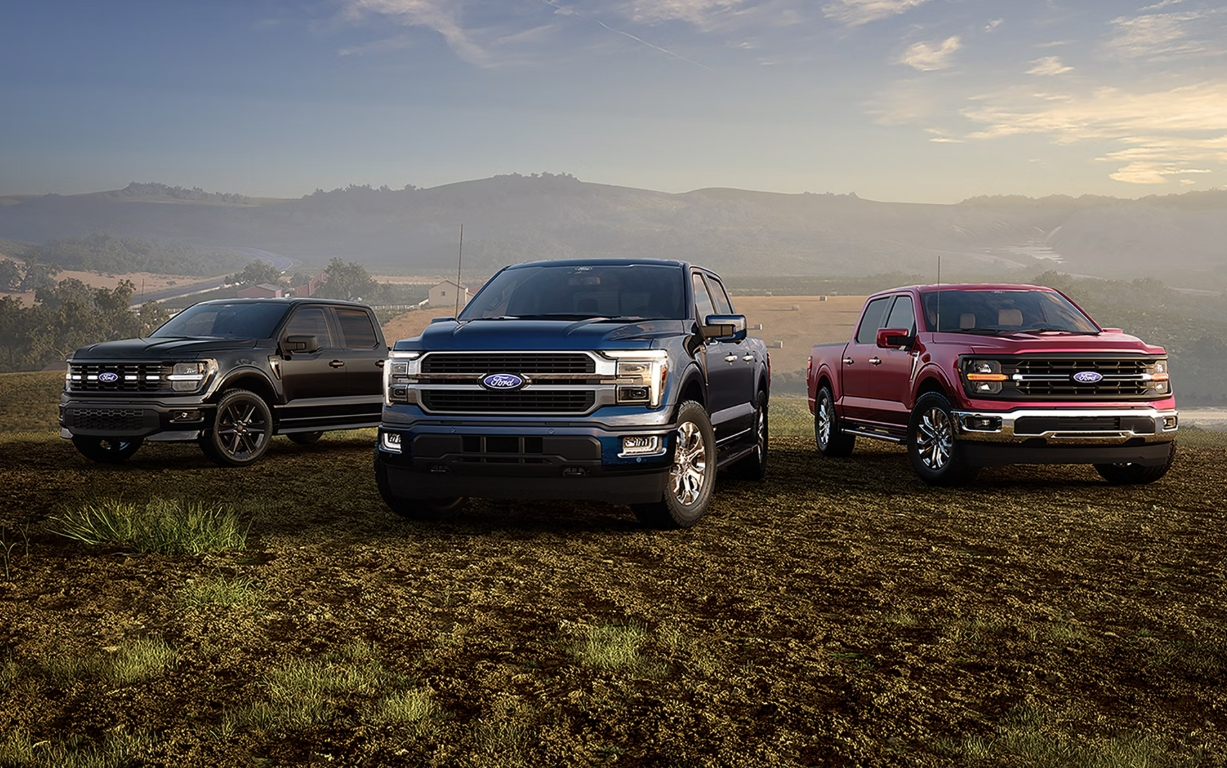
Image source: Ford Motor Company
Five pickups in the top ten bestseller list, with total sales approaching 2.5 million units, indicate a strong U.S. market preference. The popularity of pickups stems from economic factors, cultural identity, and geography.
Economically, pickups are profitable tools. For Ford and GM, full-size pickups offer high profitability. For consumers such as sole proprietors and farmers, pickups offer tax benefits. Under IRS Section 179, business owners can fully deduct the purchase price of qualifying pickups. This mechanism effectively stimulates pickup sales.
Culturally, pickups symbolize "rugged individualism." Ford's "Built Ford Tough" slogan reinforces the connection between pickups and resilience. Advertising imagery appeals to the pioneering spirit. The typical Ford F-150 buyer is predominantly male, viewing the vehicle as a reflection of identity.
Geographically and infrastructure-wise, pickups are well-suited to the U.S. Over half of U.S. roads are rural highways. Many people live in suburbs or rural areas, requiring long-distance commuting. In this environment, the versatility and capability of pickups are practical advantages.
The rise of the Toyota Tacoma reveals further market segmentation. As full-size pickup prices increase, urban users and outdoor enthusiasts are favoring mid-size pickups. These vehicles offer better fuel economy and flexibility, suiting daily city driving while maintaining lifestyle appeal.
This evolution signals that pickup dominance is stable and expanding to a broader audience.
Diversification of the SUV Market
If pickups represent pragmatism, SUVs represent American family values.
Four of the top ten models in 2025 were SUVs: the Toyota RAV4, Honda CR-V, Chevrolet Equinox, and Tesla Model Y. They range from compact to mid-size and include hybrid and pure electric versions.
With sales approaching 480,000 units, the Toyota RAV4 was the best-selling SUV in 2025 and the third best-selling vehicle overall. Its performance demonstrates the appeal of balance and reliability. For most households, SUVs meet varied needs like commuting and travel. They offer a higher seating position, flexible space, and capability.
The SUV market is undergoing diversification. The Chevrolet Equinox was the fastest-growing model in the top ten, with a 44.1% year-on-year increase. The Tesla Model Y saw an 18.5% sales decline, the steepest drop in the top ten. This reflects the policy environment and shifting consumer psychology in 2025.
The Equinox's growth highlights the strength of traditional fuel SUVs. The new generation model offers design and practical features that appeal to price-sensitive, reliability-seeking consumers.
In contrast, the Tesla Model Y slowed significantly. Annual sales fell by 18.5% year-on-year. The expiration of the federal tax credit caused a sharp drop in EV demand in the fourth quarter. Intensified competition was another factor. Competitors launched new mid-size electric SUVs, including the Ford Mustang Mach-E, Hyundai IONIQ 5, and Kia EV6. These models attracted potential Model Y customers.
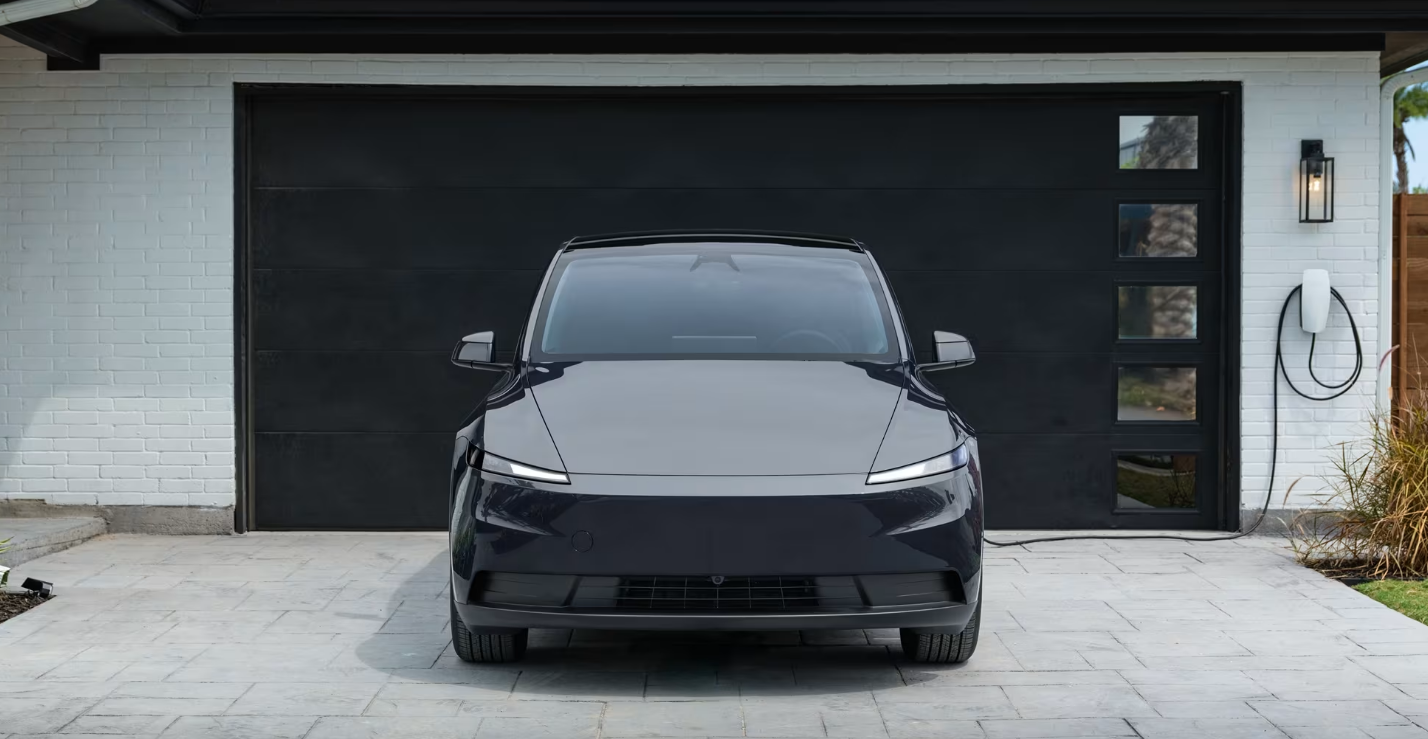
Image source: Tesla
The Model Y's decline reflects the transition from early adopters to mass consumers. Early buyers paid for innovation. Mainstream consumers demand reliable quality, service, reasonable pricing, and a convenient charging experience.
The Model Y's volatility illustrates this shift in consumer psychology.
In contrast to the EV slowdown, hybrid models grew significantly in 2025. Nearly half of Toyota's U.S. sales were hybrids. The Ford F-150 hybrid also achieved record sales.
Hybrids offer a balance between fuel economy and range anxiety. They require no changes in driving habits and reduce operating costs. Given fluctuating oil prices, this is advantageous. For families under financial pressure, hybrids offer a reliable solution that saves energy and reduces emissions.
The success of the Toyota RAV4 and Honda CR-V is tied to their hybrid versions. Hybrids are now a mainstream choice, outpacing pure electrics in growth. This reflects the pragmatic approach of American consumers: they support environmental protection without sacrificing convenience or financial security.
The Decline of Sedans and the Resilience of Japanese Brands
Amid the dominance of pickups and SUVs, the Toyota Camry ranked seventh with 317,200 sales. It was the sole representative of the sedan segment.
The sedan market share shrank further in 2025. The Camry's persistence, along with other Japanese models like the RAV4, CR-V, and Tacoma, highlights a consumer focus on reliability, practicality, and resale value.
Toyota Motor North America maintained high sales growth. Subaru's Crosstrek achieved record sales. This demonstrates that the success of Japanese brands is not accidental.
To understand this resilience, consider the concept of a "survival threshold."
In the U.S., a car is a critical tool for the working class. Losing a vehicle can mean losing a job and facing financial collapse. This pressure makes car purchasing decisions highly rational.
Under this pressure, reliability is essential.
Consumers prioritize reliability over specifications. Toyota and Honda address these concerns with decades of durability. They provide certainty rather than excitement.
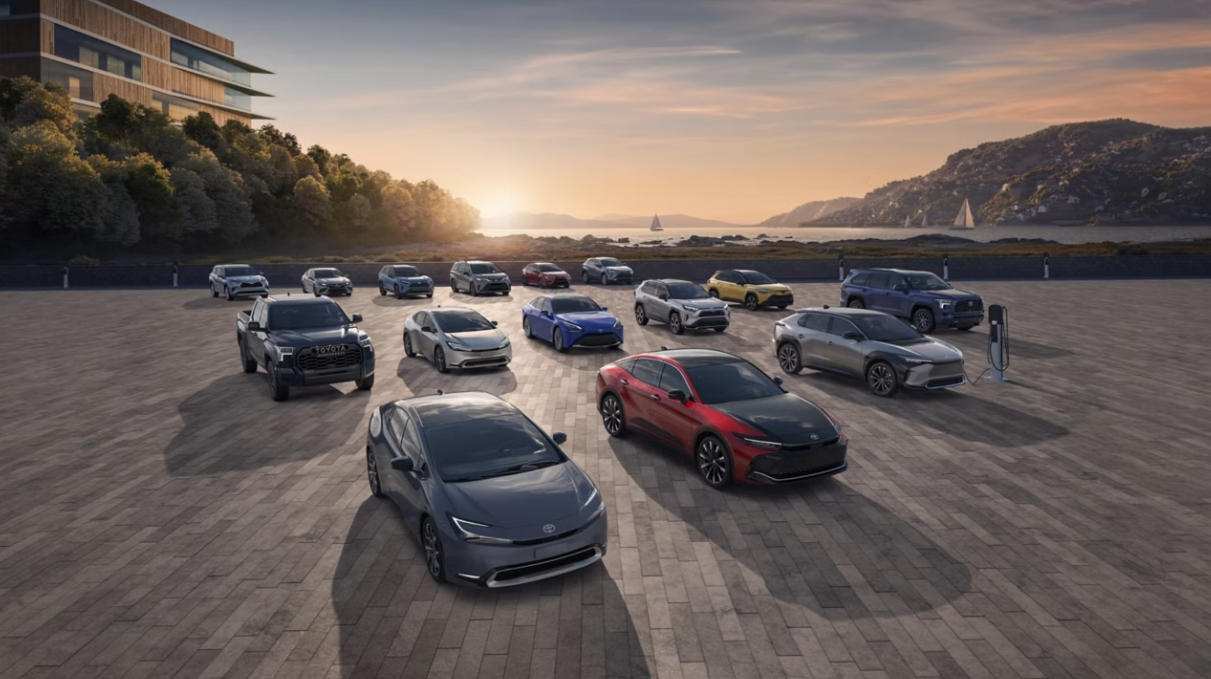
Image source: Toyota
Low failure rates help avoid high repair costs. U.S. labor costs are expensive, and insurance claims can lead to premium increases. Many families perform their own maintenance. Japanese cars, with simple structures and available parts, are easy to maintain. Additionally, their high resale value provides financial security. A three-year-old Corolla can retain nearly 70% of its value.
Japanese brands also align with the U.S. preference for functionality and safety.
Subaru's success is largely due to its all-wheel-drive system, which suits outdoor activities in snowy regions. Smaller brands like Mazda and Mitsubishi faced sales fluctuations due to tariffs. However, their focus on value and affordability appeals to the economy segment.
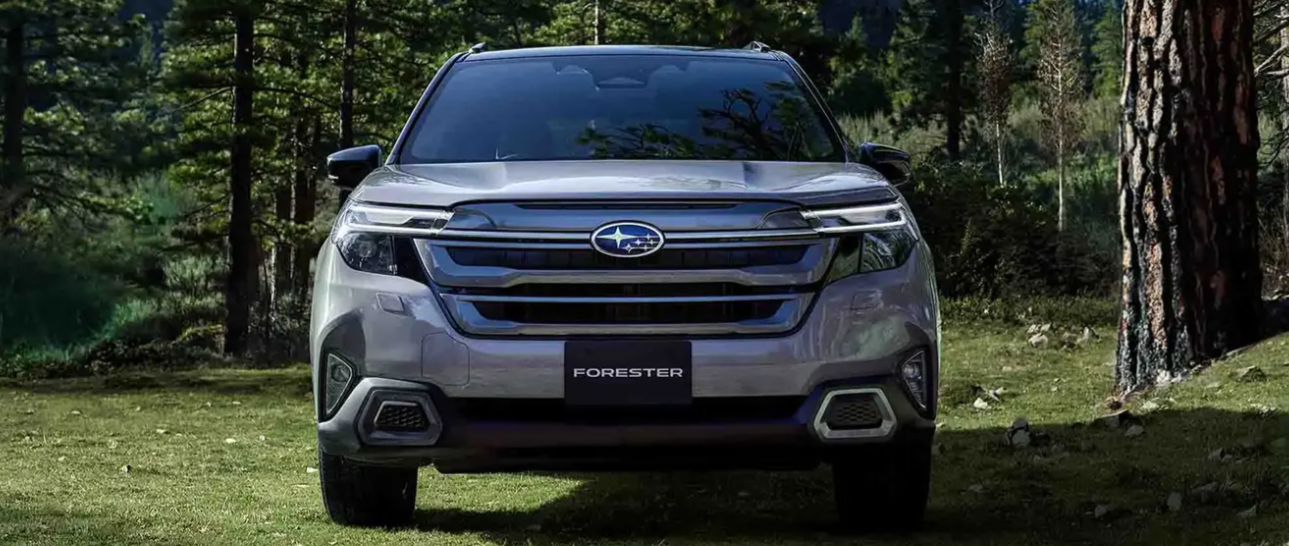
Image source: Subaru
The resilience of Japanese brands reveals a rational side of American consumption. Amid uncertainty and pressure, Americans choose time-tested options that maximize long-term interests. This psychology, rooted in socio-economic factors, underpins the U.S. auto market.
Summary:
The 2025 top ten list shows a market weighing consumer inertia, economic pressure, and change, rather than being overturned by new technology.
Pickup dominance is tied to economics, tax policy, and culture. SUV trends show families choosing between reliability and electric novelty. The 2025 policy shifts impacted EV demand, while hybrids remained popular. Japanese sedans demonstrate the enduring value of reliability and certainty.
The U.S. auto market is at a crossroads.
In 2026, slowing economic growth and tariff costs may increase prices. Competition will intensify. Electrification may slow, with hybrids expected to outperform pure electrics.
Despite market changes, 2025 data shows one clear fact. Successful products in the U.S. address the logic of "survival first, utility foremost, reliability as the foundation." The Ford F-Series and Toyota RAV4 succeed by providing reliable solutions for American lives.
For U.S. automakers, understanding the consumer needs behind this list is more important than chasing technological trends.


