



China's 2026 “Two Sessions” are underway. As the inaugural year of the 15th Five-Year Plan, the proposals submitted by delegates this year are, in many ways, mapping out China's industrial trajectory for the next five years.
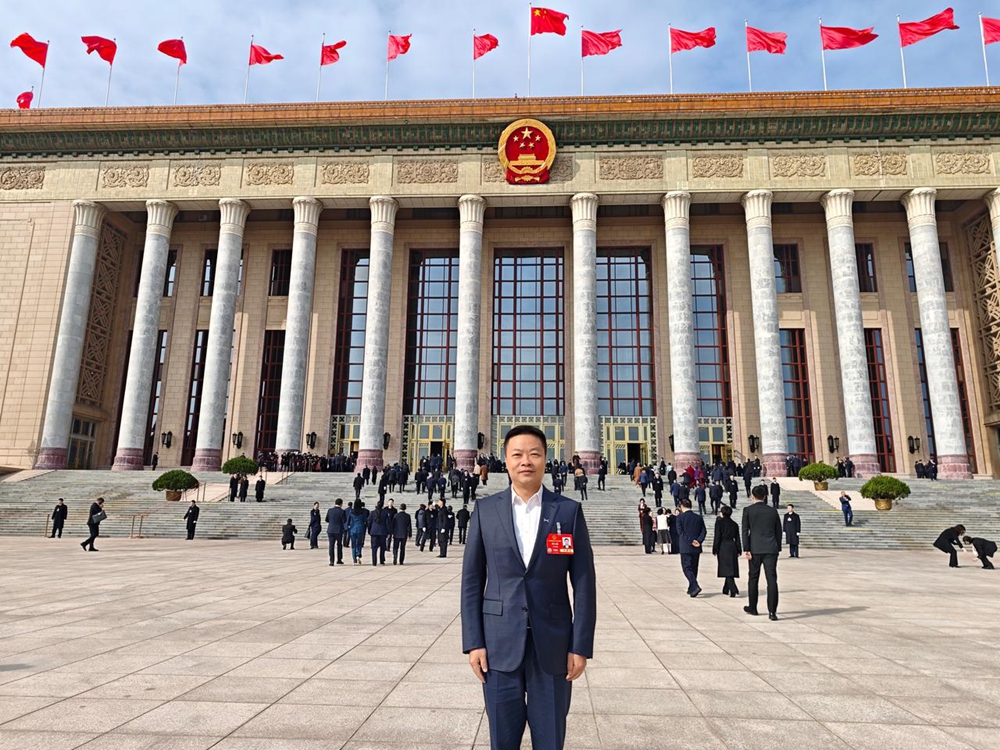
Image source: XPENG
XPENG Chairman He Xiaopeng submitted three proposals this year targeting autonomous driving, humanoid robots, and flying cars. At first glance, they represent three distinct tracks—smart vehicles, embodied AI, and the low-altitude economy. But read closely, and all three point to a single question: As technological iteration races ahead of regulation, how can institutional support “align”?
Autonomous Driving: Skip L3? Why Not Leap Straight to L4?
The keyword in He's first proposal is “leapfrogging.”
Currently, mass-market passenger cars in China are dominated by L2 driver assistance, while conditional L3 autonomous driving remains in the pilot stage. But He raises a point worth considering: Given the speed of AI-driven iteration, is it worth expending so much regulatory capital on the L3 “intermediate state”?
His suggestion is direct: simplify the intermediate steps of L3 while maintaining L2 safety oversight, thereby paving the way directly for L4 autonomous driving.
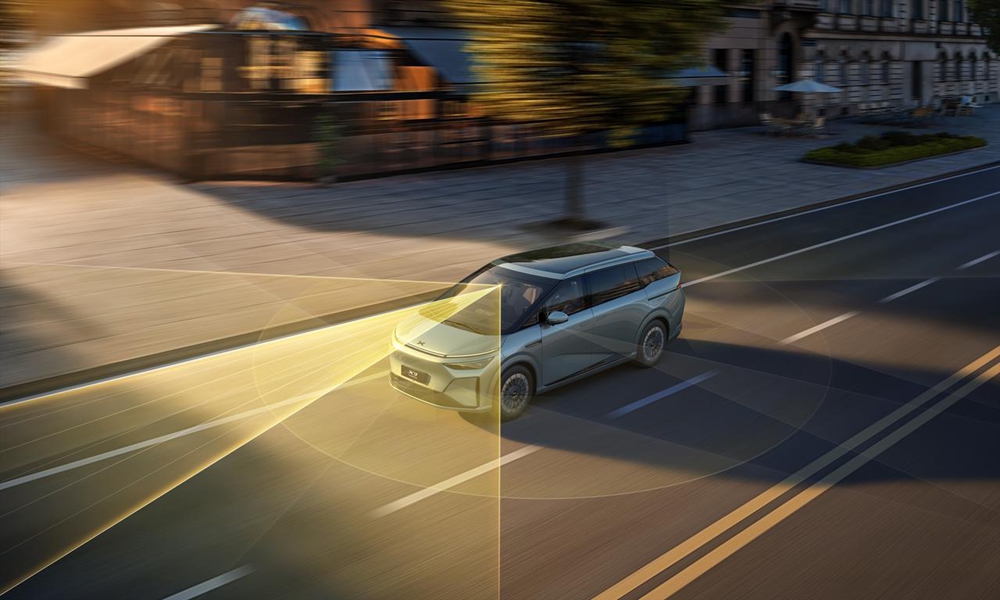
Image source: XPENG
The underlying logic here is straightforward. For years, the boundaries of L3 have been blurred—requiring drivers to take over at any moment while holding automakers legally liable, a result that pleases neither side. On the tech front, end-to-end large models are rapidly improving vehicles' ability to generalize across scenarios, and L4 architectures are already proving themselves in robotaxis.
He proposes gradually clarifying the registration and traffic management system for L4 vehicles and allowing cities with mature conditions to pilot consumer-facing L4 applications. In plain English: give cars that are truly capable the chance to actually hit the road.
An important backdrop here is that UN and US regulations for L3+ autonomous driving are accelerating, narrowing the global policy window. If China can establish a workable L4 management framework within this window, the first-mover advantage it enjoyed in the L2 era won't be eroded in the L4 era.
Humanoid Robots: Can't Just Have a Developed “Cerebellum,” Need to Grow a “Brain” Too
The second proposal focuses on humanoid robots. Public interest in the sector heated up noticeably after their appearance at the Spring Festival Gala this year. But in He's view, there is a structural risk behind the buzz.
The strength of current domestic humanoid robots lies in motion control—a developed “cerebellum” that walks steadily and flips nimbly. But in the “brain” department—autonomous thinking, decision-making, and task generalization—they trail their overseas counterparts. He specifically highlights a key term: “on-device local brain.”

Image source: XPENG
“On-device local” means deploying large models directly on the robot rather than relying on cloud calls. This is the only way to truly support robots working independently in industrial, commercial, and even household settings. If this lags, a generational gap could open up over the long term.
He's recommendations point in two directions:
First, introduce targeted R&D incentives and establish a national-level special fund to support the architecture development and training of on-device large models;
Second, referencing the autonomous driving grading standards in the auto industry, establish an intelligence standard system for humanoid robots, clarifying core metrics like computing power, data, and scenario generalization capabilities.
This line of thinking serves as a reminder: Humanoid robots are currently where new energy vehicles were a decade ago—technical verification is done, and the next step is moving from the lab to real-world scenarios. Whether that step succeeds depends entirely on whether the “brain” is up to the task.
Flying Cars: Airspace Management and Tax Classification—Two “Chokepoint” Regulatory Details
The third proposal targets the low-altitude economy. As a convergence of the low-altitude economy, new energy vehicles, and smart equipment, flying cars are currently in a phase where “technology is ready, but regulation is catching up.”
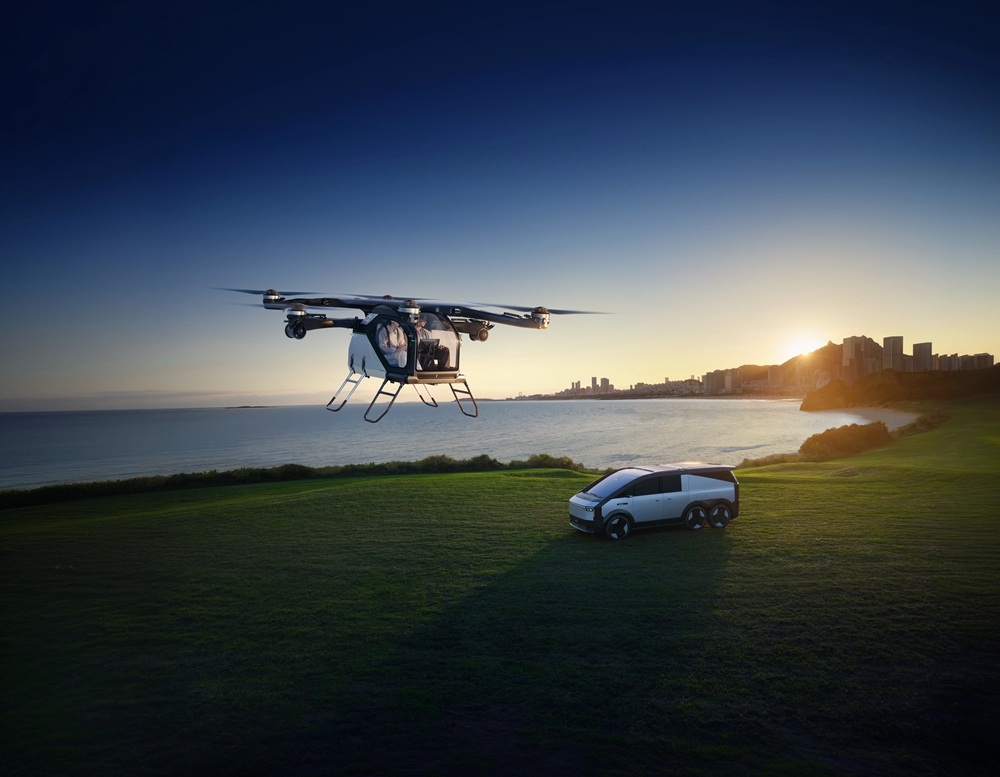
Image source: XPENG
He identifies two regulatory bottlenecks.
First is overly centralized airspace management authority. Low-altitude approvals currently involve military, local, and civilian parties, leaving little room for autonomous allocation by grassroots and market entities. He suggests selecting regions with mature industrial foundations for pilot programs in refined management and appropriately decentralizing airspace management authority to sub-provincial or higher local governments.
Second is unclear tax classification. As an emerging product, how flying cars are categorized in the current tax system directly impacts R&D and production costs. He proposes clarifying the tax classification for flying cars that meet airworthiness standards and implementing phased tax reduction policies to support the sector.
These suggestions may seem like minor details, but it is often precisely such details that determine the speed of industrial scaling. If companies burn time and money on approval processes and policy uncertainty, even the most advanced technology won't move fast.
Conclusion:
He's three proposals correspond to autonomous driving, embodied intelligence, and the low-altitude economy—precisely the “new quality productive forces” outlined for cultivation in the 15th Five-Year Plan recommendations.
Interestingly, the core of these three proposals isn't “we need to increase R&D investment” or “we need to overcome a specific technical hurdle,” but rather “how should the system be reformed?”
Behind this lies a judgment: 2026 is not just a year of continued technological breakthroughs, but a critical node where institutional support and industrial scaling must achieve “alignment.”
In recent years, China's success in new energy vehicles has been largely due to the resonance of policy and industry. Now, on the tracks of autonomous driving, humanoid robots, and the low-altitude economy, history is repeating itself with similar logic—technology has taken off, and the question is whether regulation can keep pace.
In his proposals, He uses a phrase about letting technological achievements truly step out of the lab to become a tangible reality in the skies above cities, on the roads, and within household scenarios.
That sounds like a vision, but on closer inspection, it is actually the result of achieving “alignment.”


