Gasgoo Munich- BYD established a presence in a large, competitive market with a single product.
In September 2025, Fangchengbao launched the Titanium 7. Positioned as an SUV with a "rugged exterior and a family-focused core," the model quickly changed the brand's image as a niche player for off-road enthusiasts, achieving a significant market breakthrough.
Sales exceeded 50,000 units within 80 days of launch, reaching 34,000 units in December alone. This performance reversed Fangchengbao's sales decline and established the model as the brand's sales pillar.
The Titanium 7's success extends beyond a single model's popularity. It addresses a long-overlooked segment: the demand among families for a rugged SUV that balances personal expression with practicality in the 200,000 to 250,000 yuan price range.
The Titanium 7 Achieves Strong Market Performance
Initially, Fangchengbao built its brand identity around the Leopard 5 and Leopard 8, focusing on specialized off-roading. Utilizing technologies like the DiSus-P hydraulic suspension, the brand targeted niche segments such as off-road enthusiasts and outdoor adventurers.
While this focused strategy established a distinct identity, it also imposed a market ceiling. Total sales struggled to grow, keeping the brand within niche territory.
The Titanium 7 launch marked a pivotal moment in the brand's strategic transformation. Through comprehensive repositioning, Fangchengbao achieved growth in both sales volume and brand reputation.
Strategically, Fangchengbao shifted away from "niche off-roading." Anchored by the Titanium 7, it implemented a dual-track strategy of "off-road plus family," shedding its niche label. This shift transformed the brand from a niche player to a mass-market contender, unlocking a new growth curve.
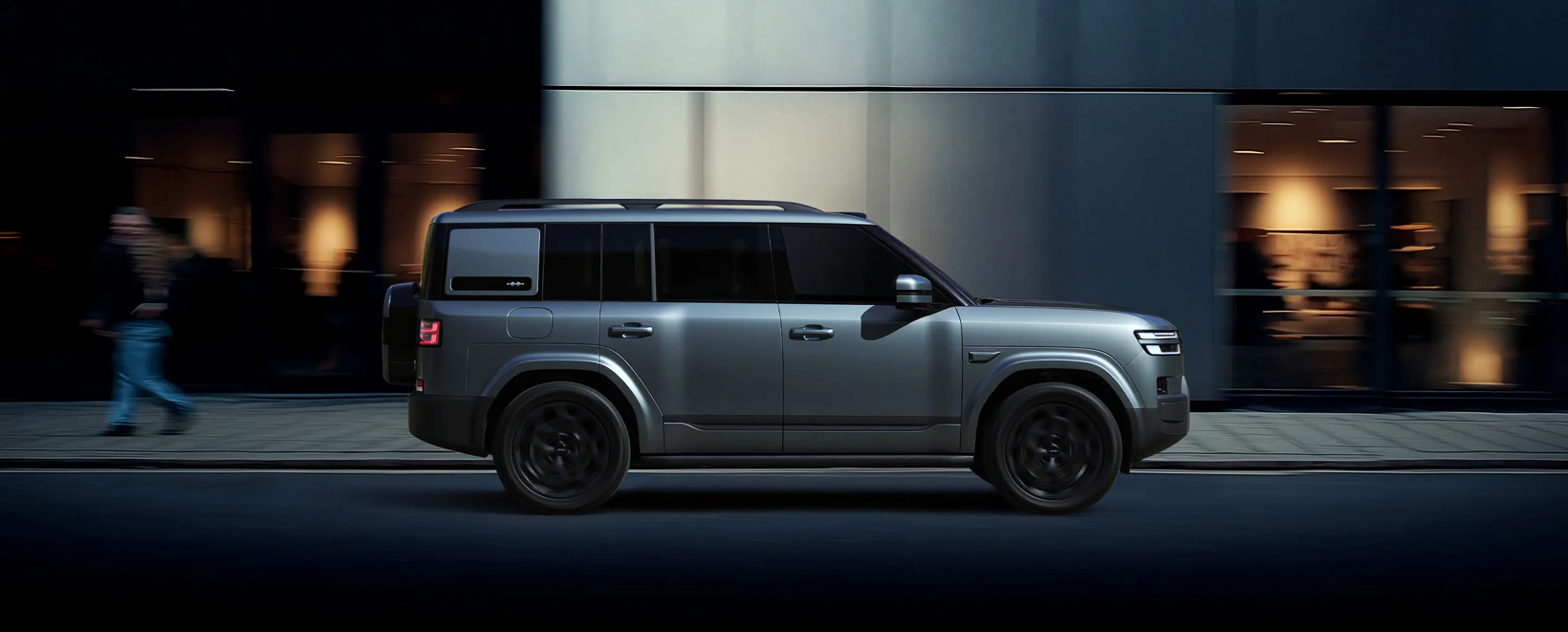
Image Source: Fangchengbao
Precise pricing was fundamental to the Titanium 7's sales growth. Priced between 179,800 and 219,800 yuan, it filled a gap in Fangchengbao's lineup for the mainstream 200,000 yuan market. Backed by BYD's system capabilities, the brand established a "competitive pricing and high quality" value proposition, lowering the barrier to entry for mass-market consumers.
Zhang Xiang, a visiting professor at Huanghe University of Science and Technology and secretary-general of the International Intelligent Transport Technology Association, noted: "The Titanium 7's top trim costs 219,800 yuan, which is lower than the frame-based Leopard. It is a light off-roader designed for both city and outdoor use. Without a heavy frame, it offers lower energy consumption and running costs compared to traditional body-on-frame models."
Strategic user expansion was equally critical. The Titanium 7 targeted practical families aged 30 to 39, prioritizing a blend of individuality and utility. This allowed the brand to expand beyond off-road enthusiasts and complement the extreme off-road users of the Leopard 5 and 8, as well as the urban commuters drawn to the Titanium 3. This broadened the user base, providing support for the increase in overall sales.
As the brand's first family SUV built on a monocoque hybrid platform, the Titanium 7 combines a "rugged, boxy exterior" with a "comfort-focused interior." It covers scenarios ranging from city commuting and family trips to light off-roading, marking a shift from "niche off-road" to "mass-market family" and aligning with the demands of mainstream consumers.
The Titanium 7's turnaround is evident in its growth in sales and reputation. In its first full month, deliveries reached 11,674 units, a record for a new Fangchengbao model. Cumulative sales exceeded 50,000 units within 80 days. By November, monthly sales climbed to 24,019 units, placing it among the top three mid-to-large SUVs. In December, sales reached a new high of 34,000 units.
The numbers reflect strong market validation of the product's value. The Titanium 7's average transaction price reached 210,000 yuan, with 85% of buyers choosing the top-tier 219,800 yuan all-wheel-drive Ultra trim. This ratio exceeds industry norms, confirming user acceptance of its "high-spec, high-value" proposition and challenging the assumption that affordable models rely on low-spec trims for volume.
The Titanium 7's popularity generated a halo effect, driving Fangchengbao's 2025 annual sales past 230,000 units, a 316% increase from 2024. The brand's average transaction price rose to 234,000 yuan, achieving growth in volume and pricing. This reversed the brand's previous struggles with low sales and limited influence.
Why the Titanium 7 Outperforms Its Siblings
The Titanium 7's success stems from its critical role in filling gaps within Fangchengbao's product matrix. By establishing clear distinctions from the Leopard 5, Leopard 8, and Titanium 3, the brand built a portfolio covering various segments, effectively avoiding internal competition.
The three models differ clearly in pricing, positioning, target audience, and feature focus.
Priced between 179,800 and 219,800 yuan, the Titanium 7 is positioned in the competitive range for family SUVs. It is a rugged hybrid SUV for families, balancing style with utility. Targeting cost-conscious families aged 30 to 39 who need versatility, it emphasizes premium family features and basic driver assistance, such as 360-degree imaging, ventilated and heated seats, and the "God's Eye" smart driving system. The top trim adds a lidar sensor and a highly efficient hybrid powertrain.
The Leopard 5 and Leopard 8 target the mid-to-high-end off-road market, priced at 239,800 to 329,800 yuan and 379,800 to 423,800 yuan, respectively. Both are specialized off-road SUVs focused on extreme capability. Aimed at off-road enthusiasts and adventurers, they feature components like the DiSus-P suspension, four-wheel-drive recovery systems, and heavy-duty off-road chassis.
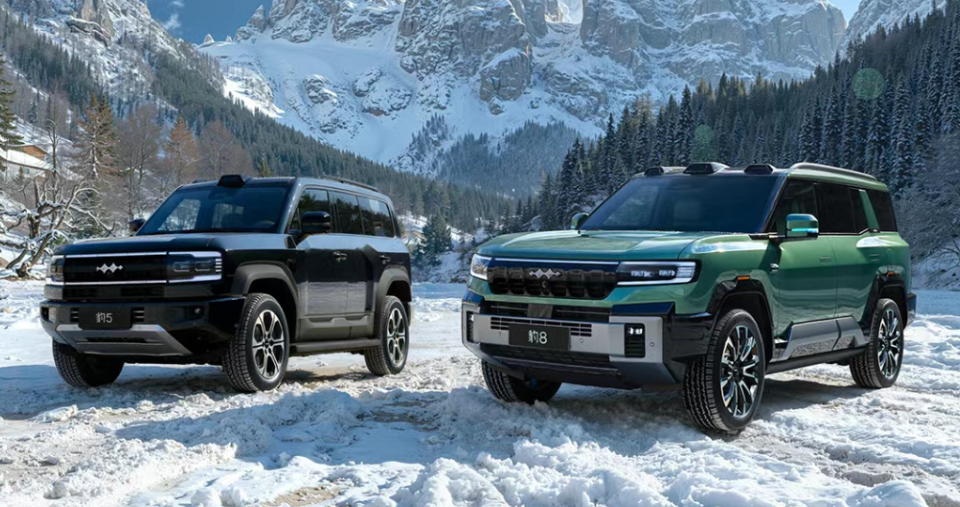
Image Source: Fangchengbao
The Titanium 3 is priced slightly lower than the Titanium 7 with streamlined features. Positioned as a pure electric city commuter, it emphasizes convenience for young urban professionals, focusing on electric range, a compact body, and basic infotainment functions.
This layout allows the Titanium 7 to avoid the positioning pitfalls of its siblings. Addressing the Leopard 5 and 8's "specialized off-road features, limited family practicality, and high price," the Titanium 7 emphasizes comfort and value. It retains the rugged look while optimizing interior space and ride comfort, and lowers the entry price.
Conversely, addressing the Titanium 3's limitations as a "single-purpose city car with limited styling and versatility," the Titanium 7 adds rugged styling and all-scenario capability. Due to its hybrid system and high ground clearance, it balances city commuting with light outdoor needs.
Ultimately, with its unique "rugged family" positioning, the Titanium 7 bridges the gap between niche off-roading and the mass family market. By combining "rugged styling, practicality, affordability, and premium features," it established a distinct segment within the brand, providing the leverage needed to enter the mass market.
Even Middle-Aged Drivers Seek Outdoor Adventure
The Titanium 7's success stems from filling a gap in the market, disrupting the competitive landscape of the 200,000 yuan SUV segment.
For years, this market has been split. On one side are city SUVs like the XPENG G6 and Li Auto L6, which dominate the mainstream family market with soft styling and comfort but generally lack distinctive design and off-road capability.
On the other are rugged SUVs like the Tank 300 and Jetour Traveler. Priced between 199,800 and 244,800 yuan, the Tank 300 has established a niche with its tough looks, but it faces challenges with fuel consumption and limited family features, restricting its audience.
The Titanium 7 captured unmet demand from drivers who wanted a rugged look but prioritized family practicality. It filled the "family rugged" segment gap.
Compared to city SUVs, its boxy design and ground clearance of over 21 cm offer stronger styling and capability for light off-roading. Compared to specialized off-road SUVs, it offers better pricing, superior efficiency, and more comprehensive family features. It balances individuality with utility, establishing a new competitive segment.
Professor Zhang Xiang highlighted the appeal of the design: "Its boxy shape fits the current trend among young people who value a distinctive aesthetic. Even if they do not need serious off-road capability, they may choose this car for its appearance."
The Titanium 7's competitive edge rests on three pillars: design, features, and cost. Regarding design, its 4,999 mm length and 2,920 mm wheelbase provide a rugged stance while maximizing interior space, making it suitable for diverse family needs like camping and storage.
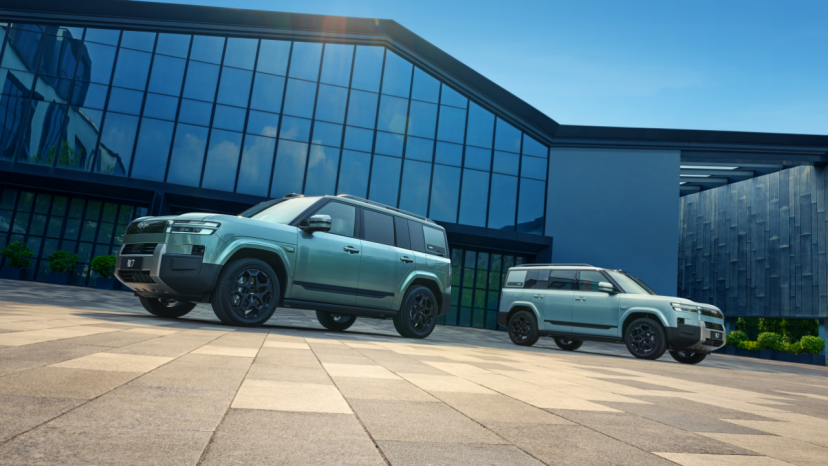
Image Source: Fangchengbao
Regarding features, it practices "tech democratization"—even the base model is equipped with a 1.5T hybrid system, 135 km of electric range, the "God's Eye C" driver assist, and 540-degree imaging. The top trim adds features like a lidar sensor, a 20-speaker audio system, and advanced autonomous driving. This specification outperforms competitors at the same price point, while leveraging BYD's driving data foundation for continuous software upgrades.
Regarding pricing and cost, the 179,800 to 219,800 yuan range offers better value than comparable rugged SUVs and commands a style premium over city SUVs. This cost control stems from BYD's vertically integrated system. By iterating on the fifth-generation DM hybrid technology, scaling up its proprietary Blade batteries, and employing supply chain cost-cutting, the brand achieves a "competitive price and high spec" formula that underpins its pricing strategy.
In its competition against key rivals, the Titanium 7 succeeded due to its differentiated advantages.
Compared to mid-to-high-end rugged SUVs like the Tank 400, it is more than 100,000 yuan cheaper. While retaining the rugged look, it offers comprehensive family features and better efficiency, attracting budget-conscious families who want that style.
Compared to family SUVs like the Li Auto L6, it has a lower entry price and stands out with its unique rugged design, attracting families looking for something distinctive.
This precise strategy allowed the Titanium 7 to avoid the saturated market of traditional city SUVs while breaking out of the niche confines of rugged off-roaders, rapidly expanding its market share.
Leveraging BYD's Strength
The Titanium 7's popularity propelled Fangchengbao to a new level, driving a transformation from a "niche off-road brand" to a "mainstream family brand."
As the brand's "sales engine," the Titanium 7 drove Fangchengbao's 2025 annual sales past 230,000 units, a 316% year-on-year increase, reversing the brand's previous sales performance.
More importantly, while increasing volume, the brand's average transaction price rose to 234,000 yuan. This preserved brand value and created a cycle of "rising volume and price," boosting the brand's influence in the mainstream SUV market and laying a foundation for future products.
The Titanium 7's success is an extension and implementation of BYD's systemic capabilities, validating the competitive logic that "systemic strength determines product strength."
Technologically, the Titanium 7 draws on BYD's resources, rapidly integrating the fifth-generation DM hybrid technology, Blade batteries, the DiLink cockpit, and the "God's Eye" system. These mature modules ensure core performance and shortened the development and iteration cycle.
Analyzing the technology application, Professor Zhang Xiang noted: "The Titanium 7 uses BYD's DiSus system. This system is widely used, benefits from economies of scale, and has low costs. It is difficult for other brands to replicate in the short term because BYD is China's largest NEV seller and has achieved significant economies of scale."
Image Source: Interviewee
On the supply chain side, BYD optimizes inventory turnover through full-process digital control, outperforming the industry average. This supported the rapid delivery of the Titanium 7 after launch. Meanwhile, scale effects and vertical integration enabled precise cost control. The strategy of parts commonality and a long-term focus on technology has created a unique cost advantage.
In production, flexible manufacturing met the demand for capacity ramp-up after the Titanium 7's launch. This ensured delivery efficiency while optimizing assembly processes to support large-scale supply.
The Titanium 7's market performance has reshaped the competitive landscape of the 200,000 yuan SUV segment. It challenged the assumption that "rugged equals niche and expensive," prompting brands like Tank and Jetour to accelerate the launch of family-oriented rugged SUVs and driving the industry toward a "rugged exterior, family interior" trend.
At the same time, the Titanium 7 disrupted the mid-to-large SUV market with its high value. By rewriting the competitive rules of "price, features, and styling," it attracted users from brands like Li Auto, AITO, and Tank, pushing the 200,000 yuan SUV market from an era of "homogenized competition" to one of "accessible technology and all-around capability."
Conclusion
The rapid success of the Fangchengbao Titanium 7 and the brand's subsequent turnaround are the result of a multi-dimensional synergy: precise strategic positioning, balanced product strength, robust systemic empowerment, and effective reputation management.
Professor Zhang Xiang commented on its market outlook: "The Titanium 7 currently leads in sales and is rising rapidly. It will be difficult for other brands to surpass it in the short term."
The Titanium 7 has established a new growth path for Fangchengbao, aiding its transition to a full-category brand. Moving forward, the brand must consolidate its first-mover advantage, optimize quality control, and accelerate smart driving iterations to fend off competitors. Its success offers a blueprint for other independent sub-brands: in a stagnant market, grasping user needs, leveraging strong systemic support, and building balanced products are the keys to achieving significant growth in brand scale.
Looking ahead, the Titanium 7's success has laid a solid market foundation and instilled growth confidence in Fangchengbao. The brand plans to launch a sedan series in 2026, signaling further diversification of its product matrix as it evolves into a full-category automaker.
However, challenges remain. As the Titanium 7 validates the potential of the "family rugged" segment, more competitors are expected to enter, intensifying competition. Therefore, while benefiting from the Titanium 7's growth, Fangchengbao must continuously optimize its advantages, transitioning from reliance on a "single successful model" to building "sustainable, full-category competitiveness."