



Gasgoo Munich- GAC's AION UT began rolling off the line at Magna's Graz plant in Austria on March 26. It marks the second model produced at the facility following the AION V. This signals a deeper partnership between GAC and Magna for localized European manufacturing.
Under its "One GAC 2.0" global strategy, GAC Aion has expanded into more than 40 countries and regions across Europe, Asia-Pacific, and the Americas. Establishing local production for a two-car lineup in Europe is a core pillar of GAC Group's "1551" internationalization strategy. This aims to sharpen global competitiveness by building a localized ecosystem.
Contract Manufacturing Model Takes Root
GAC Group's partnership with Magna began in November 2025, when the two parties announced plans to jointly produce vehicles in Europe. The collaboration spans manufacturing, supply chains, and sales operations. The aim is to scale up GAC's local production footprint. The pure electric SUV AION V is already in mass production at the Graz plant. The AION UT has officially joined the lineup.
GAC chose Magna primarily for its mature manufacturing systems and flexible production capabilities. The Magna Graz facility can assemble internal combustion engine vehicles, hybrids, and pure electric vehicles on a single production line.
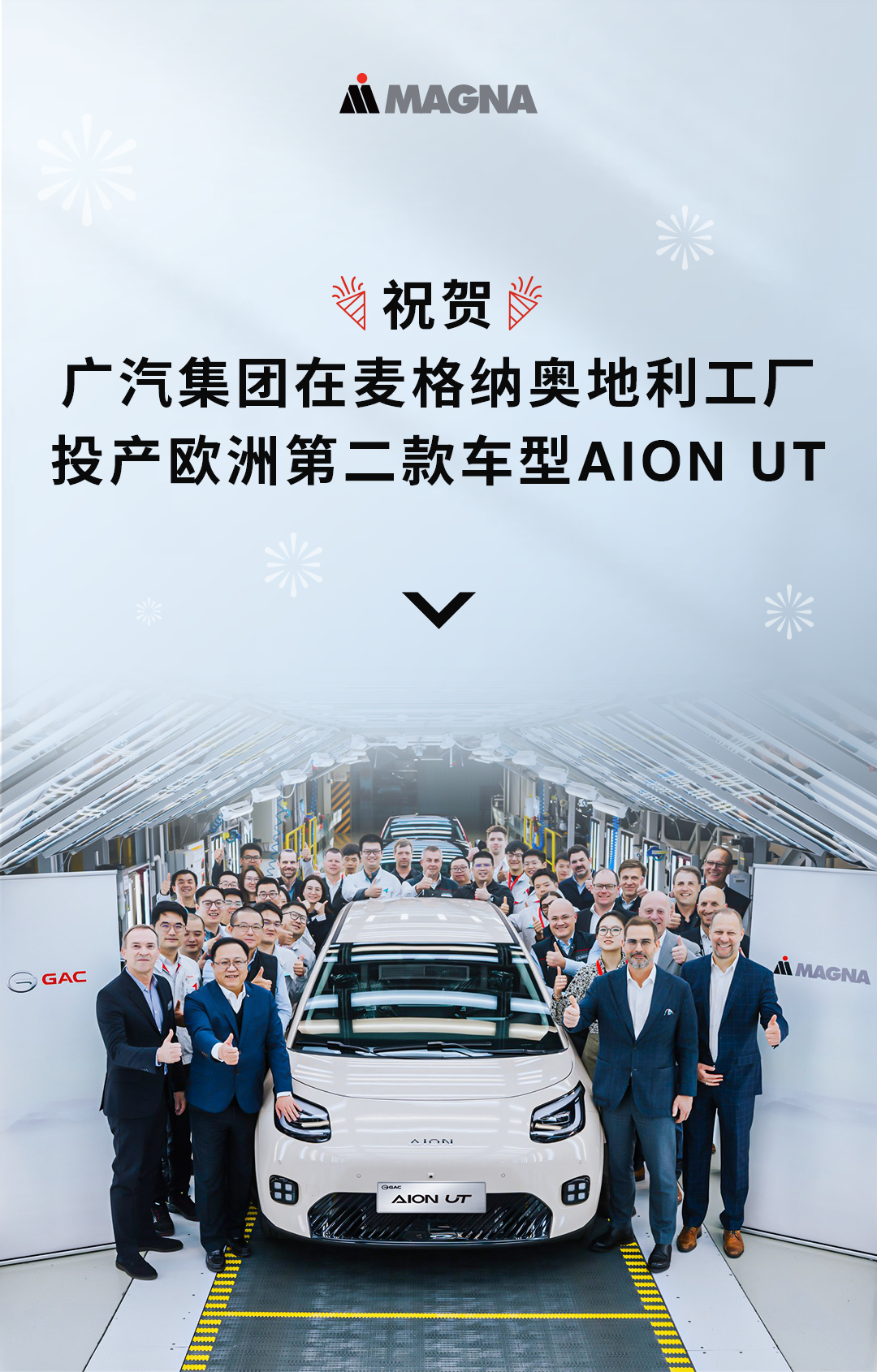
Image Source: Magna
Magna has produced over 4 million cars with 125 years of experience, enabling automakers to produce efficiently in Europe. Furthermore, Magna has provided vehicle engineering and manufacturing services to Chinese automakers for nearly two decades. This cross-continental model offers a roadmap for Chinese EV brands going global.
This partnership shortens the time-to-market for new models. It also mitigates the heavy capital risks of building proprietary factories from scratch. Leveraging Magna's local expertise, GAC can deliver locally assembled EVs to European customers. This allows for deeper integration into the regional supply chain.
Europe: A Strategic Market
Europe is a strategic market for Chinese automakers looking to boost global influence. GAC Group General Manager Feng Xingya notes that Europe's high brand loyalty makes entry difficult. However, the transition to new energy vehicles offers GAC a chance to seize opportunities. The company plans full European market coverage by 2028, supported by a comprehensive service network.
GAC Aion's European product lineup is taking shape. The AION V, the first model to launch in Europe, hit the market in September 2025. It has been delivered to customers in countries including Poland, Portugal, and Finland. The model meets European five-star safety standards and offers a WLTP range exceeding 510 kilometers.
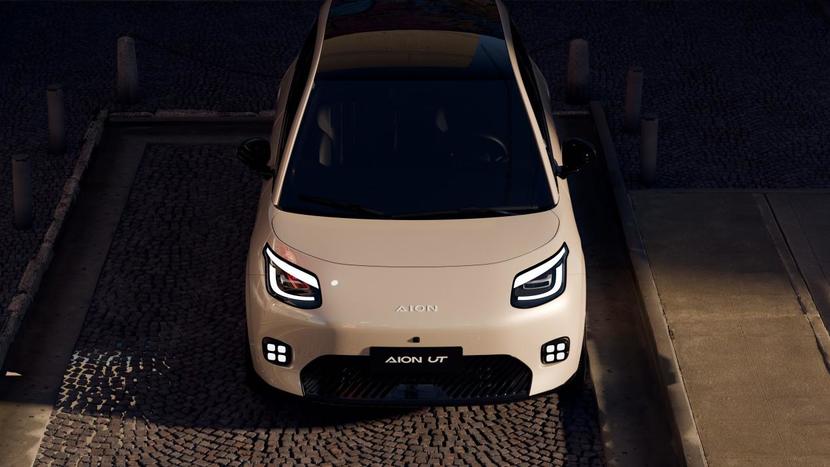
Image Source: Aion
The AION UT is a global strategic model targeting younger demographics. It made its European debut at the Munich Motor Show and is slated for an official launch in 2026.
Local production has strategic implications for GAC's European expansion. First, facing the complex landscape of EU tariffs on Chinese EVs, local production allows the company to optimize its technology roadmap and product mix. Feng emphasized that entering Europe is a long-term play. Planned regional sales may approach one-third of the company's total volume.
Second, GAC is pursuing an "In Europe, For Europe" localization strategy. Beyond vehicle assembly, the company has established the Milan Design Center in Italy and its European headquarters in the Netherlands. It plans to complete a European transit warehouse by 2025 to improve parts supply efficiency.
To alleviate customer concerns, GAC has partnered with Allianz Partners for pan-European roadside assistance. The company offers an 8-year or 160,000-kilometer warranty on EV models. This evolution from "product export" to "technology plus ecosystem export" aims to achieve long-term, symbiotic growth with the local market through collaboration with European industry players.
Against the backdrop of a rapidly reshaping global auto industry, GAC Aion's production start in Europe represents more than an output increase. It marks the entry of its internationalization strategy into a substantive phase. While the road to globalization is long, implementing localized R&D, production, and sales models helps GAC gradually build a defensive moat in the global new energy market.
For GAC Aion, Europe is not merely a sales target. It is a testing ground for brand elevation, technology validation, and the honing of global system capabilities. The start of AION UT production advances the company's European layout. In a fiercely competitive and highly regulated market, contract manufacturing is just the beginning. The real challenge lies ahead in channel operations, brand recognition, and building user reputation.


