Gasgoo Munich- On April 22, Voyah kicked off the global presale of its flagship large five-seat SUV, the Voyah Taishan X8. Priced between 302,900 and 389,900 yuan, the model offers five variants across both PHEV and EV powertrains.
As the first major product launched since Voyah’s listing on the Hong Kong stock exchange, the Taishan X8 debut took a different narrative approach.
Lu Fang, chairman of Voyah, did not open with technical specifications during his hour-long speech. Instead, he focused on daily usage scenarios. Examples included a family’s weekend grocery run and a trunk packed with 888 cups of bubble tea as a "happiness supply station." He also highlighted the ease of changing into a suit during a business trip. Additionally, he showcased a 2.1-meter bed that unfolds at the push of a button for camping.
Hardcore technologies like the Huawei HarmonyOS Cockpit 5.2, an 896-line LiDAR, and a three-chamber air suspension weren't formally mentioned until about 40 minutes into the presentation.
This shift in narrative order reflects a change in how Voyah reads the market. In the increasingly heated family SUV segment, consumers care less about specs on paper. They care more about whether a vehicle can integrate into and improve daily life details.
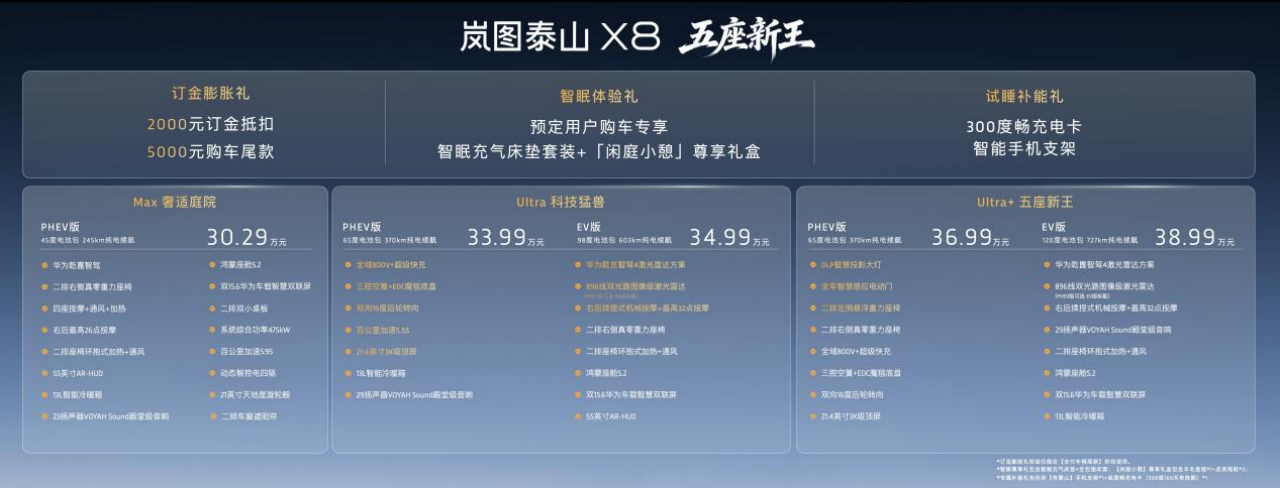
Image Credit: Voyah
Focusing on Human Needs
Throughout the event, nearly every product highlight revolved around "people." Early on, Lu Fang made a bold assessment. He stated the five-seat SUV market has moved beyond the 1.0 era of "good enough." It has also passed the 2.0 era of "fridges, color TVs, and big sofas." Now, it is in the 3.0 era defined as the family's third living space. Crucially, Voyah aimed to prove this with specific product details rather than abstract concepts.
Take space, for instance. The Taishan X8 offers 6.1 square meters of usable interior space and 48 storage compartments. The trunk provides a base volume of 1,148 liters. This is enough for 11 20-inch suitcases even with five passengers on board. It also includes a 150-liter sub-trunk. With a dedicated threaded interface, it can be fitted with a clothes rail. This allows it to serve as a 30-kilogram mobile cloakroom.
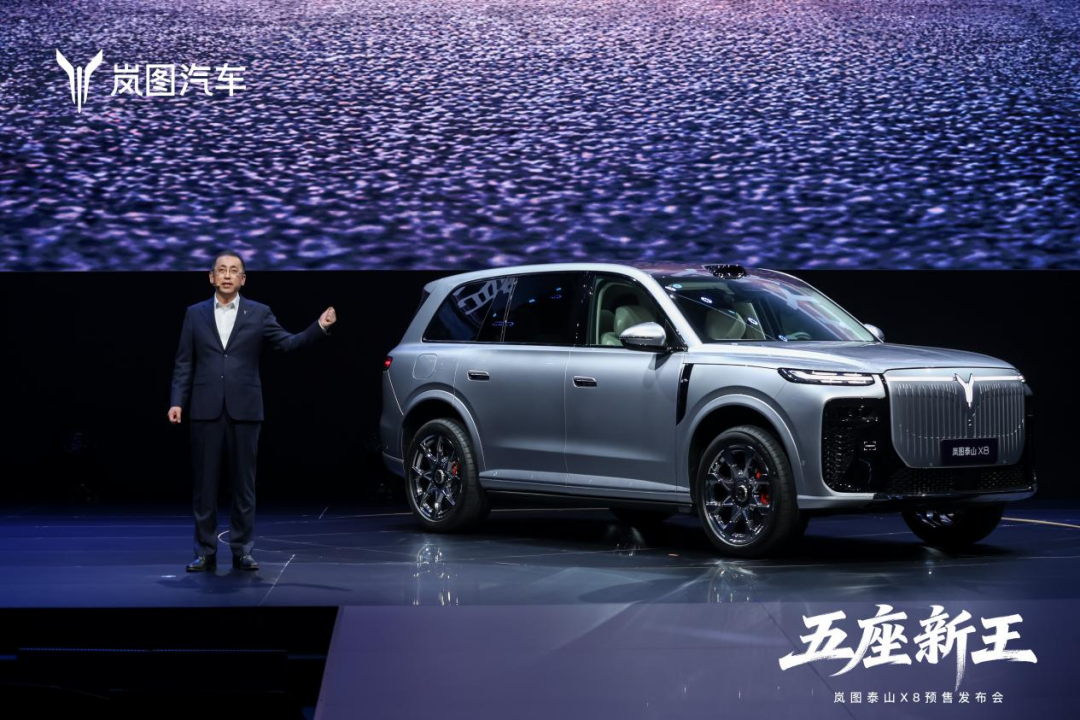
Image Credit: Voyah
The presentation of comfort features also followed a "scenario-first" logic. The second-row dual zero-gravity seats were broken down into a chain of experiences. These included cushions that elevate to align the heart with the knees. Other features were 12 mechanical massage nodes delivering a 32-point full-body massage. The system also includes ventilation and heating covering 90% of the contact surface.
For movie nights, lowering the rear armrest transforms the cabin into a private cinema with a 21.4-inch 3K ceiling screen and a 29-speaker audio system. When rest is needed, a one-touch function converts the second row into a 2.1-meter flat bed within a minute. No feature stands alone; each is embedded into a coherent usage scenario.
The handling of intelligent features is even more intriguing. While Huawei technology collaborations typically take center stage at such events, the HarmonyOS Cockpit 5.2 and Qiankun intelligent driving solution were relegated to later segments this time.
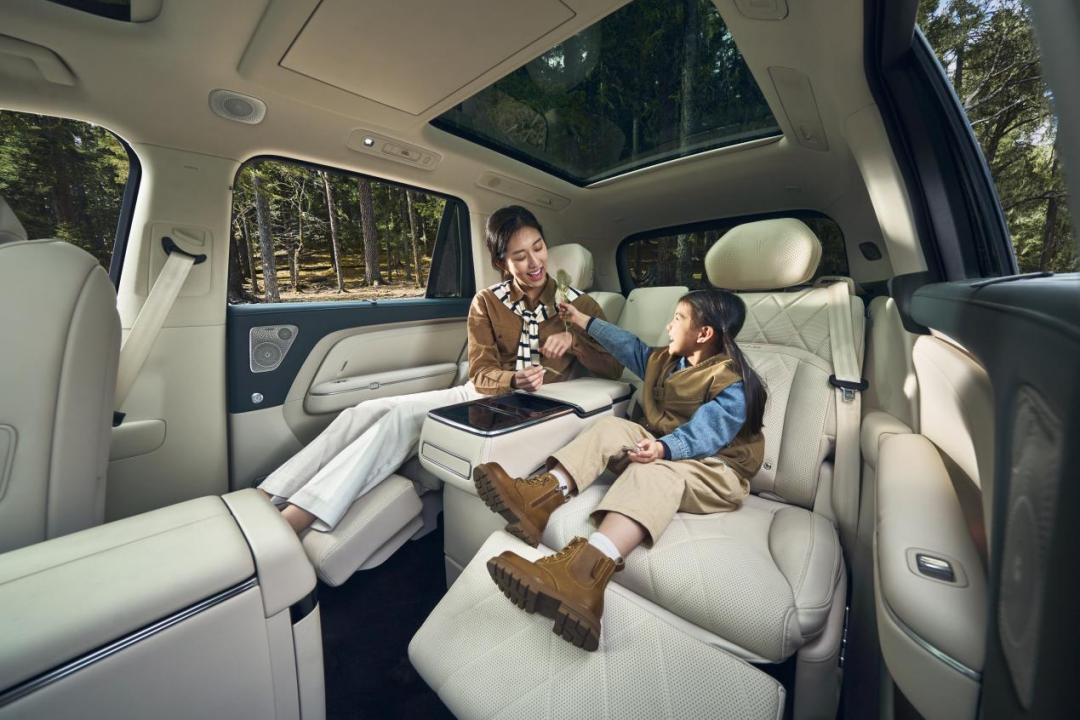
Image Credit: Voyah
Lu Fang did not dwell on computing power. Instead, he focused on convenience. He highlighted dual 15.6-inch screens supporting split-screen operations and three-finger swipe sharing. He also mentioned a voice AI capable of understanding subtext. Another feature was a Sentry Mode. It projects external views inside the cabin to prevent "dooring" accidents. Huawei's four-LiDAR setup and 896-line image-grade LiDAR were introduced near the event's close.
Answering "what change this vehicle brings to your life" before explaining "how it achieves it"—that sequence is a statement in itself.
Another Member of the '8-Series'
The launch of the Voyah Taishan X8 is no isolated incident. Almost simultaneously, "8-Series" SUVs like the IM LS8, Volkswagen 08, and ZEEKR 8X have hit the market. Looking ahead to the first half of 2026, models such as Nio’s Onvo L80, the BYD Sea Lion 08, and the Exeed ET8 are also waiting in the wings. The "8-Series" has evolved from a niche model number into a segment adopted by multiple automakers.
The so-called "8-Series" refers to large SUVs measuring about 5 meters in length. These models are positioned between the mid-size 7-Series and the full-size flagship 9-Series. With prices generally starting above 300,000 yuan and often exceeding 500,000 yuan, the 9-Series carries a high entry barrier.
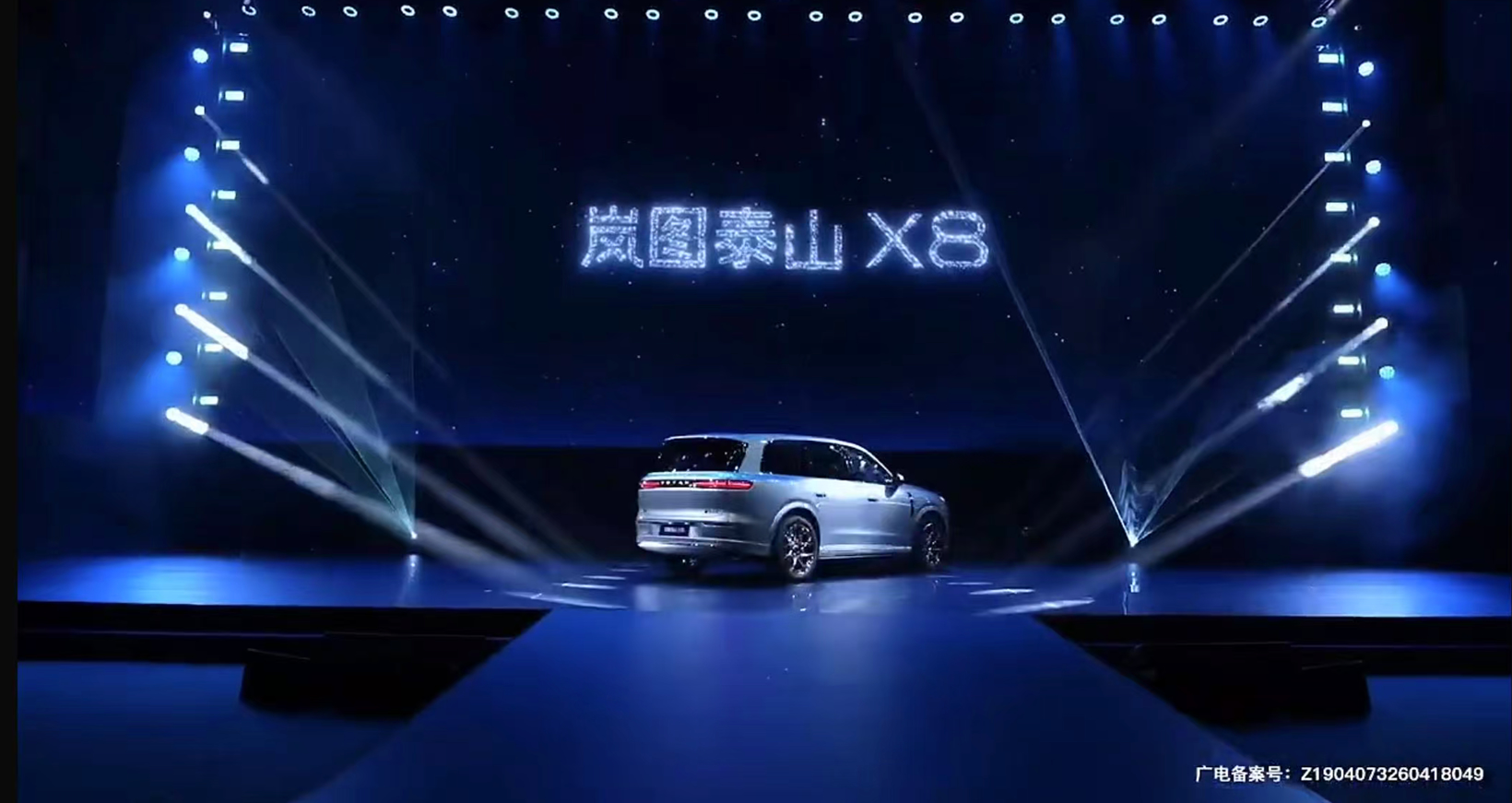
Image Credit: Voyah
The 8-Series, however, retains a spatial experience close to the 9-Series but with more restrained pricing. The IM LS8 starts at 249,800 yuan including benefits. The Volkswagen 08 begins at 239,900 yuan. The Voyah Taishan X8 starts at 302,900 yuan.
The average size of a Chinese household has fallen to 2.62 people, yet the three-person family remains the mainstream. These households have a clear need for high-quality, spacious travel options, but they are also more price-sensitive. The 8-Series fits this consumer profile perfectly.
Diversification in product form is another reason for the 8-Series surge. Early models, represented by the Li Auto L8, focused on large three-row layouts.
But as more players join, differentiation paths are diverging rapidly. The Voyah Taishan X8 opts for a large five-seat layout, ditching the third row to maximize second-row comfort and trunk capacity. The IM LS8 offers both five- and six-seat versions, highlighting handling with rear-wheel steering. The ZEEKR 8X positions itself as a high-performance flagship super hybrid, with a top-spec combined output of 1,030 kW to play the performance card. Meanwhile, Nio’s Onvo L80 debuts as a five-seat version of the L90, eliminating the third row to create larger front and rear storage areas.
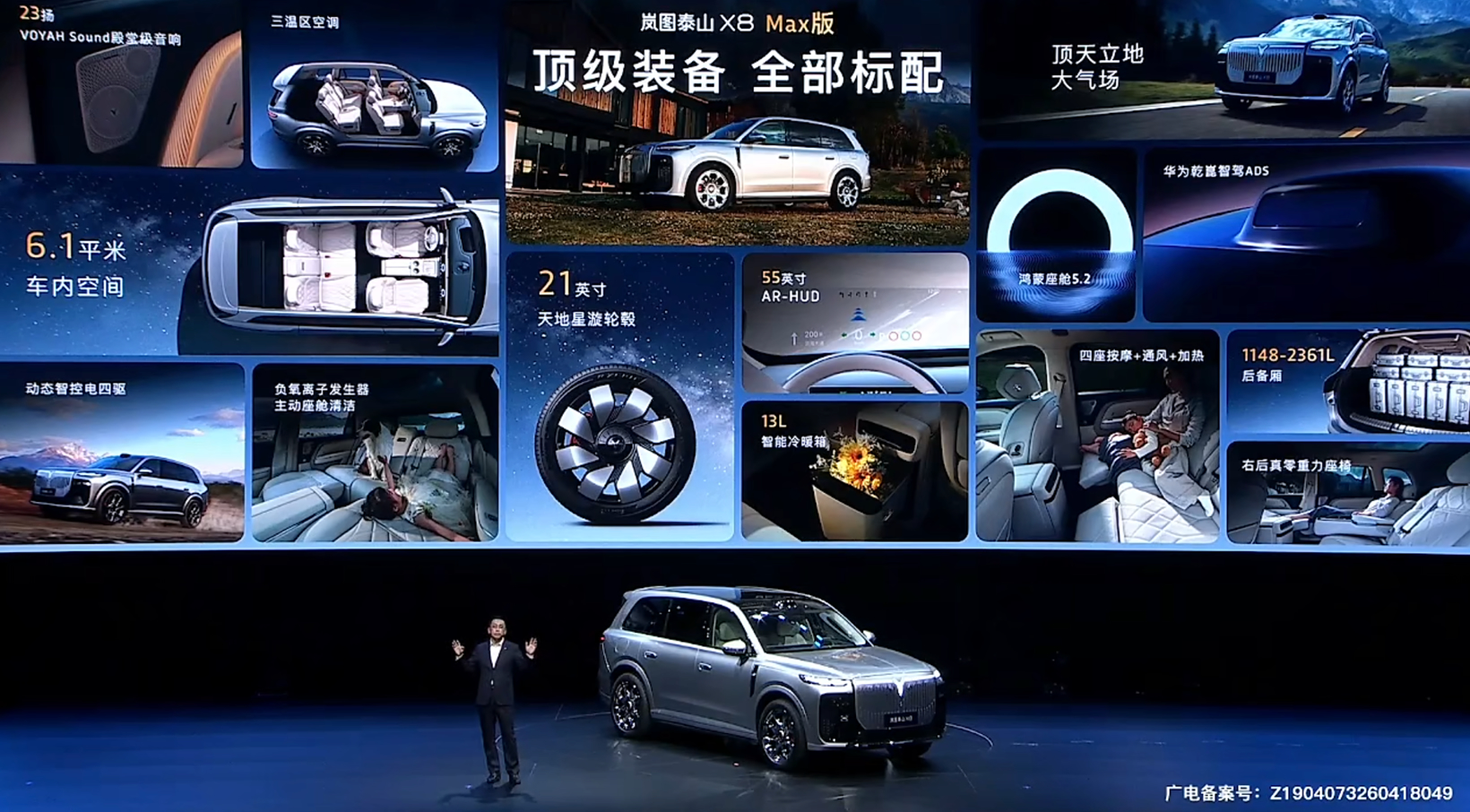
Image Credit: Voyah
Splitting from a single small third-row format creates distinct categories. These include large five-seaters, large six-seaters, and performance flagships. Each sub-segment holds sufficient market volume.
Viewed through the lens of the industry landscape, the 8-Series boom also reflects a strategic adjustment in product matrices. After the battle for 9-Series supremacy, leading brands realized that relying on a single flagship isn't enough to cover a broad market. The mantra "flagships build the brand, 8-Series drive the sales" is becoming a common consensus.
Of course, a crowded track means white-hot competition. As spec-based competition becomes homogenized, the brand that can most accurately answer "how exactly does this vehicle improve your life" is more likely to win over consumers. From this perspective, Voyah's narrative shift—prioritizing scenario experience over technical specs—is not just a tweak in communication strategy, but a return to the essence of the market.