



Gasgoo Munich- On February 10, auto stocks across China's A-share and Hong Kong markets staged a broad rally.
In Hong Kong, industry leader BYD saw significant gains, briefly topping 4% before settling around 3%. Chery Automobile jumped more than 2%, while mainstream brands like NIO, Li Auto, XPENG, and Geely also climbed, with most advancing between 0% and 2%.
The sector's strength is closely tied to positive signals from policymakers. Following a recent symposium organized by the Ministry of Commerce, the government explicitly signaled its determination to sustain and optimize policies promoting auto consumption in 2026. Capital markets reacted swiftly, reflecting optimism about the industry's outlook.
What Signals Did the Symposium Send?
On February 6, Vice Minister of Commerce Sheng Qiuping chaired a symposium bringing together industry associations, research institutes, and corporate representatives. The meeting focused squarely on auto circulation and consumption, aiming to set the tone and pave the way for market development in 2026.
The primary message was a reaffirmation of the auto industry's status as a pillar of the economy. Sheng stated clearly that the sector is strategic and essential to national growth, playing a key role in stabilizing growth, expanding domestic demand, and developing new quality productive forces. This positioning confirms that state support for the industry's healthy development remains unchanged.

Image source: 699pic.com
More crucially for markets, the meeting outlined specific policy paths. Sheng revealed that in 2026, the Ministry of Commerce will coordinate with the Ministry of Industry and Information Technology, the Ministry of Public Security, and the Ministry of Transport. The core strategy involves "combining policy support with reform and innovation, while integrating existing measures with new policies." Efforts will focus on three main areas:
First, optimizing the vehicle trade-in program. This is the most direct adjustment to existing consumption stimulus. Market expectations suggest that 2026 trade-in measures could see more attractive adjustments to subsidy levels, eligibility scope, and application processes. The goal is to more effectively leverage the massive stock of internal combustion engine vehicles, converting them into new demand for new energy or energy-efficient vehicles.
Second, launching pilot reforms for auto circulation and consumption. This signals a shift from simply "selling cars" to a full-chain "usage" ecosystem. Pilots may involve facilitating used-car transactions and regulating or innovating aftermarket services—such as maintenance, customization, and finance. The aim is to remove bottlenecks in circulation and unlock the full consumption potential of the vehicle lifecycle.
Third, improving industry management systems. This involves optimizing regulations and standards, strengthening consumer protection, and fostering a fairer, more transparent market environment to establish a long-term foundation for consumption expansion and quality improvement.
Corporate representatives at the meeting broadly acknowledged the effectiveness of recent consumption policies and offered suggestions on specific challenges facing the industry, to which relevant departments provided on-site responses.
Auto Stocks Rally: A Positive Signal
Capital markets are the most sensitive barometers. The collective rise in auto stocks following the symposium reflects a market that has raised its expectations for both sales volume and high-quality development in China's auto market for 2026.
Growth expectations for 2026 hinge largely on the pull of trade-in policies. Currently, China's auto ownership exceeds 360 million units, offering immense space for replacement. Trade-in policies can effectively lower the cost for consumers to switch vehicles, accelerating the phase-out of older models and injecting steady incremental demand into the new car market.
High-quality development is reflected in circulation reforms and the advancement of new quality productive forces. Markets are betting that policies will shift auto consumption from one-time purchases to full-lifecycle services, benefiting companies positioned in intelligence, high-end manufacturing, and aftermarket services.
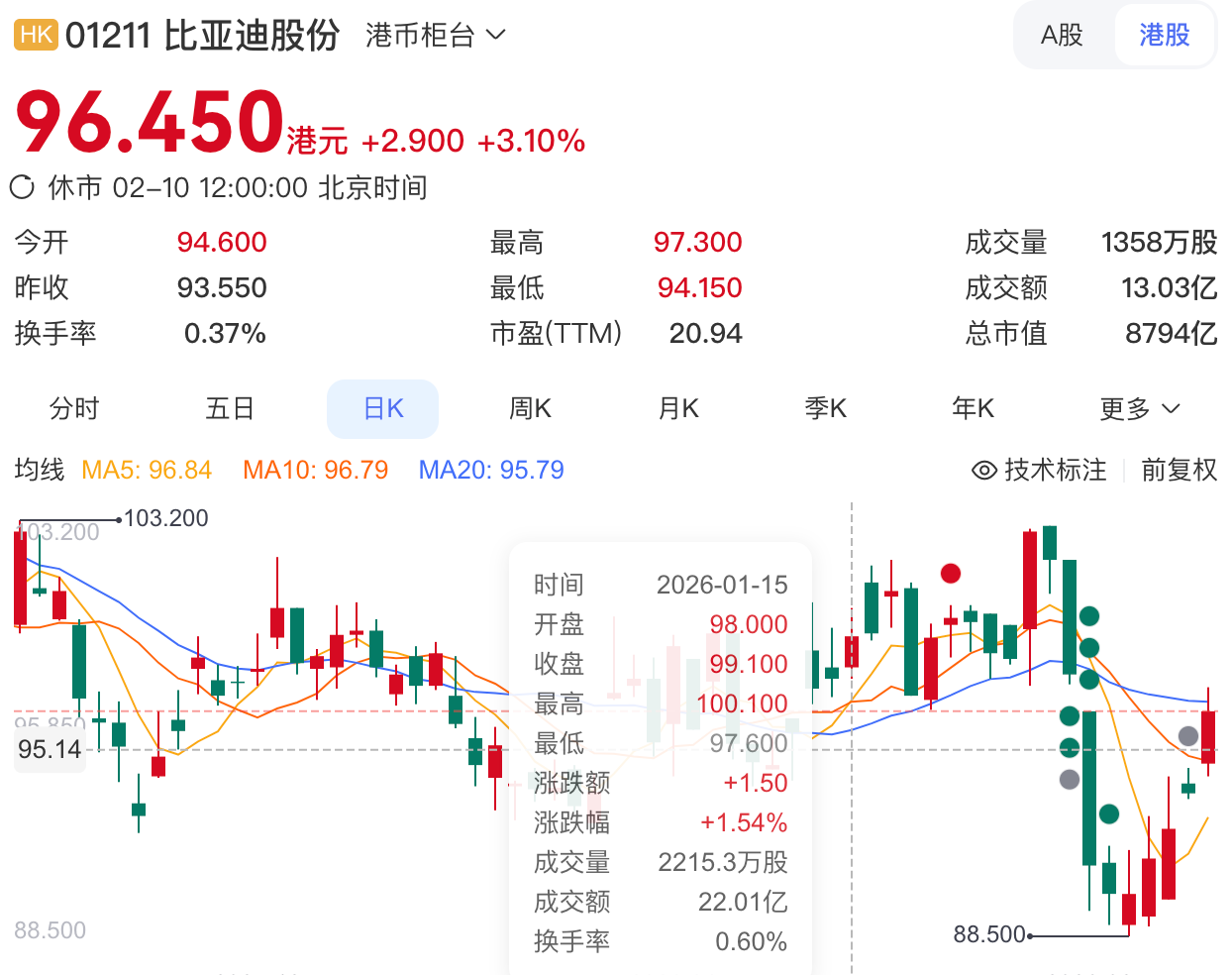
Image source: Baidu Stock
However, the gains were not uniform. BYD, as China's new energy vehicle leader, saw its rise of over 3% place it near the top, reflecting the view that industry leaders stand to benefit most from the policy tailwinds. Meanwhile, the synchronized rise of new forces like NIO and XPENG indicates market confidence that policies like trade-ins will further catalyze NEV sales.
Compared to traditional automakers, smart vehicles, new energy vehicles, and related components saw more pronounced gains. The meeting's emphasis on expanding and upgrading auto consumption aligns with the industry's technological upgrades and product structure optimization. Consequently, under a stable policy backdrop, investors are more inclined to position themselves in sub-sectors with medium-to-long-term growth potential.
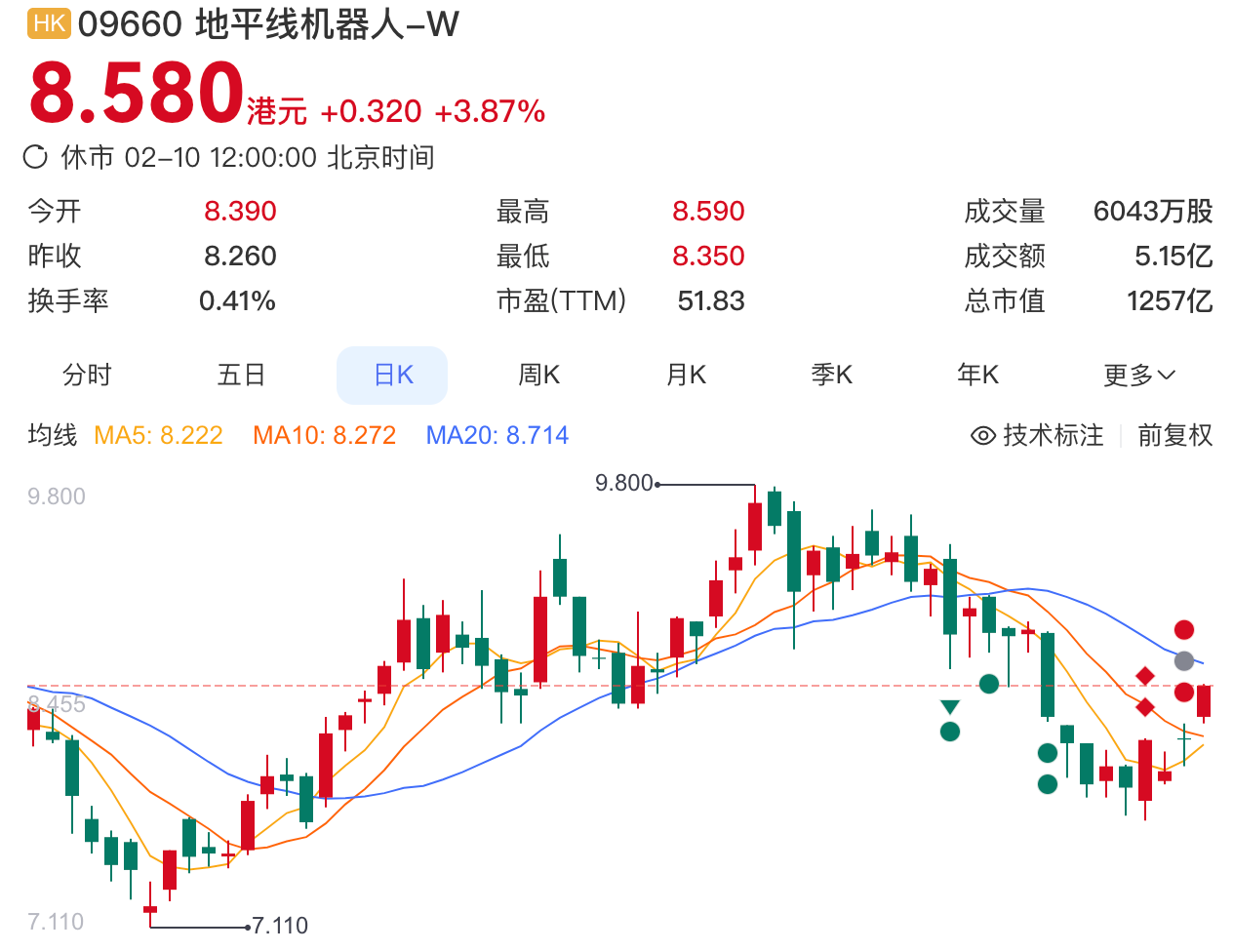
Image source: Horizon Robotics
Take smart vehicles as an example: related thematic ETFs strengthened noticeably after the meeting, reflecting continued capital interest in areas like intelligent driver assistance and the Internet of Vehicles. Horizon Robotics, for instance, surged 3.9%, outperforming most traditional automakers. Stocks for intelligent enterprises like Seyond and Hesai Technology also posted gains between 1% and 2%.
This trend aligns with the judgment of industry research firms: in an environment where policy support and technological iteration run parallel, intelligence is becoming the new value axis of the auto industry.
AI-plus and embodied intelligence are also becoming new growth drivers for the auto sector. With Tesla's Optimus projected for mass production in 2026, domestic automakers and parts suppliers, leveraging their technical capabilities, are accelerating their entry into the humanoid robot supply chain. This has become a favored sub-sector in the current rally. Robot maker EFORT saw its stock rise 3.4%, while iFlytek and others also posted varying degrees of gains.
Nomura Orient International Securities notes that with the catalysis of L3 autonomous driving policies and technological iteration in 2026, the penetration rate of high-end intelligent driver assistance is expected to rise steadily. Among the heavy holdings of smart vehicle ETFs, core sector targets involving smart driving chips and cockpit domain control—such as Tuopu Group, OmniVision Group, and iFlytek—are receiving close attention from funds.
In summary, companies with larger gains often possess strong capabilities in "democratizing smart driving" or have deep overseas layouts. Through this rally, capital markets have expressed confidence in the macro-control signal of "promoting auto consumption across the full chain." They believe that the continuous implementation of policies will provide a solid foundation for the expansion and quality improvement of the auto market in 2026.


