



On January 12, Mercedes-Benz formally disclosed its 2025 deliveries in China: more than 575,000 new vehicles handed over to Chinese customers across passenger cars and light commercial vehicles. Among them, annual deliveries of the Mercedes-Maybach GLS SUV rose nearly 14% year on year.
Amid the rise of domestic premium brands, structural contraction in the luxury segment, and shifting policies, the result underscores Mercedes’ resilience in China — offering a playbook for foreign luxury marques navigating industry upheaval.
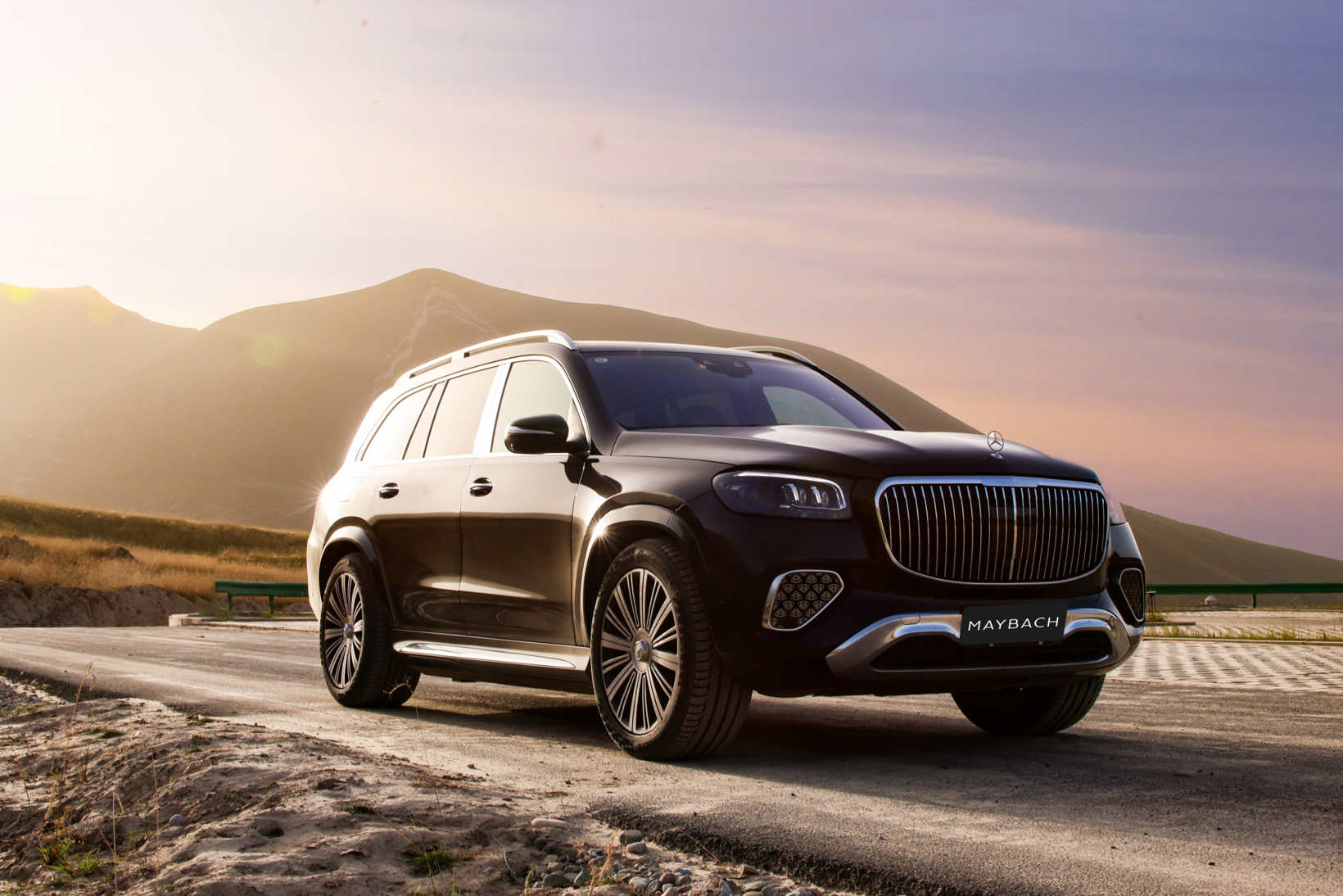
Image source: Beijing Benz
Holding the line amid headwinds, Mercedes stabilizes its China position
China’s luxury-car market is being reshaped in 2025. CPCA data show the market share of models priced above 300,000 yuan has fallen for consecutive months; in the first 11 months, imports dropped 29.7% year on year — pressure that is broadly felt by foreign luxury brands.
As CPCA secretary-general Cui Dongshu noted, segments above 300,000 yuan kept expanding in prior years, but started declining in 2024 and will continue to fall in 2025. The domestic market, he said, still shows a "shrinking high-end and expanding entry-level" pattern.
Against that backdrop, Mercedes’ 575,000-plus deliveries slipped from a year earlier — yet precise positioning in the high-end kept its core edge intact. Official data indicate Mercedes continues to lead in the 400,000-yuan-and-up and 1‑million‑yuan‑plus luxury niches. The Mercedes-Maybach GLS SUV, whose annual deliveries climbed nearly 14% year on year, has become a key growth engine.
The performance speaks to Mercedes’ read on high-end demand. Even as the market cools, high-net-worth buyers remain steady in their appetite for uncompromising luxury and brand heritage. Through pillars like Maybach and the S‑Class sedan, Mercedes has defended luxury’s value high ground.
Channel moves and policy responses have further bolstered Mercedes’ risk resilience. With the luxury-car consumption tax threshold set to be lowered in July 2025 from 1.3 million yuan to 900,000 yuan, some authorized dealers moved quickly with limited-time subsidies — pledging to fully cover the additional consumption tax on models such as the Mercedes‑Maybach S‑Class for orders placed before August 31 — helping steady expectations among top-end customers.
"Together with our dealer partners, we are taking a measured, pragmatic approach to reset market expectations and proactively manage structural swings." The company’s stance highlights firm coordination between brand and channels — a reason Mercedes has maintained stable deliveries even as rivals wrestle with dealer turbulence.
2026 for Mercedes "the product-expansion push"
Smart electrification and local innovation sit at the core of Mercedes’ breakaway plan. The company has designated 2026 as its "product-expansion push" year, aiming to introduce over 15 new and refreshed models across all powertrains. A pure-electric GLC SUV based on the MB.EA platform will add a China-built long‑wheelbase version.
Software-led upgrades are another lever to rebuild product competitiveness. Mercedes will push OTA software updates to all MB.OS‑equipped models, enabling continuous feature iteration. Over the next 12 to 18 months, the smart cockpit and pilot‑assist systems will gradually extend across the full lineup — a bid to close the gap many foreign brands still face on intelligence and software.
From an industry vantage point, Mercedes’ adjustment reflects a new playbook for foreign luxury brands in China: the era of easy wins on brand premium and tech barriers is over. Only by preserving high-end value while moving fast on electrification and intelligence can they break through the squeeze from domestic premium players and other foreign rivals.
The 575,000 deliveries in 2025 validate Mercedes’ recent strategy — and mark the start of a new competitive cycle. With the next‑generation S‑Class, a China‑built long‑wheelbase GLE SUV, and a dense rollout of pure‑electric platform products slated for 2026, Mercedes is aiming to redefine the "value benchmark" in a reconfigured luxury market.
The outcome of this shift will shape not only Mercedes’ standing in China, but also the global luxury‑car contest. In this new luxury era, brands that adapt and embed locally stand the best chance of riding out cycles — and preserving the essence and value of luxury.


