



At the start of this year, a tear-down livestream by Lei Jun set off intense debate. On air, he showcased Xiaomi EV's standout scorecard — more than 410,000 deliveries in 2025 — while answering core questions around safety and marketing claims. He used a hands-on demo of the car's triple power-redundancy design to counter rumors that "the doors won't open," and pledged to end small-print disclaimers and other bad habits in the industry.
The broadcast was seen as a do-or-die bid by Xiaomi EV to confront a trust crisis, reviving a question now dominating auto circles and consumers alike: Can we still trust Lei Jun?
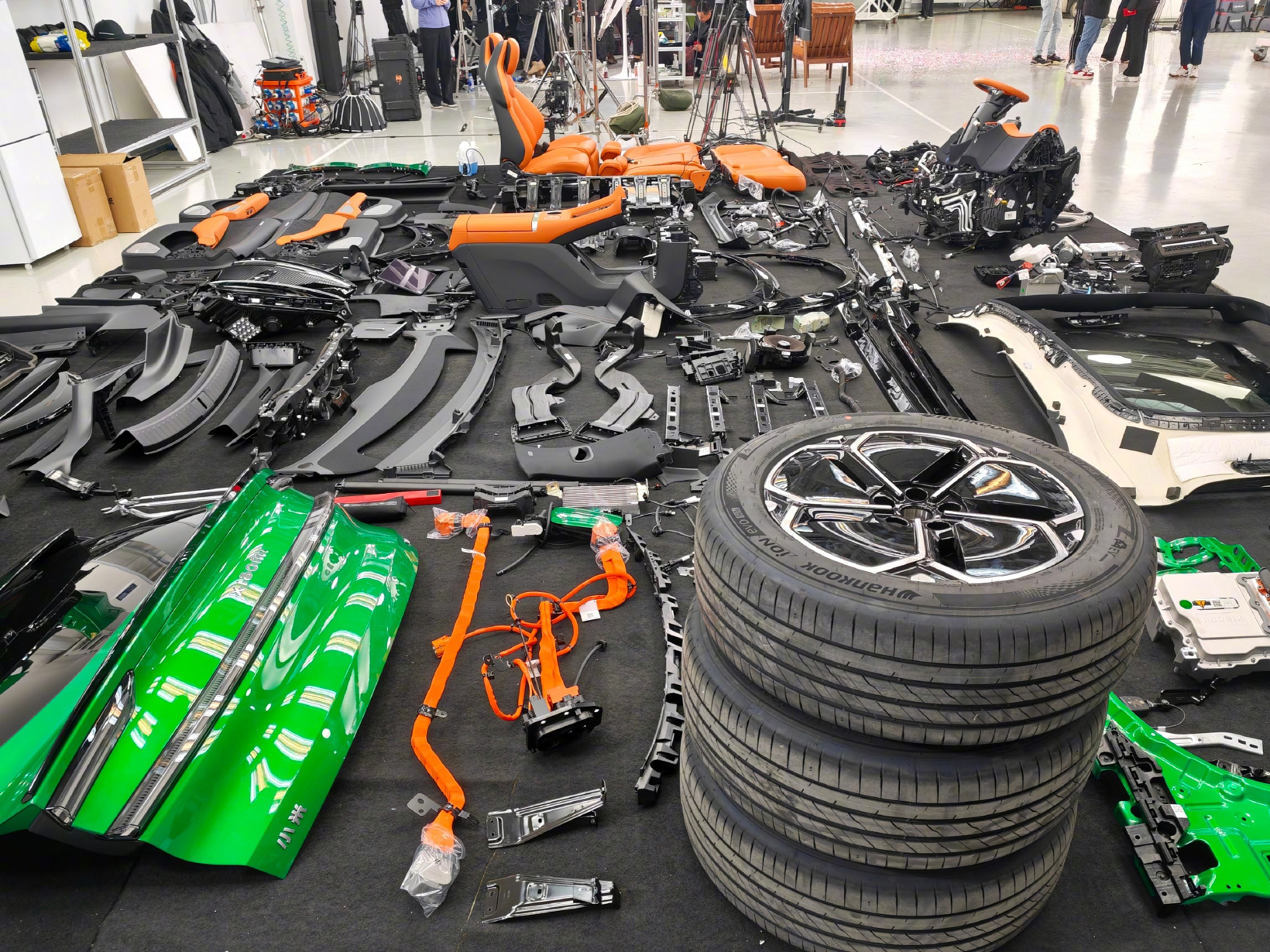
Image source: Lei Jun's Weibo
From his 2021 vow at the launch of Xiaomi's car effort — "for Xiaomi EV I'm willing to stake my entire reputation" — to the fan frenzy around the SU7 in 2024, Lei leveraged his personal IP and a vast base of "Mi fans" to help Xiaomi EV skip the toughest phase of trust-building that most EV startups face.
Yet as volumes climbed, misfires in performance marketing, recurring quality issues and mounting legal disputes erupted in tandem, shaking the foundation of trust in Xiaomi's car venture.
For Lei, this campaign goes beyond commercial success or failure; it touches his personal reputation and Xiaomi's long-term brand value. For the industry, the swings in trust around Xiaomi's car push offer a sharp lesson for cross-over automakers seeking transformation.
Building trust: from Mi-fan faith to a cross-border success story that stunned the industry
In the early stage, Lei's personal reputation was the core trust asset.
Rising from the internet sector, he built a massive Mi fan community on the back of Xiaomi phones' "born for enthusiasts" credo, cultivating an image of a pragmatic, approachable entrepreneur who understands users.
So when he declared at Xiaomi's 2021 spring event that the "last major entrepreneurial project of my life" would be building cars — and that he was willing to bet his entire reputation — the resolve instantly dispelled widespread doubts about Xiaomi's cross-over into autos.
That trust-transmission effect showed clearly during Xiaomi EV's warm-up phase.
From regular disclosures on development progress to the step-by-step buildout of the supply chain, Lei kept pushing updates via Weibo and livestreams, with almost every post drawing broad attention.
In 2024, Lei went live on Douyin to chat about "20 days after the Xiaomi SU7 went on sale." Viewers topped 100,000 within a minute; after two hours, likes had surpassed 180 million.
He returned in May that year with another stream to unveil the SU7 Pro. As Lei noted on Weibo, that session drew 39 million viewers — "my sincere thanks for all your support!"
On the last day of 2024, his New Year's Eve stream from Xiaomi EV's factory doubled as a year-end wrap and a look ahead. The broadcast logged 37.884 million views, peaked at 496,000 concurrent viewers, and amassed more than 120 million likes.
Such peaks are hard for both traditional automakers and EV startups to match.
In short, Xiaomi EV's initial success was fundamentally the success of Lei's personal IP and Mi-fan faith. Many buyers chose Xiaomi's car largely because they trusted Lei.
If the personal IP opened the door, hard product strength was the backbone of trust in Xiaomi's early car push.
Xiaomi EV didn't take the "PowerPoint car" shortcut. It poured heavily into R&D. In his New Year stream, Lei said Xiaomi invested about CNY 105 billion over the past five years and plans to put CNY 200 billion into technology over the next five.
That level of spending tops many EV startups. XPENG Chairman He Xiaopeng said at Guangdong's High-Quality Development Conference in 2025 that XPENG had invested more than CNY 50 billion in R&D and manufacturing over the past decade.
Backed by that spend, Xiaomi EV chalked up breakthroughs in core tech.
The self-developed HyperEngine V8s motor gives the SU7 Ultra a 0–100 km/h time of 1.98 seconds — excluding launch time, a claim still disputed — and a Nürburgring lap in the 6 minutes 46 seconds range, pushing performance close to Porsche and other luxury marques; its 9,100-ton integrated die casting boosts body rigidity and factory efficiency; HyperOS, rebuilt by fusing Android with Xiaomi's self-developed Vela OS, integrates MIUI, Vela, Mina and the in-car OS to connect "people, cars and homes" across scenarios, seamlessly tying into Mi Home smart devices to form a distinct ecosystem edge.
After the SU7 launched in 2024, strong performance metrics and accessible pricing turned it into a breakout hit. On Jan. 25, 2025, Lei confirmed on stream that total SU7 deliveries had exceeded 150,000, with the previous month's deliveries topping those of the Model 3. Xiaomi EV ended 2024 with more than 135,000 deliveries and set a 2025 target of 300,000. Since February 2024, Xiaomi's share price has climbed nearly 200%.
The second model, the YU7, outperformed expectations. On Jan. 1, Lei posted a set of figures: Xiaomi's first luxury high-performance SUV — the YU7 — delivered more than 150,000 units in six months, 2.3 times the SU7 over the same period.
Xiaomi EV's official account later issued a "2025 year-end summary": over the past 12 months (through November 2025), the SU7 ranked No. 1 by cumulative sales among sedans priced above CNY 200,000, while the YU7 was the top-selling mid-to-large SUV for four consecutive months.
Rapid gains in sales and share further reinforced consumer trust in Xiaomi's car-making capability and forced the industry to take notice.

Image source: Xiaomi EV Weibo
For big-ticket items like cars, the breadth and quality of sales and service networks directly shape trust. Xiaomi EV knows that well and has accelerated channels and aftersales even as volumes rise.
By end-2025, Xiaomi EV had 477 stores open across 138 cities nationwide. Service outlets expanded to 264, covering 151 cities — essentially blanket coverage of all provincial-level administrative regions.
Beyond Beijing, Shanghai, Guangzhou and Shenzhen, new first-tier hubs such as Suzhou, Chengdu and Hangzhou sped up deployments, while prefecture-level cities including Yulin, Jiujiang and Dezhou were also covered — a clear push into lower-tier markets.
The buildout not only made buying more convenient, but, through standardized service processes, eased fears about "new brands skimping on aftersales."
On user operations, Xiaomi has carried over an internet-style, data-driven approach — staying tightly engaged through the official app, collecting feedback and iterating quickly. That participatory model makes users feel heard and, in the first two years, helped Xiaomi EV establish trust well above the industry average, becoming a cross-over benchmark.
Collapse of trust: from constant controversy to a reputation shock and trust deficit
Xiaomi EV's trust crisis first sprang from lapses in marketing detail.
As a brand born online, Xiaomi is used to grabbing attention with "extreme specs." That smartphone-era playbook, however, ran into a wall in autos.
In 2025, several claims were flagged as inconsistent with reality: "1,300 km on a single charge"; "instantly stopping from 200 km/h" — both read as overblown marketing. The notorious small-print footnotes, meanwhile, were seen as word games to dodge accountability.
The SU7 Ultra's "carbon-fiber dual-channel front hood" became the flashpoint.
At the heart of it: alleged false or excessive advertising on the premium SU7 Ultra — a carbon-fiber dual-channel hood whose functionality fell short, alongside arguably misleading performance claims.
Official messaging said the hood "fully replicated the Nürburgring prototype," "efficiently directed airflow at the front," and offered "dedicated heat-dissipation channels for the brakes." Lei even stressed on stream that the internal structure would be redesigned, with twin ducts routed toward the wheel hubs.
Yet early owners who tore down the part found the CNY 42,000 option was internally no different from the standard version, with no ducting and no links to any cooling system. One owner used a blower to simulate airflow, only to see tissue paper near the openings barely move. Confronted with the backlash, Xiaomi EV issued an apology blaming "unclear messaging."
Its crisis response was criticized as lacking sincerity — offering 20,000 points worth CNY 2,000 to placate buyers who paid CNY 42,000, then conceding that "hardware performance was artificially limited by software."
If marketing disputes are surface wounds, quality and safety problems cut deeper.
In 2025, quality complaints surged at Xiaomi EV.
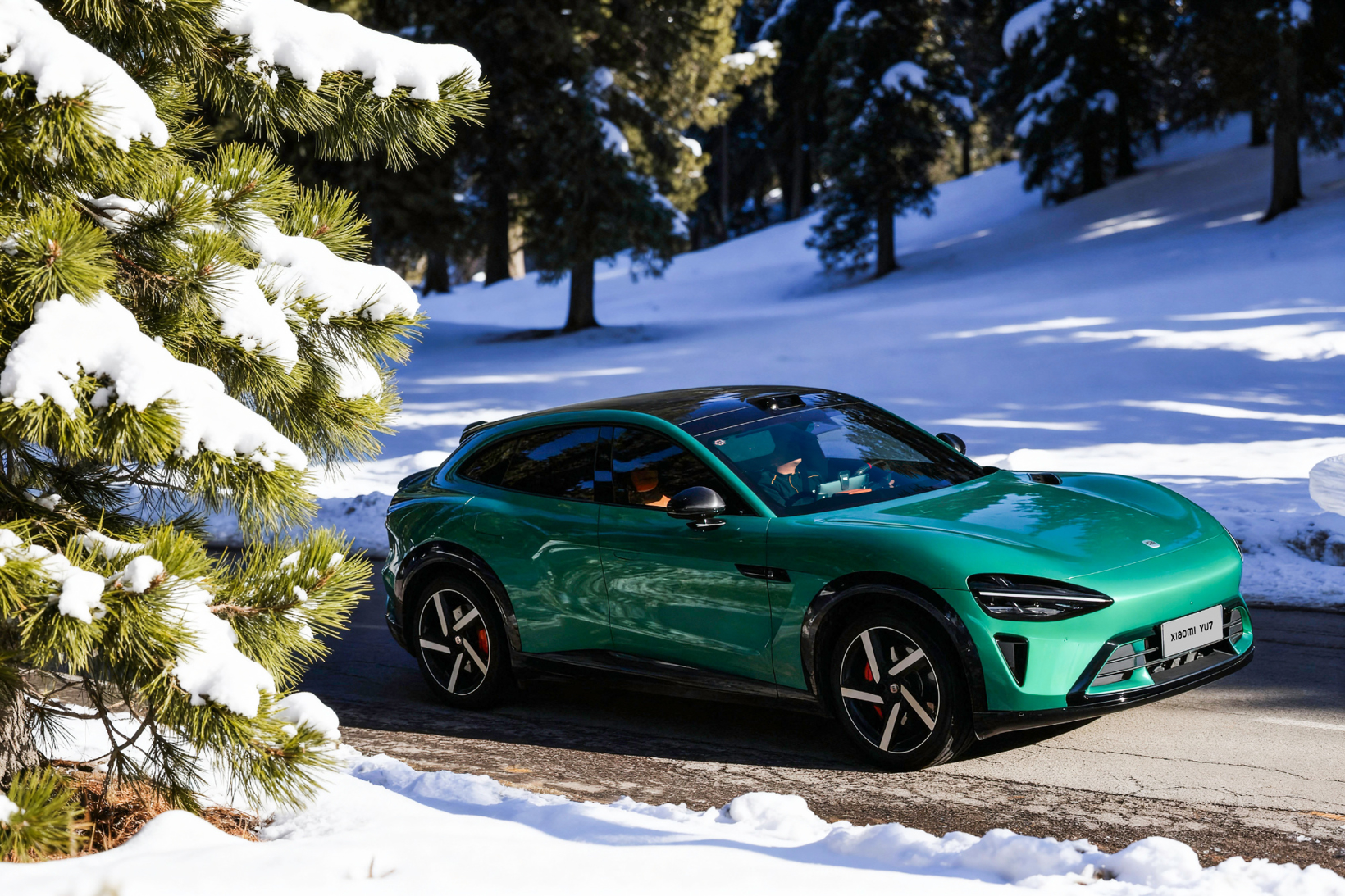
Image source: Xiaomi EV Weibo
www.aqsiqauto.com's "Q1 2025 quality ranking for mid- to large-size pure EVs" placed the SU7 last.
On Sept. 19 that year, the State Administration for Market Regulation announced that Xiaomi EV would recall SU7 standard models built from Feb. 6, 2024 to Aug. 30, 2025 — 116,887 vehicles in total. The notice said that when the L2 highway navigation assist is engaged, the system may, in certain extreme scenarios, identify too slowly, warn insufficiently or respond inadequately. If the driver fails to intervene in time, collision risk rises — a clear safety hazard.
Users also frequently complained about electronic door locks failing, unstable infotainment, and a sluggish voice assistant.
More troubling, after several crashes, social media posts claimed "Xiaomi cars' doors can't be opened after impact." Lei later addressed it in a tear-down demo, but the flap amplified concerns about safety.
Behind the defects lies a clash between Xiaomi's "internet speed" and automotive manufacturing's craft and rigor.
To seize first-mover advantage, Xiaomi EV pushed through a tough ramp. The "futures-style" delivery experience left buyers disappointed — and fueled perceptions of half-finished cars.
Once the crisis hit, Xiaomi's legal tactics further stoked frustration.
Beyond contentious arguments in the "carbon-fiber hood" suit, Xiaomi was seen deploying delay tactics in consumer disputes: in a Suzhou deposit case, the company twice challenged jurisdiction to shift the suit to a Beijing court — both attempts rejected; in Haikou, a buyer sued after Xiaomi forced early final payment, and the court ordered Xiaomi to return the deposit at double.
Legally defensible or not, those moves sent a damaging signal for brand trust — one of evasion and disregard for user rights.
Incomplete data from Tianyancha shows more than 15 cities, including Urumqi, Ningbo, Tianjin, Shanghai, Nanjing and Xiamen, have consumer lawsuits with Xiaomi over purchase-contract disputes.
Facing legitimate claims, Xiaomi closed comment sections and blamed "paid troll attacks" to duck pressure — a stance that disillusioned many long-time Mi fans.
Rebuilding trust: the keys to hitting a 550,000-unit target
Confronted with the fallout, Lei and Xiaomi EV have begun to change.
In a January 2026 tear-down stream, Lei said "safety and transparency matter more than marketing gimmicks" — a notable shift in Xiaomi's approach to building cars.
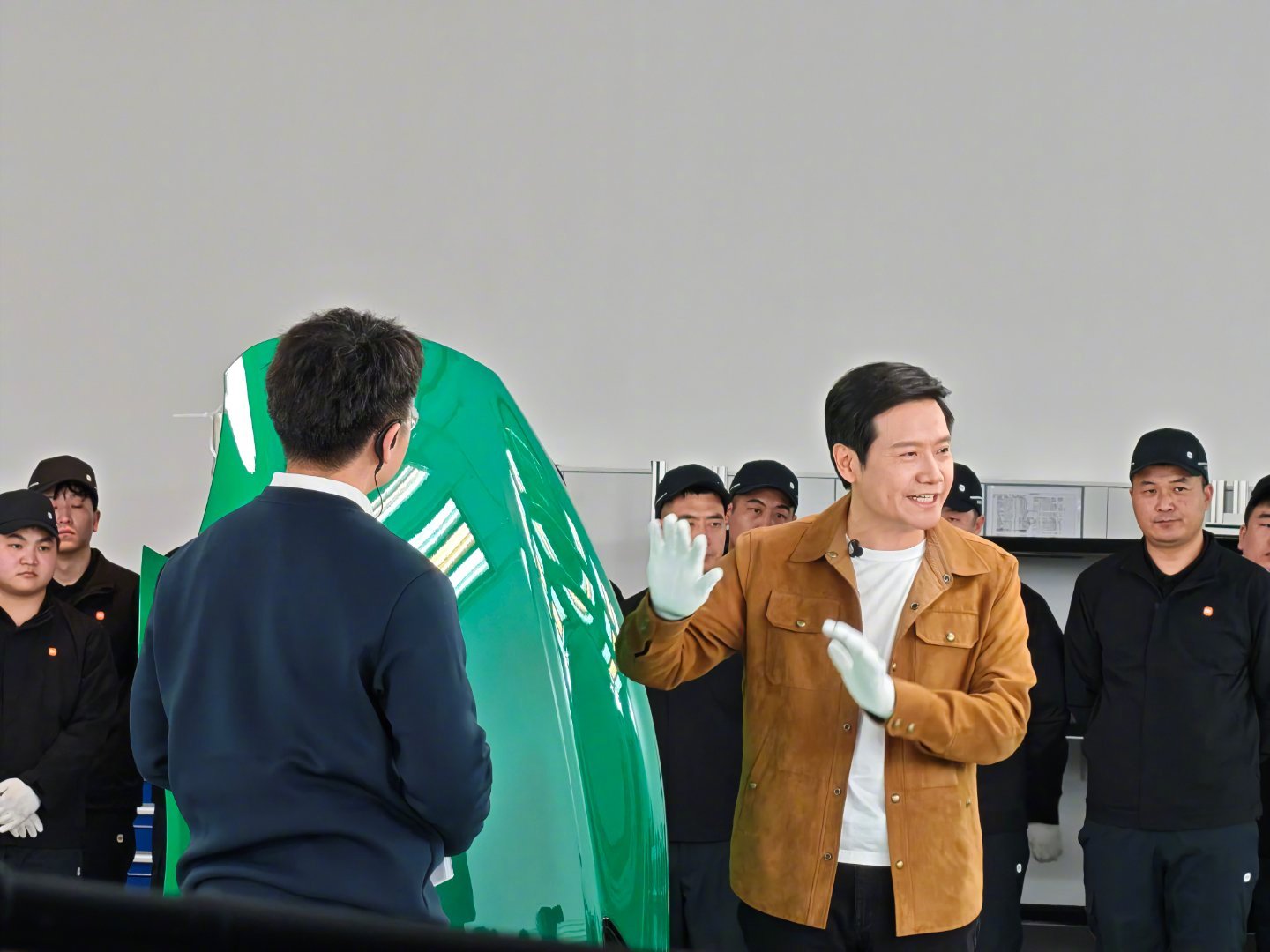
Image source: Lei Jun's Weibo
In practice, Xiaomi is moving to shore up product gaps: at least CNY 200 billion will go into R&D over the next five years, with heavier bets on large AI models, while it doubles down on a unified human-car-home experience. Internally, teams are told to "use big fonts" and present information clearly, ending small-print footnotes and similar habits.
For autos — high-safety, long-cycle products — rebuilding trust ultimately rests on product substance. To regain confidence, Xiaomi EV must drop the online industry's hype-first mindset and return to the essence of carmaking.
The YU7's solid showing already proves that if quality holds and value is sharp, the market will respond.
As noted earlier, in 2025 the YU7 delivered more than 150,000 units in its first six months and led the mid-to-large SUV charts for four straight months, becoming Xiaomi EV's sales pillar. That suggests consumers aren't rejecting Xiaomi wholesale; fix the core, and trust can be repaired.
On communications, Xiaomi needs to ditch fandom-style playbooks and build a transparent, candid dialogue. Earlier moves to close comments or blame trolls were, in effect, evasive — and deepened distrust. Lei's decision to face doubts head-on in 2026 won recognition from many consumers; that willingness to tackle issues without deflection is the right path to rebuild trust.
In 2026, the EV shakeout is turning brutal. Against that backdrop, Lei set a 550,000-unit delivery target for Xiaomi EV — an ambitious bet that reflects confidence in technology and the market, but won't be easy.
Rebuilding trust also means balancing "internet speed" with automotive steadiness. Xiaomi must keep its edge in rapid iteration — using AI to power autonomous driving and infotainment and leaning into a human-car-home ecosystem — while respecting industry rhythms on capacity expansion and product cycles to avoid fresh quality or trust flare-ups.
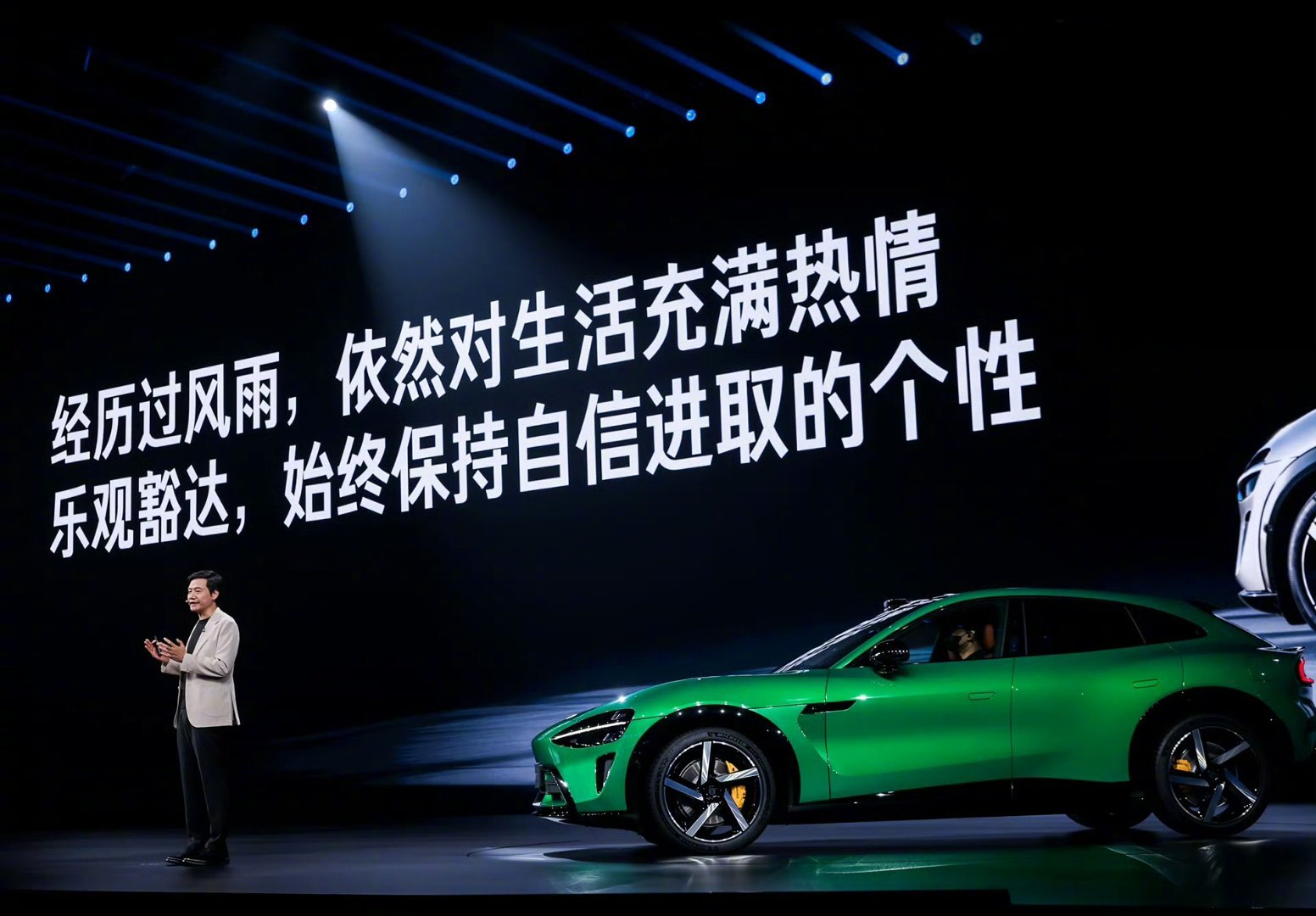
Image source: Lei Jun's Weibo
From an industry angle, Xiaomi's trust swings are instructive.
As China's NEV market shifts from policy tailwinds to market-driven competition, trust is no longer built on hype or personal IP — it rests on quality, technology and service. Xiaomi's experience shows cross-over carmakers can rise quickly with traffic and capital, but only by focusing on product, building systems and honoring commitments can they endure.
Back to the original question: Can we still trust Lei Jun? The answer isn't a simple "yes" or "no."
Lei and Xiaomi EV have paid for early missteps and shown intent to repair trust. The 550,000-unit target, CNY 200 billion for R&D, and more transparent communications are all chips on the table.
Even so, rebuilding trust takes time. Xiaomi must prove itself with steady quality and a responsible brand stance. For consumers, some patience may be warranted; for the industry, the lesson should spur China's EV sector toward a healthier, more rational phase.


